LGA Chair Cllr Gittins' address to the LGA Annual Conference on 1 July 2025.
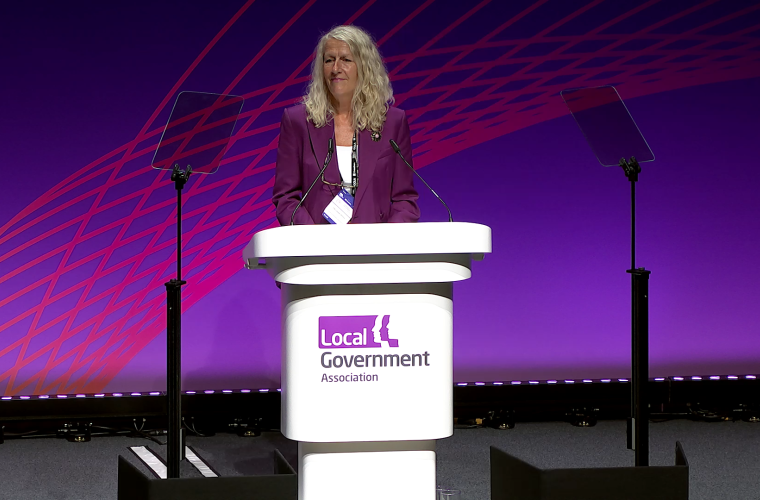
Good afternoon, conference
I am so proud to be standing with you today here in Liverpool, a city that was once my home for many years, and I’m delighted to have been re-elected as your chair.
So, thank you very much to Liam, for that kind introduction.
My commitment to act cross-party and in the interest of every council remains unwavering.
Every time we come together, I’m inspired and incredibly proud of everything our sector does to improve the lives of our residents and empower our communities to thrive.
If there’s one thing I’ve learned as a council leader – and more recently as the LGA Chair – is that this vital work sometimes goes unnoticed, but deserves far greater recognition.
And that’s exactly what this LGA’s Annual Conference is here to do.
The next three days will shine a spotlight on the exceptional work happening across every level of local government and create a space for further collaboration – the very heart of what we do best.
It’s almost a year since the general election – which returned a record number of MPs with experience in local government – and that’s something we should all take great pride in.
In Harrogate last year, we held the very first Leaders’ Council, which provides direct access to government for open dialogue on the country’s most pressing issues.
From upcoming legislation to key policy priorities such as homelessness, health and social care, and, of course, devolution and local government reorganisation.
But the Leaders’ Council is more than just a forum for discussion – it’s a driving force for change.
For example, we’ve agreed to establish a new task force with the Department for Education on Early Years and Post-16 Skills.
Hearing from my fellow members of the Leaders’ Council has been reassuring – a reminder of how much we share, despite the diversity of our local areas.
Beyond this, I’m delighted to report on further wins for our sector, spearheaded by our fantastic policy boards.
For example, the Renters’ Rights Bill now delivers on nearly every single one of the LGA’s key priorities, from ending unfair ‘no fault’ evictions – which is one of the leading causes of homelessness – to vital safeguarding against unjust rent hikes and backdoor evictions.
These measures will help families remain in the places they call home, and with the confidence that they can do so in decent conditions.
Another area of the LGA success is around the government’s commitment to allow remote attendance at council meetings.
The LGA has long called for councils to be trusted to decide this for themselves, and we hope to see legislation, as well as protections of councillors’ home addresses soon.
We were also delighted to see the LGA’s Work Local policy become government policy when the Department for Work and Pensions published the Get Britain Working White Paper.
The government will now route employment and skills support locally through mayors and clusters of councils.
The Tobacco and Vapes Bill now also reflects several key wins for our sector.
We have successfully delivered enhanced powers for our trading standards teams and vital measures to safeguard children and young people with tighter regulations on vape marketing and packaging.
And last month, we welcomed the ban on disposable vapes, something the LGA was amongst the first to call for.
These achievements are a testament to the LGA’s influence, ambition, and advocacy.
However, they are only made possible because of the hard work of councillors and officers who are committed to serving their communities.
Working in local government offers unparalleled opportunities to make a real difference.
But I know that our sector continues to experience recruitment and retention difficulties while demand pressures rise.
We welcome the government’s commitment to ease burdens including with new technology.
But we aren’t simply delivery arms – councils are catalysts of progress and innovation.
So, I encourage you all to visit the Innovation Zone here at conference which is showcasing fantastic local solutions to the challenges we face.
Improvement
We welcome the government’s continued recognition of the value of sector-led improvement and assurance, which is one of the LGA and local government’s greatest achievements.
In the past year, the LGA has delivered over 120 peer challenges and progress reviews – practical, rigorous and supportive interventions that help you improve from within.
We’ve also trained over 2,500 councillors – building the leadership, skills and confidence that are essential to good governance.
Sector-led support, delivered with peers, has consistently proven to be not only more effective than government commissioners, but more trusted and significantly more cost-efficient.
As we look ahead, we must protect and invest in this model.
Finance and spending review
This year’s Local Government Finance Settlement saw an increase in overall core spending.
This extra funding will help meet some – but not all – of the financial pressures faced by councils with some still needing to increase council tax bills and make further cutbacks to try and protect services.
We will continue to work closely with the government to improve the financial situation of the sector, and were pleased to see once again a commit to multi-year settlements at the recent Spending Review.
The Spending Review also included some further announcements:
Adult social care funding is set to rise which will offer some stability to vital services. However, challenges still remain in addressing wider reform, workforce needs and early intervention.
And crucially, we still don’t know if Fair Pay Agreement costs are included. If they are, funding will fall short of what is needed.
And on health, importantly, focusing on treatment alone is not the answer.
The Government and the NHS need to work closer with councils to co-design a modern health and care system that is rooted in prevention, community-led solutions and long-term wellbeing.
Health does not begin in hospitals – it begins in homes, streets, parks, and schools.
The NHS cannot deliver a healthier society on its own.
Councils are already leading bold, local solutions that work, and are key to building a modern, joined-up system that delivers for our people.
A Ministerial Forum which brings together national and local politicians would help to drive real reform – built from the ground up, based on what our communities need and what already works.
Like Joanna, I look forward to hearing from Health Secretary Wes Streeting this afternoon.
In education and SEND, the government’s commitment to reform with increased funding is encouraging.
But with councils still facing a substantial high-needs funding gap, we again urgently need clarity on the details and the assurances that they will meet the scale of the challenges ahead.
Local government will also benefit from enhanced capital investment to drive infrastructure improvements and support important housing delivery.
This includes the largest social and affordable housing investment in a generation, with 39 billion pounds committed to the Affordable Homes Programme over the next decade.
For the spending review period and beyond, we will continue pressing for clarity and adequate resources including the ongoing consultations on funding reform and council tax collection.
Devolution and LGR
The publication of the English Devolution White Paper was an important moment for our sector, with a commitment to transfer powers out of Whitehall and into the hands of local leaders – those who know their communities best.
In a very centralised country, the principle of genuine devolution can play a huge role in promoting inclusive and sustainable economic growth, helping to create jobs and improve public services.
As a leader of a council on the Devolution Priority Programme, I know that you will have worked late nights and through often impassioned debates to meet tight deadlines and to build consensus.
I know that you, like me, are now eagerly awaiting the publication of the bill itself.
But I am also aware that views still remain divided.
It is my firm belief that as local leaders we must be given a defined and meaningful role in future governance structures.
I recognise that members want to ensure that consensus and decision making remains at the heart of local governance.
Similarly, there remains a need for the government to clarify the role of constituent councils in delivering against the competencies set out in the White Paper.
The LGA has recently conducted research to better understand how councils can be effective members of combined authorities.
And I want to thank everyone – from councils and mayoral combined authorities – who has been involved in this extremely important project.
I look forward to hearing about the reflections and lessons learnt when we launch this report on Thursday.
I am also mindful of the ambition in our sector, and that members in areas not currently covered by a devolution deal are increasingly concerned about their ability to contribute to and benefit from national priorities.
We are also keen to see a clearer commitment to aligning strategic authorities with Integrated Care Systems, and fire authorities to help improve joint working across the wider public sector.
And we know that even the sector’s most established Combined Authorities are keen to see the Bill go even further with clarity on the “right to request”, and we also want to make sure there is a fair deal for London Boroughs.
Fiscal devolution, such as local tourism levies are also essential, and the LGA will work with UK Mayors to deliver this to protect essential infrastructure and local heritage.
We know that there are varied approaches to hyperlocal governance structures, and we are keen to promote best practice while allowing local areas to decide on the best approach for their area.
If the neighbourhood area committee model is to be standardised, then councils must receive additional funding to deliver this model in a way which truly empowers communities.
I look forward to joining Minister Norris at the National Association for Local Councils’ fringe on this very subject tomorrow.
As we get closer to the publication of the bill, the LGA’s devolution hub will continue to be your one-stop-shop for guidance, and information about the support available to councils who are going through LGR.
With thanks
None of the work of the LGA could happen without those who give us so much of their time.
I pay tribute to those that have contributed their time, knowledge, and experience with us.
I am grateful to Cllrs Kevin Bentley, Bev Craig, Joe Harris and Marianne Overton – It’s been an absolute pleasure to work alongside these committed and hardworking leaders.
And I want to pay a particular tribute to Marianne, who after 14-years is stepping down as leader of the Independent Group.
Marianne, you will be missed by us all, but I take comfort in knowing that you will always be on hand to offer us advice and guidance.
I’d like to welcome Cllr Hannah Dalton, leader of Epsom and Ewell Borough Council, to her new place as leader of the Independent Group.
And I also want to welcome Cllr Stephen Atkinson, leader of Lancashire County Council, who today becomes the leader of our new political group representing Reform UK.
And a final thanks goes to Joanna for her leadership, commitment to continuous improvement, and wise counsel.
Together, councils, of all tiers, and of every political persuasion or none, continue to make a difference – and the LGA will be there with you every step of the way.
Thank you!