In Halton, there has been a focus on addressing the emotional challenges of motherhood and the cultural barriers to breastfeeding. This builds on The Holding Time Project by artist Lisa Creagh, an initiative that challenges stereotypes and cultural norms, which was launched in Halton in 2024.
Synopsis
Between Us is a powerful exhibition of portraits and poetry exploring breastfeeding, bonding, and the journey into motherhood.
In Halton, there has been a focus on addressing the emotional challenges of motherhood and the cultural barriers to breastfeeding. This builds on The Holding Time Project by artist Lisa Creagh, an initiative that challenges stereotypes and cultural norms, which was launched in Halton in 2024.
Through writing workshops for mothers and collaboration with a local photographer, an anthology and online gallery of mothers’ poetry were created, alongside an exhibition in summer 2025. Family Hubs staff are now trained to sustainably deliver the workshops in-house.
I found the workshops healing and really beneficial for my mental health. I actually found them better than the therapy I have had since giving birth.”
Participant, Spring 2024 cohort
Background
Halton is located in the North West of England, within the Liverpool City Region, and is the 19th most deprived local authority in England.
Low breastfeeding rates often correlate with deprivation, and in keeping with this trend, Halton has traditionally had breastfeeding rates significantly lower than the England average. Breastfeeding was not the “norm” in Halton.
Breastfeeding is one of the best ways to reduce health inequalities as it delivers health, social, and economic benefits that particularly help families who face the greatest disadvantages.
Breastfeeding can reduce the risk of respiratory infections, gastrointestinal illness, ear infections and Sudden Infant Death Syndrome in babies; lower rates of childhood obesity; reduce mothers’ risk of breast and ovarian cancer and type 2 diabetes
In line with the strategic priority to increase breastfeeding rates, and as part of the Halton Infant Feeding Delivery Plan, it was identified that addressing the cultural barriers to breastfeeding was crucial to generate a shift for existing and future parents. Our ambition was - and still is - for breastfeeding to be the “norm” in Halton, and for breastfeeding initiation and continuation rates to increase annually towards regional and national averages.
A number of projects were initiated, including the Halton Breastfeeding Welcome scheme, which benefits families by letting them know which local venues and businesses are approved as breastfeeding friendly through window stickers and an online directory. The scheme has also helped us to identify breastfeeding advocates within the community to set up informal breastfeeding support networks. We have also rolled out school workshops about how mammals feed their young to normalise breastfeeding for the next generation of parents.
Building on The Holding Time Project
Between Us project builds on The Holding Time Project, which arrived in Halton in 2024. This iterative project, led by artist Lisa Creagh, challenges stereotypes and aims to overcome cultural barriers to breastfeeding.
At the inaugural Halton Breastfeeding Celebration Event in 2024 at Norton Priory in Runcorn, the Holding Time audio trail was officially was launched. This was a photography exhibition featuring portraits of breastfeeding mothers and audio clips of their unique journeys.
In the lead up to this event, writer Rachel New was commissioned to lead creative writing workshops at Halton Family Hubs. These sessions offered local women a space to reflect on and share their personal stories of breastfeeding and motherhood. Participants were then invited to share their stories through poetry at the Celebration Event.
With more than 300 people in attendance, women shared their stories of breastfeeding and motherhood with courage and emotion.
The event was incredibly moving and inspiring, and captured the imaginations of mothers, families and professionals alike. The reaction and response from those in attendance reaffirmed what we suspected - we were on to something that could have a huge impact!
Between Us
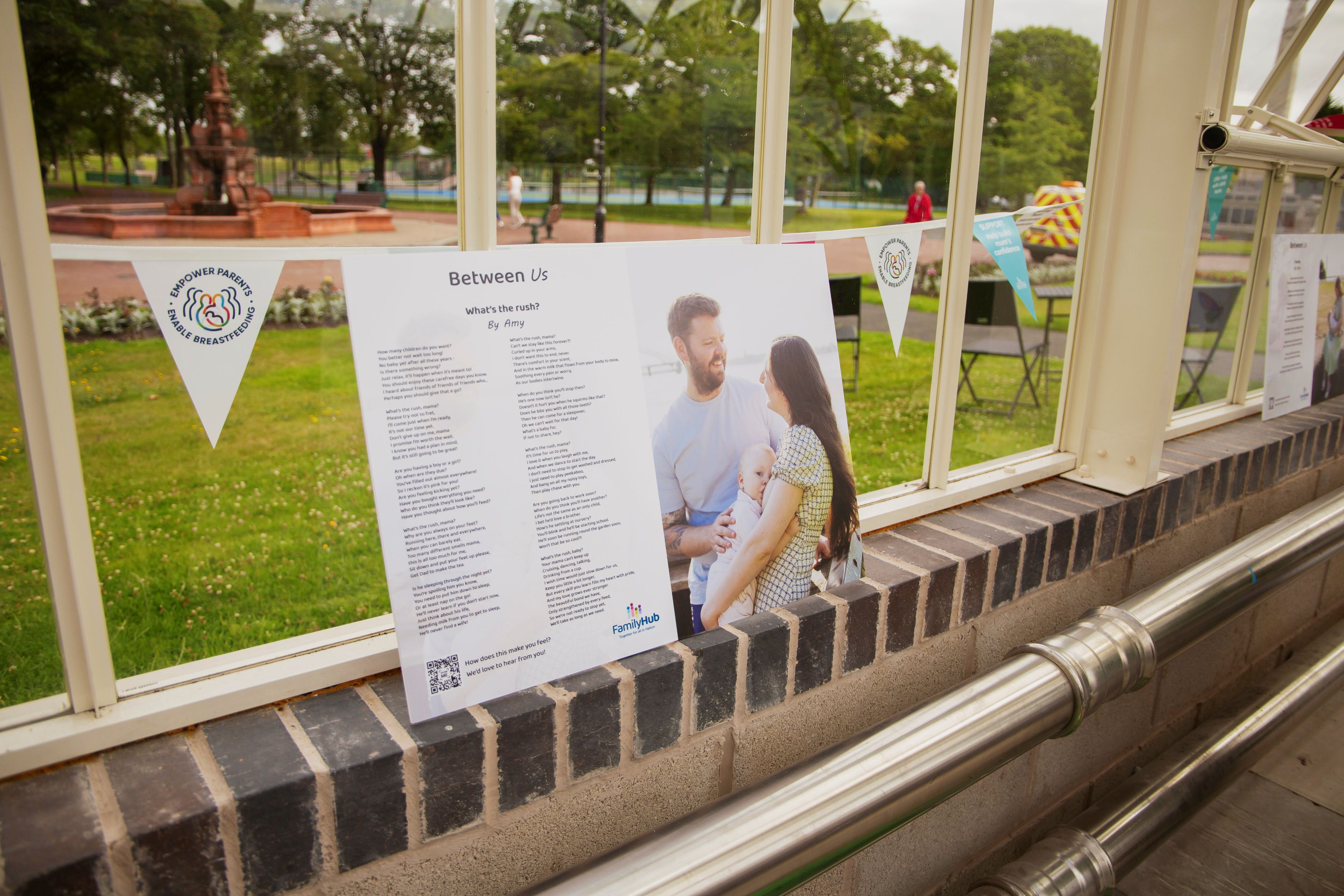
Halton Family Hubs commissioned another series of writing workshops, and this time we collaborated with local photographer Becca Smith, of Little Wonderland Photography, Cheshire. She beautifully captured the parent-infant bond and the incredible connections through breastfeeding in her portraits of the poets and their families, bringing the poems vividly to life.
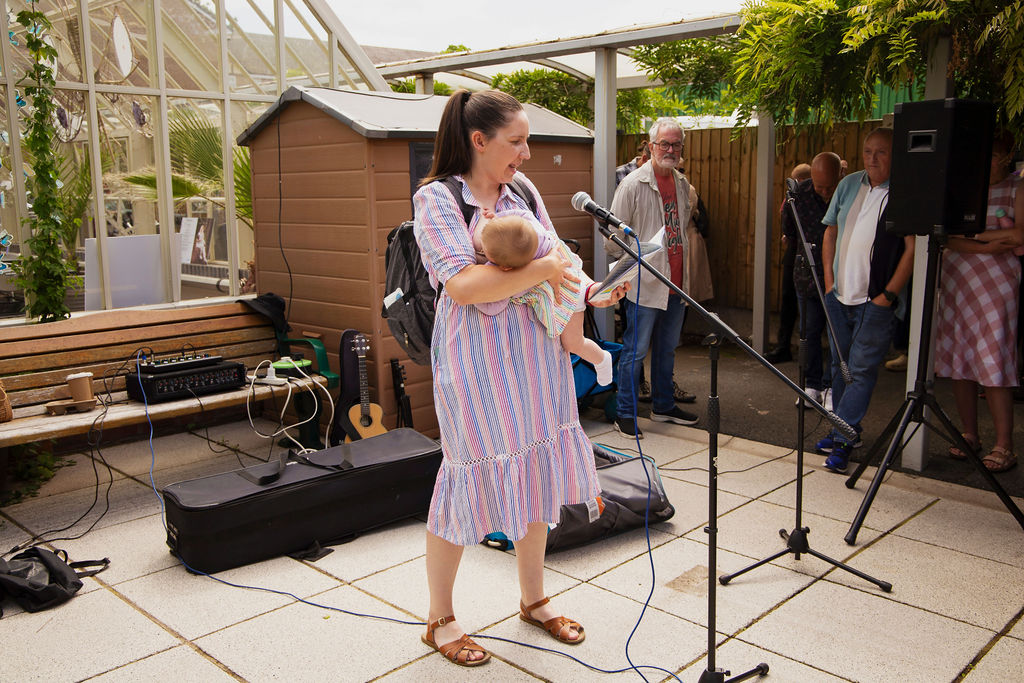
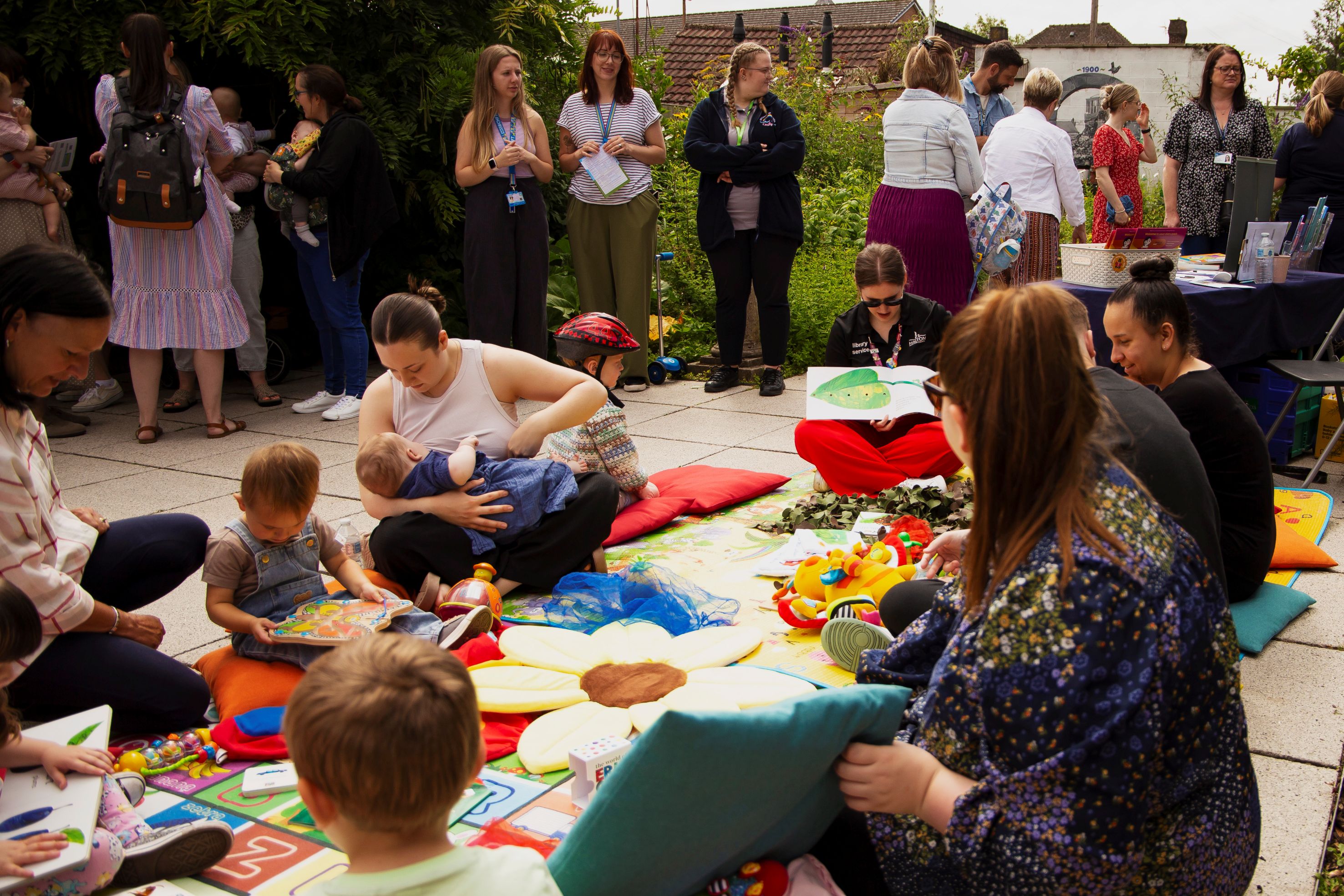
At the Breastfeeding Celebration Event in 2025 at The Glass House, Victoria Park, Widnes, the newest cohort of women from the workshops were invited to read their written pieces alongside an exhibition of poetry and portraits.
The exhibition was displayed in a number of community venues over the summer of 2025, in addition to a publishing a printed anthology and launching an online gallery.
Outcomes
Upon observing the incredible impact of this project, we enlisted the expertise of researchers at Liverpool John Moores University to evaluate the project. As expected, the outcomes were profound - not only in terms of the impact of the creative writing process on maternal wellbeing, but also the impact on the wider public.
Qualitative data was analyzed according to PERMA indicators of subjective wellbeing - and contextual distance travelled - for participating women:
- Positive emotions
- Engagement
- Relationships
- Meaning
- Accomplishment
in addition to capturing positive breastfeeding outcomes achieved through storytelling.
Key findings from the evaluation:
- Women favourably compared writing workshops to more conventional therapeutic approaches, including talking therapy and counselling.
- Energy and enthusiasm has translated into other positive lifestyle changes (e.g. diet and physical fitness).
- Women able to appraise their own self-development through creative engagement as the workshops progressed.
- The social relationships and emerging friendships formed between group members are a significant outcome.
- Evidence of impact on family relationships at home.
- Therapeutic qualities of the creative process helped women to discover and appreciate their creative self as a means of rationalising difficult experiences.
- Participants felt a real sense of accomplishment in allowing themselves to feel and be vulnerable in their writing and group discussions. This resulted in subsequent feelings of strength and pride at the end of the programme, both in oneself and in the writing produced.
- All women interviewed agreed that they would be happy for their writing to be shared publicly (e.g. in an exhibition space or digital anthology). This represents a big step change in confidence and self-awareness.
- Significant outcomes for women in breastfeeding group in relation to:
- Breastfeeding continuation through renewed sense of confidence and peer validation.
- Ability to manage expectations of oneself and others, especially in relation to external judgement and stigma.
- Reconciling the impact of prior experiences on self-limiting behaviours.
- Enthusiasm for acting as breastfeeding advocates in their own networks and communities, through their enhanced understanding of the value of peer support.
Breastfeeding you was the hardest thing I have ever done.
The commitment, the time, the love.
I wouldn’t change it. Look who it made you.
You will forever be the one that made me a mother.
The one who taught me so much.
I am proud of you and me. We did it together.
From ‘You and I’, by Susan
In addition to the outcomes observed through the evaluation, Halton has also observed a steady increase in breastfeeding rates over the past 3 years – initiation has increased by 5.6% to 55.1% from 2021/22 to 2024/25, and continuation at 6-8 weeks has increased by 9.7% during the same period. Although this cannot be attributed to one project or scheme alone, it demonstrates how the expansion of services and the addition of projects to shift the culture have truly made a difference.
Sustainability
This approach of creative writing and storytelling has empowered women to tell their stories, and connect with others to reflect on their unique and often challenging breastfeeding experiences and journeys in to motherhood. We wanted to ensure this project could continue within a sustainable model, and build capacity within our system to nurture and develop this approach.
Rachel New, who had facilitated the first cohorts, was commissioned by Halton Family Hubs to devise a training programme for staff from within the Halton Family Hubs partnership. 12 practitioners were trained to facilitate creative writing workshops, including staff from Infant Feeding Team, Perinatal Mental Health Teams, Dad Matters, Parents in Mind and a volunteer who had been a participant on our very first cohort.
Following the training, practitioners meet quarterly to share knowledge and good practice, solve problems, develop skills and plan future cohorts.
We are delighted that we ran our first in-house cohort this autumn, and feedback indicates that the outcomes were just as positive as the previous cohorts.
It was an amazing experience, I really enjoyed every part of it and it was so lovely to do it alongside other mums in similar situations and stages of life too. Just to say thank you to everyone involved! It was such a special time for me and it will definitely be something I take with me, as I’d love to continue writing and building it into my life going forwards."
Participant, autumn 2025 cohort
Reflections
Despite the programme being a resounding success, there have been challenges: 1) recruitment of mothers to the cohorts, 2) responding to the complex and sometimes sensitive experiences that emerged during the workshops, and 3) finding free/low-cost gallery space to display the work.
Solutions:
-
Recruitment to programmes really does hinge on affiliated practitioners recognising the value of the workshops and signposting parents who they are already working alongside. Highlighting the benefits and participant feedback, sharing the poetry and giving practitioners a taster of the workshops have been effective ways to increase buy-in.
The writing techniques can also be used in a 1:1 setting, so if a group setting is not appropriate for someone, the therapeutic approach can still be used by one of the trained facilitators.
- Even in the cohorts focussed on breastfeeding, quite emotional and challenging experiences have surfaced, which highlights the need for appropriate perinatal mental health pathways sitting alongside interventions such as this. During each cohort, we include a visit from a member of the Halton Family Hubs perinatal mental health team to introduce their support offer, in addition to facilitators being familiar with local services and screening tools. Also, the caring and empathetic nature of facilitators enables a safe space for women to open up and feel supported by their peers – sometimes this is all that is needed.
-
Halton libraries offer gallery space free of charge, so we were able to display the gallery there for one month, but we also had to pay for gallery space in a local shopping centre, where there is high footfall. However, paying for gallery space is not sustainable long-term, so we continue to source locations with free space.
One of our local Early Years settings requested a panel for display in their nursery, and Widnes market was keen to celebrate local breastfeeding stories inside and outside of their Breastfeeding Room. Supportive, breastfeeding friendly community venues have enabled the panels feature around the borough on a permanent basis free of charge.
This has been one of the most powerful projects in Halton around breastfeeding and perinatal mental health. Using creative arts to explore, reflect, connect and share mother’s stories has been a revelation.
It is something that we are passionate about embedding as a core part of the Family Hubs offer, and have already moved to a sustainable model.