Southampton Climate Commission is an independent body that brings together key actors to drive, guide, support and track local climate action. The commission will respond to local needs and challenges and the work of the commission will reflect these local conditions.
Synopsis
A high level assessment of emissions in Southampton was undertaken by Leeds University in 2021 using projections based on a carbon budget assigned by population. Projections based on current national policy/activity suggest that to close the gap with national targets for net zero by 2050, the city will need to reduce its 2005 emissions levels by; 62 per cent by 2025; 73 per cent by 2030; 80 per cent by 2035 (compared to UK Government's legal target of 78 per cent by 2035) and 90 per cent by 2045.
Southampton City Council proposed setting up an independent Climate Commission to undertake further work to set targets and develop strategy for net zero carbon in the city and to collaborate and engage with city stakeholders.
Consultation over six months with the Chamber of Commerce, Local Enterprise Partnership (LEP), Workplace Travel Network, key partners and a survey open to the public showed overall support for a climate commission.
The challenge
Southampton City Council declared a climate emergency in 2019 indicating the need for action to mitigate further climate change and adapt to the future. There needs to be coordinated local action, alongside national policy changes to meet carbon targets.
The solution
It was proposed that the mechanism for delivering these next steps is a Climate Commission with a range of stakeholders participating to develop ownership and oversight to meet targets. A partnership will build capacity in the city to address the challenges of climate change and provide a platform for deliberation and democracy. It would need support from local organisations, businesses, NGOs, academic institutions, and representative bodies. It must reflect the diversity of Southampton and be representative.
The impact (including cost savings and income generated if applicable)
- In its first year, the Commission has become more established, defining its role – although this will need continuous refinement.
- The Commission reviewed a presentation from the Solent Cluster and from SoCAN (Southampton Climate Action Network). The Commission published a Position Statement on Solent Cluster and Hydrogen Production.
- Active recruitment of new members to open up applications to all who are able to represent a community or business.
- Development of a skills matrix to identify which areas of expertise are lacking to target specific sectors – economics and ecology in particular were identified.
- An Annual Report has been developed, demonstrating progress over the first year of the Commission.
How is the new approach being sustained?
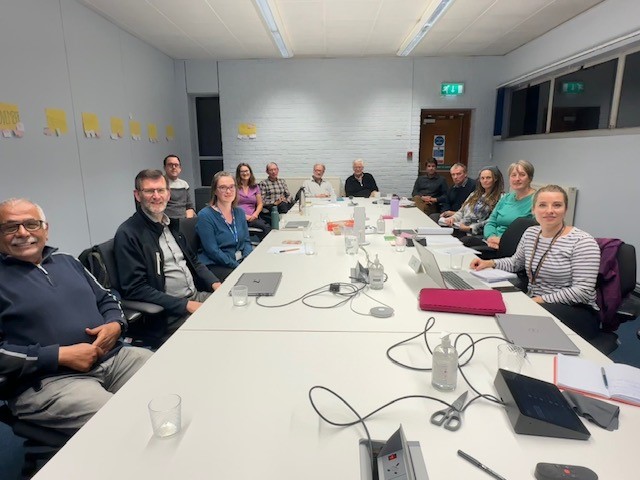
Hybrid meetings are held every two months with continual development of objectives and content of meetings.
Lessons learned
- Requirement for communications plan for position statements and generally publicising who we are and what we do.
- Share funding applications and grants to avoid duplication and identify opportunities for organisations working together.
- Consultation monitoring and response.
- Mapping of groups and activities across the city is useful.
Contact information
Melanie Robertson at southamptonclimatecommission.org