A notable achievement in Knowsley is the strength of partnership working, particularly through the Combating Drugs Partnership, which has facilitated collaboration and ongoing follow-up on conversations and plans among stakeholders. This case study forms part of the publication, Two years on: a progress review of ‘From harm to hope: A 10-year drugs plan to cut crime and save lives’.
Introduction
In Knowsley, the implementation of the 10-year drug strategy has been bolstered by the funding support, although concerns persist regarding the uncertainty of funding due to one-year funding cycles. Despite this challenge, early results from the first two years of the strategy are beginning to emerge, with Knowsley benefiting from its status as a project ADDER site, providing a head start in the implementation. A notable achievement in Knowsley is the strength of partnership working, particularly through the Combating Drugs Partnership, which has facilitated collaboration and ongoing follow-up on conversations and plans among stakeholders.
Partnerships
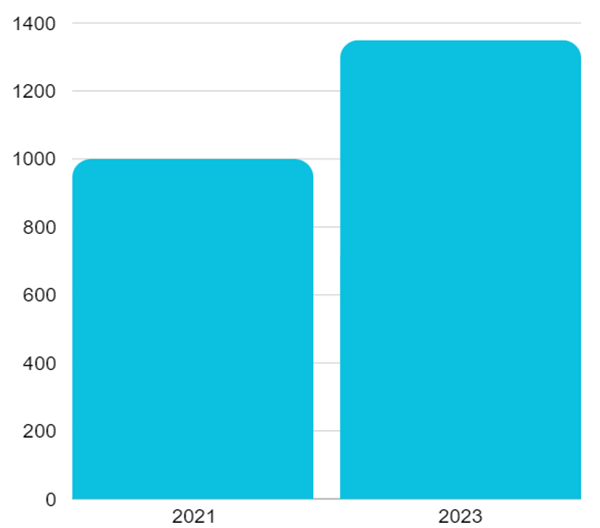
In Knowsley, there exists an active relationship between the council and the Department of Work and Pensions (DWP), which fosters a robust interface between the benefits systems and treatment services. This is one of many partnerships that supports Knowsley’s work on the drug strategy. A recent visit from OHID (Office for Health Improvement and Disparities) in December 2023 yielded extremely positive outcomes, underscoring Knowsley's achievements in increasing the number of people in active treatment from 1,000 to 1,350 since the inception of the strategy. This notable increase holds significant implications for the area and highlights the effectiveness of collaborative efforts in addressing drug-related issues.
The infusion of additional funding from the strategy enables Knowsley Council and partners to provide a more comprehensive offer to the population, surpassing a surface-level approach of simply encouraging referrals and taking a more proactive approach to identification of individuals in need through outreach, and support for front line practitioners in a number of roles. Instead, the council can offer training to system partners, place specialists within the service, contribute to collocation efforts, establish multidisciplinary teams (MDT), and support drug user identification.
The challenges
Furthermore, Knowsley is actively seeking longer-term capital investments, including early plans for a new treatment and recovery centre in an area where need is the highest. Additionally, dedicated spaces within town centres will be established to increase awareness and accessibility to treatment services, reflecting a proactive approach to addressing drug-related challenges within the community.
Crime and policing
Knowsley emphasises the critical importance of the crime and policing element within the drug strategy, particularly regarding opiates, as a result, the approach to addressing this drug category is more strongly led by law enforcement. However, this focus may result in a weaker interface in regards to drug user identification and referral to treatment for opiate users.
Synthetic drugs
Knowsley has seen the significant threats posed by new synthetic opiates, drawing insights from trends observed in North America. Substances like fentanyl and nitazines are deemed potentially more dangerous than traditional opiates, and the predominant crime-focused approach may hinder harm reduction efforts by creating barriers to treatment. However, integration with partner services, particularly probation services, has yielded positive outcomes for community outreach. Probation services in Knowsley have proven to be an effective avenue for addressing known challenges in identifying opiate users and facilitating their entry into treatment. As a result, approximately 150 new individuals access treatment annually through the probation route, highlighting the effectiveness of this approach in reaching and supporting vulnerable populations.
Community engagement
Knowsley has implemented innovative approaches to engage communities with health services, such as the liver screening van collaboration with the voluntary sector, which serves as a valuable channel for identifying and referring individuals into treatment. Notably, Knowsley's drug and alcohol strategy integrates alcohol into its approach rather than segregating it into separate categories. To ensure competency levels across the system, the council has invested in an education coordinator and maintains strong audit processes to uphold service quality. While homelessness is more concentrated in neighbouring Liverpool, Knowsley remains engaged with outreach services, hostels, and provides naloxone provision. Reporting requirements are not perceived as burdensome in Knowsley, with collective reporting adhered to across Merseyside region local authorities to the Police and Crime Commissioner (PCC), facilitating streamlined processes and collaboration.