This is a two-year project to assess air quality in 10 schools located near roads with high traffic levels, or those within or adjacent to an air quality management area.
Introduction
The project will determine the current air quality at the schools. An air quality audit will be undertaken and educational resources will be provided to each school.
Following the initial monitoring period, potential mitigations to improve air quality within the schools will be considered. There are funding available for these interventions, an an anti-idling campaign will also be implemented. Further monitoring will then be undertaken following the campaign and any mitigations will be measured.
Background
We were committed to undertaking an air quality project following the implementation of a second air quality management area in Southend.
As part of our 2017 Air Quality Action Plan (AQAP) update provided in the 2022 Annual Status Report, it detailed that the ‘project’ will support the AQAP with the following measures:
- pilot remote air quality sensors
- support National Clean Air Day (2023 and 2024)
- public health and raising awareness summary of actions, which will link strongly to the ‘project’
- raising awareness of high risk and vulnerable groups through social media, SCC website and health alerts
- community engagement action summary which promoted community engagement in a local air quality context.
Southend-on-Sea City Council submitted a bid to Department for Environment Food and Rural Affairs (Defra) for a grant funding to enable us to take on an Air Quality Project incorporating the above.
Objectives
The project focuses on schools that sit along:
- the main A13 and A127, and
- those within the Air Quality Management Areas (AQMAs).
It is part of our commitment to improving air quality across Southend.
Project aims
- air quality monitoring to determine fine particulate matter and nitrogen levels at these schools
- web linked information at schools showing and providing data to schools
- school air quality audits and assessments of specific school activities and interventions
- engagement with schools on actions, intervention options and campaigns on air quality, reducing pollution exposure, safer, more active travel, modal shift
- funding for mitigation measures, activities and local campaigns for schools
- wider anti-idling campaign for schools
- review post campaign and intervention impacts, through a final measurement campaign.
How did you set up the project and it's objectives?
As previously detailed the initial phase in setting up the project was submission of a bid for grant funding to Defra. This was successful.
- Council Officers then had to go through a procurement process to engage an air quality consultant to assist with the project.
- We also had to engage with local schools to promote the project and gain their participation.
- Connecting with Schools' Air quality Monitoring for Health and Education (SAMHE) - an indoor air quality project to provide devices to participating schools.
- Liaison with public health colleagues on the project aims was also undertaken.
The impact
To date since the project commenced in September 2023, we have worked with 11 schools. We have undertaken air quality audits at all schools and reviewed current interventions. An initial phase of air quality monitoring was undertaken for three months at each school.
Traffic surveys were arranged and completed at all locations. Additionally, travel surveys were provided to school staff & parents, and secondary school students to gain knowledge on how they get to school and how far they travel.
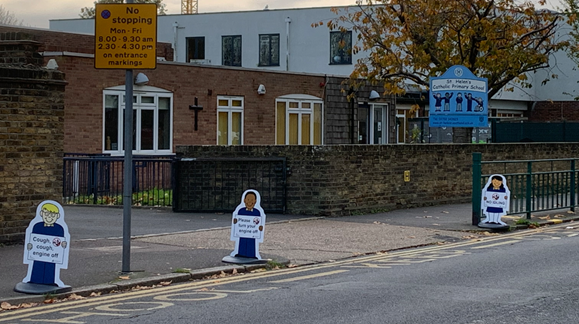
Assemblies were held at all schools to provide information on the project and air quality in their area, and learning resources were provided to all schools. We launched an anti-idling campaign in September 2024, which focused on the project schools but was also promoted across the City. Educational resources were also provided on this subject to the schools.
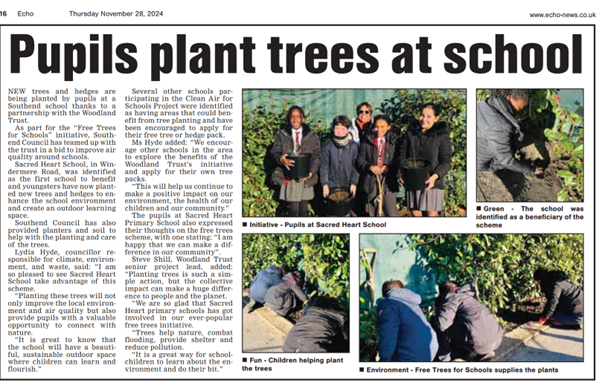
Mitigation measures have been installed at a number of schools including air purifiers and a living green wall. We have also promoted the Woodland Trusts free trees for schools’ initiative through the project. Schools that have signed up and received a tree pack, we have been able to provide soil and planters facilitate planting.
These actions have made improvements in a number of areas including public health and well-being; and environmental.
What have you learned?
- The project is still ongoing and it has recently been extended by Defra for another year, allowing us to work with more schools.
- We learn that early engagement is key as this caused initial delays to project. Internal processes like procurement can also take a long time.
- We had good visibility of the anti-idling campaign, and we are planning a second stage of promotion to extend visibility to more schools.
How effective has the project been?
We feel that the project has been effective and really well received by the schools. We are looking forward to working with more schools through the project extension and delivering the programme to them.
We believe that the project aims will be addressed by the conclusion of the project.