Over the last three years, Surrey County Council has developed a collaborative plan with trusted partners across the county to support residents with reducing energy bills, keeping homes warm and free of damp and mould, and reducing residential carbon emissions, which account for around 30 per cent of Surrey’s total.
Synopsis
The plan have included supporting the set up of nearly 100 Warm Welcome spaces, an online energy advice tool, a group-purchasing solar scheme, in-person home visits with thermal imaging surveys, and a ‘one-stop shop’ platform for the ‘able to pay’ run by Furbnow. All of these are essential strands in helping to maximise the delivery of government grants, whilst providing key pathways for those residents looking for long term cost savings to take action on energy efficiency.
The challenge
As we approached the significant rise in the energy price cap in winter 2022, which was going to further exacerbate the cost of living crisis, Surrey needed to develop a robust way to support the residents most at risk, as well as bolstering the established organisations who already provided support to these residents to prevent them being overwhelmed.
Surrey has some Key Neighbourhoods which rank highly on the Index of Multiple Deprivation, and where factors such as air quality, lack of access to fresh food, lack of local healthcare, etc, combine to have a significant impact on the wellbeing of residents.
Surrey’s housing stock consists of older properties, as well as a lot of semi-rural and off-gas properties. In fact, around 300,000 homes in the county have Energy Performance Certificate ratings of D or below, or no energy performance certificate (EPC) at all.
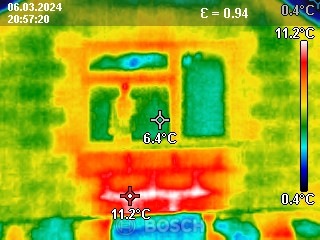
The local challenge is not just in key neighbourhoods or people dealing with fuel poverty, because in real terms that’s around two out of three of our households that are either paying more than necessary on their bills, or living in homes that are colder than they need to be – and therefore potentially at risk of damp and mould, impacting resident health and increasing pressure on local health services.
This means the ‘able to pay’ side’ of home retrofit also poses a significant challenge, and because it’s Surrey there is a high proportion of people who do not fall within the grant eligibility income bracket, but are struggle with cost of living, and do not have spare funds to upgrade their homes, regardless of the long term cost savings or positive health implications.
These challenges aren’t unique to Surrey; most local authorities face these challenges. We went from a standing start to creating a fairly comprehensive plan to address the challenges for all residents, and importantly, we managed to do this by trusting in our community groups and charities, creating partnerships which delivered for residents.
Objectives
Through the work of our 2030 and 2050 teams in the Strategic Energy arm of Surrey County Council’s Greener Futures, we’ve secured numerous government funding streams, and most recently, we were in the process of delivering LAD3 and HUG1 under the Sustainable Warmth banner.
Working with the University of Surrey (UoS) on a research project, called ‘The Leaky Pipeline’, which analysed the barriers of the retrofit grant process. The project discovered reasons, including a lack of transparency around grants, a lack of independent and impartial advice from trusted messengers in the community, and barriers to completing the process, depending on what else was happening in someone’s life at that time.
Given the above challenges, we sought to create a simple and clear way that any resident could get impartial – and ideally free – energy advice that they trusted.
Secondly, we wanted to ensure that following this advice, residents had a clear pathway to taking action. Those eligible for grants would automatically receive whole house assessments and ventilation surveys through the Planning Advisory Service (PAS) route, whereas those classed as ‘able to pay’ were potentially susceptible to bad advice or making mistakes in planning their home upgrades.
Thirdly, we wanted to tackle the lack of trust and transparency around advice and grants. One of the recommendations in the UoS report was that community ‘hubs’ could help to provide key information and advice from an independent perspective. This could also help address people’s wariness over scammers, with nuisance phone calls often increasing around the advertising of home upgrade offers.
The aim was to develop a trusted network of energy advice partners to build relationships through in-person energy advice and home visits, and who would be able to refer residents through energy schemes we were working on, be those Department for Energy Security and Net Zero (DESNZ) grants or those set up via our local authorities.
What we have done
Working across several departments, including the Greener Futures engagement team, 2050 team, and fuel poverty team in Communities and Prevention, we set up key delivery systems to deal with these challenges through a Warm Hubs programme.
90 warm hubs (now Warm Welcomes) were set up across the county, with funding provided to support the additional energy costs of staying open for more hours, hot drinks and snacks and activities. These were set up in community centres, churches and village halls and libraries, in or as close as possible to our Key Neighbourhoods, with the goal of ensuring residents had a welcoming, warm space within walking distance.
Alongside this, we designed Surrey Energy Advice, an energy advice tool on which residents would answer a maximum of 12 questions and be provided with all the support and funding options available to them.
This was developed to include options for the able to pay market, so that we could promote our group purchasing schemes and business decarbonisation schemes. The tool was installed on all computers in Surrey Libraries, many of which were warm hubs, so that staff could help those with digital exclusion issues.
In conjunction with these initiatives, the community groups Zero Carbon Guildford (ZCG) and Energy Action Redhill and Reigate (EARR) had been working together under a small UKPN grant to provide high level energy advice to residents through home visits. We began exploring how to best work with these community groups and create better pathway referrals to new and existing schemes.
We bid for the Local Energy Advice Demonstrator fund from DESNZ (administered by Greater South East Energy Hub in our region) with ZCG and Surrey Climate Commission to secure funding which would:
- Create the Home Energy Advice Team.
- Fund the creation of our Furbnow home energy plan portal (one-stop shop)
- Provide a Home Improvement Loan to pilot part-fund home retrofits.
We commissioned Surrey Climate Commission to run focus groups in key target areas so that we could understand how best to make the platform work for a wide range of residents.
The Home Energy Advice Team (HEAT) was run by Zero Carbon Guildford, but with other community groups, including EARR, Circular Dorking and Runnymede Draught Busters, working to deliver home energy visits in different parts of Surrey.
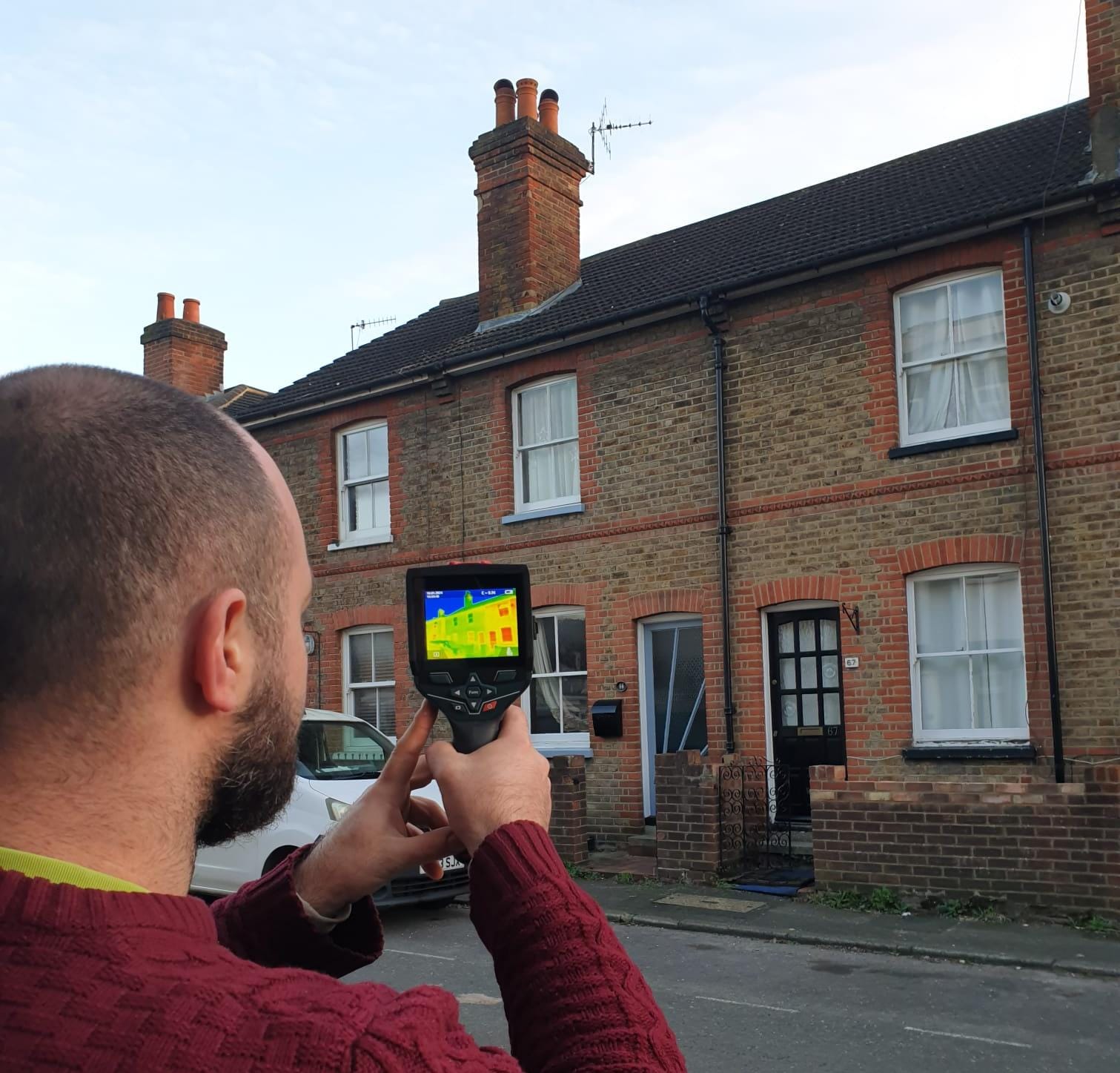
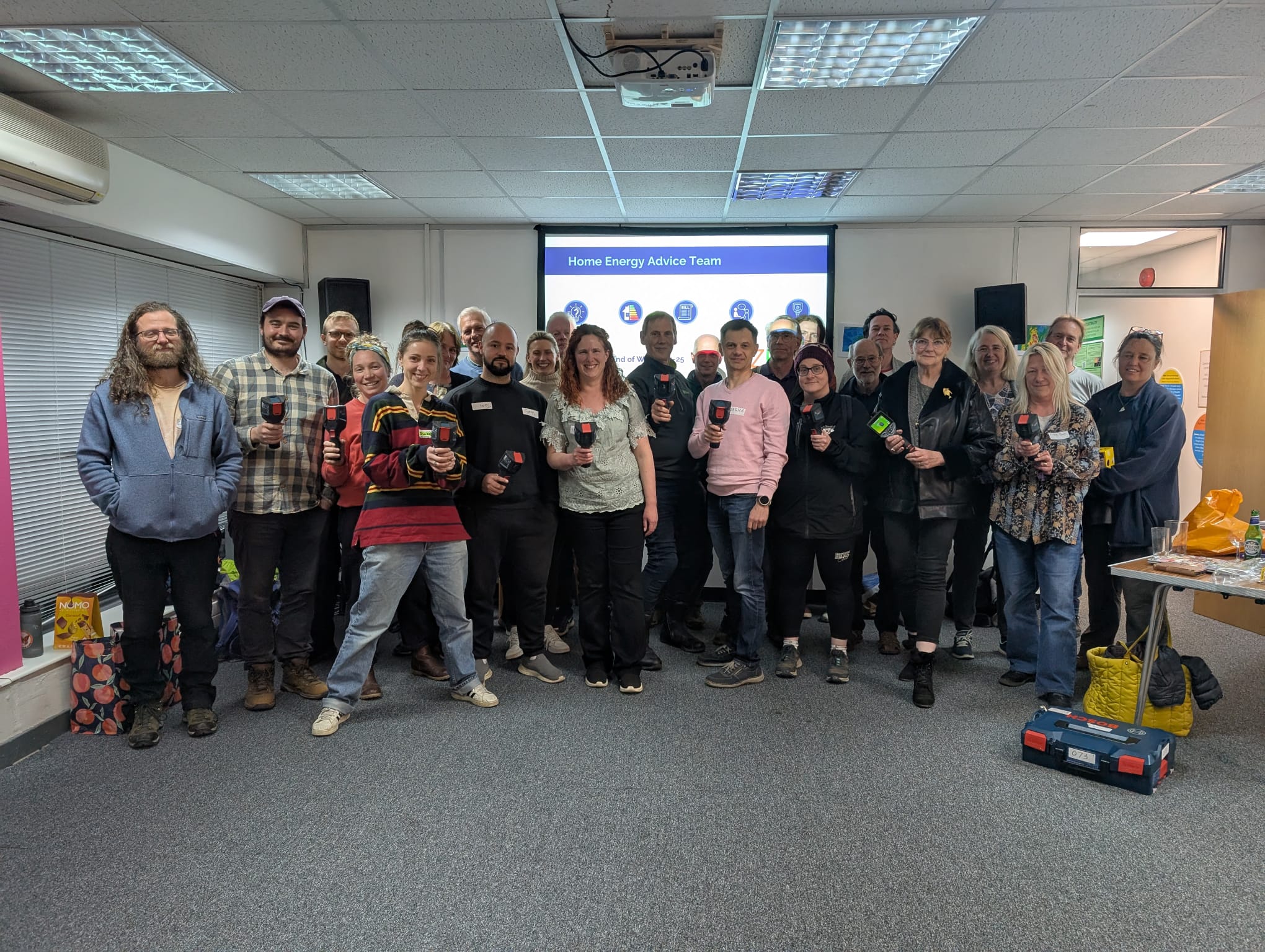
Under HEAT, 120 ‘Energy Champions’ were trained up through ZCG’s training to deliver in-person home energy visits, including thermal imaging surveys, and all undertook NEA’s Delivering High Quality Energy Advice. From November 2023, the HEAT service has visited over 2000 homes and has a resident feedback score of 4.91 out of 5, with 78 per cent of respondents more likely to install significant retrofit measures because of the visit. This is a testament to the power of trusting and enabling community groups to support local authority activities.
One key success factor in this programme was HEAT acting as an entry point for energy advice for residents, who either needed a final bit of advice or confidence to take the next step, but also to catch a wider audience to refer to schemes they may be eligible for. Over the last three years, this has included the Sustainable Warmth grants, as well as ECO and GBIS, and Solar Together, which was administered by partner iChoosr. This referral pathway will play a key role in delivering the £14 million of Warm Homes Local Grant secured by the Greener Futures 2050 team over the coming years.
We then created HEAT+, funded with a grant from UK Power Networks. HEAT+ allowed us to send Energy Champions who had further training in fuel poverty and the grant process to spend up to five hours supporting the most vulnerable residents with getting on top of energy debt or applying for grants.
Impact
The stats below show the impact of our efforts over the last three years, which have been achieved by developing key relationships with trusted partners.
Fuel Poverty Programme:
- 134,054 residents supported through our Warm Welcome venues
- 31,703 residents provided with food and meal support
- 832 energy efficient appliances provided to fuel poor and vulnerable households
- 4,919 fuel vouchers distributed
- 24,705 winter essential items distributed.
Local Energy Advice Demonstrator Project
- 2,014 households received in-person Home Energy Advice Team visits, including over £600,000 worth of free thermal imaging heat loss surveys.
- 120 residents upskilled as Energy Champions to support their communities.
- Four retrofit assessors and one retrofit coordinator trained.
- 397 homes installing significant energy efficiency measures.
- 156 whole house retrofit plans provided via Furbnow, who run Surrey’s ‘One Stop Shop.
- 21 Furbnow retrofit projects now being delivered.
Other
- Creation of Surrey Home Retrofit Guide.
- Approximately £20 million in private investment in PV through three waves of the Solar Together group purchasing scheme.
- £14 million secured via Warm Homes Local Grant to be delivered from Spring 2025.
Lessons learned and recommendations
Surrey has four strategic priorities under a banner of ‘No One Left Behind’; tackling health inequality, a sustainable economy which benefits everyone, empowering communities, and Surrey’s greener future. The Greener Futures team works to demonstrate the benefit of working across these strategic priorities, to deliver co-benefits holistically through our projects that benefit residents.
The energy projects which make up the above activity have helped to demonstrate the clear benefits for residents that action on climate and environment can have on their everyday lives, regardless of their motivations.
The main recommendation would be to trust and empower local community groups and charities as delivery partners, which requires relationship building and due diligence to ensure a secure and functional partnership.
Flexibility, where possible, is key to ensure these groups can help with your delivery targets whilst helping to develop their systems and long term prospects. This was done through memoranda of understanding, providing support with legal, contracts, and data sharing agreements as necessary parts of the working relationship.
Moving forward
Our 2050 team has now secured £14m from the Warm Homes: Local Grant. We estimate around 50,000 homes will be eligible for this, so we can potentially support whole house retrofit for around two per cent of these.
Zero Carbon Guildford has also managed to secure around £600,000 of funding to continue the delivery of the Home Energy Advice Team, beginning May 2025.
Similarly, the fuel poverty programme has been going from strength to strength, with approximately £900,000 sourced through VCMA funding, which steps in to fill the void left by the end of the Household Support Fund. Within this funding programme, there a nine key partners funded, with Citizens Advice Bureau currently creating ‘energy first aid’, a referral system which enables all nine organisations to refer residents to one of the other services in the partnership, including the HEAT service, which can then pay a visit.
As such, we are well placed to continue scaling up from the solid foundations we’ve built over the last three years, and to hopefully continue to tackle more of the obstacles that residents face to practical action on energy efficiency.
Contact details
Ben McCallan
Greener Futures Engagement Lead
[email protected]