The Resilient Roch project, funded through the Flood and Coastal Resilience Innovation Programme (FCIP), has tackled a range of local climate challenges, most notably flood risk, affecting residents in disadvantaged communities.
Synopsis
The Resilient Roch project, funded through the Flood and Coastal Resilience Innovation Programme (FCIP), has tackled a range of local climate challenges, most notably flood risk, affecting residents in disadvantaged communities. These communities often face multiple, overlapping disadvantages that impact health, wellbeing, environmental quality, and living standards, making them especially vulnerable to the effects of flooding.
To address these challenges, the project team pioneered a coordinated property survey approach, enabling multiple assessments to be conducted simultaneously on properties. This innovative method was developed through strategic partnerships and aimed to streamline data collection and adaptation intervention planning.
Key benefits of this integrated approach included:
-
improved coordination across agencies and stakeholders
-
integrated interventions that address multiple household vulnerabilities
-
enhanced efficiency and convenience for both residents and service providers.
By aligning efforts and resources, Resilient Roch has not only improved flood resilience but also contributed to broader social and environmental outcomes in some of the most at-risk communities in Rochdale.
Background
The Resilient Roch project is tackling multiple housing-related challenges—energy efficiency, building condition, and flood risk—through the development of co-ordinated property surveys. This element of the project focuses on enhancing the climate resilience of homes in Rochdale, particularly in the flood-prone areas of Littleborough and Wardleworth.
Rochdale’s housing stock includes a significant number of Victorian and Edwardian terraced properties, many of which are in poor condition. These homes often suffer from low energy efficiency and are especially vulnerable to flooding, compounding the risks faced by residents.
The inspiration behind Resilient Roch was the recognition that these interconnected issues required a holistic and integrated approach. By combining flood resilience measures with energy efficiency improvements, the project aims to create sustainable, future-proof homes that are better equipped to withstand the impacts of climate change. The interventions introduced are designed not only to address immediate risks but also to deliver long-term benefits for residents’ well-being, financial stability, and the wider environment.
The project team prioritised community involvement throughout, recognising that meaningful engagement not only facilitated survey completion but also helped foster a sense of ownership and long-term commitment to resilience improvements. In terms of practical delivery, the project achieved community engagement using multiple channels.
Objective
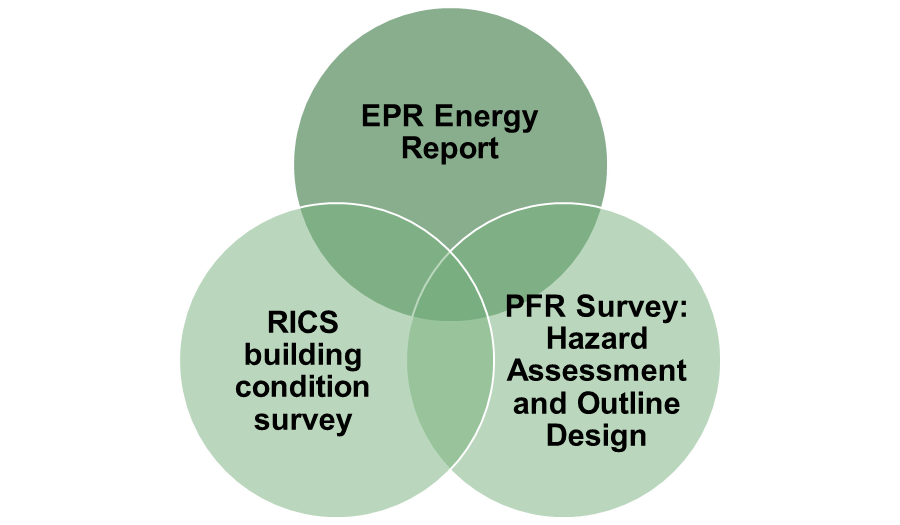
The primary objective of the project was to combine three surveys (property condition, energy efficiency and property flood risk) into one streamlined property visit.
Improving housing resilience to flooding
The project aimed to retrofit homes in flood-prone areas to make them more resilient to future flood events. This involved integrating property-level flood resilience (PFR) measures, such as flood barriers, non-return valves, and water-resistant building materials.
Enhancing energy efficiency
Many homes in the target areas were energy-inefficient, with outdated insulation and poor heating systems. The project sought to improve energy efficiency, reducing residents' energy bills and the overall carbon footprint of the community. Combining the surveys permitted the specification of more flood resilient energy efficiency materials e.g. the installation of resilient cavity wall insulation, where appropriate.
Streamlining climate resilience surveys
The project team formed partnerships to trial a streamlined method of conducting multiple surveys concurrently on private properties. It developed a new approach that brought benefits by co-ordinating surveys, by integrating possible interventions and by bringing greater convenience and efficiency for contractors and clients.
Method
Organising the surveys involved a series of carefully planned steps, from procurement through to on-the-ground delivery, all designed to ensure smooth implementation and maximise participation across the target communities.
Procurement
The project required careful coordination by Rochdale Borough Council (RBC), drawing on extensive experience from previous housing, environmental, and flood risk management programmes. RBC officers ensured a rigorous procurement process, using established frameworks to appoint a consultancy for flood modelling, engineering, and Property Flood Resilience (PFR) survey work.
Additionally, RBC enrolled in the Environment Agency’s Client Support Framework to access approved suppliers and PFR installers. This approach ensured compliance with Environment Agency standards for product specifications and expertise, while streamlining access to market and specialist contractors.
Engagement
A critical enabler of the project’s success was active resident engagement. The effectiveness of the surveys depended on residents and landlords granting access to their homes. Building trust and maintaining clear, consistent communication were essential.
Delivering multiple surveys presented coordination and communication challenges, especially in areas like Wardleworth, where many residents are non-English speaking. To ensure broad participation, Rochdale Borough Council (RBC) used a range of engagement methods, including direct mailings, follow-up letters, personalised phone calls, and in-person visits. Additional support came from local flood action groups and the National Flood Forum, active in the area since 2013.
Streamlined survey process
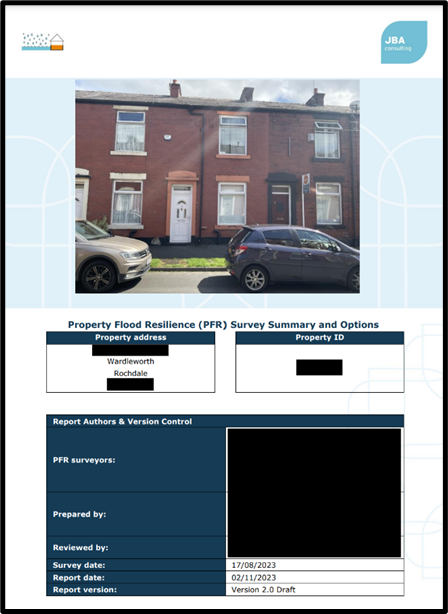
To collect the necessary data for energy efficiency and property resilience measures, the project coordinated the needs of three surveys - the RICS Building Condition Survey, an energy efficiency report, and a Property Flood Resilience survey - into one combined site visit. On occasion, due to logistical challenges, some surveys were delivered separately. However, RBC remained the single point of contact communicating with residents and coordinating survey bookings streamlining the process for both residents and contractors.
The impact
This element of the Resilient Roch project delivered multiple key benefits to the community and environment, enhancing public health, well-being, financial stability, and environmental resilience.
Flood resilience and safety
The project improved the flood resilience of homes in vulnerable areas by installing measures like flood barriers and non-return valves following initial PFR surveys. These upgrades protect residents from surface water flooding and provide long-term safety and peace of mind.
Improved housing conditions
Building condition surveys uncovered major issues, such as ceiling joist defects and carbon monoxide leaks. By ensuring landlords complied with housing regulations, unsafe living conditions were addressed, leading to better health and safety outcomes for tenants.
Energy efficiency and cost savings
Energy efficiency surveys helped residents identify their eligibility for measures to enhance their homes' energy efficiency. These improvements could reduce heating costs for low-income households, provide financial relief, and decrease overall energy consumption, supporting environmental goals. Even in instances when properties or households do not meet eligibility criteria, the project has developed an evidence base that could be used to leverage future grant funding.
Creating a replicable model
By combining various resilience interventions, the project developed a streamlined model that could be adopted by other local authorities, supporting wider flood resilience and housing improvement efforts.
Lessons learned
The project provides valuable lessons about integrating flood resilience, housing improvement, and community engagement:
Coordination across multiple surveys
Coordinating multiple surveys for the same households required meticulous effort from Rochdale Borough Council (RBC) officers, but delivered significant benefits. Residents reported appreciating the combined survey approach for its convenience, reducing disruption and enabling more integrated interventions. However, contractors faced challenges balancing resident needs with their own efficiency requirements. These were mitigated through clear communication, consistent project branding, and centralised booking management. The experience underscored the importance of balancing operational efficiency with resident convenience while managing multiple contractors effectively.
Housing conditions and council interventions
Securing permissions from landlords and tenants was often difficult, particularly when individuals were absent or disengaged. Many tenants were reluctant to report poor housing conditions due to fear of eviction. However, the building condition surveys uncovered serious safety risks, including structural defects and carbon monoxide leaks. RBC took action to ensure compliance with housing regulations, safeguarding tenant wellbeing. Officers also connected residents to additional support services—for example, helping an elderly resident access a home mobility improvement grant through Adult Care.
Community engagement
Extensive efforts were made by RBC officers to engage landlords, homeowners, and tenants and encourage participation in the surveys. A centralised database was developed, and a single point of contact was maintained for residents and surveyors. This was complemented by long-standing community engagement, supported by the National Flood Forum (NFF), which leveraged community influencers and champions to raise the project’s profile. Trusted groups such as the Wardleworth and Littleborough Flood Action Groups played a pivotal role in fostering participation and facilitating conversations around flood risk.
Structural challenges to integration
Despite surveying all properties for flood resilience and energy efficiency, current funding structures limited the ability to deliver a fully integrated package of improvements. Eligibility for energy efficiency grants was low, restricting the implementation of recommended measures. Nevertheless, the surveys created a robust evidence base for future interventions. RBC is now exploring alternative funding sources to support the delivery of flood-resilient energy efficiency upgrades, potentially extending beyond the current FCRIP project timeline.
Conclusion
The Resilient Roch project attempted to combine flood resilience and energy efficiency through coordinated property surveys, delivering significant benefits to both the community and for addressing climate change. By overcoming challenges such as coordinating multiple surveys and securing engagement from landlords and tenants, the project has improved housing conditions, enhanced flood resilience, and lowered energy costs for residents. It has also built strong community trust and long-term support by collaborating with trusted local groups.
Despite funding limitations, and challenges with the delivery of the surveys (not all surveys could be combined), the project’s approach and lessons could provide a scalable model for future climate resilience initiatives, offering both immediate and sustainable housing improvements. Expanding this integrated approach, particularly if supported by co-ordinated and coherent grant and funding frameworks, could extend these benefits to even more communities.
Contact details
Resillient Roch
[email protected]
Further information on the combined surveys approach on the National Flood Forum website.
Further information on Resilient Roch on the Engage Environment agency website.