Introduction
Non-metropolitan towns and cities are vital to our nation’s social and economic fabric. They anchor rural economies, act as gateways to the natural environment, and sustain a unique way of life.
Despite their differing regional and economic contexts, non-metropolitan areas face shared challenges: rising housing costs, struggling high streets, and pressures on funding and governance, all of which threaten their long-term sustainability.
Housing-led regeneration has emerged as a key strategy to help address these challenges. By leveraging housing development as a driver of investment and renewal, local leaders are meeting immediate housing needs while delivering broader economic and social benefits. Working with central government and private sector partners, they are pioneering new approaches to overcome viability barriers and attract investment.
This report explores the transformative impact of housing-led regeneration through nine case studies, supported by analysis of housing delivery in non-metropolitan settlements across England. It highlights practical approaches to overcoming delivery barriers and evidences the important contribution these places make to national housing delivery.
With English devolution promising to empower regional leaders, alongside reform of the planning system, this report reinforces the importance of keeping non-metropolitan towns and cities firmly in focus, ensuring their potential is fully realised and enhanced in the years ahead.
Defining non-metropolitan areas
This report defines non-metropolitan areas as the rural and sub-urban towns and cities located outside the main city regions of England. These areas are identified by combining two key Office for National Statistics (ONS) classifications:
Towns and Cities that are classed as ‘Small’, ‘Medium’ or ‘Large’ ‘Built Up Areas’ (BUAs), as defined by ONS, that are situated within local authorities identified as ‘largely rural’, ‘mainly rural’ or ‘urban with significant rural’ as per the ONS Rural Urban Classification, excluding Local Authorities within established City Regions.
By focusing on these discrete settlements rather than broader rural districts, the analysis provides a clearer view of distinct housing trends surrounding non-metropolitan town centres.
Using this definition, we identify 226 non-metropolitan settlements in England. On average, each settlement contains approximately 15,300 homes and 33,600 residents. A regional breakdown of non-metropolitan areas is outlined below, with a map provided on Page 20.
Methodology
This report combines a review of regeneration and housing literature, data analysis, and case study interviews to understand housing delivery and regeneration in non-metropolitan settlements.
Literature Review
A review has been conducted to identify recent findings in relation to new housing in non-metropolitan settlements and town centres in academic, government and industry publications. This has been complemented by an assessment of recent national government funding programmes for the regeneration of towns, such as the Towns Fund and Levelling Up Fund.
The research identified primary barriers to delivering housing in town centres and a set of best-practice approaches to delivery, which have been set out in this report.
Data analysis
Having defined non-metropolitan settlements, Prior + Partners created a data tool to investigate and analyse housing and socio-economic data in non-metropolitan settlements as well as aid the process of selecting appropriate case studies. The tool spatialised all non-metropolitan settlements within our definition and integrated multiple quantitative datasets on socio- economic context and housing supply, delivery and town centre performance.
Key characteristics and trends in housing in non-metropolitan settlements have also been analysed and summarised in the report. The housing analysis was used to identify towns that were relevant to the study and to ensure a representative sample of areas. For example, a spatial representation of change in housing stock at the small area level helped identify towns where housing delivery has taken place in town centres, rather than on the edge of towns.
Case study interviews
A shortlisting process was undertaken to select the case studies.
A longlist of 20 non-metropolitan settlements was produced in the first instance, which was built up from the LGA, Prior + Partners, and Newsteer teams’ combined knowledge, qualitative research, as well as systematic research of quantitative and spatial data through our analytical data tool.
Summary profiles of the 20 non-metropolitan settlements selected were produced which describe the approach taken to housing delivery and regeneration in each area, and the key issues and lessons to be explored. These were shared with the LGA’s People and Places Board for review. A representative sample of nine areas considered most relevant to the study were researched further through in-depth interviews with the respective councils.
The project team translated findings from the above into lessons and recommendations aimed at supporting councils.
Literature review
Extensive analysis and debate on town centre regeneration and housing delivery have taken place across academia, government, and industry. This review considers recent writing on several relevant themes, including different strategies for regenerating declining town centres, lessons from mixing residential uses with other uses in town centres and the feasibility of delivering different town centre housing typologies, including above-retail conversions and large-scale brownfield projects.
An overview of recent regeneration funding programmes, such as the Towns Fund and Levelling Up Fund is provided, summarising the support for housing development in non-metropolitan settlements in national government policy.
Findings have been synthesised into key lessons, including a set of primary barriers to housing in non-metropolitan settlements and corresponding best-practice approaches to delivery which have informed case study interviews.
Literature review and policy context
A review of recent literature from academic, government, and policy sources highlights several key themes influencing town centre housing development. A summary of the literature is provided below.
The changing role of town centres
Recent research on town economies and regeneration has identified the need for different growth models for town centres going forward, with greater mixing of uses and residential densification recurring themes. In particular, it is emphasised that town centres should push for more experiential offerings (leisure, communal dining), intergenerational living and more specialised retail. Reports emphasise that many towns can no longer rely on retail as a means of ensuring vitality, with greater residential development often cited as a suitable tool to promote renewal. Shifting commuting patterns in the wake of COVID-19 are also widely reported as a significant disruptor to traditional town centre models, with large-scale office development no longer a reliable means of ensuring vitality for many towns.
Town centre housing types
There are various established approaches and typologies of town centre housing development identified in the literature. Typologies include:
- conversion of larger retail units
- conversion of small ancillary or storage spaces above retail units on high street
- redevelopment of larger council-owned assets to deliver housing
- large-scale residential development on fringe city centre brownfield sites, such as next to railway stations.
The literature identifies the need for thoroughly different public sector interventions depending on housing typology. For instance, the delivery of high-street residential requires careful consideration of factors such as the age and condition of buildings, compliance with building regulations, and the potential impact on town centre retail activity.
Housing delivery barriers
Town centres experience many of the same structural barriers to housing deliver as much of the UK. Specific obstacles to housing delivery in non-metropolitan town centres identified in the literature include:
- the difficulty of assembling sites and attracting funding
- minimising costs when developing units on town centre high streets
- the current complexity of Compulsory Purchase Order (CPO) legislation
- the lack of clear guidance and support for town centre residential development in local plans and stringent parking requirements on constrained sites.
To overcome these barriers, many of the reports suggest reform to the VAT regimen (which is currently charged when converting high street units to residential), CPO legislation, and more dedicated policy on town centre housing in local plans. Similarly joint ventures between local authorities and specialised town centre developers are seen as the optimal delivery vehicle for realising this form of development.
Recent national government funding programmes
As part of literature review, we looked at recent government funding programmes relevant to non-metropolitan areas. The past five years has seen a wave of national government funding programmes with a focus on stimulating town centre and high street regeneration outside of England’s major cities. A total of £10.5bn has been allocated across the UK Shared Prosperity Fund, the Towns Fund, and the Levelling Up Fund (LUF), alongside other initiatives like Town Deals and the Brownfield Land Release Fund. This has supported a broad national programme of town centre regeneration, land remediation, and cultural, transport, and infrastructure projects.
Analysis of successful Town Deals and LUF projects shows that a significant proportion feature a town centre housing component. Towns Fund projects include the conversion of town centre retail to residential, as with the plans to convert the vacant M&S and BHS units to housing in Northampton. In Blyth, £18m out of £21m in funding is going towards the refurbishment of rundown existing housing units, with Mansfield also using a tranche of funding to adapt town centre housing estates. Hastings and Dewsbury will see the delivery of a small number of town centre homes in historic conversions, while Towns Fund grants will be used to finance largescale transport-oriented brownfield development in Worcester.
Numerous projects identified in the case studies in chapter “04 Case Studies” received government funding including the Levelling Up Fund, the Towns Fund, and the Brownfield Land Release Fund. Selected examples of projects with a housing component funded via the Towns Fund are set out in the map.
Findings from the literature review
Following review of the literature, a number of barriers and challenges to delivering housing in town centres and on high streets have been identified. Likewise, case studies identified in the literature have provided an idea of successful approaches to delivering housing in town centres.
Barriers to delivering town centre housing in non-metropolitan areas
- Complex land ownership
Town centres tend to have smaller plots which are often spread across a greater number of individual owners. This makes assembly of smaller plots into a single parcel a complicated and often lengthy process, which requires negotiation with multiple stakeholders and may require use of Compulsory Purchase powers.
- High build costs
Town centres often have older building stock, which can make conversion to residential units more expensive than for standard units[1]. Making units compliant with Building Regulations or decarbonisation or energy efficiency targets, or access requirements incur additional costs.
- Unclear or out-of-date planning policies:
The lack of precise and affirmative policy and design guidance in Local Plans supporting town centre housing often deters investors. Parking or Section 106 requirements for town centre sites are also often not aligned with the space or financial fundamentals of the site[2] .
- Financial risk for councils
Significant upfront investment requirements, need for specialist delivery support and long-term commitment to delivery introduce significant risk and uncertainty for council-led schemes.
- Compulsory purchase legislation
Inconsistent Compulsory Purchase Order processes heighten litigation risks, constrain councils’ ability to drive housing delivery and delay redevelopment.
- Public and political opposition
Local opposition has often hindered the delivery of town centre housing. In some cases, local residents who fear losing major retailers may also oppose developments that could support a sustainable local economy. In this context, political leadership can be decisive in ensuring that well-designed developments receive support through the planning process.
Best practice for delivering town centre housing in non-metropolitan areas
- Streamlined governance
A strong and integrated vision for town centres relies on targeted and dedicated governance. This might mean assembling a dedicated town centre team within the council or empowering the local Business Improvement District to deliver a program of improvements.
- A clear investment narrative
Ensuring that town centres sites are proactively marketed, simplified and improved so that they form a compelling investment prospect which can be taken to the market. This has been done successfully by using public grant to enable land remediation or land assembly.
- Affirmative planning policy
Providing explicit planning policy and guidance on town centre housing can help de-risk private development by providing developers with greater certainty. For example, producing a dedicated Supplementary Planning Document for town centres with explicit guidance on housing delivery and design has proven helpful. Likewise, specific Design Codes for town centres, can help minimise developer risks relating to the quality of design.
- Public / private joint ventures
Where large-scale housing has been successfully delivered in town centres, this has often been as a result of extensive collaboration between the public and private sectors, with councils consolidating sites and the private sector providing necessary capital and expertise.
- Different housing types and tenures
Offering different housing types (such as apartments and townhouses) and tenures (student housing, purpose-built housing for the elderly) enables a more resilient town centre offer and encourages mixing of different groups.
[1]Heritage Works for Housing, 2024, Historic England
[2]A New Urban Settlement: Fixing the Affordable Housing Crisis in Rural England, 2018, Institute for Public Policy Research
Analysis of housing in non-metropolitan settlements
Introduction
England’s urban fabric extends far beyond its biggest cities. This analysis examines the characteristics of housing in the 226 identified non-metropolitan settlements, highlighting their unique attributes and contributions to national housing delivery. These areas are shown on the map below.
It explores how these areas contribute to housing growth while driving regeneration and supporting broader national priorities. By identifying shared traits and regional variations, the analysis uncovers patterns in housing delivery, considering factors such as affordability and local economic performance.
Housing characteristics in non-metropolitan settlements
One in seven homes in England is in a non-metropolitan settlement
Non-metropolitan settlements are home to almost 7.6m residents and 3.6m homes, equal to 14.2 per cent of all housing in England (25.6m).
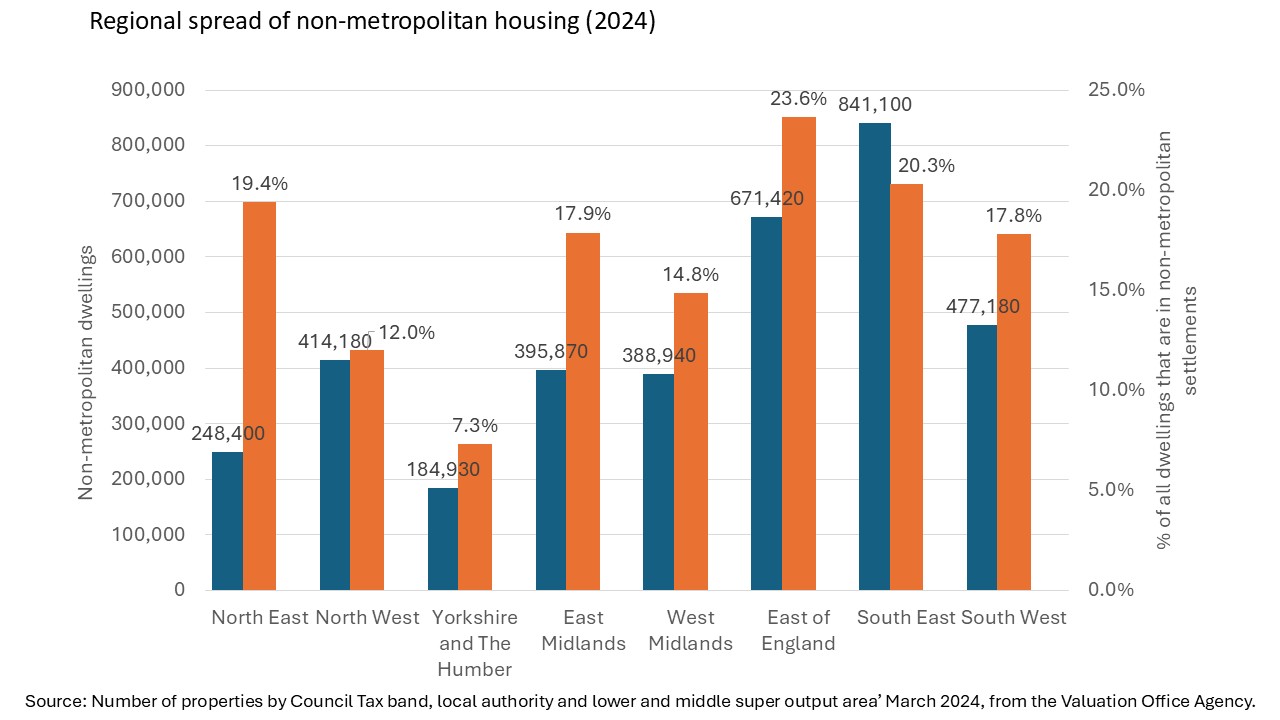
The distribution of these settlements varies markedly by region, reflecting differences in rurality and urbanisation. In the East of England, non-metropolitan settlements provide 23.6 per cent of all housing stock, compared to only 7.3 per cent in Yorkshire and the Humber.
The majority of non-metropolitan housing is concentrated in three regions: the South East (23.2 per cent), East of England (18.5 per cent), and South West (13.2 per cent). Settlements in these regions tend to be smaller but more numerous, whereas the Midlands and North have fewer, more concentrated settlements.
This fundamental difference in settlement pattern accounts for the higher proportion of non-metropolitan housing stock in the South compared to other regions.
Non-metropolitan settlements have added 315,500 homes in the past decade, more than London.
Between 2014 and 2024, non-metropolitan settlements delivered 315,500 new homes, representing 14.5 per cent of England’s total new housing and surpassing the 301,700 homes delivered in Greater London.
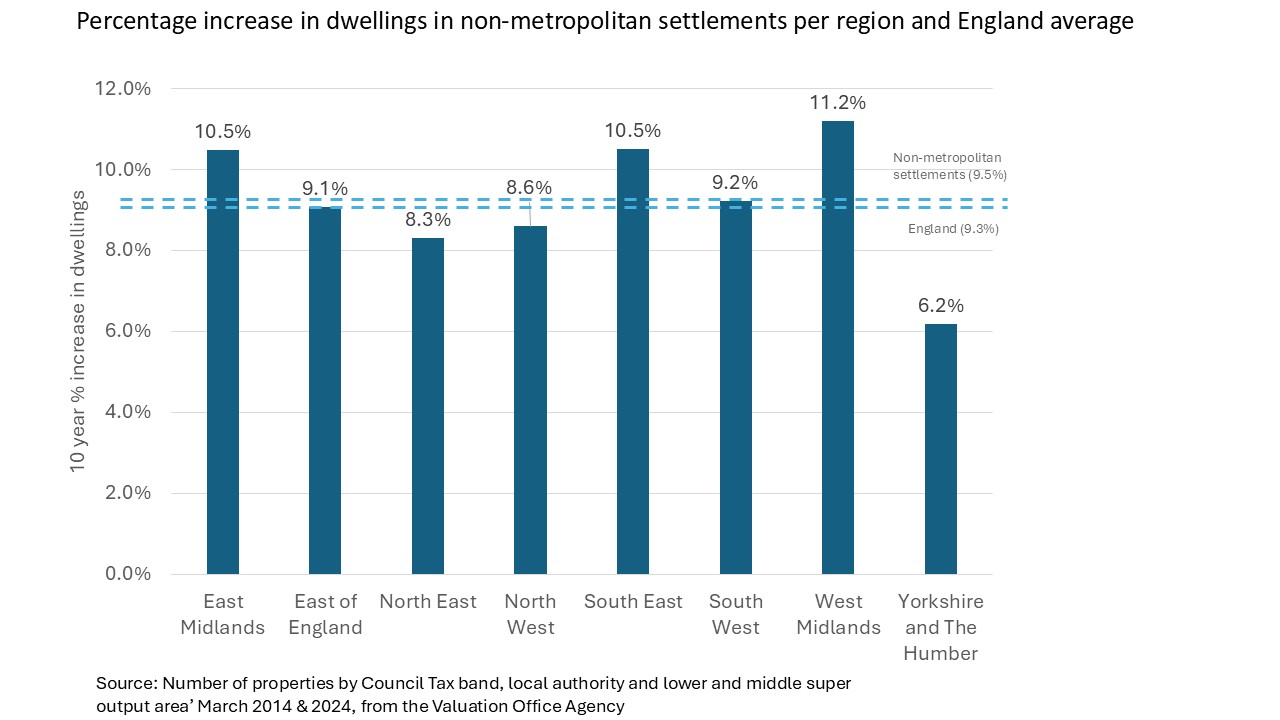
The rate of increase in non-metropolitan settlements of 9.5 per cent is on par with the rate of increase of 9.3 per cent across England, though regional differences emerge in both volume and rate of delivery.
Leading regions also dominated supply, with the South West (79,900 added), East (55,900), and South East (40,290) contributing 56 per cent of national non-metropolitan housing growth.
The West and East Midlands delivered fewer homes yet achieved strong growth rates of 11.2 per cent and 10.5 per cent, respectively, surpassing the national average.
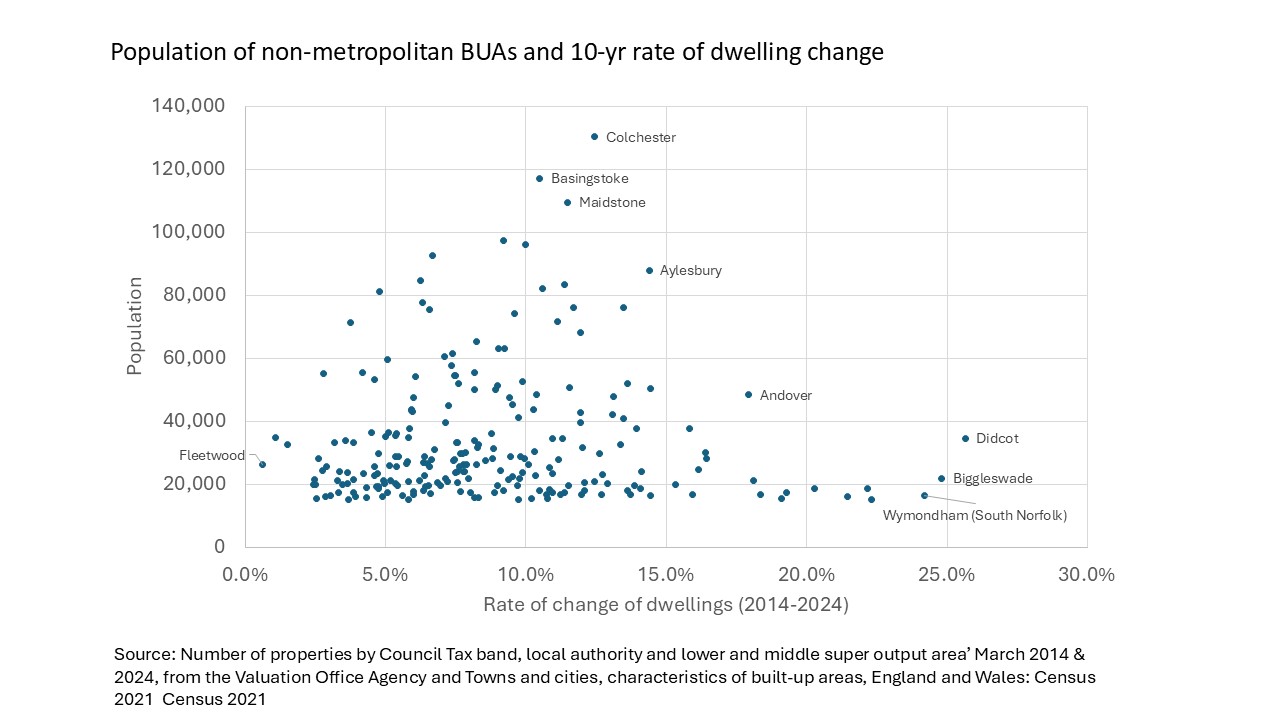
Examining settlement size alongside housing growth shows that larger towns and cities added more homes in absolute numbers, contributing significantly to housing delivery. No correlation was found between the rate of housing delivery relative to size, indicating that housing growth is evenly distributed rather than concentrated in larger and better-served non-metropolitan settlements.
Given the quantum of housing delivered non-metropolitan areas clearly play an important role in national housing delivery, though no clear pattern of growth across settlement size raises questions about infrastructure provision and how spatial planning and market forces guide housing delivery.
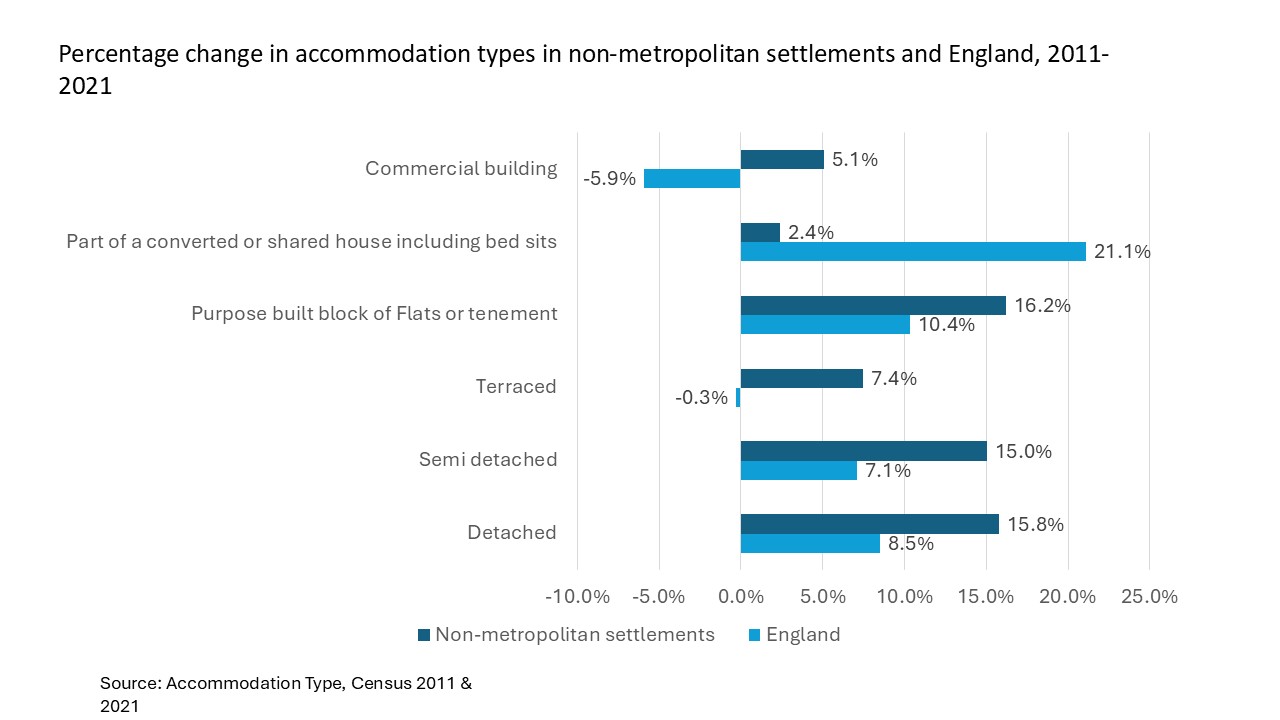
Delivery rates of flats and terraces in non-metropolitan settlements are exceeding the national average.
Over the past decade, semi-detached and detached housing has accounted for 70.3 per cent of all new housing in non-metropolitan settlements.
Contrary to common perceptions, higher-density flats are the fastest growing accommodation type in non- metropolitan settlements (16.2 per cent), exceeding the average 10 per cent increase across England.
Additionally, these settlements have seen a notable rise (5.1 per cent) in accommodation within commercial buildings (housing in an office building, hotel or over a shop), contrasting with a national decrease (-5.9 per cent) in this type of housing. This trend likely reflects use of permitted development rights to facilitate sporadic retail-to-residential conversions, alongside more coordinated efforts to repurpose vacant space amid falling office and retail demand.
Non-metropolitan settlements also outperform England in the delivery of new terraced housing (7.4 per cent versus -0.3 per cent), indicating growth in medium-density housing options which runs counter to a decline in this housing typology across the country.
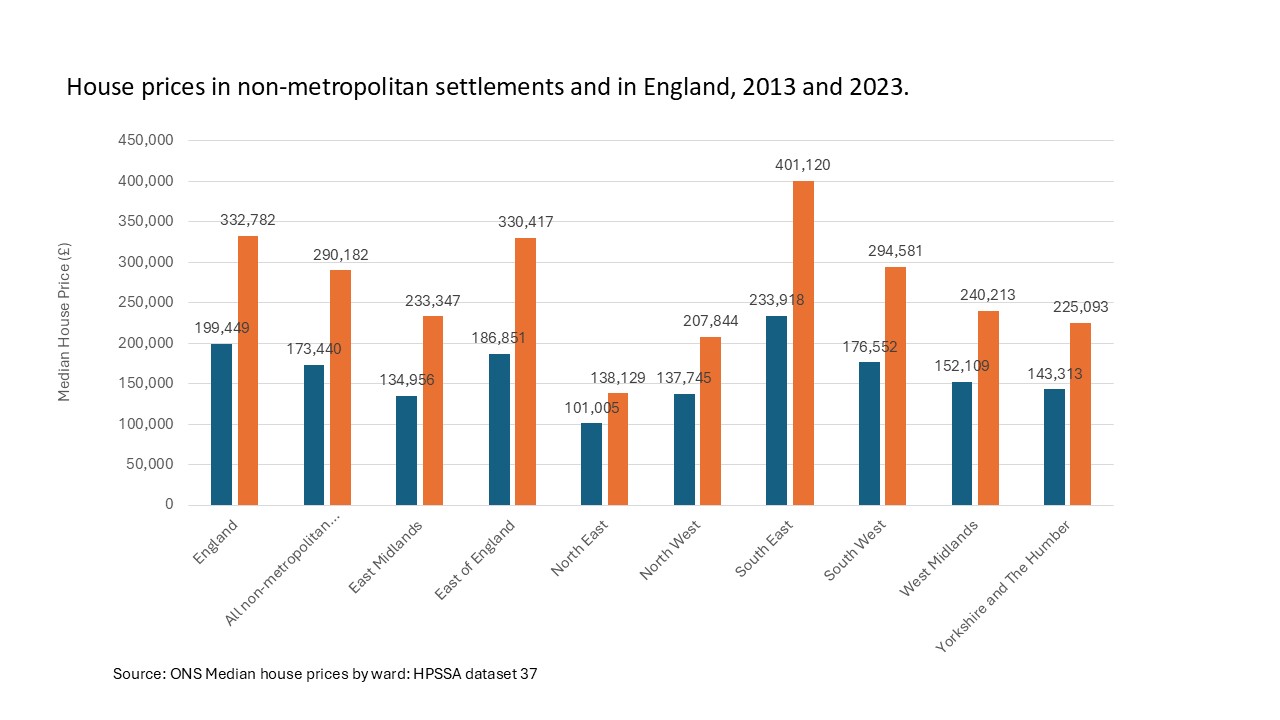
Housing in non-metropolitan settlements is 13 per cent more affordable than the national average.
House prices in non-metropolitan settlements have increased at the same rate as the England average, both experiencing a 67 per cent increase over the decade.
On average, house prices in these areas are 87 per cent of the national median price, with this affordability gap remaining constant since 2013. The East of England, East Midlands, and South East, experienced the strongest median price growth.
Conversely, the West Midlands, Yorkshire, North West, and North East all experienced below-average price growth in non-metropolitan settlements, resulting in their affordability relative to England improving over the decade.
These findings indicate that non-metropolitan areas maintain a consistent affordability advantage, although slower regional growth may reflect broader economic challenges.
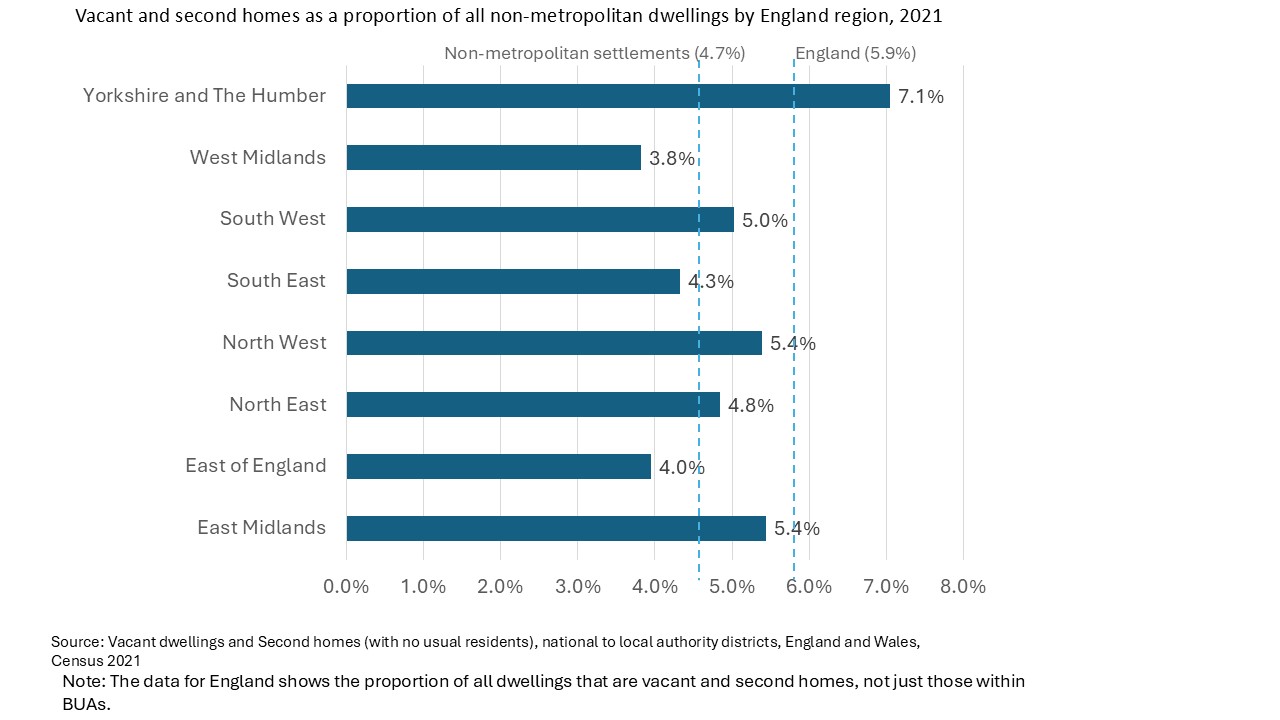
Almost 5 per cent of homes in non-metropolitan settlements are vacant or second homes
There are 170,600 vacant houses and second homes in non-metropolitan settlements in England. These account for 11.3 per cent of the over 1.5m vacant housing and second homes across the whole of England. Across all regions, vacant homes account for a much greater proportion than second homes.
The distribution of vacant and second homes is reflective of non-metropolitan housing distribution and are concentrated in the South East, East of England, and South West.
Vacant and second homes disproportionately affect non-metropolitan settlements in the North of England. Yorkshire and the Humber is most impacted with over 7 per cent of all housing in non-metropolitan settlements being vacant or second homes, an average of almost 1,190 vacant and second homes per non-metropolitan settlement. Yorkshire and the Humber also has a much larger proportion of second homes than other regions.
Vacant housing in and around town centres is a significant issue that impacts on vibrancy and undermines regeneration efforts.
In the graph below, the England average represents the proportion of all housing that is vacant or second homes (including rural areas), not simply those in Built Up Areas, so it is expected that there would be a higher proportion of vacant and second homes. We expect higher levels of vacant and second homes in rural areas, which are included within the England average, but are not included in the averages for non-metropolitan settlements.
Conclusions
Non-metropolitan settlements play a vital role in England’s housing delivery, accounting for one in seven homes. They offer greater housing diversity and choice, with nation-leading rates of flat and townhouse delivery. These areas typically exhibit higher rates of home ownership and maintain more affordable housing compared to the national median. However, regional disparities in growth and affordability, alongside a lack of concentrated development in larger settlements with better services, underscores the need for targeted infrastructure and planning strategies to support continued development outside urban centres.
- Significant housing stock
Non-metropolitan settlements account for one in seven homes in England, housing nearly 7.6 million residents in 3.6 million dwellings. This represents 14.2 per cent of all housing across the country.
- Robust housing growth
Over the past decade, non-metropolitan areas have delivered 315,500 new dwellings, although with significant regional variations in delivery. This growth accounts for 14.5 per cent of England’s total new housing supply.
- Diverse housing options
These settlements have seen delivery rate of flats increasing by 16.2 per cent compared to the national average of 10 per cent, emerging as the fastest-growing non-metropolitan housing type, enhancing housing diversity and choice.
- Affordable living
Housing in non-metropolitan settlements remains 13 per cent more affordable than the national median house price, an advantage that has held steady over the decade despite house prices increasing by 67 per cent nationally over this period. There has been greater housing delivery in areas with lower house prices. This highlights the important role of non-metropolitan areas in providing housing that is affordable.
Case studies
Introduction
Following on from the data analysis, a more extensive research exercise was undertaken to better understand the motivations and mechanisms for delivering housing in England’s town centres.
This section contains nine case studies examining housing delivery in England’s non-metropolitan areas. Selected from the 226 identified non-metropolitan areas, these examples were chosen for the quality, ambition, or originality of their housing plans. The case studies represent a diverse mix of political control, regional locations, and economic conditions, offering a comprehensive snapshot of council-led housing delivery across England.
To better understand the motivations and mechanisms driving housing delivery, interviews were conducted with senior council leaders in regeneration, planning, and housing roles. These interviews provided rich insights into the role of councils in enabling housing supply and revealed distinct approaches, challenges, and successes in different contexts.
Each case study follows a structured format to ensure consistency and comparability. They provide a place profile, an overview of the town including key socio- economic and town centre performance metrics, a planning, policy and governance section, summarising how these have contributed to successful housing delivery. On overview of the council’s approach to housing delivery and detail on key projects is provided, and other town centre regeneration projects are summarised. Lessons on how councils have delivered housing and regeneration projects are identified from each case study.
The case studies set out in this section are all examples of places where the council has enabled housing delivery in their town centres, or has plans to do so in the short-term. The scope of intervention ranges from creating the environment for housing delivery through planning policy through to direct intervention via self-delivery.
However, the case studies vary considerably in terms of the baseline circumstances and built form of the town centres, with a mix of older and newer towns, a mix of struggling and robust retail centres and a spectrum of economic and deprivation profiles across the nine examples.
The interview process also revealed that while all of the councils saw housing delivery as a means of enhancing their town centres on some level, the motivations for introducing housing, the scale of delivery and the scale of Council involvement in realising these visions were often very different.
While the case studies present a range of recent experience, from councils who are directly delivering high-density town centre housing to councils who simply aim to guide small-scale delivery, there are some overarching lessons that can be drawn from this exercise. These are summarised in the conclusion section.
Case study 1: Lancaster, Lancaster City Council
Lancaster’s development reflects a careful balance of heritage preservation with growing housing needs. The council has successfully used policy to ensure the highest possible quality and to manage the quantum and type of housing. Lancaster has fully embraced the opportunities presented by student housing and has sought to futureproof itself against future market changes by ensuring the flexibility of its developments. The council is being proactive in advancing housing proposals as part of a major, mixed-use regeneration scheme – The Canal Quarter - in partnership with the private landowners, where previous private-sector led schemes have fallen through.
Place profile
Lancaster is a cathedral city in the North West of England, with a population of 53,000, making it functionally more like a town. It is part of the group of 13 historic cities in England with rich heritage dating back to its heyday as a Georgian port. Lancaster is distinctive in having a very large student population, with two universities based in the city Lancaster University (based at an out-of-town campus at Bailrigg) and the Bowerham Road campus of the University of Cumbria (on the periphery of the city centre). As of the 2021 Census, 50 per cent of Lancaster Central MSOA were students.
The city has seen a 10 per cent increase in housing stock over the last ten years and had previously exceeded its statutory housing target, although it currently does not have a 5-year housing land supply.
Market context and challenges
Lancaster’s city centre has shown resilience compared to similar areas. Pre-pandemic, commercial rents were rising sharply; however, a combination of affordability and pandemic-enforced closures led to a doubling of vacancy rates in the early 2020s. Whilst vacancy rates are still above Lancaster’s long-term average, rents are beginning to recover and the average letting time is now relatively short at just under 4 months as of 2024. Lancaster has seen business growth in the centre and investments such as the Health Innovation Campus.
Planning, policy and governance
The city’s development is underpinned by the Lancaster District Local Plan, which was adopted in 2020 and is currently under review. The plan identified a ‘broad location for growth’ in Bailrigg, South Lancaster, which included provision for a garden village, but rising construction costs have stalled this project, prompting a review of the Local Plan. There is no dedicated town centre strategy for Lancaster, but there is a detailed Supplementary Planning Document for the Canal Quarter.
Local plan policies prioritise city centre brownfield developments and set requirements for high-quality development, driven by conservation area designations and a comparatively high proportion of listed buildings in the city. The Lancaster City Council Homes Strategy 2020-25 also earmarks the city centre as one of the most appropriate locations for new student housing development.
The council has introduced an Article 4 direction across Lancaster and neighbouring village of Galgate, restricting permitted development rights and preventing the conversion of housing residential units to HMO without having to apply for planning permissions.
Housing delivery
Lancaster faces land constraints to where houses can be developed due to the two areas of National Landscape (formerly Areas of Outstanding Natural Beauty), an area of Green Belt, flood risks, and severance of the city centre from adjoining residential areas caused by the gyratory road network. These factors have driven a town centre and brownfield-first approach, which has been the focus of local plan policies for some time in Lancaster, as well as nearby Morecambe, where land is more readily available in the town centre.
Successful and high-quality private sector-led schemes have revitalised industrial sites along the Lune River. The main criticisms have been that, in some cases, they have failed to deliver sufficient mix of uses. With most city centre brownfield sites having been regenerated, the council has allocated greenfield sites on the edge of the city, such as a ~750 homes being brought forward by Taylor Wimpey in North Lancaster and ~900 homes by Persimmon in East Lancaster.
Student housing
Lancaster has seen a significant uptick in the total amount of purpose-built student accommodation, with the Local Plan supporting student accommodation developments on the campus and within the city centre. Recent student developments have included Caton Court (630 beds), Luneside (431 beds, completed 2020) and the two most-recent City Block developments; a conversion of the listed former Gillows building (96 beds) and a new-build scheme over new commercial units at Marton Street (58 beds), which replaced a former public house.
Future developments approved or under construction include the Primus development (388 units) which will complete in 2025, and purpose-built housing for the University of Cumbria’s campus (214 units).
Within the conservation area, the preference is for the retention of ground floor units for common-residential use, ensuring vibrancy and provision of mixed uses. Architecturally, the student schemes have been of a high design quality, even those outside of the conservation area, such as Caton Court, a high-quality brick and stone development.
Given uncertainties around the quantity of student housing needed and levels of future demand, the council requires developers to evidence that their scheme are capable of reversibility and being converted to other uses.
The council is also seeking to direct students into purpose-built student housing and preserve and free-up residential housing stock in the city centre and nearby residential areas by enforcing an Article 4 Direction. This restricts the conversion of residential units to HMOs without having to apply for planning permission
Canal Quarter
Lancaster City Council are spearheading plans for the residential-led regeneration of the Canal Quarter, which is the city’s last remaining major brownfield site (16 acre). A Masterplan was approved in 2023 and seeks to guide the delivery of housing, additional business space, an enhanced arts and cultural offer and the restoration of some of the heritage assets within the Quarter, including the former Mitchell’s Brewery. Early phases of housing could, subject to planning permission, include an affordable housing development at the Coopers Field/St Leonard’s Gate part of the Quarter, and similar development at the southerly Nelson Street. The Canal Quarter is partly owned by the council, with council-owned car parks included within the boundary, and partly owned by private sector developers. The council is collaborating with the developers to integrate their proposed schemes.
The council has taken a more proactive role in delivering the site following previous private sector schemes that failed to progress over a decade ago. The council has been successful in securing Brownfield Land Release Funding to help unlock the Canal Quarter site. (The Brownfield Land Release Fund (BLRF) is a cross-government initiative between the Department for Levelling Up, Housing and Communities (DLUHC) and One Public Estate (OPE) which is delivered in partnership by the Local Government Association and the Cabinet Office).
Morecambe
In the nearby town of Morecambe, innovative schemes by developer Place First have reconfigured and transformed underused housing into one- and two- bedroom flats across the West End One (107 units) and Bay Mill (42 Built-to-Rent units) schemes, providing housing that is responsive to local market conditions.
The council has in recent years taken ownership of the former Frontierland amusement park after a series of private sector proposals failed to emerge. The council has launched a tender process to invite bids from commercial leisure, hospitality and mixed-use developers to provide a comprehensive leisure and tourism focussed development to complement Eden Project Morecambe which will be built near to the Frontierland site. The Eden Project Morecambe scheme was awarded £50 million through the Levelling Up Fund Round 2, and is currently in the delivery phase, helping to reimagine Morecambe as a seaside resort for the 21st century.
Lessons
Planning, policy and governance
- Ensure high quality development with relevant Local Plan policies and leveraging the heritage context to enable planners to enforce the highest quality.
- Consider the new government housing targets within their local contexts. The new targets are particularly difficult in Lancaster as most city centre brownfield sites have been redeveloped, and targeting out-of-town greenfield sites may not generate desired outcomes (for example, car dependency) without significant public and active transport infrastructure delivery.
Housing delivery
- Council intervention may be needed for schemes where private sector plans have repeatedly failed, to bring together various private sector interests.
- Prioritise a town centre and brownfield land-first approach to housing delivery to regenerate under-utilised sites (including council-owned car park) and strengthen the vibrancy of the city centre.
- Require developments that are flexible that can be adapted to meet fluxes in market, such as student housing schemes that can be converted to standard housing.
- Leverage the opportunities provided by student housing and be intentional about delivery of student housing, controlling the quality and stock. Focus student housing in purpose-built blocks rather than residential houses, through an Article 4 directive preventing housing being turned into HMOs and student housing without planning permission.
Town centre regeneration
- Retain ground floor units in city centre sites for commercial activity, to deliver a mix of uses, while being pragmatic and flexible on the possible types of uses that can be accommodated.
Case study 2: Telford, Telford and Wrekin Council
Telford is currently seeing high density housing delivery in its town centre, as well as the delivery of family housing and some conversion of upper floors of retail units to housing. The council is playing a prominent role in much of this development, with its arms-length housing company Nuplace a significant partner in town centre housing delivery.
Despite proposals for large-scale densification, Telford’s primary town centre does not struggle from a lack of a diverse offer or minimal footfall. The motivation for large-scale town centre redevelopment is instead about assuring the correct types of housing in the correct locations, ensuring a high-quality mixed use offering and de-risking the centre as a future market for Build to Rent (BTR).
Place profile
Telford is a New Town in Shropshire, West Midlands, which was established in the 1960s. The town benefits from its location in close proximity to Birmingham and Wolverhampton by rail and is an employment centre in its own right with a particular focus on manufacturing.
While Telford has heritage assets and older areas nested within its borders, its town centre comprises a 1960s central business district next to Telford Central Station and, as such, does not have sensitive heritage assets which might complicate housing delivery, as seen in many non-metropolitan towns.
Telford has experienced significant growth in its overall housing stock over the past ten years (16.3 per cent) and is one of the few examples of a major non-urban area that regularly meets or exceeds its statutory housing target, with a very high score against the Housing Delivery Test (264 per cent).
Market context and challenges
Telford town centre (defined as the central shopping area next to Telford Central Station) has a low vacancy rate and has been very resilient to footfall variation in recent years, with a 2024 retail vacancy rate of 0.5 per cent - very low by the standards of England’s high streets.
Although occupancy rates in the centre dropped by 1.2 per cent during the pandemic, this equates to a vacancy of just 11,000 sq. ft.- a very small decline compared to other town centre retail areas in England. As of late 2024, occupancy rates have recovered to within 0.2 per cent of pre-pandemic levels. The town centre’s health may partly be due to its diverse uses, with an already-established leisure and retail offering, unlike many older towns. For example, the Southwater development was completed in 2014 and encompasses an ice rink and cinema, as well as retail and commercial space, representing an early example of developing a more “experiential” town centre.
As shown, Telford is seeing most of its housing delivered on suburban sites and via urban extensions. However, there are also a number of town centre developments which have been recently completed or are under construction, with council-led schemes forming an increasingly large component of new delivery. In particular, the council is delivering transit-oriented medium-density development in the town centre in the form of the Station Quarter. Elsewhere, Telford has delivered more typical family housing in sites bordering the town centre, as at Southwater Way, as well as projects to redevelop the upper floors of retail units as housing in centres, such as their 1 Walker Street project in the historic district centre of Wellington.
For a long time, Telford & Wrekin Council struggled with delivering private market rental properties of a high quality. This is partly because Telford isn’t an established market for BTR or other specialised private rental operators (unlike in nearby Birmingham) while having significant demand for private rental properties. Consequently, the council identified a significant shortfall of private rented accommodation of a reliable quality which met high environmental standards or catered to specific groups. In 2015, Nuplace was established by the council as arms-length housing delivery company to plug the gaps in the market.
Planning, policy and governance
Telford & Wrekin Council has been under consistent leadership (Labour) since 2011. The council successfully bid for national levelling up funding, having been allocated £22.3m from the Towns Fund in 2021.
Telford’s Town Investment Plan (TIP) included projects across the town’s local centres, such as urban design improvements to the Place Theatre at Oakengates, the refurbishment of historic buildings in Wellington town centre and the delivery of a new “digital skills hub” at the Station Quarter. Bringing forward new housing was a strong feature of the bid.
Housing delivery
A significant share of market rent homes in the borough have been delivered by the council, with Nuplace the largest private sector landlord in the borough. As of early 2024, Nuplace had a portfolio comprising 485 homes with a further 359 units in delivery. The majority of Nuplace’s developments delivered to date are in suburban or out-of-centre locations. However, the past few years have seen a shift towards delivery in Telford town centre, where Nuplace is the most prominent housing developer.
As a company owned by the public sector, Nuplace has a number of objectives beyond simply delivering high quality new homes. The company also aims to raise the overall standard of private renting across the Borough, generate a long-term income stream for the council (to protect frontline services), regenerate brownfield and stalled sites and stimulate local economic growth through job creation. In addition to generating construction jobs, Nuplace makes extensive use of local supply chains, with most suppliers based within a 30-mile radius of Telford town centre.
Nuplace has a management model similar to that of a commercial housebuilder, with long-term partnership arrangements with private housebuilders (in this case a strategic partnership with as regional volume housebuilder across multiple projects). Likewise, for more conventional plots, Nuplace delivers pre-designed housing products, where capital costs are predictable and bespoke elements are minimised. The delivery structure relies upon a 100 per cent council borrowing structure, with affordable tenures cross-subsidised by private tenures. In terms of leadership structure, the company has sought to keep a small core team with industry skills developed through private sector experience.
Southwater Way
2022 saw the completion of 46 homes on Southwater Way on the edge of the Town Centre. The project was delivered as part of a joint venture between Nuplace and a major regional housebuilder, with grant support from the West Midlands Combined Authority.
50 per cent of the units are 3-4 bed family housing units, with all homes built with in-built roof solar PV panels and EV chargers provided - beyond the environmental requirements for new housing at the time. Southwater Way was delivered via Nuplace’s standard delivery approach, with NuPlace funding the delivery of the scheme which was designed and constructed by the partner company.
Station Quarter
Station Quarter is a mixed-use, housing-led development encompassing more than 700 new homes, a hotel, commercial units and an education and digital skills hub on a site next to Telford Central Station. The first phase of the project started on site in January 2024, which comprises 189 homes, with Nuplace delivering 117 largely 1 and 2 bed units and a housing association delivering the remaining 72 affordable units.
Station Quarter is intended less as a boost to the town centre (which has healthy footfall and low vacancy rates) and more as an early venture into higher-density BTR housing in Telford. Nuplace aims to create a new market for town centre living and in so doing derisks and sets the quality for any future higher-density development on the part of private BTR operators. Similarly, the mixed use and education-focussed nature of the scheme, which will see the relocation of Telford College to the centre from a peripheral location, aims to meet other strategic objectives for the council beyond housing delivery, such as assuring greater graduate retention in the town.
The development was openly tendered on a two-stage process and will be delivered with additional grant funding support via the national government’s Levelling Up Fund and Towns Fund, as well as funding from the Marches LEP.
The prominence and sensitivity of the site has meant that Nuplace has needed to vary its standard approach to housing delivery. For example, a more specialised housing developer has been appointed to lead the apartment block component of the development and another for the family housing element, rather than a single house-building partner across the whole site. Likewise, a Masterplan was delivered for the site with Design Code elements, which is in contrast to Southwater Way and other Nuplace projects, where pre-applications were the primary means of setting the format of development.
The apartment component is being marketed at multiple groups such as young professionals with jobs served by the nearby railway station, as well as older existing residents who are looking to downsize their properties. On-site completion is targeted at Summer 2026.
Lessons
Planning, policy and governance
- Put in place a specific Masterplan to be to enable delivery of higher density housing in the very centre of town.
Housing delivery
- Leverage large-scale town centre development to enable wider regeneration objectives (such as enhancing graduate retention in the town) and to deliver housing types which largely aren’t delivered by private developers.
- Establish an arms-length housing company to deliver market-rate housing in town centres and address a lack of private rented housing.
- The success of the arms-length housing company can be attributed to its purposefully lean development model based around strategic partnerships with housebuilders, with minimised staffing and design costs and a portfolio approach to funding and debt management.
Case study 3: Aldershot, Rushmoor District Council
Aldershot is an example of a town centre where its retail offer could not be relied on alone to ensure its vitality. As part of an integrated and coordinated intervention, Rushmoor Borough Council strategically bought a number of vacant town centre retail properties to develop a larger housing-led mixed-use proposal through a strategic partnership with a private developer.
The council has not only financially invested in one of the key town centre schemes but has also played a proactive role in attracting further private investment and securing critical central government funding to bring forward both council-led and third-party projects.
Place profile
Aldershot is a mid-sized town in the London commuter belt which falls within the Borough of Rushmoor. In terms of its economic and demographic profile, Rushmoor has average deprivation levels but household incomes and house prices which fall above England-wide average values. The council is notable for having significantly exceeded its allocated housing target, as demonstrated by the above Housing Delivery Test metric.
As of 2024, Aldershot has higher than average retail vacancy levels in its town centre and lower than average retail rent values per square metre.
Market context and challenges
A number of major retailers left prominent sites in the town centre during the early 2010s, with the town centre’s retail offer considerably compromised and large parts suffering from high vacancy rates.
Likewise, the town faces significant barriers to private development in that there are low overall returns to property development, given low rents and sales values. At the same time, build costs are high due to the town’s location in the South East of England.
In common with many other non-metropolitan towns, there is enormous demand for private rented accommodation on the part of key workers and other groups. However, there were few opportunities for established PRS developers to enter the market, with a limited supply of large or easily consolidated sites and the lack of an established market for private rented accommodation in the town centre.
While the town faced significant decline of its established retail offer, there were opportunities for repurposing the town centre. The University for the Creative Arts Farnham (UCA Farnham) was identified as having the potential to help reinvigorate the town centre through a greater student and creative presence. Likewise, while not an established commuter destination, Aldershot has a relatively good rail connection to employment centres in London, while having the benefit of lower house and rental prices than other rival markets in the South East of England.
Planning, policy and governance
In 2016 the Aldershot Town Centre Prospectus was developed and adopted as a Supplementary Planning Document, but purposefully written for a less technical audience. This was developed at an early stage of the council’s plans for town centre regeneration and was intended to sell the potential of a repositioned and reimagined town centre. The document was developed in close collaboration with the local community and stakeholders, with the Prospectus an outcome of significant private and public sector engagement. The document set out the council’s objectives including to cultivate town centre living, enhance the cultural offer and to diversify the centre through both renewed retail and other non-retail uses.
In 2019, the council adopted the Rushmoor Local Plan formalising key development opportunities in the Prospectus document as site allocations in Union Street East (Union Yard) and The Galleries.
Establishing a robust planning position helped to unlock government funding for the Union Yard scheme in the form of £5M from the Housing Infrastructure Fund, alongside £1.2M from the Enterprise M3 Local Economic Partnership. The Galleries scheme was also supported by £3.4m from the Housing Infrastructure Fund to help with site remediation and infrastructure delivery to unlock the site.
Housing delivery
A joint venture between the council and Hill Investment Partnership (jointly, the Rushmoor Development Partnership) was formed in 2018, with the Partnership initially looking at four key sites across the borough, including two major town centre sites in Aldershot and Farnborough with the opportunity to unlock in excess of 1,000 new homes.
While the Partnership structure is one of shared risk and reward, different arrangements have been in place for different developments, with the council leading the delivery and taking the financial risk of the Union Yard project. The Galleries project sits outside of the Partnership and is led primarily by the private landowner, Shaviram Group.
Union Yard
Union Yard is a council-led regeneration project nearing completion on the site of multiple former retail units between Union Street and High Street in the heart of town centre. The scheme includes 128 student units, 18 affordable homes aimed at those aged 55 and over, and 82 market-rent apartments, offering a unique mix of housing options that will introduce a diverse range of residents to the town centre. The Rushmoor Development Partnership secured the planning consent but, in this instance, the council has taken forward the scheme as landowner with Hill appointed as contractor for the build.
The development incorporates commercial space suitable for the town’s needs, including makers spaces for small or independent businesses alongside ground-floor retail units engaging onto a newly designed public square and established retail frontages on Union Street. The maker spaces are provided in the form of container units, which provide a smaller, temporary and more affordable space for local creatives to sell their products, with larger retail units available nearby in the event of wanting to scale-up.
The mid-rise character of the development has taken into account the surrounding historic context through a carefully considered design and use of materials.
The Galleries
The Galleries is a separate privately-led development located nearby, which aims to deliver 596 apartments on the former site of a shopping mall. Spread across several buildings and rising up to 12 storeys, the project is currently in the early phases of development with demolition and site clearance well progressed following planning approval in 2022.
The Galleries development aims to function harmoniously with Union Yard, with the scheme offering a fundamentally different format of retail offer, focused more on flagship tenants, compared to Union Yard’s independent retail focus.
Rushmoor Borough Council owns the freehold of part of the site and it is being brought forward by the Shaviram Group. The council will release the site to Shaviram at the point of delivery of a new 250-space public car park on a separate plot to serve the town, which will be transferred into council ownership upon its completion.
Wider town centre regeneration
In addition to addressing the oversupply of retail at the Galleries, the council has sought to concentrate retail in the heart of the centre and away from the periphery of the town through a relaxing of retail frontage designations in the Local Plan, resulting in a much smaller share of the town being designated for retail uses.
The council is also embarking on large scale regeneration in other Borough-wide town centre sites. Farnborough Civic Quarter, a 960 unit mixed-use development has secured outline consent, with other uses such as a hotel, leisure and non-residential floorspace also planned for the site. Further development of the site may be conditional on national government funding and this is actively being explored.
Lessons
Housing delivery
- Reboot the town centre offer by balancing a bold and ambitious strategy and carefully considered long-term partnerships with the private sector.
- Constant adaptation of developments to market circumstances, with a pragmatic mindset on the part of the council. Adapting of delivery arrangements needed to factor for the changing investment landscape.
- Negotiation of build costs at a fixed price prior, insulating the development from build cost inflation.
Planning, policy and governance
- Planning frameworks play a crucial role in assuring buy-in and achieving consensus. An integrated Prospectus functioned as both a statutory planning document and a public-facing document to promote the council’s town centre vision.
- Strong and new council leadership provided a bold vision and the political support to see its long-term plans come to fruition.
Town centre regeneration
- Maximise the potential of town centre investment by integrating multiple policy goals, such as delivering student and private market housing and temporary retail, enabling local makers to sell their products in a low-cost space.
Case study 4: Hereford, Herefordshire Council
Hereford has seen recent town centre residential development in the form of in-fill residential development and student housing in its historic core. It has ambitious plans going forward with proposals for key worker and specialised housing on other town centre sites, with the council playing a significant role in delivery.
The recent set of proposals for town centre residential development are a response to longer-term housing targets, the need for new and specialised forms of housing and to achieve longer-term diversification of uses in the centre. While the decline of retail in the centre is a factor and is being addressed by wider place-making strategies, town centre regeneration is not primarily being pursued for this reason. Given the heritage restrictions of the centre, new town centre development has had to be pursued sensitively and collaboratively through a Masterplan-led planning strategy.
Place profile
Hereford is an historic cathedral city and the county town for Herefordshire Council. The town is not demographically similar to other traditional English county towns, in that it has a relatively high working age population and has house prices and incomes below the England average.
It has seen above average overall increase in housing stock in the ten years to 2024, and has notably seen a significant share of its housing delivery in the town centre (as well as on the outskirts), which is not typical of many rural English towns.
Market context and challenges
Hereford has relatively low retail vacancy rates, at around 4 per cent of total retail space in 2024. However, the town has suffered greater from the cost-of-living crises and lack of consumer spending than other areas, with vacancy rates doubling in the last two years. This is more concentrated in certain parts of the centre, with the Maylords Shopping Centre seeing the loss of two anchor tenants, with the centre eventually bought
for further redevelopment by the council. In line with this trend, over the same period the average cost of town centre rents has fallen by 25 per cent, with the average unit taking almost nine months to let. There are more positive signs on the horizon with lettings activity starting to rise again and average town centre rental costs starting to recover to their pre-pandemic levels.
Herefordshire Council has a high overall housing target which is set to rise with the reorganisation of housing targets under the new national government (with the target likely shifting from 16,000 to 27,000 units).
Hereford is necessarily the focal point for new housing development given its location as the largest town in a very rural constituency and a major employment hub.
At the same time, Hereford town centre is not an established location for purpose-built apartments, with the area an untested market compared to larger nearby cities, with most new housing delivered as suburban family homes on the periphery.
Hereford also suffers from significant development constraints, with a small historic centre which experiences significant transport issues due to the flow of commercial traffic through the town centre (rather than via a ring road). As such, parking is a sensitive issue for new development. The council has sought to expand its centre through targeted redevelopment of the former Cattle Market as a new edge-of-centre retail destination in 2014. This in turn has enabled neighbouring vacant sites to become viable as sites for denser town centre housing (as per Merton Meadows, as set out below).
Planning, policy and governance
Hereford is led by Herefordshire Council- a unitary authority.
A draft Hereford City Masterplan was produced in Spring 2023, which set out core growth objectives for the city and centre, including enabling a “a vibrant historic core”, with plans for delivering housing as part of the Owen Street Quarter. The Masterplan is intended to guide the form, tenure and mix of uses on sensitive town centre sites, so as to ensure greater local buy-in. The council is in the process of updating this plan to reflect the new NPPF guidance and mandatory Housing targets.
To unlock aspects of their long-term strategy for the town centre, Herefordshire Council applied successfully for £20 million in funding to deliver its Hereford City Transport Package project as part of the Levelling Up Fund Round 2. This included schemes such as public realm, pedestrian and cycling infrastructure improvements and a new transport hub at Hereford Railway Station. The town received a further £22.4m in funding to deliver its Town Deal via the Towns Fund Programme, with projects including a new Digital Culture Hub and Skills Centre, a new public library, a refurbished Hereford Museum, an electric buses project and provisions to enhance the biodiversity and green credentials of the centre.
To unlock aspects of their long-term strategy for the town centre, Herefordshire Council applied successfully for £20 million in funding to deliver its Hereford City Transport Package project as part of the Levelling Up Fund Round 2. This included schemes such as public realm, pedestrian and cycling infrastructure improvements and a new transport hub at Hereford Railway Station. The town received a further £22.4m in funding to deliver its Town Deal via the Towns Fund Programme, with projects including a new Digital Culture Hub and Skills Centre, a new public library, a refurbished Hereford Museum, an electric buses project and provisions to enhance the biodiversity and green credentials of the centre.
Housing delivery
Herefordshire largely relies on the private sector to deliver much of its housing, but is looking to take a greater lead working directly and with Partners to enable more specialised forms of housing in the centre to meet unmet demand, such as purpose-built homes for the over-55s and key worker housing. Herefordshire also has a very large housing waiting list (around 2500 on the list in 2024), with significant affordable housing delivery considered the most economical long-term solution to this. As a means of achieving these goals and enabling future development, Herefordshire Council has been proactive in unlocking major town centre brownfield sites. At Merton Meadows, the council will employ national government funding to address long-term flooding problems, which will make the site a more attractive and viable proposition for new housing.
However, Hereford town centre doesn’t have a large resident population, and the council has not been able to rely on the private sector alone to deliver all of the types of housing needed, such as high-quality key worker and retirement homes. Therefore, Hereford is currently in the process of establishing some form of public housing delivery body (whether a joint venture or a standalone council-led ALMO). The company will aim to set the standard for new types of housing in terms of quality, aesthetics and tenure mix, to enable high quality private development to eventually deliver housing of a similar calibre.
Merton Meadows
A council-owned city centre gateway site. As of 2024, the site is prioritised for up to 400 dwellings, with a focus on delivering intergenerational housing for retirees, as well as key worker housing, based around a highly landscaped setting. The council-owned site is currently going through masterplanning and will likely be delivered with a commercial partner or through a new arms-length housing delivery vehicle. The site has received more than £2m in funding from the national government’s Brownfield Land Release Fund to remediate flooding issues, which is crucial for the activation of the site.
Wider town centre regeneration
Herefordshire Council’s town centre vision sees greater housing delivery as just one of multiple holistic measures to enhance the centre. As part of a longer-term strategy to diversify the uses of the centre,
Hereford successfully attracted the New Model Institute for Technology and Engineering (NMITE) to permanently locate to the town in 2021, bringing activity and realising the town’s longer-term ambitions as a centre for higher education. In order to facilitate this move, Herefordshire Council released some of its publicly owned land near the railway station to be delivered as student housing by a private developer. 178 units were delivered at Station Hill in 2021.
Similarly, Hereford sought to expand its city centre and retool its retail offering through the development of the old Cattle Market as an edge-of-centre retail destination in 2014.
Lessons
Town centre regeneration
- Delivery of high-quality retail, employment, education, health, leisure and amenity offers alongside new residential developments has been needed to encourage people to live in the centre.
Housing delivery
- However, ensuring the delivery of the right type of town centre housing is often a necessary prerequisite for a major rethinking of town centre uses. In the case of Hereford, delivering student housing was vital for attracting a higher education provider to the town.
- Consider the most appropriate housing types for town centre locations. Accessible town centre sites in Hereford considered most appropriate for key worker and certain types of retirement housing.
Planning, policy and governance
- Use public assets such as railway station and gateway sites pragmatically to unlock delivery of town centre housing.
- Use SPDs to set the tone and ensure design quality of new buildings in town centre developments. This is especially the case for historic towns with development restrictions and where town centre housing is a largely new phenomenon.
Case study 5: Folkestone, Folkestone and Hythe District Council
Folkestone exemplifies how cultural initiatives and clear vision through a place plan can revitalise a town centre. Folkestone and Hythe District Council have been proactive in incentivising, delivering and coordinating a spectrum of regeneration interventions, and establishing a platform for investment.
It has taken an active role in addressing issues of development viability by remediating challenging sites and partnering with developers to reduce risk. The council also leverages its wholly owned housing company, Oportunitas, to provide new housing to meet growing demand for private rented housing.
Place profile
Folkestone, a town on the Kent coast, has experienced a remarkable transformation after a prolonged period of decline common to many coastal areas. This revival has been driven by ambitious development plans and substantial investments, spearheaded by local philanthropist Sir Roger De Haan. Cultural and art-led regeneration initiatives by Creative Folkestone have changed the town’s image and appeal, making it increasingly popular among young renters. London commuters have been relocating to Folkestone in large numbers due to the direct, high-speed train link.
Market context and challenges
A growing population has increased the demand for housing, leading to a surge in rent prices. The prevalence of Airbnbs and second homes exacerbates the shortage of housing and affordability issues, and contributes to a transient population, with some properties occupied only on weekends.
Folkestone faces stark socio-economic disparities and deprivation that persists in certain areas of the town. These inequalities are heightened by the town’s changing demographic. Tied to this are the growing issues of a lack of affordable housing and high waiting lists for council homes.
However, the delivery of additional housing is constrained by challenging brownfield sites requiring significant remediation and the antiquated road network. This puts pressure on the viability of sites, which is being further impacted by rising interest rates and building costs.
While the Old High Street is performing well due to interventions from Creative Folkestone, there are high vacancy rates at the top of the high street in the direction of the station and in the main retail core, where flagship retailer Debenhams closed in 2020.
Planning, policy and governance
Folkestone’s development is guided by a comprehensive Place Plan, which laid the foundation for a successful Levelling Up Fund bid. This bid addresses a number of public realm and connectivity challenges, especially around the station area leading through to the town centre. Folkestone also recently underwent a rebranding campaign to raise awareness of its transformation, particularly aimed at London audiences.
The council has implemented measures to streamline the housing approvals process, specifically for Housing Revenue Account (HRA). By producing an HRA pipeline report approved at the cabinet level, the council can deliver housing schemes within the set parameters of the business plan without needing cabinet approval for each project. This approach has enhanced responsiveness to market needs and developer interest.
The council engages regularly with key stakeholders leading the development of Folkestone, notably organisations backed by Sir Roger De Haan. Through its planning functions, the council seeks to facilitate and enable investments.
Housing delivery
Housing stock has increased by 7 per cent in the last 10 years. Most new housing has been delivered in the town centre and on the western edge of the town. The delivery of housing is motivated by a need to provide suitable housing for a growing population, increase the provision of affordable housing, particularly as house prices are rapidly rising, and future-proof the town centre.
Folkestone’s housing delivery features several key projects:
- Shoreline Crescent: Up to 1,000 new luxury flats on the seafront, including the recently completed first phase comprising of 84 flats. The Folkestone Harbour & Seafront Development Company (FHSDC), led by Sir Roger de Haan, oversees this £1 billion initiative to regenerate the harbour area.
- Ship Street (Old Gas Works): A challenging site between the station and the seafront that has been unused since the 1960s. The council’s ambitions plans for regeneration include 134 units and enhanced public realm.
- Live-Work Units: Units on the old High Street have been converted to creative Live-Work units. These have had significant positive local impact on vibrancy.
- Vacant Floors above shops in the High Street. A local developer has taken over a stalled project to deliver in excess of 30 units in the town centre.
- Royal Victoria Hospital Conversion: The old hospital building was converted to 18 high quality flats together with a brand new block of 19 flats, overlooking Radnor Park, just minutes from the station. All 37 units were acquired by the council’s housing and regeneration company – Oportunitas.
- Biggins Wood Brickworks Site: This site, vacant since the 1970s, has been remediated by the council to create a development platform. The council is in the process of disposing of the site which has planning permission for 77 houses and 5,600sqm of commercial and office space.
- Highview Site: The council purchased an old school which has since been demolished and is being prepared for sale, having received planning permission for 30 homes.
Several models are being pursued by the council for the delivery of housing and regeneration projects.
The council is actively delivering new homes through Oportunitas – a company wholly owned by Folkestone and Hythe District Council – that was set up to deliver more homes for the private rented market. As of late 2024, Oportunitas owns 75 properties, including one commercial unit. It aims to offer affordable rents in the future as it transitions into profitability.
The council is proactive in incentivising developer interest by de-risking projects, particularly on more challenging sites. One way the council is doing this by remediating brownfield sites using funding from government like brownfield land release funds, and in some cases, acquiring planning permission, before disposing of the site to a developer or partnering with a developer to bring forward much needed homes.
A second way that the council is de-risking challenging projects is by taking on the delivery of part of a scheme. The council is considering how to enable the regeneration of the Old Gas Works site on Ship Street site, which faces issues of viability due to the need
for remediation, challenging gradient of the land, high retaining walls and surrounding property values, as it is in a more deprived part of the town. The council is planning on retaining the affordable homes for the HRA and exploring the potential of whether a proportion of units could be taken on by Oportunitas – the council’s housing company for private rent. This will further de-risk the site for incoming developers as they won’t need to find a provider for the affordable homes, and will pay tranche payments, reducing the amount of capital borrowing by the developer.
Effective partnership working and an active approach to stakeholder engagement has been a key strength of Folkestone’s housing delivery. The Old Gas works site was activated as part of the Triennial in partnership Creative Folkestone and the council have used innovative approaches to stakeholder engagement including the use of VR headsets to reach a wider audience.
Wider town centre regeneration
A comprehensive approach to regeneration links multiple projects across the town:
- The council has acquired the former Debenhams building which has been rebranded as ‘Folca’ to prevent landbanking of this key site and plans to repurpose it for mixed-uses, including a GP surgery and leisure facilities, subject to business case viability. However, rising costs, rising interest rates on loans, and requirements for building energy efficiency standards pose a number of challenges.
- The Old High Street revitalisation: Led by Creative Folkestone, which acquired many properties and rents them at reduced rates for creative uses, including Live/Work creative spaces.
- Levelling Up Fund – ‘Folkestone a Brighter Future’. A £20M investment targeting public realm improvements, improvements to the main gateways to the town centre and high-street and connectivity enhancements.
- Old Harbour Regeneration: The Harbour Arm has been transformed by the Folkestone Harbour & Seafront Development Co. into a vibrant area with F&B and leisure uses.
Lessons
Planning, policy and governance
- A clear plan and vision, such as Folkestone’s Place Plan, provides strategic direction for the town’s development and helps to unlock funding from central government.
- Branding initiatives can help to change the perceptions of a place, raise awareness, encourage new residents and drive tourism. Folkestone’s recent branding campaign has contributed to its changing image, promoted the investments into the town, and attracted new residents from London.
Housing delivery
- Local councils can take an active role in de-risking development projects, making them more attractive to investors. Councils can do this by leveraging external funding, remediating sites or taking on a part of the development, reducing the capital investment for developers.
- A pipeline of HRA projects approved at the Cabinet level can speed up delivery of housing and make a council more responsive to market demand, enabling a council to deliver projects within set parameters, rather than requiring approval on a project-by-project basis.
Town centre regeneration
- Council acquisition of key town centre sites – such as the former Debenhams building – can prevent landbanking of the site by developers and deliver much needed facilities to the town centre.
- Mixed use redevelopment of vacant retail assets incorporating modern medical and leisure facilities can be used to encourage footfall to the town centre.
- Reduced fixed rates from government on loans for regeneration and housing projects, particularly HRA housing, would give local authorities the tools to undertake regeneration projects in the context of rising interest rates and challenging viability.
Case study 6: Bognor Regis, Arun District Council
Bognor faces two significant challenges: the restoration of its heritage assets, and the ongoing challenge of attracting footfall to the town centre, having previously been a popular seaside holiday destination. To help address these issues, privately rented housing is being incorporated in plans to restore a key heritage and retail asset in the centre – The Arcade -, as a means to aid project financial viability and create an ongoing investment asset. The council-led project has allowed for a longer-term view on its social and economic benefits. Nonetheless, housing alone is not seen as a "silver bullet". The council is prioritising complimentary culture, tourism, and leisure-driven regeneration through its wider assets to enliven the town centre.
Place profile
Bognor Regis, situated on the South Coast within Sussex's Arun District Council, is a medium-sized town with a unique character and heritage assets. Unlike Brighton, Hastings, or Folkestone, Bognor Regis has not seen significant growth in population or housing over the past decade, with housing stock having increased by only 5 per cent.
Market context and challenges
The town centre of Bognor Regis has faced significant challenges in recent years. The effects of the pandemic on the retail sector were notable and more recently, the cost-of-living crisis has had a profound impact, with constrained householder spending contributing to commercial vacancy rates skyrocketing sixfold in the past two years. Over 11,000 sq ft of lettings have been lost. Despite these challenges, rents in the town centre have remained high, suggesting a potential for rebalancing affordability to restore vibrancy. The town’s identity as a tourism and leisure destination has waned, with insufficient hotel and leisure facilities for short stays having contributed to the decline in visitor numbers. Albeit this has been partially addressed with the recent sale of brownfield sea front land by the council to Whitbread who are currently constructing a new Premier Inn on the site. The council are also evaluating two other potential hotel sites which they may bring forward for development if viable.
One of the principal shopping centres in Bognor Regis is the Arcade, holding a collection of 21 units occupied by predominantly independent retailers and Food & Beverage outlets. The upper floors were previously office chambers but are currently unoccupied and in an extremely poor state of repair. The council acquired the centre in 2017 but its heritage status (locally listed) and the future costs of repairs and maintenance represent an additional challenge in maintaining this asset as purely commercial/retail/office (for which there is little demand).
This wider decline underpins the rationale for several regeneration schemes, including the redevelopment of the Alexandra Theatre/Regis Centre (on site, and opposite) and the Arcade, which seeks to restore a heritage asset and bringing back to life this key town centre site, which connects the main retail area with the seafront and the theatre and Place Saint Maur a recently completed council project which provides a public piazza for multi-function events and uses.
Planning, policy, and governance
The regeneration of Bognor Regis is not guided by a masterplan or statutory document but has been catalysed by a successful Levelling Up Fund bid. Arun Council received more than £19.4m in funding as part of the Levelling Up Fund Round 1, of which a component (£12.19m) is allocated towards the expansion and improvement of the Alexandra Theatre (now under construction) on the seafront. The council is exploring an opportunity to redevelop the adjacent Regis Centre car park site into a multi-level, mixed-use destination leisure, cultural, and hospitality centre and include a multi-storey car park and short-term holiday/leisure accommodation with potentially also a hotel.
The council’s pragmatic approach to planning, particularly with respect to heritage constraints and the local economic environment, has been key to advancing regeneration efforts in Bognor Regis. The council have been able to overcome planning challenges such as the need for parking provision, which the Arcade site cannot accommodate, on the basis that it may subsidise parking permits for Arcade residents who need them. A portfolio approach to parking in the town centre is unlocking opportunities for individual sites. This is weighed against the individual development opportunities potential for on-site parking in a re-modelled form such as multi-storey, undercroft for example (rather than just at grade).
The Bognor Regeneration Board, a non-statutory body, acted independently from the main political stakeholders in the area until late 2024. This Board acted as a convenor of stakeholders and was influential in championing Bognor town centre. Since the recent election, there is overall consensus on the importance of regeneration projects and need for investment into Bognor Regis, despite the complex political context.
Housing delivery
Housing delivery in Bognor Regis is concentrated along the seafront and on edge of the town. While seafront developments achieve strong sales values, housing further inland faces some challenges of viability – only viable in a low to medium density. New housing developments on the edge of town are primarily led by volume builders and met with mixed reception.
In the town centre, the council is prioritising culture-led regeneration to drive increased footfall, like the Alexandra Theatre regeneration project, with housing being integrated into mixed-use developments such as the Arcade redevelopment and being explored in other town centre/seafront locations on sites owned by the council.
Whilst retirement living is a potential viable high-density use in the town centre, the council is mindful of too much of that tenure type concentrated in the town centre – creating a "retirement town". There is also a focus on delivering high-quality aspirational flats in the town centre for private market rentals, particularly seeking to retain young people and targeting young working professionals, together with short-term lettings and serviced apartments to support tourism growth.
The Arcade Project
The Arcade project is central to Bognor Regis’ regeneration efforts. This late Victorian heritage asset in a key town centre site between the seafront, retail, and theatre areas, has fallen into disrepair, with some of the structure destroyed in a fire in the 1930s and having also been added to with poor quality structure in the 1950s. Its ground floor houses some retail and F&B tenants, but its upper floors, previously used as offices, remain vacant due to a lack of current market demand and poor floor plate configuration.
The plan for the redevelopment includes providing 35 high-quality private rental flats aimed at young professionals on the upper floors, which are integral to the viability of the Arcade project, set above refurbished retail and F&B units on the ground floor. An adjacent building will also be rebuilt in a style sympathetic to the Arcade’s heritage, integrating and linking additional high-quality flats and commercial units.
The Arcade redevelopment is a council-led and funded initiative, supported by funding from the Government’s Brownfield Release Fund (over £600,000) for the enabling works. The council has partnered with a team of external professionals ranging from technical, design, economic, and heritage experts and led by a highly experienced Chartered Planning & Development Surveyor, to ensure the project’s success.
With the absence of market appetite for this scale of risk and cost– particularly given the building’s heritage - the council, who owns the site, is leading the redevelopment with a contractor partners. The council is taking a long-term view on financial returns driven by the site’s potential for wide economic and cultural benefits, over immediate returns. The council has taken seriously its obligation to step-in and preserve the Arcade’s heritage value as well as intervening to drive economic activity in the town centre. The potential for other income-producing uses is a secondary driver. The council is exploring options for the management of the combined commercial and housing asset to ensure regulatory compliance and sustainable income for the council. When fully restored and occupied, there will be a lesser ongoing maintenance burden together with an income stream, and a reserve fund will be established to contribute to the long-term upkeep of the building.
Wider town centre regeneration
Wider regeneration plans include the refurbishment of the Alexandra Theatre which is ongoing and feasibility work for the redevelopment of the former Brewers Fayre pub and restaurant, known as ‘The Regis Centre’, and the adjacent car park. The project will be leisure and arts-led, with plans for a 390-seat auditorium and five studios. The council is intending to provide tourism accommodation in the town centre with short lets and serviced apartments and ideally a further new hotel in addition to the adjacent site.
Lessons
Planning, policy and governance
- Getting the right expertise in and recognising where there is missing capacity and skill in the council is essential. Arun District Council are collaborating with a range of external experts on the delivery of the Arcade project and other projects.
- Continuous evaluation of options is needed. Getting the feasibility stage right and supported by stakeholders is key before significant promises are made on timescales.
- A clear vision rooted in ambition for the area can unite stakeholders on the need for change and help overcome setbacks and challenges that are common with complex regeneration project.
Housing delivery
- Council intervention is needed on key town centre sites where there is limited or no market interest in delivery (particularly where there are heritage concerns), with the council taking a long-term view on the potential for return on investment.
- A portfolio approach to parking has the ability to unlock sites that would struggle to provide on-plot parking, such as considering providing permits for new residents who need them, funded by the council on car parks in close proximity.
- Housing isn’t a silver bullet and there needs to be a considered approach to leisure, retail and cultural facilities to balance footfall, mix of occupancy and onward economic spend and wider benefit. The housing delivery part of the Arcade project sits alongside investments into ground floor retail and F&B assets and the redevelopment of the theatre.
Case study 7: High Wycombe, Buckinghamshire Council
Buckinghamshire Council has used its landholdings to proactively intervene in revitalising High Wycombe town centre through targeted and strategic partnerships with the private sector. This has been further enabled by national government grant funding, a commercially experienced council team and extensive political and local buy-in, enabling effective decision-making.
Recent years have seen some densification to the town centre, with a number of new residential schemes delivered, with council-owned assets forming a significant focus for these plans.
Place profile
High Wycombe is an affluent commuter town in South East England to the west of London, with relatively low levels of deprivation, above-average household incomes and above-average house prices. Buckinghamshire Council has been largely successful in meeting the national government’s Housing Delivery Test for delivering additional housing across its district, achieving 97 per cent of its target in the most recent test period.
Market context and challenges
An analysis of town centre health was undertaken using CoStar data. Historically, the town has had relatively low vacancy rates, which have risen by 108 per cent since 2020. However, because vacancy rates were at a low baseline level of 1.25 per cent in 2020, the number of vacant units in the town centre in 2024 has remained relatively low in real terms.
The sudden spike in retail space availability caused by the pandemic enabled a resetting of the town centre at generally higher rental levels, with the number of deals in 2024 being 43 per cent higher than pre-pandemic levels. The average unit takes only 5 months to let and, although slightly higher than 2020, the vacancy rate is stabilising at a rate below the long-term average.
Planning, policy and governance
High Wycombe falls within Buckinghamshire Unitary Authority, having previously been part of the Wycombe District Authority until its abolition in 2020. Buckinghamshire Council has had a consistent leadership since its creation in 2020, which has facilitated the delivery of a longer-term and holistic vision for High Wycombe town centre. Local leaders and politicians have expressed strong support for the town centre strategy, which is built on well-prepared cases for key development sites. These cases thoughtfully consider commercial factors and reflect considerable expertise and experience of the council’s officers.
The High Wycombe Town Centre Masterplan received funding from the Bucks LEP Board in 2016 for the delivery of a rationalisation of town centre transport in the Southern Quadrant of the centre, with the plan aiming to deliver 470 homes and 1,380 new jobs.
High Wycombe received £11.8 million as part of the Future High Streets Fund, which was allocated towards repurposing vacant units, improving public spaces, improving landmark buildings and repurposing the House of Fraser building in the Eden Shopping Centre.
Housing delivery
Buckinghamshire Council is a major landowner in High Wycombe and has sought to diversify town centre uses through a redevelopment strategy which is pragmatic and draws on its commercial links with the private sector.
Buckinghamshire Council has sought to balance policy-driven planning with a pragmatic approach to market realities in High Wycombe town centre. In particular, it has sought to diversify the housing offering in the centre through a commercially viable approach, including exploring opportunities to deliver increased Build to Rent (BTR) units and market-affordable housing.
Effective partnerships with private developers have driven key projects, such as the redevelopment of the Chilterns Shopping Centre. The council has focused on fostering high-quality development through close collaboration with the private sector, rather than relying solely on interventionist policy tools. As well as partnership with private developers, the council has sought to ensure strong in-house commercial and legal expertise to ensure that viability considerations can be considered appropriately and comprehensively.
In 2022 the council adopted its Work Smart Estates Strategy, which aims to balance corporate objectives with ensuring long-term financial sustainability of the council’s estate. This strategy has included an approach to office rationalisation, exploring options for repurposing underutilised council office space (resulting from adapted working patterns since the Covid-19 pandemic). Options have included exploring further town centre housing delivery (including affordable housing); supporting the wider regeneration of the Eastern Quarter; and delivery of wider enabling infrastructure.
The council has also repurposed its assets for uses beyond traditional offices. For instance, High Wycombe’s historic library was converted into Patch, High Wycombe, an affordable co-working space. In a separate project, the council redeveloped the Brunel Shed to provide new space for Buckinghamshire New University (BNU). Originally redeveloped by Buckinghamshire Council (formerly Wycombe District Council) in 2019, the site has since been restored and BNU has signed an agreement to lease and occupy the premises.
Elsewhere, the council has taken other innovative approaches enable a healthier town centre. To ensure Tesco’s continued presence, the council facilitated the retailer’s downsizing for viability and repurposed the store’s upper floors to house the Buckinghamshire Archives. Meanwhile, part of the former archives site was converted into an exhibition space, helping a key anchor tenant remain in the town centre and also boosting local footfall.
In both the cases of the Chiltern Shopping Centre redevelopment and the adaptation of the Tesco site, Future High Streets Fund financing played a pivotal role, with the council carefully utilising national government funding as a source of gap financing.
Chilterns Shopping Centre
The council has sought to integrate greater mixed uses through the sale of town centre retail assets, including some redevelopment for housing. In 2022, Buckinghamshire Council (formerly Wycombe District Council) approved plans to consolidate the town’s main retail area at the Eden Shopping Centre. The council also approved £12 million in Future High Streets Fund investment and £3 million in local authority funding to redevelop the vacant House of Fraser at the shopping centre site, creating a more focused retail offering.
In 2018, the Chilterns Shopping Centre was sold to developer Dandara, which has since submitted plans for a residential-led town centre development, including 360 new apartments. Plans for the project were submitted in November 2023.
Wider town centre regeneration
Eastern Quarter Redevelopment
The Eastern Quarter redevelopment is a major town centre sub-district, directly adjacent to the railway station. The area comprises six key sites, with recent land acquisitions completing the land assembly. The redevelopment plans primarily focus on housing, a shift from the original office-led proposals, which were revised following the pandemic.
Phase 1 includes plans to improve permeability and pedestrian access, supported by Section 106 agreements and Community Infrastructure Levy (CIL) contributions. As of 2024, outline approval has been granted for the site, with decisions on the tenure mix to be negotiated in the future.
University and Wycombe Hospital
Buckinghamshire New University has identified a need for more student housing in the town centre, particularly in the University Quarter. The council is exploring ways to support this through its land assets.
Wycombe Hospital is looking to respond to the change in demand for land on its site and to become a central anchor of town centre regeneration, but is constrained by a long-term lack of funding. The council is therefore aiming to take on a facilitative role in enhancing the site.
Lessons
Planning, policy and governance
- Commercially-minded planning policy, embedded commercial skills within the council’s team and a collaborative relationship with local developers has enabled town centre regeneration and its associated objectives (including delivery of significant numbers of town centre housing).
Housing delivery
- Close collaboration with the private sector helps the council achieve high quality developments and secure the types of housing most needed.
Town centre regeneration
- Creative land policy and selective repurposing of public sector assets has helped High Wycombe ensure long-term retention of major retailers and the delivery of new co-working space.
Case study 8: Shrewsbury, Shropshire Council
Shrewsbury have sought to future-proof an already successful town centre through targeted council- led intervention. The national government-funded Smithfield Riverside represents a very ambitious change for a town with significant heritage constraints and a significant enhancement of the town’s riverside, delivering new green space and residential units as part of a neighbourhood level regeneration project.
Place profile
Shrewsbury is a historic market town in the West Midlands and the primary town of the Shropshire Unitary Authority. Shropshire has average levels of deprivation, but below average household income levels and house prices (albeit higher than many other locations in the West Midlands).
Shropshire has been highly successful in meeting its allocated national government housing target to date, having exceeded the Housing Delivery Test by more than 50 per cent. Similarly, Shrewsbury has seen an increase in dwellings stock in the ten years that exceeds England averages, although much of this has been delivered on the town’s outskirts.
Market context and challenges
An analysis of CoStar data suggests that Shrewsbury has a very active town centre with the typical unit only taking between two and three months to let (a considerably faster rate than benchmarked towns).
Rents have increased in the aftermath of the pandemic but have now settled back to the long-term average of the town, with a consequent rapid recovery from pandemic vacancy rates. Likewise, vacancy rates have fallen in the town centre since the pandemic, which is partly a symptom of the town’s strong base of independent shops and the council’s purchase and decommissioning on two under-performing shopping centre (reducing overall retail inventory). Current vacancy rates in the town are the lowest since 2019.
Shropshire has a strong hospitality sector and night-time economy and, consequently very high demand for affordable worker housing. However, the lack of a mature Private Rental Sector in the town means that the strong demand is largely unmet, which means that many younger workers do not decide to remain in Shropshire long-term.
Attracting private developers in the town centre is restricted in a number of respects. There are few large, attractive sites for medium-scale development in the centre, with the market for smaller sites in historic buildings largely under-developed due to lack of landowner interest at present. While the council would want to play a more central role in unlocking smaller sites, in the absence of greater central government funding, the exemptions to such sites in contributing to Section 106 (as per the 2014 Ministerial Statement) removes many of the incentives for the council to intervene at scale.
Planning, policy and governance
The 2021 Shrewsbury Big Town Plan and Masterplan Vision sets out a vision for a more mixed use offering within the historic town, including significant residential development on the fringes of the centre and in several prominent central sites, including along Westbank Terrace Gardens, Old Potts Way and along the Northern Corridor (to the north of the town centre). The Big Town Plan also instigated a design code ensuring high quality of design of new buildings, streets and public spaces.
The Big Town Plan was produced by a partnership between Shropshire Council, Shrewsbury BID and Shrewsbury Town Council. This partnership has played a big part in bringing town stakeholders together and building consensus and agreement on major projects, notably Smithfield Riverside.
Shrewsbury received £18.7m in Levelling Up Fund (LUF) Round 2 funding towards the Smithfield Riverside Redevelopment Programme, as well as the Transforming Movement and Public Spaces in Shrewsbury programme. For Smithfield Riverside, the funding will be used to enable the demolition of the two shopping centres and the delivery of Roushill Park. The council has also received £48,000 from Homes England to advance the residential component of the Smithfield Riverside scheme.
Housing delivery
Shrewsbury is at an early stage of delivering housing in its town centre, with its one major site (Smithfield Riverside) at an early stage of development. However, Shropshire Council is notable for having a holistic long-term vision for enhancement of their town, despite its relatively healthy retail offer.
Smithfield Riverside
The Smithfield Riverside development, which is currently under construction, is an economic growth led programme in a well-connected town centre site. The scheme is being conceived by a large team of expert consultants together with a small and efficient client-side team. It will see the council-led demolition of the Riverside and Pride Hill Shopping Centres, a multi-storey car park and a bus station to deliver a riverside park, with plans for mixed commercial and residential development in the longer term.
The council has indicated that there will be medium-rise residential development providing between 180 to 260 units. The council is seeking to provide a mix of needed housing types such as high-quality housing serving young workers, the over-55s, and affordable housing.
The redevelopment of the two shopping centres was a means of the council consolidating and focussing the town centre’s retail offer. However, the proposal has also sought to develop a more holistic town centre offer, with new vital green space delivered.
The development is partly funded by Shropshire Council with assistance from the national government’s LUF. LUF funding has been leveraged for the groundworks, protecting the site from the risk of flooding, and the public realm. The ambition is that this will de-risk the project, attract investors and developers, and make housing more valuable.
While the housing component was initially conceived as being a later phase, it has been brought forward due to the challenging market for commercial and leisure developments. The council hopes that bringing forward the residential developments will increase land values and support viability for the rest of the scheme. Flexibility in the project’s phasing has allowed the council to adapting to the market and financial context.
The council is expecting to deliver the housing components through private sector delivery partners. While the council has its own housing company (Cornovii Homes), it does not usually deliver this type of housing. There is limited appetite within the council to retain ownership of the residential developments, whereas it is considering retaining the retail the commercial elements of the scheme.
There is a recognition that the project has potential to drive long term economic growth for Shrewsbury. The long-term wider benefits – evidenced through the economic impact assessment, notably, the land value uplift – are central to the project’s economic rationale.
Stakeholder engagement on the project has been very successful. The council have invested significantly in establishing stakeholder groups and doing dedicated engagement, and have achieved buy-in from community and civic groups.
Cornovii Homes Developments
The council has also sought to enhance the housing profile of the town through the formation of a house-building arm. In 2019, Shropshire Council founded Cornovii Homes Developments, a wholly owned arms-length delivery organisation focusing on delivering new housing for market sale. The objective was to enable a longer-term stream of revenue for the council to meet its essential functions (such as extra care and counteracting homelessness), but also to meet unmet gaps in the housing market, such as providing key worker housing.
While Cornovii is still at an early stage of developing its business model and buildings its portfolio, it is starting to move into private rental sector accommodation to address long-term structural gaps in the market.
Wider town centre regeneration
The Northern Corridor is the area stretching north of Shrewsbury station and a key growth area set out in the 2021 Shrewsbury Big Town Plan and Masterplan Vision. The council will initiate the development of the site, with the aim of Northern Corridor to become more residentially focused, with the Smithfield development comparatively more centred on mixed retail, commercial and housing uses.
Lessons
Planning, policy and governance
- Longer-term vision for the town is key to ensuring that large sites meet their potential in terms of quality and impact. The potential of Smithfield Riverside - the consolidated site of the two former shopping centre - to achieve major longer-term civic objectives is being targeted.
- A strong governance structure and political alignment is key to driving forward complex and multi-stakeholder regeneration projects. Shrewsbury’s Big Town partnership brings together Shropshire Council, the BID, and the Town Council, to advance plans for development of the town.
Housing delivery
- Judicious use of regional and national government funding streams can provide essential funding to unlock schemes and sites, and give confidence to go ahead. WMCA and Homes England funding has enabled more securing funding for the Smithfield Riverside scheme which has allowed the council to think more ambitiously.
- Investment into groundworks and addressing risk of flooding on development sites can de-risk sites for commercial partners and encourage private sector investment.
Town centre regeneration
- Flexibility and adaptability in phasing and uses of developments allows councils to weather changing market conditions. Shrewsbury Council has adapted the phasing of Smithfield Riverside to bring forward the residential component, responding to challenging viability for leisure and retail development.
- Developing consensus among local stakeholders is essential. Shrewsbury have sought to ensure buy-in through extensive consultation and prospect development with local stakeholders.
Case study 9: Bishop’s Stortford, East Hertfordshire District Council
Bishop’s Stortford has a very healthy retail and commercial offer in its town centre. Building on this success, East Hertfordshire District Council is trying to enable a significantly expanded town centre retail, commercial and leisure centre offer to serve a rapidly growing town. Housing forms a core part of this new town centre offering, with a mix of private sector-led housing coming forward in recent years, including Build to Rent (BTR) units, retirement housing and council-led development.
Place profile
Bishop’s Stortford is a medium-sized town, with a large working age population, of which a significant share commutes to jobs in Stansted Airport and London via car and rail. Residents of East Hertfordshire have incomes significantly above the England average, with very low levels of overall deprivation and high house prices.
The town has seen a significant uptick in its total number of properties during the ten years to 2024, with dwelling stock increasing by 13.5 per cent- significantly higher than the average change in stock across England. Furthermore, it is seeing the ongoing delivery of large-scale development in its town centre, both in the form of conventional development as well as specialist housing for the elderly and other groups.
Market context and challenges
Bishop’s Stortford has a highly resilient town centre, with an overall town centre vacancy rate of 0.8 per cent in late 2024. Between 2020 and 2024, there was a marginal drop in overall vacancy rates and rents have increased by 15 per cent, indicating very good health and improvement in a period during which other town centres struggled.
Within the town centre, however, there is some variation in retail health, with the Jackson Square shopping mall area experiencing greater issues with business churn than elsewhere in the centre.
The town is also a competitive location for commercial activity, given its proximity to the London and Cambridge growth clusters, with demand for smaller-scale commercial space in the town centre, as well as demand for logistics space at larger sites close to the M11.
Bishop’s Stortford is a historic market town with the centre designated as a Conservation Area comprising a large number of buildings with heritage protections. As such, any new development in the town would need to slot carefully into this setting, with collaboration with local stakeholders vital.
Planning, policy and governance
Bishop’s Stortford falls within East Hertfordshire District Council, who set the overarching planning strategy for the town, most recently through the East Hertfordshire District Plan (2018). The plan includes several specific policies which relate to Bishop’s Stortford, including two detailed site allocations in the town centre, which were integrating into the eventual District Plan following on from an initial Town Centre Planning Framework.
A core component of the East Hertfordshire District Plan as it relates to Bishop’s Stortford has been the requirement for collaborative masterplans to be developed for each of the major housing allocation sites in the town. This is a means of assuring high quality design and ensuring council input into the mix, quantum and appearance of new dwellings on key private sector-led developed sites. Each site masterplan is developed iteratively via a number of sessions across a steering group which consists of council representative, the site owners and promoters and local interest groups. The eventual masterplan borne out of these meetings is then examined by the council and assessed in terms of its alignment with council objectives and approved if appropriate, forming a material consideration in the determination of the planning application.
Housing delivery
The vast majority of housing allocated to Bishop’s Stortford in the East Herts District Plan for the period 2011to 2033 will be delivered via two urban extensions (Bishop’s Stortford North and Bishop’s Stortford South). However, two major allocation sites in the town centre have been explicitly earmarked for redevelopment, with a Masterplan approved for one of the sites (Goods Yard) and one in development for the other site (Old River Lane). A number of smaller sites have already been delivered in the centre prior to the most recent planning policy, with a significant share of the units at Goods Yard already completed and occupied.
East Hertfordshire District Council has played a key role in activating certain sites, as at Old River Lane, where the council sold the site to a developer in 2010 but then bought back the site in 2015 when their plans proved unfeasible. In spite of this, the council is not a major landholder or aspiring to have a long-term portfolio of assets. Instead, the council is predominately concerned with setting the regulatory framework for delivering housing, rather than delivering it directly. Given the need to balance growth considerations and preserve the heritage of the town centre, East Hertfordshire District Council have sought to ensure local buy-in through extensive consultation and detailed masterplanning of key sites, directly guiding the form, tenure and mixes of key town centre developments.
Bishop’s Stortford Goods Yard
The riverside development is the largest development site in the town’s centre and will deliver a total of 586 build-to-rent units once fully built out. It is being brought forward by Solum- a joint venture between Network Rail and Kier. The project is on the fringe of the town centre, built on old railway sidings and surface car parking serving the railway station. The new development is envisaged as a new town centre neighbourhood, including a new station square, as well as commercial, retail and parking space.
The site was formed by a Masterplan which prescribed the mix of uses, materials, massing and other considerations. The eventual approved development included plans for extra care housing, with the council explicitly supporting and encouraging the delivery of specialised types of housing.
As of 2022, the Exchange development within the wider Goods Yard site has been completed, with 149 units delivered (of which 131 units are market-rate and 18 units are affordable). Southside Locks (a further phase of the development) was in the final stages of construction as of March 2024 and will see the delivery of 174 units (of which 46 are affordable).
Old River Lane
A major town centre site and one of two significant central site allocations for Bishop’s Stortford as of the East Herts District Plan 2011-2033. The site is council-owned and is earmarked for around 150 units with a new public square at the core of the development, as well as new retail and office space.
While the majority of the site will likely be developed and owned by a private stakeholder (Cityheart), the council has iteratively made the site more commercially viable through consolidation of neighbouring sites and investment into the grounds and heritage aspects of the adjacent Waytemore Castle ruins. To meet planning policy requirements and in order to divert traffic from the town centre, East Herts Council also led the delivery of an on-site multi-storey car park which includes 15 new dwellings and a 400sqm commercial unit. The form of the new development has also been significantly shaped by the council, with design guidance provided through a bespoke masterplan, which is currently in development. The timing of the development also meant that plans for a purpose-built arts centre needed to be scaled back to ensure viability, with the plans carefully adapted in the face of macroeconomic developments.
Wider town centre regeneration
East Hertfordshire District Council has sought to drive footfall in the town centre through the refurbishment of the major town centre park (Castle Park), as well as delivering a new leisure centre on the edge of the town centre.
Lessons
Planning, policy and governance
- Ensure design quality and local buy-in for key town centre development through an SPD with a strong design code element for the town’s major, sensitive sites and extensive consultation.
Housing delivery
- In the case of Bishop’s Stortford, town centre housing was pursued primarily as a means of creating a more centralised and targeted town centre offering for a rapidly expanding town.
- Town centre housing delivery can be a means of cross-subsidising larger-scale mixed-use projects which deliver vital town centre components that usually aren’t met by the private sector.
Conclusions
Town centre housing is being pursued by councils to meet a number of different objectives.
Some towns have encouraged residential development in their town centres as a direct response to declining retail performance. Other councils have instead pursued town centre housing as just one of many different interventions to cultivate a healthy town centre, along with new retail, commercial and green space. In other instances, councils have approved new housing in the context of major or sensitive town centres sites, where the delivery of market housing enables the council to cross-subsidise service provision or infrastructure, which would otherwise be unaffordable, such as new community space or green space.
Councils are seeking to deliver new types and tenures of housing to address market failure in their town centres.
Nearly all interviewees spoke of a strong demand for affordable private rented accommodation or specialised housing (such as retiree and key worker housing), which could not be easily met by the private sector, whether due to a lack of suitable sites compared to big cities, the viability of dense development on brownfield sites in non-metropolitan centres, or the immaturity of the market. Many councils are trying to initiate and cultivate a healthy private rented sector.
Councils can play a vital role in derisking new housing and setting a precedent for high quality private sector-led development to come forward in the future.
This has been achieved through direct delivery of housing, proactive site remediation or site preparation, or even repurposing of council-owned assets.
There have been varying degrees of local government involvement in delivering new housing in town centres.
Some councils have adopted interventionist approaches by directly delivering new stock through arms-length housing companies or joint ventures. Attracting commercial skills to the council were often raised as a challenge to successful project delivery. Elsewhere, councils without significant land portfolios have taken more of an indirect role, guiding private development through targeted planning policy or unlocking it through other publicly funded improvements to town centres.
Council delivery of housing is an approach that can assure a higher quality of town centre residential development.
This also provides a secured funding stream for the council. Of the councils interviewed who have been involved in direct delivery, many had adopted a purposefully commercial approach, often employing specialised staff from the private sector or applying lean business models. The timing of contracts and phasing of projects was also often a key factor behind successful delivery in a time of significant fluctuation in building material and labour costs.
In almost all case studies, councils have had clear roles as place leaders.
Each of the councils have provided direction for the town’s development, whether through a vision, masterplan, place plan, or investment prospectus. These have brought stakeholders together to meet shared ambitions and objectives, achieving a co-ordinated approach across the town and across partners. In some cases, masterplans, place plans, or visions have been invaluable in unlocking funding from central government and investors.
Extensive consultation has been a pre-requisite for assuring buy-in amongst local residents and stakeholders.
Many councils have played a proactive role in stakeholder engagement. A well-considered engagement programme has helped mitigate opposition to development by local residents and stakeholder. Statutory and planning documents such as prospectus or vision documents have also been a way that councils have achieved buy-in and consensus from stakeholders.
Flexibility, adaptability, and pragmatism have allowed councils to respond to changing market and economic conditions.
For larger town centre development sites with a housing component, councils have needed to build a degree of flexibility into plans to enable adaptation to wider economic circumstances. Flexibility and adaptability have been built into the project phasing, the operational and management plans, and end uses.
Councils have ensured developments are sensitive to heritage assets.
Many non-metropolitan areas have historic town centre and numerous heritage assets. Supplementary Planning Documents and Design Codes have been vital tools used by councils for assuring housing development of a higher quality is brought forward, which meets the expectations of the local population and minimises harm to designated heritage assets. In some cases, housing development has enabled the restoration of dilapidated heritage assets through cross-subsidy.
National and regional government funding has often been critical in realising town centre regeneration plans for many of the towns profiled here.
For some councils, gap financing via the Towns Fund and other grant programs has enabled more holistic or ambitious proposals to be brought forward, rather than settling for the most de-risked option.
In other cases, national government funding has enabled previously inactive sites to be remediated and unlocked or has financed crucial urban design and transport interventions which have made town centres more attractive to private investors. In spite of this, government funding for town centre regeneration is still less available than it should be, especially for stockholding councils where government borrowing is highly constrained by unfixed interest rates.
Recommendations
This section sets out the various challenges to town centre housing delivery and some potential interventions to address these. Recommendations are focussed on the solutions that are available to councils, and where applicable, they identify solutions at the national government scale.
The challenges to town centre housing delivery are predominantly informed by the case studies and the literature review. The recommendations reflect successful interventions taken by councils in the case studies and the elements that interviewees emphasised as being most important in addressing challenges facing non-metropolitan areas.
The findings in the literature review and across the case studies have shown that developing housing in town centre is one of various approaches that can ensure greater vitality of town centres. This has been achieved through a number of different approaches, such as council-led conversion of commercial assets to residential, public and private-led consolidation of plots into larger developable sites, unlocked in many cases by national government funding, and effective policy and governance interventions. However, there are a number of barriers to delivering greater housing in town centres, ranging from funding problems to a lack of large enough sites for viable development.
| Challenge |
Recommendation: Local council |
Recommendation: National Government |
|---|---|---|
|
1. Low land values and limited developer interest Lack of vibrancy has an impact on property values and developer interest. Infrastructure and amenities such as leisure and cultural uses, transport, and public realm is needed to enhance town centres still feel feeling the impacts of the COVID-19 pandemic.
|
Create value through mixed-use and public-sector amenity Councils can enhance town centres by incorporating diverse amenities in new developments. They can:
This approach creates lively town centres with a mix of services, housing, and public spaces, making them more attractive and functional for residents, and increase property values and developer interest. Example: Hereford; High Wycombe; Bishop’s Stortford; Aldershot |
Long term, flexible funding Recent funding initiatives like the Towns Fund have promoted a comprehensive approach to town centre redevelopment. This strategy integrates various uses and fosters a sustainable regeneration model. To support this joined-up development effectively, it is essential to secure long-term and flexible funding. This will ensure that redevelopment efforts can adapt to changing needs and be maintained over the longer term. |
|
De-risk to enable opportunity Councils can make brownfield sites in town centres more attractive for private sector investment by:
By taking these steps, councils can effectively encourage private sector investment in key town centre locations, promoting urban regeneration and efficient land use. Example: Folkestone; Shrewsbury |
||
|
2. Rising costs and viability constraints Rising construction costs have affected the financial viability of many regeneration projects, particularly on brownfield sites. High interest rates can also reduce developer confidence and create uncertainty for the public sector. |
Pro-active council intervention Councils have stepped in when private developers fail to redevelop crucial sites due to viability challenges. Unlike private companies, councils can consider long-term benefits beyond immediate financial returns. They recognise that redevelopment projects can bring broader advantages to the community, such as improved infrastructure, increased job opportunities, or enhanced public spaces. This longer-term perspective allows councils to invest in projects that might not be immediately profitable but offer significant value to the area over time. Councils can intervene in a number of ways:
In studied examples, strong business cases that evidence the wider and long-term economic benefits have been essential in unlocking the development opportunity. Example: Bognor Regis, Lancaster; Shrewsbury
|
Provide certainty and stability To enhance confidence among councils engaged in regeneration projects, the national government should consider fixing interest rates on regeneration loans. This policy would provide much-needed certainty and stability for councils. Additionally, implementing measures to offset low land values and incentivise developers is crucial. For instance, reducing VAT on the conversion of vacant spaces above retail units into housing could motivate landowners to maximise their resources and contribute to revitalising communities, as could reprofiling the payment requirements of CIL to come at the end of a project rather than the start. |
|
3. Lack of large town centre sites and complex land ownership Small and historic towns tend to have a shortage of large sites under singular ownership where viability can be improved through the phased delivery of residential development. |
Make more of public sector assets Where councils are significant landholders, they can leverage their portfolio to consolidate council functions, and release land for housing and regeneration. This approach can also generate capital receipts and reduce running costs, with support available to councils through the One Public Estate programme. Councils can maximise the value of their land holdings through several strategic approaches such as:
Councils can create commercial structures that enable delivery such as deferring land receipt to the end of the project or creating flexible overage structures. Example: High Wycombe; Hereford |
Confirm enhanced powers for councils Recent changes in legislation, particularly under the Levelling Up and Regeneration Act, have broadened the scope of CPO powers for councils. This includes the removal of "hope value," which previously inflated land prices based on potential future development. By eliminating this cost factor, councils can acquire land at more realistic prices, thus promoting the delivery of affordable housing and necessary infrastructure. The proposed reforms aim to simplify the CPO process, making it faster and more efficient.
|
|
Promote positive intensification Councils can use planning policies, site allocations, and development briefs to prioritise the development of brownfield land, especially in town centres. This approach can:
By focusing on these centrally located, previously developed areas, councils can revitalise town centres while addressing housing needs more efficiently. Example: Lancaster; Telford |
Maintain critical funding Continued government investment in programs like the Brownfield Release Fund is essential for overcoming obstacles to housing development, thereby fostering economic growth and improving local living conditions. This funding addresses significant cost barriers that often deter private investment in these areas. By providing financial support, the government enables councils to undertake essential tasks such as decontaminating land, demolishing derelict structures, and enhancing infrastructure.
|
|
|
Develop bespoke policy and guidance To enhance town centre housing delivery, councils should develop specific planning documents or policies that differentiate between town centre housing and other housing developments. These documents can, for example:
By creating these distinct policies, councils can better address the specific needs and opportunities of town centre housing, potentially accelerating delivery and improving overall urban regeneration efforts. Example: Aldershot; Bognor Regis |
||
|
4. Unclear or out-of-date planning policies Town centre housing development can be new territory for non-metropolitan centres which have historically relied on out-of-town growth. Viability of brownfield sites can be further compounded by planning requirements which are more suitable for greenfield sites or other development types. Restrictive planning policies have included parking requirements unsuited to smaller plots or inflexible affordable housing requirements which complicate viability. |
Recognise the importance of a clear vision Councils play a crucial role in guiding development through strategic planning tools. These tools include vision statements, Masterplans, Place plans and Investment prospectuses. The benefits of these approaches include:
By creating comprehensive and compelling strategic documents, councils can effectively:
These planning tools transform abstract aspirations into tangible, actionable strategies. Example: Aldershot; Folkestone; Shrewsbury |
|
|
5. Lack of developer interest for rental products Town centres outside of city regions are often untested markets for developers who specialise in PRS, with such actors less likely to make an investment without strong evidence demand. Low land values and small plot sizes may affect the viability of projects and developer interest. |
Build commercial expertise in councils To improve their effectiveness, councils should focus on developing commercial skills within their teams. This can be achieved through three main approaches:
By embedding these commercial skills, councils can:
This approach enables councils to better understand and navigate the commercial aspects of town centre development, leading to more effective planning and execution of projects. Example: High Wycombe; Telford; Bognor Regis |
Increase government funding for PRS development Government funding for council-led regeneration schemes is crucial for instilling market confidence and attracting further investment. With a significant shortage of quality private rental sector (PRS) housing, particularly in smaller towns, it is imperative that national government prioritises the catalysation of PRS development in these underdeveloped markets. To effectively address this challenge, the government should align the activities and investments of agencies such as Homes England with the objective of enhancing PRS availability. This alignment can facilitate the creation of sustainable housing solutions that meet local needs and stimulate economic growth. A proactive approach by the government to support council-led regeneration initiatives can not only bolster investor confidence but also significantly improve housing quality and availability in areas that need it most. |
|
6. Skills shortages in non-metropolitan councils Successful housing delivery, placemaking and design or unlocking of sites for private sector-led delivery requires specific technical skills. Non-metropolitan councils face a greater challenge in attracting and retaining those skills.
|
Provide clear direction through Supplementary Plans Creating Supplementary Plans with robust design codes offers several benefits:
Extensive consultation during the plan making process can foster support from local stakeholders and residents, creating a sense of ownership and buy-in. Example: Shrewsbury; Aldershot |
Greater national level funding for council training The need for enhanced training in viability negotiation and development management is critical for councils to effectively navigate the complexities of commercial delivery. To address this, the government should consider increasing national funding dedicated to training programs that equip councils with the necessary skills and knowledge. Specific training could be developed with training providers and local government support organisations such as the LGA. |
|
7. Lack of stakeholder buy-in Local opposition by residents and stakeholders to housing developments. |
Produce heritage specific supplementary plans Local Plan policies and Design Codes specific to heritage areas provide crucial guidance for their development. Clear policies and codes offer several benefits:
Example: Lancaster; Bishop’s Stortford; Hereford |
|
|
8. Heritage constraints The heritage context, assets, and designations in historic towns are often very important, but can place additional pressures on viability if poorly codified in policy. |
Proactive housing delivery Councils can play a proactive role in prioritising specialised forms of housing both in town centres and other areas. This approach can retain young people in town centres and generate ongoing revenue for councils. One approach taken by councils is to establish council-owned housing companies to address specific housing needs that private developers may not be meeting such as:
Successful council-owned housing companies typically employ a lean development model characterised by:
By adopting this strategy, councils can effectively fill housing gaps while maintaining financial efficiency. Councils can also leverage planning policy to respond to evolving housing needs, such as through:
Example: Telford; Shrewsbury; Lancaster |
Continue access to heritage funding Facilitating the availability of heritage funding to support the regeneration of historic buildings and town centres, including enabling development which tends to be more expensive. |
|
9. Limited delivery of specialised housing types and tenures In some towns, the market is failing to deliver the type of housing which is most needed such as affordable housing, key worker housing, elderly housing, and housing for young professionals. |
Continue support from Homes England Support from government agencies like Homes England could play a crucial role in empowering councils to undertake ambitious development projects. This could involve strategic partnerships on a range of finance types including grants, loans and skills-sharing. Strong collaboration not only enhances the councils' capacity to deliver housing but also aligns with broader governmental objectives for urban regeneration and infrastructure improvement. Specific benefits include:
|