Introduction from Councillor Kevin Bentley and Councillor Abi Brown OBE
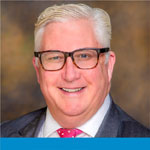
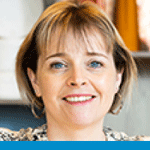
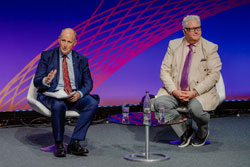
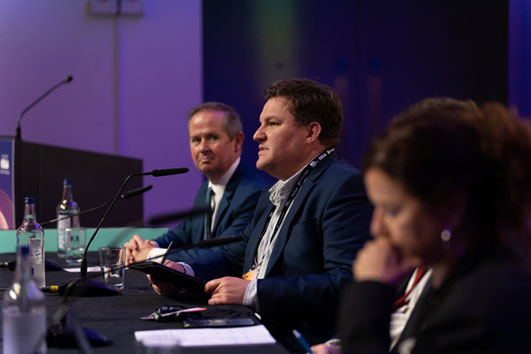
Welcome to our LGA Conservative Group Annual Report for 2024/2025. We are delighted to update you, our Conservative councillor colleagues from LGA member councils, on our work over the past year and our plans for the next twelve months.
We are writing this shortly after the July reshuffle which saw Kevin Hollinrake, our Shadow Secretary of State for Housing, Communities and Local Government, move on to become Party Chairman and James Cleverly succeed him.
We have worked incredibly closely with Kevin and his shadow team over the past nine months. The most obvious example of this has been the weekly ‘Blue Team’ meetings which we host at 18 Smith Square. The ‘Blue Team’ comprised Kevin and his shadow ministers from the House of Commons and the House of Lords, their advisers, and on the councillor side, ourselves, Cllr Tim Oliver (Chair of the County Councils’ Network), Cllr Sam Chapman-Allen (Chair of the District Councils Network), Cllr Elizabeth Campbell (Leader of the Conservative Group on London Councils), the Chairman of the Conservative Councillors’ Association (Cllr Philip Broadhead, and from February, Cllr John Cope) and Baroness Teresa O’Neill.
This followed on from the meetings that we had with the Secretary of State and their ministerial team when we were in government. While those meetings were used to lobby the Government on matters over which they had direct control, such as the Local Government Finance Settlement, over the past year we quickly adapted to the realities of opposition and have used them to share intelligence from our council groups in order to challenge the Government in Parliament. For example, on the impact of the increase on employers’ National Insurance contributions on council budgets and the implications of the Planning and Infrastructure Bill for communities.
These meetings have also provided a useful forum to discuss the implications of the Government’s proposals on local government reorganisation and devolution. Our agreed position is that such changes should be ‘bottom up’ rather than imposed ‘top down.’ For those who are embarking on this journey, the LGA can provide you with a plethora of support, further details of which are outlined later in this report in Abi Brown’s summary of the work of the Improvement and Innovation Board over the past year.
We are incredibly grateful to Kevin for the time that he and has team devoted to the Blue Team meetings, for his collegiate style, and for his wider engagement with us, which has included attending many other LGA and external events and meetings involving you, the members of the Conservative local government family.
While we are sorry to see Kevin move on, we congratulate him on his appointment as Party Chairman, and having established such an excellent relationship with him, we look forward to continuing to work with him is his important new role.
We are also excited that such a high profile and well-respected figure as James Cleverly has been appointed as our Shadow Secretary of State, and we look forward to working closely with him and his team over the coming year.
We wrote our introduction to last year’s annual report shortly after the terrible general election defeat. In the twelve months since then, along with our colleagues on the Group Executive, we have worked to ensure that the voice of Conservative local government is clearly heard within the Party and to emphasise that a recovery in our fortunes at a local level is a prerequisite to us returning to power nationally.
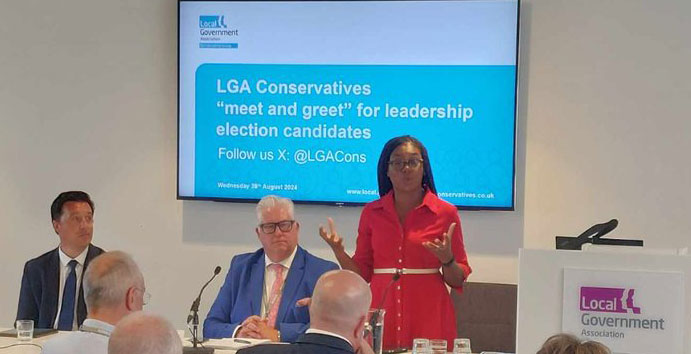
This process started with the leadership election. In August, we were delighted to welcome the then leadership candidates – Kemi Badenoch, James Cleverley, Robert Jenrick, Priti Patel, Mel Stride and Tom Tugendhat – to 18 Smith Square where group leaders from across the country heard them speak and take questions.
We also took this opportunity to present them with copies of our ‘contract’ which outlined how we could support them while also making ten key asks of them on behalf of our Conservative local government family. It was pleasing to see The Times acknowledge our proactive work when it commented that “Conservatives in the Local Government Association have been on the front foot in this leadership contest.”
Following her election as leader, we have established an excellent relationship with Kemi and her team, and we were delighted to welcome her as our guest speaker at our dinner at the LGA Conference in July. Kemi gave a rousing speak and had the opportunity to speak individually to many of the two hundred plus Conservative councillors who were in attendance.
We wrote congratulatory letters to the members of the Shadow Cabinet upon their appointments, and these led to useful introductory meetings with those whose briefs impact most directly on local government. For example, we welcomed Alex Burghart, the Shadow Chancellor of the Duchy of Lancaster, to one of our group meetings at the LGA Conference for a very useful session on policy development.
We look forward to continuing to develop our relationships with members of the Shadow Cabinet over the coming year.
Alongside our established and close partnership with the Conservative Councillors’ Association, over the past year we have also sought to establish new relationships.
For example, in December, Kevin Bentley addressed the Association of Conservative Peers (ACP), which provided an invaluable opportunity to explain what we do and outline the key issues facing local government. This has resulted in a strong and ongoing relationship with the ACP, and particularly with two of its senior figures, Baroness Shephard and Baroness Pidding, with whom we have regular meetings.
In January, we organised our first Leader’s College for Conservative council and group leaders. Held in Milton Keynes, the programme included sessions ranging from ’12 Rules of Group Leadership,’ led by Lord Fuller, the former Leader of South Norfolk District Council, to ‘What makes an effective Group Whip’ with Cllr Mark Platt, the Chief Whip at Essex County Council, as well as dedicated sessions for those in control and in opposition. The event was a great success and the next Leader’s College will take place in November.
If the preceding paragraphs indicate that the past twelve months have been positive in terms of building relationships and promoting our work to key stakeholders, it is important to recognise how disappointing the local election results were. We fully understand (and share) your frustration that years of achievement and hard work by Conservative councillors and councils were swept aside due to the national situation.
We would like to pay a particular tribute to two LGA Conservative Group stalwarts, Izzi Seccombe, our former LGA Conservative Group Leader, and Roger Gough, the former Leader of Kent County Council and our lead member on the Children and Young People Board, both of whom were not re-elected. We thank Roger and Izzi for the major contribution that they have made to the LGA, and local government more widely, over many years and wish them all the very best.
Elsewhere in this report, the summaries from our lead members on the LGA’s policy boards outline the work that has taken place over the past year, and we hope that you find these useful and informative.
In addition to this annual report, we regularly communicate with you in various other ways, including our email bulletins, which update you on key policy announcements, lobbying activity and forthcoming events. We hope that you have found them useful. We are also on X, so please do follow us at @LGACons for all the very latest news and views from the LGA and the Conservative Group.
The LGA’s Councillors’ Forum meetings, which take place approximately every six weeks, are open to all councillors from member authorities. They are often attended by Ministers or other prominent speakers, while the Conservative Group meeting beforehand offers an ideal opportunity for us to discuss topical issues in a private political setting. Over the past year, Kevin Hollinrake and the shadow ministerial team regularly attended our group meetings, and we have also been joined by speakers from partner organisations such as the Conservative Policy Forum.
Details about forthcoming Councillors’ Forum meetings are included in our monthly bulletin. If you wish to attend, please email [email protected]
We would like to end by thanking you, our fellow Conservative councillors, for all that you have done for your communities and for our Party over the past year.
The last few years have been very politically challenging, but we are proud of the fantastic work that you all do, and more certain than ever that it is our Conservative local government family that will lead the revival of our Party’s fortunes nationally.
|
|
|
|
|
|
|
LGA Conservative Group Executive – 2024/2025
The LGA Conservative Group Executive oversees and directs the work of the Conservative Group at the LGA.
The members of the Executive for 2024/2025 were:
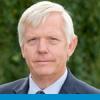
Conservative Group Leader and LGA Senior Vice Chair – Councillor Kevin Bentley (Essex County Council)
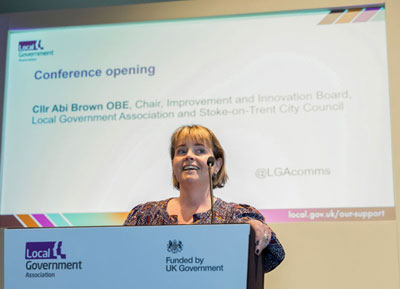
Conservative Group Deputy Leader and LGA Deputy Chair – Councillor Abi Brown OBE (Stoke-on-Trent City Council)
County Council Executive Member – Councillor Rory Love OBE (Kent County Council)
Non-Met District Council Executive Member – The Lord Fuller OBE (South Norfolk District Council)
London Borough Council Executive Member – Mayor Jason Perry (London Borough of Croydon)
Metropolitan District Council Executive Member - Councillor Antony Mullen (Sunderland City Council)
Unitary Council Executive Member – Councillor Linda Taylor (Cornwall Council)
'At Large' Executive Members (four positions)
- Councillor Kelham Cooke (Lincolnshire County Council)
- Councillor David Fothergill (Somerset Council)
- Councillor Joanne Laban (London Borough of Enfield)
- Councillor Colin Noble (Suffolk County Council)
Ex-officio: Chairman of the Conservative Councillors’ Association – Councillor John Cope (Elmbridge Borough Council)
Invited to attend Group Executive meetings
National Lead Peer - Councillor William Nunn (Breckland District Council and Norfolk County Council)
Chairman of the County Councils Network – Councillor Tim Oliver (Surrey County Council).
Chairman of the District Councils Network – Councillor Sam Chapman-Allen (Breckland District Council).
LGA Deputy Chairs – Councillor Izzi Seccombe OBE (Warwickshire County Council) and Councillor Morris Bright MBE (Hertsmere Borough Council and Hertfordshire County Council)
|

|

|

|
|

|

|

|
|

|

|
LGA policy committees
The LGA is a politically-led organisation, and the members who are appointed to serve on its governance bodies are responsible for developing its lobbying and policy positions.
From September 2025, the LGA will move to a new policy committee structure, replacing the policy boards that previously existed.
The LGA’s political groups make annual appointments to the LGA’s governance structures. The number of places and lead member positions (chairman, vice chairman and deputy chairman) that they allocate are determined by the LGA’s proportionality figures, which are calculated every May after the local elections.
Councillors are appointed to serve on the policy committees annually. Nomination forms are sent to Conservative group leaders in June, the appointments are made in July, and they take effect at the start of the new LGA year on 1 September 2025.
In September, the LGA holds a cross-party briefing day for all councillors appointed to the committees. This is an opportunity for senior members to outline the LGA’s priorities for the coming year and for those attending to get further information about their role.
Each Conservative council group leader can nominate up to three councillors from their group. Those councillors who are interested in being appointed are asked to indicate which committees(s) they are interested in serving on and whether they wish to be considered for the lead member position. Applicants are also asked to provide a short statement outlining their experience and suitability for the role.
We make a conscious effort to appoint opposition councillors as well as those from groups that are in control to ensure that a wide range of voices and experiences are heard.
In making the appointments, the LGA Conservative Group Leader considers various factors. The experience and expertise of each applicant combined with the information included in their statement are obviously important. We also aim to ensure that the appointments reflect our strength geographically as well as representing all the tiers of local government.
Each year we are heavily oversubscribed, with some committees being particularly popular, so we cannot offer a place to everyone who puts themselves forward. However, vacancies do occur and we keep every application form on file for consideration when necessary.
When making these appointments we want to ensure that we have a strong and varied team that is representative of Conservative councillors across the country, which promotes and showcases the very best in talent from Conservative local government, and which will provide a strong Conservative voice within the LGA.
The following reports from our lead members outline the work that they and their colleagues have undertaken over the past year. We hope that you find them useful. Further information about the LGA governance structure and meetings is available on the LGA website
Children and young people board – Roger Gough
The children and young people board is responsible for the LGA’s activity relating to the wellbeing of children and young people, education, social care, health and early years.

It has been another busy year for the board, with our work covering a wide range of issues and topics affecting children and young people.
In November 2024, we published our vision for children, young people and families. This sets out our ambitions for children and how councils, partners and government can work together to deliver them. It also includes key recommendations to underpin the vision and guide our work in relation to children, young people and families.
Our key legislative focus this year has been the Children’s Wellbeing and Schools Bill, which was introduced to Parliament in December. The Bill includes some measures that the LGA has lobbied for, including oversight of providers of placements for children in care and improved information sharing. Our work has included providing evidence to the Bill committee and briefing parliamentarians. For example, we called for the inclusion of measures to extend corporate parenting duties to additional bodies, which was subsequently included following a government amendment in March.
Also in March, board members joined lead members from around the country to meet with Department for Education officials to discuss measures in the Bill related to placements for children in care. This is a significant issue for councils both in relation to costs and outcomes for some children, so I was pleased that the LGA was able to facilitate colleagues having the opportunity to hear about the proposals, ask questions and share their own experiences.
We also submitted a response to a call for evidence to the curriculum and assessment review. This highlighted the important role a reformed curriculum could play in supporting more children with Special Educational Needs and Disabilities (SEND) in mainstream education.
Indeed, supporting children and young people with SEND remains one of the biggest challenges that councils currently face. We continue to lobby for fundamental reform that is focussed on increasing the levels of mainstream inclusion and also for councils to have the necessary powers and levers to hold partners to account for their work in supporting children and young people with SEND.
We also continue to call for Dedicated Schools Grant (DSG) deficits to be written off (whilst recognising those councils who have already contributed via the Safety Valve programme), alongside an extension to the statutory override on the treatment of DSG deficits (which is due to end in March 2026).
We have also:
- contributed to the support for children and young people with special educational needs - NAO report
- contributed to the value for money report on support for children and young people with SEND and submitted evidence to the subsequent UK Parliament inquiry
- briefed the Education Committee, submitted evidence to their on-going solving the SEND crisis – education committee and given evidence to the All-Party Parliamentary Group on SEND
- continued work to support those in care. The board oversaw the development of our supporting care leavers guide, and we updated the resource pack for councillors which includes information for all councillors in their role as corporate parents
- published the key findings and recommendations agreed at the January meeting of our board's children's mental health task and finish group. The findings are based on a range of activity exploring existing legislation and policy, identifying good practice in councils, and engaging with children and young people to get their views on what needs to change.
Support for unaccompanied asylum-seeking children and care leavers continues to be a high priority issue for councils. Recent high court hearings have been clear that this should be considered a children’s social care issue rather than an asylum issue, and therefore the board’s wider work around children’s social care will form part of the LGA’s lobbying.
Finally, on a personal note, having not been re-elected at May’s local elections, I stood down from my lead member role. Having served on the board for many years, I wanted to place on record my thanks to Conservative colleagues for the valued support and advice that they provided and for working together as a team to develop a sensible, pragmatic and financially prudent approach to our work on the board and in response to the various policy proposals that we considered over the past year. I wish them all the best for the future.
City regions board – Councillor Robert Alden
The city regions board represents the interests of city areas. Its remit includes growth, transport infrastructure, skills and wider public service reform.

Although the city regions board is Labour-chaired and Labour-dominated, there has been plenty of scope over the past year for my colleagues and I to ensure that the voice of Conservatives in urban and metropolitan areas is clearly heard within the LGA.
At the first board meeting of the 2024/25 cycle, we agreed a work programme aligned to the pursuit of three broad outcomes:
- Councils and combined authorities should be seen as essential and equal partners in shaping and delivering the shared ambition for inclusive growth and greater prosperity.
- Local leaders have the capacity and capability to kickstart inclusive growth in their areas.
- The LGA plays a leading role in supporting local government to develop solutions that address the challenges of productivity, prosperity and wellbeing.
In October, the Government published 'Invest 2035: the UK's modern industrial strategy' and we responded on behalf of the sector by highlighting local government’s key role in delivering inclusive local growth.
I am pleased to report that the LGA successfully lobbied Government to secure a £900 million fund to support a transitional year of the UK Shared Prosperity Fund, preventing a funding cliff edge for essential skills and business support provision.
We have also overseen the publication of various important LGA reports over the past year.
For example, 'Economic inactivity interdependencies in England' brings key data together, and using regression analysis, outlines those factors that might be causing economic inactivity across places.
Meanwhile, the publication 'How local transport infrastructure influences economic inclusion', using new data analysis and evidence from local authorities, provides clear evidence of how inadequate local transport provision hinders economic inclusion, with many job and training opportunities not easily accessible via public transport.
Members of our board and the people and places board took part in a joint workshop to understand the potential opportunities and risks arising from future arrangements for overview, scrutiny, and voting in strategic authorities. This was part of a wider review, the findings of which will inform the LGA’s position on arrangements for shared decision-making.
Finally, I would like to take this opportunity to thank my Conservative colleagues on the board, Councillor Barry Anderson, Leeds City Council, Councillor Julia Lepoidevin, Coventry City Council, Cllr Antony Mullen, Sunderland City Council, Councillor Olly Scargill, North Tyneside Council, and Councillor Mark Weston, Bristol City Council, for their support and advice over the past year.
Community Wellbeing Board – Councillor David Fothergill
The community wellbeing board works to support local government in the delivery of its public health, health protection and mental health responsibilities, as well as issues relating to an ageing society and the reform and funding of adult social care.
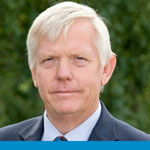
Following the announcement in January of an independent commission into the future of adult social care, chaired by Baroness Casey, its terms of reference were published in May.
The commission will work in two phases: phase one will report in 2026 with a plan for how to implement a national care service over a decade; and phase two, which will report by 2028, will make longer-term recommendations for the transformation of adult social care.
Whilst welcoming the establishment of the commission, we are clear that if it is to meet its stated objectives it is essential that it involves councils as well as those drawing on care and support and their loved ones. We have also urged the Government to revisit its timetable due to the urgency of the situation.
Engaging with the commission and seeking to influence its findings will be a key priority for the coming year. The importance of its work is underlined by the decisions made in the autumn budget to increase the national living wage and employers’ national insurance contributions, the financial implications of which will make it even harder for social care authorities to address existing significant challenges such as waiting times for an assessment of needs and the commencement of care packages.
Given the Government’s emphasis on shifting from treatment to prevention, it is also disappointing that there has been no specific funding to prevent, reduce or delay the onset of more acute and costly needs for care. This is particularly so given that our report, launched at the National Children and Adults Services Conference (NCASC), found that investing in earlier preventative support would both improve lives and save £3.17 for every £1 spent.
In April, we hosted our annual public health conference in partnership with the Association of Directors of Public Health (ADPH). Over 1,250 delegates signed up over the three days to hear from speakers across nine key plenary sessions and participate in a virtual innovation zone.
In May, I jointly authored with Cllr Arooj Shah, chair of the children and young people board, the foreword for '10 years of children's public health in local government: A series of interviews', marking the ten year anniversary of children’s public health transferring to councils. This features interviews with public health and child health leaders, explores successes and challenges, and looks ahead to the next decade.
Meanwhile, for all the latest information on public health, our LGA public health blog features insights and shares innovative approaches and best practice from councils across the country.
Finally, I ended last year’s report by noting a high-profile LGA 'win' in relation to the previous Conservative government acting on our longstanding lobbying on behalf of member councils by confirming plans to ban disposable vapes.
Ahead of the legislation coming into effect on 1 June, the LGA worked with DEFRA, the Association of Convenience Stores and National Trading Standards to ensure that it was actively communicated to businesses, advising them stop purchasing new stock and arrange for the responsible disposal of any remaining vapes.
Culture, tourism and sport board – Councillor Joanne Laban
The culture, tourism and sport board provides strategic oversight of all the LGA’s policy and improvement activity in relation to libraries, the visitor economy, sport and physical activity, the arts, museums, public parks, and heritage.

With many of Team GB’s athletes beginning their sporting career in facilities owned or co-owned by local authorities, last year’s Olympics and Paralympics highlighted the crucial role that councils play in encouraging physical activity and promoting sporting opportunities.
Furthermore, as reflected in a Local Government Chronicle article published just after the games, the Olympics generates momentum and inspiration which local authorities can capitalise on to encourage increased physical activity.
Additionally, councils have a key role to play in encouraging physical activity and providing sporting opportunities that are appropriate for their local communities and which complement the offers made by grassroots clubs. Enabling as many people as possible to access physical activity is of course a significant preventative step in improving health equality.
An illustration of this was Sport England’s 'moving communities' report which highlighted the significant achievements of public leisure facilities in supporting people to get active locally. Some key statistics included in the report are that leisure centres generated a social value of £890 million in 2023/24; the average number of participants per site grew by almost a thousand people (seven per cent), and the average visits per site rose by over 10,000 per year (five per cent).
To build on these achievements, we have published a practical guide for councillors and officers on how to improve physical activity levels amongst children and young people from low-income neighbourhoods.
Following the success of Team GB, we briefed on the Parliamentary debate on sport. Whilst acknowledging that successes at major events are important, we highlighted the need for a greater focus on and resourcing of grassroots sports and public leisure services to ensure the benefits of physical activity reach everyone.
Linked to this, we also responded to Sport England's consultation on the next phase of their implementation plan, using the opportunity to call for a stronger strategic relationship with the LGA to deliver improved outcomes locally.
Meanwhile, our active communities hub highlights good practice in the delivery of sport, physical activity and leisure services by councils and their partners to reduce inequalities and improve physical activity levels in the least active communities.
Arts Council England (ACE) is one of our key partners, and the LGA chair and board chair have met with Sir Nick Serota, its chair, to discuss devolution and partnership working. In June we met with Dame Margaret Hodge to discuss her independent review of ACE (to which we made a written submission). We were also pleased to co-commission and launch the 'culture and place data explorer' with ACE.
We also:
- provided a briefing for the Parliamentary debate on the impact of the budget on arts heritage and cultural organisations
- provided a briefing for a short debate on plans to publish a new strategy for public libraries
- responded to Select Committee inquiries on protecting built heritage and community and school sport.
With many councils acting as trustees of charitable organisations, in partnership with the Charity Commission, we also produced a guide for councillors on their role as trustees
Our cycle of board meetings for 2024/2025 finished with a visit to Leicester, hosted by the city council. This provided a great opportunity to explore the Richard III Visitor Centre, see how the cathedral has responded innovatively to the influx of new visitors, and hear about ambitious plans, including a new museum.
I am privileged to have served as our Conservative lead member (and deputy chair) of the culture, tourism and sport board over the past year, and I would like to thank my fellow Conservative colleagues for the support and advice that they have given me.
In particular, I would like to thank Cllr Peter Golds for representing the board at various external events, including speaking at policy exchange sessions on libraries and the visitor economy, a StreetGames policy session on the future of Conservative sports policy at the Conservative party conference, the Creative Industries Policy and Evidence Centre, and for also attending a Parliamentary reception on the creative industries.
Economy and resources board – The Lord Fuller OBE
The economy and resources board shapes and develops LGA policies and programmes in relation to local government finance; welfare reform; workforce issues and pensions.

The LGA’s autumn budget and spending review submission for 2024 included our updated funding gap estimate of £6.2 billion over two years as part of a wider representation and analysis of the funding outlook for local government. Alongside this, it summarised our key asks across a range of issues facing councils, including supporting children and young people, housing, adult social care funding and reform, growth, and crime.
We also produced an in depth briefing on the announcements contained in the autumn budget and issued a media statement
In December, we published 'reforming the local government funding system in England', a joint publication with SOLACE and CIPFA. The LGA’s contribution, which was overseen by a working group of board members, sets out the financial challenges facing the sector and proposes actions that Government should take to support councils in the short-term. It also called for consideration of the need for broader change over the long-term.
In February, we published our submission to the 2025 spending review with an accompanying media release. The submission included updated funding gap figures that reflected the impact of announcements made at or following the autumn budget. The analysis shows that councils could face a £1.9 billion funding gap in 2025/26, rising to £4.0 billion in 2026/27, £6.0 billion in 2027/28 and £8.4 billion in 2028/29. It also drew on the results of a survey of chief finance officers in January.
In February the local government finance settlement (LGFS) 2025/26 was published. Our response noted that:
Extra money for councils next year, including compensation for employer national insurance contributions increases, will help meet some of the cost and demand pressures they face but still falls short of what is desperately needed to cover them all.
Our briefing for the debate on the LGFS 2025/26 was shared with MPs and Peers.
The Government's spring statement was published in March, and in response we published an on-the-day factual briefing
We also responded to the consultation on local authority funding reform. MHCLG is engaging with the sector on these reforms through a high-level stakeholder group on which the LGA is represented along with council chief executives, chief finance officers and other stakeholders. The group has met several times, and will continue to do so, to discuss key aspects of the proposed reforms.
The Government published its response to the local audit strategy consultation. Whilst we welcomed the dropping of the proposal that audit committee chairs be independent appointments, we argued that councils should retain the right to appoint their own chair. The new mandatory requirement for every audit committee to include at least one independent member means that the Government will need to ensure that guidance addresses the specific concerns that we raised in our consultation response (such as what constitutes ‘independent’, appropriate skill requirements, remuneration levels, and a solution – potentially through a national pool for those authorities who are unable to recruit suitable people locally).
We remain committed to working with Government on the redesign of the local audit system and on the proposal to set up a new local audit body. I am particularly grateful to Cllr David Leaf, my Conservative colleague on the Board, for representing the LGA at a Parliamentary panel that discussed the reform of local audit.
Improvement and innovation board – Councillor Abi Brown OBE
The improvement and innovation board has responsibility for the LGA’s activity in relation to improving councils’ performance, including peer support and mentoring.
It has been another busy year for the improvement and innovation board, and I am particularly grateful to my Conservative colleagues for being so supportive to me in my role as board chair, and for working effectively and cohesively as a team to ensure that we have had a solid record of achievement over the past twelve months.
For example, whilst we worked constructively with the Office for Local Government (Oflog) throughout its existence, its closure in December was a clear vote of confidence by central government in the LGA’s ability to deliver high quality sector-led support in rapidly changing circumstances. Indeed, our sector support offer, which is funded by the UK Government, is central to our mission of delivering high impact, low cost programmes to our membership.
I am therefore delighted to report that, as outlined in our annual review of sector support delivered in 2023/24, 100 per cent of chief executives and 97 per cent of council leaders say that LGA support has had a positive impact on their authority.
Our ability to adapt with pace and flexibility to changing circumstances is evident in our support offer to councils on devolution or LGR journeys. You can find more details of this on our Devolution and LGR hub, which includes access to networks, service-specific support (for example, on children’s and adults’ services), and webinars covering key topics, including opportunities to learn from local and combined authority representatives with experience of local government reorganisation and devolution.
Meanwhile, our corporate peer challenge programme, which provides robust and credible challenge, has been refreshed to support local and combined authorities navigating their next steps and priorities in relation to local government reorganisation and devolution.
Our councillor and officer development leadership programmes continue to play a vital role in ensuring councils have the skills and knowledge to deliver and lead, including through times of change. With more than 2,000 councillor placements delivered in 2024/25, flagship schemes such as the Leadership Academy, Leadership Essentials and Next Generation remain cornerstones of this offer.
As conference chair, I was delighted to welcome 170 delegates to Manchester for the annual member peer conference in March. With the increased focus on devolution, local government re-organisation, challenged councils, rising demand and much more, the conference was a great opportunity to celebrate the work of our member peers and thank them for giving up their time to support our sector-led improvement work.
In addition to hearing from Jim McMahon, the Minister of State for Local Government and English Devolution, the conference included plenary and workshop sessions exploring a wide range of topics, including one on artificial intelligence (AI) which was led by our own group leader, Kevin Bentley.
Speaking of AI, we have launched 'AI Unpacked' to help explain AI concepts to those just beginning their AI journey. This series of short videos cover the basics of ‘what is a large language model?’ to ‘what is predictive analysis?’ With most councils still in the exploration phases of AI adoption, these videos are designed to support confident decision-making.
With officer recruitment and retention an increasing challenge, we launched the 'Make a difference, work for your local council' campaign. Funded by the UK Government, this has been advertised in all English regions via radio, podcasts, billboards, social media and digital. Councils have also been using the toolkit to promote the campaign locally.
We updated our councillors’ guide to procurement to reflect the commencement of the Procurement Act (2023) in February. This guide outlines councillors’ roles, frequently asked questions, as well as covering best practice, social value and contract management.
Meanwhile, the councillor transformation toolkit aims to help councillors support, enable, make decisions on, and scrutinise, transformation in order to achieve better outcomes for local residents and communities, while delivering value for money.
Local government finance can be daunting, but our e-learning module is designed to be as accessible as possible and has been updated to complement the councillor workbook on local government finance. This module, along with various others, is available on the LGA councillor e-learning platform
Finally, I would also encourage councillors and councils to make use of LG Inform, the LGA’s freely available, award-winning data-benchmarking tool. This powerful platform uniquely integrates thousands of local-level data metrics to enable councils, the public sector and communities to compare local authority performance, including those with similar characteristics, such as CIPFA’s ‘nearest neighbours’.
For more information on using LG Inform, or how to subscribe to LG Inform Plus (our paid data benchmarking subscription service), please contact [email protected] or [email protected]
Local infrastructure and net zero board – Linda Taylor
The local infrastructure and net zero board provides strategic oversight of the LGA’s policy, regulatory and improvement activity in relation to planning, local infrastructure, transport and housing services, the environment and climate change.

Following significant engagement activity with councils and external organisations, we have:
- responded to the Government’s consultation on revisions to the National Planning Policy Framework in September and set out our position on the Government’s response in December 2024
- responded to working papers on brownfield passports and responded to reforms to planning committees as the Government continues to consult and roll-out reforms to the planning system
- provided a briefing for the second reading of the Planning and Infrastructure Bill and an amendment paper on the Planning and Infrastructure Bill, which was introduced in March.
Concerns remain about how the Planning and Infrastructure Bill will ensure that councils – who best understand the needs of their local areas – remain central to the planning process, and we will continue our lobbying work as this legislation progresses through Parliament.
I would like to take this opportunity to draw your attention to the fact that a housing and homelessness case study hub has been launched on the LGA website to highlight good practice in the delivery of affordable housing by councils and partner organisations.
We have also published a refreshed empty homes officer toolkit to support the practicalities of dealing with empty homes.
The board has continued its dialogue with government on waste reforms, and our waste reforms briefing outlined the LGA’s position on key issues.
This helped to achieve some positive outcomes, including the Government agreeing that payments from packaging producers to process packaging waste should be separate from the wider local government settlement, meaning an ‘additional’ £1.1 billion for the sector in 2025/26, with the Spending Review confirming this will be additional for the next three years.
Our representations also led to government reversing its proposal to limit the frequency of residual waste collections and confirming that councils can continue to charge for garden waste collections. We continue to lobby for sufficient food waste new burdens funding and further support around the introduction of requirements to collect flexible plastics from 2027.
Representations also continue to be made on the Deposit Return Scheme (DRS) due from 2027. LGA research shows that councils cumulatively risk losing nearly £70 million a year because of proposals to introduce a DRS for bottles and cans. We continue to lobby the government about this and other risks, such as increased litter and impacts on recycling.
We submitted written evidence to the transport committee inquiry on the impacts of street works by utility companies. We highlighted the damage caused by street scarring, increasing use of ‘immediate’ and ‘emergency’ works, growing demand for access to street works and the weak incentives for works to be done on time and to a high standard.
In response to the increasing use of new technology, including AI, and to highlight good practice in preventative and reactive repairs, the LGA published 'improving highways maintenance productivity'
As vice chair of the board, and drawing on my experience as leader of Cornwall Council, I was pleased to speak on the future of buses at the LGA conference in October. Also in my vice chair role, I attended a social housing roundtable with the Deputy Prime Minister, Angela Rayner, and the Minister of State for Housing and Planning, Matthew Pennycook.
Finally, having stood down from Cornwall Council at the local elections in May, and therefore also from the board, I would like to thank my Conservative colleagues for all the friendship, support and advice that they have offered me over the past two years whilst I have been chair, and then vice chair, of the board, and also our Conservative lead member. They are the very best of Conservative local government and I wish them all well for the future.
People and places board – Councillor Martin Tett
The people and places board focuses on the role of non-metropolitan authorities in enabling economic growth, the transformation of public services and strategic transport and housing.

The past year has been a busy one for the people and places board, which represents the interests of non-metropolitan local authorities and works in partnership with the City Regions Board on wide range of issues, including: devolution, economic growth, employment and skills, public service reform and strategic transport and housing.
Alongside the devolution task and finish group, which I co-chair, much of our activity has focused on providing leadership and oversight in support of the LGA’s response to the Devolution White Paper and in preparation for the publication of the English Devolution Bill.
This has included line-by-line analysis of the key provisions of the White Paper, ‘deep dives’ into hyper-local and combined authority governance and public service coterminosity, and identifying key asks and concerns for the sector.
We have worked to establish relationships with the new Ministers whose portfolios impact on our work. For example, at the LGA conference in October I chaired a session on delivering inclusive growth which included Alex Norris MP, the Minister for Democracy and Local Growth. It considered various issues, including how to convene the various levers of growth, how we can work with Whitehall to deliver this agenda, and the intersection with devolution.
Also at the LGA Conference, we held a workshop on 'work local', the LGA’s practical vision for a devolved and integrated employment and skills system which gives local leaders the power and funding to work with partners to join up provision. The session was ably chaired by Cllr Kevin Bentley, the LGA Conservative group leader and former chair of this board.
In March, along with Cllr Liam Robinson, the Chair of the City Regions Board, I met with Alison McGovern MP, the Minister for Employment, to discuss 'connect to work', Job Centre Plus reform and the development of Great Britain Working plans. I am pleased to have established a good relationship with the Minister on welfare reforms and back to work policies for those not economically active.
A significant achievement for the board over the past year was the successful lobbying to secure a £900 million fund to support a transitional year of the UK Shared Prosperity Fund (UKSPF), preventing a funding cliff edge for essential skills and business support provision. We also hosted a session, which was attended by 70 councils, with MHCLG officials and lead UKSPF officers to discuss the mechanics of this transitional year.
We have commissioned Genecon, a placemaking and economics consultancy, to research the challenges faced by councils in delivering housing and infrastructure projects. Using the principles of work local, and building on the LGA’s green jobs framework. The research will be used to highlight the importance of enabling place-based and partnership approaches whilst also highlighting existing best practice.
Safer and stronger communities board – Councillor Sue Woolley
The safer and stronger communities board has responsibility for the LGA’s activity relating to the promotion of the safety of local communities, including issues of crime and anti-social behaviour, police governance and accountability, community safety, public protection, the fire service and emergency planning, and licensing and other regulatory activities.

To support councillors to manage the risks associated with their public role, the LGA provides a range of resources, including guidance, nationally delivered training and local workshops on in-person and online safety for councillors, as well as advice for councils on the support that they can provide to councillors experiencing abuse.
All resources, guides, and event information are available on the civility in public life hub and specific enquiries can be sent to [email protected]
Separate to our scheduled series of meetings, the board met to consider the Government’s devolution proposals. Members were supportive of devolution whilst highlighting, amongst other things, the need for flexibility in relation to local circumstances; the importance of being mindful of the footprints of different public services and the advantages of coterminousity; the impact of moving services such as licensing away from local communities (for example, the potential loss of local intelligence); and the need for cooperation across boundaries.
These points will inform work that was already underway on issues such as community safety partnerships. We are also holding regular discussions with the Association of Police and Crime Commissioners regarding the impact of devolution on policing and public safety.
We have continued to have a close relationship with other LGA boards due to the cross-cutting nature of our work. For example, in April lead members from our board had a useful meeting with our counterparts from the fire services management committee and the local infrastructure and net zero board. This focused on the LGA’s work in relation to extreme weather events, particularly flooding and wildfires, and their impact on local authorities.
The LGA hosts a network of community safety officers which shares best practice and acts as a consultation board for policy development. If a community safety officers in your council would like to join the network, please ask them to contact [email protected]
We also continue to play a leading role in the forum, which currently has over 180 members, that we have established with the Association of Police and Crime Commissioners (APCC) and the Domestic Abuse Commissioner (DAC). This has carried out valuable work over the past year, including establishing a working group to make recommendations to government on how to improve the domestic abuse related death review process.
Finally, although the board is chaired by a Liberal Democrat, I am pleased to report that our Conservative members have continued to participate actively in its work over the past year, both at internal and external meetings. For example, at the LGA conference in October, I chaired a session on community cohesion, whilst in November, my colleague, Cllr Priti Joshi, chaired a webinar on the Law Commission’s consultation on burial and cremation law.
I am therefore pleased to have this opportunity to thank my colleagues for their hard work over the past year and for all the support they have offered me in my lead member role.
Fire services management committee – Councillor Rachel Bailey
The fire services management committee represents the views of fire authorities in relation to service modernisation and all other fire related issues.

In January, we held an extra meeting to consider the Government’s devolution proposals on fire and rescue services. The discussions highlighted the need for public accountability and transparency in fire governance and support for stand-alone fire scrutiny panels.
At our other meetings we have discussed a range of important issues, including the on-call duty system, community resilience and the Grenfell Tower report. We have also received regular updates on workforce and pensions issues and reports from the National Fire Chiefs Council (NFCC) and the Fire Standards Board.
We also worked with the NFCC to develop a joint spending review submission to the Home Office which highlighted the need for sustainable funding for the fire and rescue service.
We have continued to engage with His Majesty's Inspectorate of Constabulary and Fire and Rescue Services (HMICFS) through regular attendance at their external reference group, including at an additional meeting to discuss their thematic review into misconduct in the fire and rescue service.
Our fire conference, which took place in Gateshead in March, was attended by around 200 delegates. Keynote speakers included Alex Norris MP, the Fire Minister, Sir Andy Cooke, His Majesty’s Chief Inspector of Fire & Rescue Services, and Mark Hardingham, Chair of the NFCC. Plenary and workshop sessions covered a range of subjects, including devolution, fire finance, inspection, negotiations, culture, building safety, planning for extreme weather events, tackling misconduct, the fire service’s role in community cohesion, and pensions.
The Fire Standards Board (FSB) has produced a series videos which explain its work and the support that fire and rescue services can receive from the NFCC. All videos are available on the Fire Standards Board website
The LGA’s Improves tool' also supports FRA members to scrutinise improvement and provides information to help them make informed decisions.
We welcomed a ban on disposable, single use vapes which came into effect in June as these products have become a fire hazard in bin lorries and waste and recycling centres.
Finally, having taken over as interim lead member in May, I wanted to take this opportunity to thank Nick Chard for his many years of service at the LGA on fire-related issues, including the FSMC, the Fire Commission and workforce negotiations.
Nick, who did not seek re-election at this year’s local elections, was an outstanding lead member over many years, a highly respected Chair of the Kent and Medway Fire and Rescue Authority, and a tireless advocate for the sector.
I know that colleagues from across the political spectrum will greatly miss Nick’s experience and contributions, and I wish him all the very best for the future.
The Conservative group office
The LGA Conservative group office supports Conservative council groups and councillors whilst also being the day-to-day voice of Conservatives within the LGA.
There are currently three full-time members of staff, and they have a wealth of knowledge, including first-hand experience of being a councillor, of having worked for the Conservative Councillors’ Association (CCA) and of working in Parliament.
The office works closely with the CCA and the Local Government Department at CCHQ, including hosting joint events and sponsoring sessions at the CCA Local Government Conference.
Although much of the staff’s time is spent supporting the group leader, group executive and Conservative members of the LGA’s governance bodies, they also deal with enquiries from Conservative councillors in relation to a variety of issues, and they aim to be the first point of contact for Conservative council groups and councillors.
One of the group office’s key roles is to support our senior members to establish and maintain relationships with shadow ministers and their advisers. This includes lobbying on specific policy proposals or pieces of legislation and securing the attendance of shadow ministers and other politicians at Conservative group meetings or corporate LGA events.
In summary, the work of the group office includes the following core activities:
- supporting Conservative councillors who serve on the LGA’s governance bodies.
- working closely with shadow ministers, their advisers, and with the CCA and CCHQ.
- shaping the LGA’s corporate campaigns, policy, media, and public affairs work in line with the direction given by the group’s political leadership.
- offering advice to individual councillors and Conservative council groups.
- producing an annual report to inform members of our activities.
- organising the annual ‘Next Generation’ programme for aspiring future leaders.
- delivering the Conservative part of the LGA’s ‘Be a Councillor’ programme.
- organising events at the Conservative Party Conference, CCA Local Government Conference and the LGA Annual Conference.
- sending a fortnightly email bulletin to all Conservative councillors to update them on news and events from the group, the corporate LGA and the Conservative Party.
- co-ordinating the Conservative member peer programme as part of the LGA’s wider sector-led improvement work.
For the latest information on our activities, please follow us on X @LGACons and visit the Conservative Group website

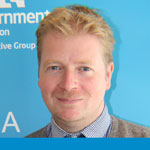
Interim Head of Group Office - Kyle Evans
Kyle joined the LGA in 2023 having previously managed a parliamentary and constituency office for a MP who was also a select committee chairman. He was appointed interim head of group office in June 2025.
Kyle is responsible for advising on and implementing the policy direction and management of the Conservative Group and providing advice to the group leader and the group executive. He also supports members on the safer and stronger communities board, the economy and resources board, the city regions board and people and places board.
Kyle joined the Conservative Party aged 17 and served as a councillor on Nuneaton and Bedworth Borough Council from 2018 to 2024. During that time he served as a cabinet member, overseeing a successful Levelling Up Fund bid, and chaired the overview and scrutiny and licensing committees. He was also an opposition spokesperson.
Contact: 07783 425 203
Political Adviser - Paul McCannah
Paul joined the LGA in 2004 from the Conservative Councillors’ Association (CCA), where he was the national organiser.
As well as supporting the head of group office, he advises Conservative members who serve on the children and young people board, the community wellbeing board, the culture, tourism and sport board, the local infrastructure and net zero board, the fire services management committee and the Fire Commission.
Paul served on Enfield Council from 2002-2014, during which time he was a cabinet member for community safety and for leisure services. He also chaired various scrutiny committees as well as the overview and scrutiny committee.
Contact: 07747 564 920

Political Administrator - Courtney Waldowski
Prior to joining the group office in October 2023, Courtney studied politics and international relations at the University of Leicester and worked as a public affairs account executive and an event planner for a political communications firm.
She provides administrative support to the group office, group leader and to Conservative members, and is the first point of contact for general enquiries.
Outside of work, Courtney enjoys travelling, reading and playing darts for her local team.
Contact: 07768 020373
Contact us:
LGA Conservative Group Office
Local Government Association
18 Smith Square
Westminster
London
SW1P 3HZ