Foreword
We are delighted to jointly introduce this new guidance, authored by the Belong Network, a non-government organisation undertaking research, policy and practice on social cohesion. The guidance has been endorsed on a cross-party basis by the Local Government Association (LGA).
In many respects, everything councils do is relevant to social cohesion. Council services contribute towards a shared sense of belonging, of communities at ease with themselves -an aspiration we all share. As Belong and LGA members recognise, social cohesion is not self-sustaining; it must be actively nurtured to endure. Too often, social cohesion is only noticed by its absence, slipping between policy priorities and falling through the gaps between services.
Social cohesion is about place-making - creating communities where people live, work and spend time. We know that cohesive and socially connected communities are more likely to attract investment, support innovation and retain the talent that local economies need.
While councils have legal responsibilities to promote and maintain cohesion as set out in the Public Sector Equality Duty, it cannot be reduced to compliance alone. It has to be more than simply meeting a statutory duty. Cohesive communities are also resilient communities. In the face of climate change, terrorism, pandemics, economic uncertainty and an increasingly volatile world, that resilience is more important than ever.
Building cohesive communities is not solely the responsibility of local authorities. Despite their role as place leaders, councils do not control all the factors required to address these challenges. This guide helpfully sets out the relationships and partnership models that can be drawn upon to build and sustain social cohesion at a local level.
The guidance provides councils with practical and detailed support. This includes a clear summary of legal obligations, examples of effective tools and strategies for embedding cohesion in council services and points readers to further resources. It also sets out the practical steps required to develop effective cohesion strategies. Throughout, the guidance draws on examples of good practice from councils and their partner organisations. These evidence-based case studies show how organisations have gone about building thriving, connected communities and what they have learned from this process.
The Building Common Ground guidance could hardly come at a more opportune moment. Global conflicts, economic pressures and disinformation place increasing strain on the bonds that hold society together. These challenges risk dividing us, but also test our understanding of what a cohesive society means and where its boundaries lie. The definition of social cohesion put forward by Belong helps clarify this scope and ambition.
We all want to live in communities where everyone can thrive and feel a sense of belonging. This is a society where people feel heard, safe, and able to influence democratic institutions. If these ideals seem distant from daily pressures and the challenges councils face, that only highlights the need for this guide and the work it supports.
When equipped with the right tools and resources, we believe councils are uniquely placed to create and nurture communities that are good places to live in and a society in which we all belong. This guide aims to help councils do that job. We hope you will find it useful.
Co-signed:
Cllr Louise Gittins (LGA Chair)
Kelly Fowler (Belong Chief Executive)
Section One – Introduction
About the guidance
In most parts of Britain people get along with their neighbours and work colleagues. Yet the bonds that hold society together face growing pressures. They include social isolation, poverty, pressure on public services (including policing), declining trust in democratic institutions, weaker family ties, fear of crime, antisocial behaviour, immigration and asylum challenges, religious and cultural divisions, political divisions, religious and political extremism, racism, misogyny, and the spread of mis and disinformation. These tensions have become more visible in recent years, reflected in the riots and protests of 2024 and 2025.
This guidance does not seek to rank or resolve these pressures. Instead, it begins from the premise that each represents a challenge society can choose to overcome. A shared sense of belonging among law-abiding citizens committed to democracy is the cornerstone of a resilient society. When people feel connected and invested in common values, they are better able to work together to address divisions and withstand external shocks. Building this resilience is essential for our society – today and in the future.
Local authorities and their partners are at the forefront of responding to these tensions and this is made harder by pressures that reduce the police support available. But social cohesion is about much more than averting public disorder. It is about creating the conditions where everyone thrives and feels connected to one another. Therefore, it is important that local authorities, police, and partners prioritise responding to the needs of residents and drive joint action that restores trust and equips communities to face challenges together.
As leaders of local places, councils and councillors play a crucial role in promoting social cohesion. Their leadership—both elected members and senior officers—sets the tone for inclusive decision-making, prioritises resources, and ensures that cohesion is embedded across services and partnerships. Alongside their role in setting policy within legal frameworks and budgetary limits, councillors have a key contribution in representing communities and fostering trust, while officers provide the strategic and operational capacity to deliver programmes. Leadership by councillors and officers at all levels in a local authority is essential in building cohesive communities.
This guidance on social cohesion authored by Belong and endorsed by the LGA (Local Government Association), aims to help local authorities fulfil this role. It supersedes the LGA’s Building cohesive communities, published in 2019. The LGA recognises that every area faces a different range of challenges and that councils have the best understanding of local needs and how to address them. The aim of the guidance is not to be prescriptive. Rather, this guidance on social cohesion aims to give local authorities the tools to address the challenges they face and to share good practice. Specifically, this guidance will:
- help councils consider what social cohesion means in practice
- set out relevant legislation and government policy priorities
- provide a framework and set of principles to guide local authority work
- look at the processes involved in developing a local authority social cohesion strategy
- discuss current challenges to social cohesion and how they might be addressed
- use case studies to share good practice
- provide links to further resources and reading.
How to use the guidance
The online guidance is organised into six thematic sections:
- Introduction and legislative and policy background (Section One, this section)
- Developing a social cohesion strategy (Section Two)
- Partnerships and partner organisations (Section Three)
- The roles of elected members and different local authority service areas (Section Four)
- Responding to social cohesion challenges (Section Five)
- Monitoring, learning, evaluation and sustainability (Section Six)
The LGA’s Social Cohesion Guidance will be accompanied by training for councillors and officials. The training will be organised by Belong and the LGA and run from early 2026.
What is social cohesion?
Practical, accessible and communicable definitions of social cohesion underpin local social cohesion strategies. Local authorities should develop their own definitions of social cohesion, ideally in consultation with partner organisations and residents. A clear definition of social cohesion enables local authorities to set out clear aims for programmes of work, design implementation plans and monitoring and evaluation processes. Clear definitions also help local authorities to communicate their vision for stronger and cohesive communities to residents.
Background
Social cohesion, sometimes called community cohesion, first entered the policy lexicon in the 1990s in relation to urban regeneration programmes. Its use became more widespread following the Cantle report (2001), which examined disturbances in some northern towns and highlighted the need to tackle social divisions, improve inter-community relations and strengthen people’s sense of belonging. It also acknowledged wider issues such as economic disadvantage and segregation. Cohesion is often described as the ‘glue’ that holds society together. Although successive governments since 2001 have recognised its importance and introduced various initiatives, many of them short-term, there has never been an official government definition of social cohesion. Instead, local authorities have developed their own definitions as part of their own strategies. The Government has also commissioned four independent reviews that have examined social cohesion, including the Casey Review (2016) and most recently the Khan Review (2024) of social cohesion and democratic resilience, with each adopting its own definition of social cohesion. There is also a large academic literature that examines the nature of community cohesion (See further reading).
Although there are many definitions of social cohesion, there is some consensus that it is a social glue or the ‘ties that bind’ us together in communities and wider society. It involves subjective conditions such as inter-personal trust, a sense of belonging, mutual support and shared values. Some academic research sees social cohesion as an outcome of the social contract – the implicit agreement between members of society to uphold shared rules and responsibilities in exchange for protection and support from the Government.
The Belong Model of Social Cohesion
To help local authorities refine their thinking, it may be useful to refer to Belong’s Model of Social Cohesion that draws on research and practice to explain what makes communities strong, connected, and resilient (Figure 1.1).
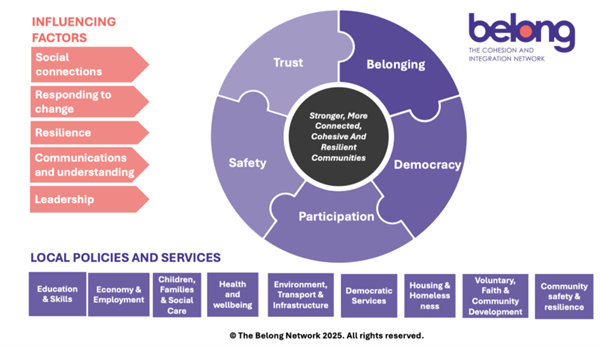
At its core, social cohesion aims to build stronger, more connected, and resilient communities. It is shaped by five interrelated conditions, which include:
- Participation: This refers to the opportunities people have to engage in local life and decision-making. When individuals feel involved and able to contribute, it fosters trust, shared responsibility, and a sense of ownership within the community.
- Belonging: This refers to the feeling of inclusion and attachment to both local communities and the nation. It reflects whether people feel they have a stake in society and are recognised as part of a shared identity that values difference and common purpose. Belonging is underpinned by shared values and norms of behaviour, including tolerance, respect for the rule of law, and acknowledgment of different viewpoints while maintaining mutual respect.
- Democracy: This is the strength and adaptability of democratic systems to uphold fair processes and withstand challenges. It includes people’s confidence that their voices are heard and valued by peers, government, and local institutions, and that democratic institutions remain resilient, robust and inclusive.
- Trust: This describes the quality of relationships between different groups, underpinned by trust and reciprocity. These relationships involve fostering connections across lines of difference in terms of race, faith, age, income – and this can sometimes involve handling and negotiating difficult issues. Promoting trust and good intergroup relations is positive for all of us, as it sets the context for the emotional and practical support people can provide for one another, which enhances wellbeing and strengthens resilience in times of crisis.
- Safety: This is how safe people feel in their communities and how secure they feel in their life circumstances. When people experience physical and psychological safety, they are more likely to trust others and participate in community life. Conversely, when safety is threatened, individuals or groups may withdraw out of fear. Solidarity and support from others are therefore crucial in restoring confidence and enabling re-engagement, as seen when communities unite after incidents of violence or division. Safety and security also encompass the capacity of people and communities to adapt to shocks and change, preventing differences from escalating into division or conflict.
These core conditions are influenced by relevant policy and service areas at the local level, such as education and skills, policing and justice. These provide the essential environment for social cohesion and communities to thrive. For example, being in work enables people to meet and mix with others. The layout of the built environment and access to parks, cafes and leisure centres also impact on people’s ability to connect with each other. Democratic institutions and systems of governance are another foundation, as they underpin civic participation and give people a voice.
Social cohesion can be boosted or inhibited by the presence of influencing factors which can either strengthen or undermine cohesion.
- Social connections: Opportunities for bonding, bridging, linking, and participation
- Responding to Change: Handling to economic, social and demographic change
- Resilience: Dealing with trigger events (which can lead to larger scale shock events), and the creation of unifying moments
- Communications and understanding: Media, social media, narratives, addressing misinformation, and shaping attitudes
- Leadership: Trusted, inclusive, and responsive leadership, along with partnership working to guide communities through change and foster unity
Social cohesion is both a process and outcome. It is experienced locally within communities and nationally through a shared and inclusive sense of identity. Shared understandings of Britishness and Englishness help ensure that everyone feels they belong and has a stake in society. Social cohesion is about people and their social relationships. It is also about places and the process of place-making - creating environments where people want to live and work and where they feel they belong.
Finally, social capital—the networks and relationships that connect people—plays a critical role and it takes different forms.
Bonding social capital is formed through the strong relationships between people who share similar characteristics, for example, between people who live in close-knit communities, in workplaces and between people from similar class or ethnic backgrounds. The COVID19 pandemic also showed the crucial role of bonding social capital in times of crisis, with members of these such networks providing mutual aid.
Bridging social capital is formed between people from different backgrounds across lines of difference (e.g. age, faith, class). Such relationships have shown to reduce inter-group conflict, stereotyping, perceptions of threat and prejudice. Bridging social capital builds empathy, trust and the shared identities that help to break down the rigid demarcations between ‘us and them’.
Linking social capital are the relationships between people and institutions, for example, between councillors and their constituents. These connections help build political and institutional trust and enable people to gain resources or bring about neighbourhood change.
Case study: Calderdale Council
Calderdale Council provides a narrative definition of social cohesion in its Building Stronger Communities Framework (2025-2030). This definition drew from extensive public and stakeholder engagement which sought people’s views about the type of community they wanted Calderdale to become. 800 members of the public were consulted as part of this process.
The definition underpins Calderdale Council’s programme of work to strengthen communities and sits alongside a measurement framework to enable the local authority to understand the picture of social cohesion in the borough. The framework allows them to understand where change is happening in order to align resource and energy to where it can make the most impact on mitigating and managing challenges. The narrative definition has also helped Calderdale Council to communicate its vision to residents.
Social cohesion is where diversity is valued and positive interactions between people of all kinds are enjoyed. It is a vital part of what makes communities feel strong and safe. It happens when people from different backgrounds meet, mix and get along.
The work of cohesion and integration is about having living, working and social spaces where difference is welcomed and celebrated. It is about creating a place where empathy and curiosity about people ‘not like me’ is encouraged. When this happens, we can move beyond ‘us’ and ‘them’ towards kindness, trust and social cohesion between groups of people.”
Calderdale Council, 2025.
Further reading
- Abrams, D., Davies, B. and Horsham, Z. (2023) Rapid Review: Measuring Social Cohesion, Manchester: Belong.
- British Academy (2019) Cohesive Societies: Scoping Concepts and Priorities, London: British Academy
- Bottoni, G. (2018). A multilevel measurement model of social cohesion in Social Indicators Research, 136(3), 835-857.
- Cantle, T., & The Community Cohesion Team. (2001). Community cohesion: A report of the Independent Review Team. London, UK: Home Office.
- Casey, Dame Louise (2016) The Casey Review: A Review into Opportunity and Integration, London: Department for Communities and Local Government.
- Hewstone M., Van Zalk M., Al Ramiah A., Schmid K., New R., Wölfer, R., Fell, B., Floe, C. and Wigoder C. (2017) Diversity and Social Cohesion in Mixed and Segregated Secondary Schools in Oldham: Research Report, London: Department for Education.
- Khan, Dame Sarah (2024) The Khan Review: Threats to Social Cohesion and Democratic Resilience, London: Department for Levelling Up, Housing and Communities.
- Putnam, R. (2000) Bowling Alone: the collapse and revival of American Community, New York: Simon and Schuster.
Social Cohesion: Central Government Responsibilities
Local authorities will need to be aware that social cohesion is relevant to the priorities of different government departments. Relevant policy priorities of these departments will need to be addressed in local authority social cohesion strategies.
The Ministry of Housing, Communities and Local Government (MHCLG) has been the lead department for social cohesion in England since 2006. MHCLG also has a UK-wide role in some areas related to community cohesion through its administration of some funding streams such as the Pride in Place programme.
Responsibilities for ‘community’ policy is shared between MHCLG which leads on regeneration and local economic development and the Department for Culture, Media and Sport (DCMS) which leads on civil society. DCMS’s Civil Society and Youth Unit has responsibility for civil society policy, youth policy, volunteering and tackling loneliness.
The work of other government departments is summarised in Table 1.2 below. The work of different government departments impacts on social cohesion policy. At a local level, social cohesion is relevant to different directorates and teams in a local authority and requires partnership working with other organisations.
|
Department or organisation |
Responsibility |
|
Cabinet Office |
Supports No 10 and the Prime Minister. Coordinates national security policy and government responses in times of crisis. Leads on political and constitutional reform. Its agencies and non-departmental public bodies include the Equalities and Human Rights Commission, the Social Mobility Commission and the Office for Equality and Opportunity. |
|
Department for Culture, Media and Sport |
Leads on culture, arts, media, sport, tourism and civil society. Its agencies and non-departmental public bodies include the National Lottery Community Fund, the National Heritage Memorial Fund, Arts Council. England, Historic England and Sport England. |
|
Department for Education |
Leads on children’s services, early years, schools, further and higher education. Equalities ministers currently sit in the Department for Education. Its agencies and non-departmental public bodies include Ofsted. |
|
Department for the Environment, Food and Rural Affairs |
Leads on rural poverty and strategy to improve services for rural communities. |
|
Department for Science, Innovation and Technology |
Leads on innovation, productivity and science and ensures technologies are safely developed and deployed. Has responsibility for online safety. Its agencies and public bodies include Ofcom. |
|
HM Treasury |
Leads on economic and financial policy and public spending. |
|
Home Office |
Leads on immigration and nationality, policing, fire and counter-terrorism (including Prevent). Has responsibility for resettlement programmes and refugee integration. Its agencies and non-departmental public bodies include the Gangmaster and Labour Abuse Authority, the Migration Advisory Committee and the Commission for Countering Extremism. |
|
MHCLG |
Leads on housing, planning, local government, regeneration, cohesion and faith. Its agencies and non-departmental public bodies include the UK Holocaust Memorial Foundation. |
|
Ministry of Justice |
Leads on the justice system, including courts, prisons and the probation service. Has responsibility for restorative justice. Its agencies and non-departmental public bodies include the Victims Commissioner. |
Legislation and policy context that relates to social cohesion
In developing strategies and programmes of work on social cohesion, local authorities will need to consider their statutory duties, Government policy priorities and programmes of work and accountability mechanisms.
Legislation and statutory duties
1. Public Sector Equality Duty (PSED) is set out in section 149 of the Equality Act 2010. It requires public authorities, in exercising their functions to “have due regard to the need to foster good relations between persons who share a relevant protected characteristic and persons who do not share it.” This legislation clarifies what good relations involve. The PSED is not just about preventing discrimination, but also about actively tackling prejudice and promoting understanding between different groups.
2. Community safety duty
Crime, anti-social behaviour and hate crime can erode social cohesion in many different ways (see Section Three). Local authorities are designated as “responsible authorities” for community safety, alongside the police, fire and rescue service, Integrated Care Boards (health), and probation services. The Crime and Disorder Act 1998 (as amended) requires these organisations to form Community Safety Partnerships which are required to:
- conduct a strategic assessment of crime, disorder and antisocial behaviour in their areas
- consult with the local community and develop and implement a partnership plan.
Under the Anti-Social Behaviour, Crime and Policing Act 2014 local authorities also have powers and duties to address antisocial behaviour. Every police force in England and Wales must have a dedicated Anti-Social Behaviour lead and work with their local community to publish an Anti-Social Behaviour Action Plan.
3. Serious Violence Duty
The Police, Crime, Sentencing and Courts Act 2022) requires local authorities to prevent and reduce serious violence. The Government has produced guidance to help local authorities fulfil this duty.
4. Prevent Duty
The overarching aim of Prevent is to stop people from becoming terrorists or supporting terrorism.
The objectives of Prevent are to:
- tackle the ideological causes of terrorism
- intervene early to support people susceptible to radicalisation
- enable people who have already engaged in terrorism to disengage and rehabilitate.
The Counter-Terrorism and Security Act 2015 stipulates that local authorities and Community Safety Partnerships must have due regard to preventing people from being drawn into terrorism. The UK Government has published Prevent Duty Guidance and a toolkit for local authorities to help them fulfil their duties.
The LGA has published guidance on a Councils’ role in preventing extremism.
5. Resilience duties
Local authorities have specific duties under Civil Contingencies Act 2004 and the 2022 UK Government Resilience Framework as amended. They are Category One Responders and are members of local residence forums. While social cohesion is not directly specified in this legislation, local authority duties in this area require that they consider social cohesion:
- cohesive communities tend to have higher levels of inter-personal trust which makes communities more resilient in emergencies or crisis.
- local authorities can take steps to manage tensions and address misinformation which may spread during crisis situations.
The LGA has published guidance for councillors on emergencies.
6. Democratic duties
Local authorities in the UK have a central role in making sure elections are run properly, fairly, and securely. These include statutory duties, as well as a broader role to promote democratic resilience and maintain standards in public life (discussed in Sections Three and Four). Local authority statutory duties are set out in the Representation of the People Acts 1983, 1985 and 2000, the Political Parties Elections and Referendums Act 2000, the Electoral Administration Act 2006, and the Elections Act 2022. This legislation underpins local authority duties to register voters, maintain the electoral register, elections, and ensure lawful, fair, and accessible democratic processes. The Electoral Commission publishes guidance for local authorities on these duties.
Local authority officers – chief executives, Monitoring Officers and democratic service staff - also have formal duties around supporting councillors in their roles, including providing training, advice, and helping them upholding ethical standards. These duties are set out in legislation and in the Nolan Principles of Public Life. To assist councillors in their role, the LGA has produced a councillor code of conduct.
In addition to the electoral legislation set out above, local authority duties to support elected members are set out in the Local Government Act 1972, the Local Government and Housing Act 1989, Local Government Act 2000 and Localism Act 2011. Under the Localism Act 2011 local authorities must adopt codes of conduct for members and the Monitoring Officer has a personal duty to ensure lawfulness and fairness in council decision-making, and to report any contraventions.
Other legislation relevant to social cohesion
Social cohesion is relevant to many different council service areas which may have to discharge statutory duties, for example, the Development of Local Plans. Relevant legislation is set out in Section Four which examines local authority service areas.
Policy priorities that relate to social cohesion
Several Government policy priorities are directly relevant to social cohesion. They include:
Pride in Place
Pride in Place, the UK-wide regeneration programme has stronger communities as one of its explicit aims. It builds on many of the policy priorities outlined in the 2021 Levelling Up White Paper and aims to:
- Build stronger communities – Activities will aim to strengthen relationships, a sense of safety, civic pride and belonging.
- Create thriving places – Activities will aim to improve local amenities and physical infrastructure, focusing on town centres and high streets.
- Empower people to take back control – Communities are being given new powers to take over local assets for residents’ use, with funding available to achieve this.
Pride in Place is led by MHCLG. Its first phase – announced in March 2025 - targets 75 locations, each of which will receive £20 million over the next decade to invest in regeneration and community services. Spending decisions will be the responsibility of Neighbourhood Boards which will develop a Neighbourhood Plan to be approved by MHCLG. Neighbourhood Plans will need to address social cohesion. A second phase brings the numbers of places covered by this funding to 244.
The Pride in Place Impact Fund will provide a further £150 million of funding to up to 95 places across England, Scotland and Wales to support the development of shared spaces, revitalise local high streets and improve public spaces. Each place will receive £1.5 million over two years to enable immediate work to make sure that the places and spaces valued by communities are improved and match the pride they feel for their local areas.
The Rural England Prosperity Fund, administered by DEFRA (the Department for Environment, Food and Rural Affairs) is providing £33 million to rural communities, with local delivery via local / district councils, to improve local infrastructure and essential services that benefit rural communities and help businesses in rural areas.
The Common Ground Resilience Fund will also support community connection and cohesion by funding locally led interventions to build community resilience. A £4.5 million Know Your Neighbourhood Fund to continue supporting people to connect and volunteer in some of the most disadvantaged areas across England.
Case study: Hartlepool Pride in Place data analysis
Context
Hartlepool has secured £21.5 million through the Government’s Pride in Place Programme. This will be delivered through a four-year investment plan and a ten-year regeneration plan running until 2035. Oversight is provided by a 28-member board representing civil society organisations, elected members and local authority officers, business, education, faith, youth organisations, the Police and Crime Commissioner, the NHS, social landlords and parish councils. The MP serves as deputy chair, and the board brings together extensive knowledge and expertise in community development and regeneration. The programme aligns with wider efforts to strengthen civil society, including the creation of Hartlepool Opportunities Partnership (HOP), a new infrastructure organisation which is supporting the work of the Pride in Place programme, initially through community engagement.
Approach
Early work focused on quantitative and qualitative data collection and analysis to inform the local strategy of the Pride in Place programme. Programme staff undertook stakeholder mapping which highlighted gaps in the board, which were later filled. A geospatial consultancy was commissioned to analyse place-based data. Crucially this showed that 23 per cent of residents in the target area had no formal qualifications and 38 per cent of households lack access to a car, restricting their employment opportunities. HOP staff and volunteers are undertaking consultations with a target 1,200 residents, prioritising areas with historically low responses to consultations. First analysis of this data suggests that safety and security, health and wellbeing, and social cohesion and connectedness are the most common concerns of residents.
Impact and learning
Although it is too early to assess impact, several aspects of Hartlepool’s approach provide useful insights for future evaluation. Key features that offer valuable lessons for other Pride in Place recipients include the proactive use of volunteers to reach out to residents and the core role of civil society in programme governance – both of which merit closer impact monitoring.
Devolution
The UK Government’s devolution agenda aims to shift power and decision-making from central government to local and regional levels, giving communities greater control over their priorities and resources. As well as the Pride in Place programme, the Devolution Bill currently before Parliament, proposes measures that would require all local authorities in England to ensure they have effective neighbourhood governance structures in place, extends the community right to buy and obliges mayoral and strategic authorities to collaborate with partner bodies, subject to Parliamentary approval.
Tackling loneliness
A connected society is the Government’s strategy to end loneliness. It drew many of its recommendations from the Jo Cox Commission on Loneliness report in 2017. This strategy commits to a cross-departmental approach to tackle loneliness and social isolation, and National Lottery Community Fund support for befriending and social prescribing projects.
Addressing social determinants of ill-health
Fit for the Future, the NHS Ten Year Health Plan for England commits to addressing the social determinants of ill-health, which include poverty, inequality, poor housing, loneliness and social loneliness. There is now greater recognition of the role that social prescribing can play in boosting physical and mental health. This practice connects individuals to community activities and services to address their non-medical, health-related social needs, address social isolation and improve their wellbeing.
Civil society covenant
Civil society organisations are key partners in developing and delivering local authority social cohesion strategies. The Government has set out its support for civil society organisations in the 2025 Civil Society Covenant. In future, the Department for Culture, Media and Sport will support new initiatives to strengthen civil society organisations.
Accountability mechanisms
The Local Government Outcomes Framework sets out 15 priority outcomes for local authorities. They aim to help monitor performance and to encourage improvement, as well as hold local authorities accountable for the services they provide. The Neighbourhoods outcome specifically relates to social cohesion and is given below.
|
Priority Outcome |
Outcome measures |
Output measures |
|
People feel safe and included in their local community and are satisfied with their local area as a place to live. |
|
|
Other outcome areas have a bearing on social cohesion, for example, the Economic Prosperity Priority Outcome requires local authorities to reduce poverty.
It is important to recognise that a substantial policy infrastructure already exists to support social cohesion. Local authorities have long been implementing initiatives that align with these priorities—often under different banners such as community development, community safety partnerships, or integration strategies. Many areas are already delivering elements of this agenda, for example through investment in green spaces, libraries, and community hubs, as well as programmes that promote volunteering, civic participation, and local leadership. These efforts demonstrate that social cohesion is not a new concept, but an evolving practice embedded in local governance, with opportunities to build on existing strengths rather than starting from scratch.
Investing in social cohesion can deliver economic and social returns. When cohesion breaks down, the costs to public services and the wider economy are high; when it is strengthened, communities become more resilient and productive. Evidence shows that even modest investment in building trust and connection can create a virtuous cycle—stronger relationships lead to healthier, happier, and more engaged residents who work together to tackle local challenges and sustain thriving communities.
Situations where cohesion breaks down can be costly to the public purse. The House of Commons Home Affairs Committee estimated that the additional policing costs from the 2024 summer riots amounted to £28 million, with officers removed from their ordinary roles to maintain order. The final bill of the 2011 riots was estimated at around £500 million in addition to significant wider economic implications – loss in tourism spending over the following year cost the economy an estimated further £520 million.
Evidence to the Independent Commission on Neighbourhoods showed that cohesive communities, with strong bonding, bridging and linking relationships are associated with lower levels of crime. Pro-social norms of behaviour can be strengthened through social contact and residents are able to exercise the informal social control which discourages crime and anti-social behaviour.
Investing in social cohesion can enable greater resilience to shock events. During the COVID-19 pandemic, places with stronger social networks coped better. Research undertaken by Belong during the pandemic showed that areas that invested in community cohesion initiatives exhibited higher levels of neighbourliness, trust in local government, and optimism during the pandemic. Residents in these areas were more likely to volunteer and felt better connected to their communities compared to those in areas without such investments.
There is a growing body of international evidence that highlights the benefits of social connection on good health and wellbeing. Loneliness is a risk factor for depression, heart disease, stroke and dementia. Public Health England calculated that every £1 invested in tackling loneliness saves society £1.26.
The Casey review argues that bonding and bridging social relationships help people find jobs and in their career progression across all ethnic groups. Cohesive communities may be more likely to attract external investment and retain talented and highly qualified individuals. The role that social networks play in economic generation has been recognised by successive governments, most recently in the 2021 Levelling Up White Paper and in the 2025 Pride in Place Strategy.
Section One summary
This section has outlined why social cohesion matters and the frameworks that underpin it. We have explored the concept and definitions of social cohesion, introduced the Belong Model as a practical tool for local authorities, and highlighted the role of social capital in strengthening community ties. The chapter also set out the legislative duties, policy priorities, and accountability mechanisms that shape local authority responsibilities, demonstrating that a substantial policy infrastructure already exists and that many places are already delivering elements of this agenda. Finally, we examined the compelling case for investment, showing that cohesive communities generate social and economic benefits while reducing risks and costs associated with division. Taken together, these insights provide a foundation for local authorities to build strategies that strengthen trust, belonging, and resilience in their communities.
Further reading
- Abrams, D., Broadwood, J., Lalot, F., Davies Hayon, K. and Dixon, A. (2021) Beyond Us and Them: Societal Cohesion in Britain Through Eighteen Months of COVID-19, London: Nuffield Foundation, University of Kent, The Belong Network.
- Department for Culture, Media and Sport (DCMS (2023) Tackling Loneliness, Evidence Review, London: DCMS.
- Independent Commission on Neighbourhoods (ICON) (2025) Delivering Neighbourhood Renewal: Proposals for Change, London: ICON.
- Lesiak, M. and Coutts, A. (2025) The case for strengthening social bonds to prevent crime, London: Demos, Local Trust and National Network for Neighbourhood Improvement.
- Parsfield, M. (2015) Community capital: The value of connected communities, London, RSA.
- Putnam, R. with Romney Garrett, S. (2020) The Upswing: How America Came Together a Century Ago and How We Can Do It Again, New York: Simon and Schuster.
Section Two – Developing a social cohesion strategy
Social cohesion strategies developed by local authorities offer an opportunity to set out a clear vision for how people live, work and interact in place. While not a statutory requirement, a growing number of councils have proactively published their own strategies, recognising the importance of fostering inclusive and resilient communities.
Social cohesion objectives can also be incorporated into other council strategies and delivery frameworks. These might include the Corporate or Council plan or the Community Safety Strategy, both of which are statutory requirements. Embedding these objectives provides an opportunity for councils and partners to take stock of existing policies and frameworks and to create a coherent narrative about how these strategies align to deliver stronger communities for everyone in a place, and more effective outcomes for people.
This section provides guidance on the process of developing social cohesion strategies and delivery plans, whether as discrete documents or embedded into other strategies.
It sets out:
- key principles that should underpin social cohesion strategies and delivery plans
- stages in developing a social cohesion strategy
- the role of leadership in strategy development and governance arrangements
- sources of data to inform strategy development
- guidance on stakeholder and community engagement including co-production of with local partners
- embedding social cohesion across different service areas within the council, a theme that is examined further in Section Four of this guidance
- implementation and delivery plans
- monitoring and evaluation processes.
Strategy development and delivery – key principles
Local authorities should consider the following underlying principles when developing and delivering social cohesion strategies.
- Is driven by consistent local leadership: The success of social cohesion strategies hinges on strong leadership. When council leaders and senior officers jointly prioritise cohesion, they create the conditions for a meaningful and actionable strategy. A clear mandate from leadership empowers officers to develop a comprehensive, evidence-based approach and ensures the strategy is adopted and implemented with credibility and commitment.
- Is inclusive of all local residents: Different places face different cohesion challenges, even within a local authority. Social cohesion is an ‘everywhere and everybody’ condition that is relevant to all parts of the UK, while acknowledging specific issues faced by particular communities or localities. ‘Everyone, everywhere’ visions should be communicated to local residents in the strategy and associated public-facing communications. Strategies should be written in accessible, professional language and demonstrate a clear understanding of the local context.
- Seeks consensus while recognises a plurality of views: Social cohesion strategies are most effective when supported by a broad, cross-party mandate among councillors, providing stability and shared commitment to long-term goals. Listening to diverse perspectives ensures that strategies reflect the full range of community needs and aspirations. This inclusive approach strengthens legitimacy, trust and the collective ownership of social cohesion initiatives.
- Is evidence-based: The development and delivery of social cohesion strategies needs to be informed by evidence, for example, national statistics, local residents surveys, administration data from service providers, consultation or observations from frontline staff. There needs to be robust systems for monitoring and evaluation to assess progress, impact, and value. Findings from this process should inform continuous learning and institutional improvement, ensuring that approaches evolve in response to new evidence, changing conditions and residents’ feedback. Local authorities need structures to capture institutional learning.
- Involves local residents: Strategies, delivery frameworks and programmes of work need to be seen as legitimate by all communities. It is important that all sections of the community are involved in the development of social cohesion strategies. Where specific sections of the community are under-represented in consultation processes, local authorities should reconsider how to reach and engage them.
- Is responsive to the wider context outside the local authority: National and international events and issues can impact on social cohesion at a local level. These issues need to be considered in the development and delivery of social cohesion strategies. Importantly, these plans should acknowledge that local authorities are used by non-residents such as commuters, students, and visitors, and therefore should consider broader patterns of movement, interaction, and influence within place.
- Recognises the role of civil society and faith organisations: The development and delivery of social cohesion strategies should recognise the role of civil society and faith organisations ensuring these groups are meaningfully involved in the design, decision-making, and delivery of cohesion programmes. Voluntary and community sector organisations have a crucial role to play, whether they are large and well-known or small, grassroots and locally focussed groups, and cohesion strategies are most effective when they are co-produced with this sector.
- Mainstreams cohesion across all areas of council’s work: Local authorities should look to embed social cohesion as a core principle in council strategies and across different services areas. It should be considered in day-to-day decision-making and delivery. For example, councils may choose to consider social cohesion when completing an Equality Impact Assessments when new policies or proposals are considered. Targeted actions should complement this, addressing specific challenges and needs.
- Is guided by shared values and principles in public life: Local authorities developing cohesion strategies, whether independently or in conjunction with partners, should ensure that their approach reflects core values in public life, including fairness, transparency, accountability, value for money, inclusivity, evidence-based decision making, and collaboration.
Stages in developing a social cohesion strategy
The Belong Network, authors of this guidance, has supported local authorities in developing cohesion strategies using a four-stage model that reflects broad practice. Each stage is supported by specific tasks and evidence requirements, which include:
1.Inception, research and assessment
Establishing the strategic aims, reviewing literature, gathering baseline data, identifying key issues, stakeholder mapping and planning community and stakeholder consultation.
Examples of tasks:
- Set up appropriate governance structures
- Develop a communications strategy
2, Engagement and analysis
Consulting with stakeholders, analysing community insights, and refining priorities.
Examples of tasks:
- Use a mixed methods approach to achieve statistically relevant reach in consultation with all communities
- Analyse findings to identify opportunities for joint work
3.Strategy co-production and launch
Co-producing the strategy with stakeholders, refining the strategy, and preparing for launch.
Examples of tasks:
- Draft the strategy and delivery framework
- Secure cabinet approval for the strategy
4. Implementation, Monitoring, Evaluation and Learning
Delivering actions, tracking progress, and embedding continuous improvement.
Examples of tasks:
- Deliver agreed actions and monitor progress
- Embed continuous improvement through evaluation and learning
- Annual update reports to the Cabinet and relevant scrutiny board
Local leadership and governance mechanisms
Local authorities need social cohesion strategies to be supported by visible and committed local leadership. This provides guidance and legitimacy, enabling officers to develop evidence-based approaches while fostering broad ownership and confidence in the strategy across the council, partners and the wider community.
Effective place-based leadership relies on the complementary roles of elected councillors and senior officers. Councillors provide democratic legitimacy, strategic direction, and community representation. Officers contribute professional expertise, operational delivery, and organisational leadership. Together, they ensure that local government is accountable, inclusive, and responsive to the specific needs of place.
To support councillors in their role in developing, delivering, or scrutinising social cohesion strategies, it is helpful to provide access to:
- a clear definition of social cohesion
- its relevance to wider public policy areas
- local authority’s statutory duties and relevant legislation
- the value and impact of investing in cohesion
- a summary of current local delivery mechanisms
- knowledge of cohesion issues (strengths, weaknesses, opportunities, threats).
Strategic or Executive Directors and the Monitoring Officer will play a pivotal role in collating data and initiating formal discussions—such as requesting an agenda item at Cabinet or another governance structure—with the aim of securing a mandate for strategy development.
The objectives of such a meeting may include:
- presenting the business case for a strategy, including evidence of need and the rationale for its development, to support members in considering approval to proceed
- understanding members’ views to inform the scope of the programme
- securing approval to begin a four-phase strategy development process
- garnering feedback on the output of a strategy (e.g. an internal delivery plan or external public facing strategy)
- agreeing how Cabinet will remain engaged and updated
- identifying a Cabinet sponsor (individual or collective) for the work
- appointing a Senior Responsible Officer (SRO) to lead and oversee delivery
- exploring governance options (both short and long-term) and assess appetite for partner involvement.
Governance models
Social cohesion policy is inherently cross-cutting, involving multiple partners, departments, and teams. This complexity requires thoughtful governance arrangements that support collaboration and accountability. Local authorities should put in place a governance structure that aligns with the ambitions of the social cohesion strategy.
Local authorities have a range of governance models to choose from, each offering different strengths depending on the scope and ambition of the strategy. Selecting the most appropriate governance structure should reflect not only the desired outcomes of the strategy but also the capacity for the structure to evolve over time, ensuring continued relevance and effectiveness during implementation.
These models may include:
- cross-departmental steering groups
- multi-agency partnership boards
- community-led advisory panels
- integrated delivery teams
- strategic oversight committees.
|
Governance model |
Strengths |
Issues to address |
Examples |
|
Multi-agency partnership This model involves shared governance and joint accountability across a range of partner organisations. It is particularly suited to strategies with broad ambitions and cross-cutting objectives, enabling a more integrated and impactful approach to social cohesion. |
|
|
Bradford – The Health and Wellbeing Board oversees the Stronger Communities Partnership (SCP), which holds the cohesion portfolio. Bradford Council leads the SCP and is accountable to the Health and Wellbeing Board for performance and delivery. |
|
Council-led partnership This model positions the local authority as the convening body responsible for governance and delivery. Partners are integrated into the council’s strategic framework but are not held to the same level of accountability. |
|
|
Tamworth Borough Council - has used its EDI Strategy as a formal governance tool to embed cohesion. They are launching a council-led social cohesion strategy under direct council oversight later this year. |
|
Department-led (delegated authority) In this model, senior leadership delegates responsibility for the cohesion agenda to a specific department within the local authority—commonly Community Safety or Neighbourhood Services. Oversight is maintained through either dedicated governance structures or integrated into business-as-usual scrutiny functions. The department’s Executive Director typically acts as the Senior Responsible Officer.
|
|
|
Torbay Council Social cohesion is led and delivered primarily through the Community Safety team, underpinned by a statutory multiagency Community Safety Partnership (CSP). The positioning within the CSP framework helps overcome challenges in engaging partners. |
|
Civil society-led In this model, the local authority commissions an external organisation (or consortium) to lead cohesion activities—capitalising on their expertise in bonding, bridging, and linking. The council retains accountability through contractual arrangements rather than embedding cohesion within its own strategic governance. |
|
|
Walsall Council - shifted from leading cohesion work to supporting Walsall for All as an independent CIC. This transition enabled community-led delivery, greater flexibility, and access to wider funding, while the council retained oversight through contractual arrangements and remains a core partner. The partnership now drives strategy with civil society, faith organisations, and public services. |
|
No dedicated governance Social cohesion is referenced within broader council strategies (e.g. equalities, neighbourhoods, or community safety) but lacks a dedicated governance structure. Delivery is typically reactive and dispersed across multiple teams without formal coordination. |
|
|
It is standard practice for many local authorities to embed social cohesion work across existing teams—such as neighbourhoods, community safety, or equalities—in lieu of creating a dedicated governance structure. |
Case study: Walsall for All
Context
Walsall is a West Midlands local authority which has faced a number of social cohesion challenges linked to economic and social change in early 2010s. Changes to the local labour market, with fewer mid-skill, stable jobs, has deepened inequalities. Pressures on the high street, and residential and demographic change presented limited opportunities for everyday social contact between different groups, leading to mistrust, resentment and rising tensions.
In 2015, these issues were brought into focus when the English Defence League marched through the town centre. (A similar protest in 2012 led to violence). This prompted the leader of the council to set up a cross-party working group to examine social cohesion. This group actively sought the views of residents as well as local stakeholders, leading to strong recommendations for the Council to establish clearer social cohesion priorities and the publication of the first cohesion and integration strategy in 2017.
Approach to governance
A strong civil society and faith sector, an award-winning college, community spaces used by all communities and a strong sense of shared history have brough people on this journey .The publication of the Walsall Council’s 2017- 2020 cohesion and integration strategy, alongside cross-party support for its commitments enabled Walsall Council to be recognised for its work on social integration and cohesion and secure funding from the Ministry of Housing, Communities and Local Government’s Integrated Areas Action Programme. Walsall Council was one of only five local authorities selected to pilot work to promote social cohesion and integration. At the start, the local authority lead this work. Although other public and civil society organisations were commissioned to deliver activities, the local authority was ultimately accountable for this programme of work.
As the programme matured, it became clear that social cohesion required a clear brand identity and shared ownership beyond the council. The Walsall for All partnership was born in 2019. The governance structure was expanded to include a Strategic Partnership Board reporting to the local authority, with representation from:
- local civil society organisations
- faith leaders
- education and youth services
- the police and public health services
- residents' representatives
- housing providers
- healthcare professionals.
This board shaped and monitored programmes of work, while working groups and networks delivered specific activities.
Following the success of the pilot and the end of the initial funding, Walsall for All transitioned from a local authority-led programme to an independent Community Interest Company (CIC) and is one of the key drivers of social change in Walsall today.
Learning
This change from a council-led programme to a community interest company reflected a deliberate move to embed social cohesion work within the community itself, ensuring independence, flexibility, and sustainability. Walsall for All CIC still receives an element of funding from the local authority and is accountable to it for this work. Walsall for All now operates as an independent partnership still closely linked with Walsall Council but able to develop its own priorities and attract wider funding. The new 10-year Community Cohesion Strategy (2025–2035) was co-designed launched jointly by Walsall for All and Walsall Council.
Contact
[email protected]
Further reading
Walsall Community Cohesion Strategy 2025–2035
Data to inform strategy development
Social cohesion strategies need to be based on a robust evidence base that also supports future monitoring and evaluation.
Local authorities hold a wide range of existing data that reflects the story of their place, people, and partnerships. Before identifying data gaps, councils are encouraged to review existing quantitative and qualitative datasets to uncover key lines of enquiry and map current engagement with community organisations.
Quantitative data to inform strategy development
Relevant existing datasets may include:
- Large national quantitative datasets with Accredited Official Statistics status, for example, the Census, the Annual Population Survey, the Indices of Multiple Deprivation or the Community Life Survey.
- National and local administrative data, including the quarterly Home Office immigration and asylum statistics, the National Pupil Database, Crime Statistics (including hate crime data), Indices on multiple deprivation, and information collected through tension monitoring
- Bespoke datasets from central government or local providers. MHCLG will be providing local authorities which have received Pride in Place funding data packs about local conditions which will be a source of data about social cohesion and the underlying conditions that influence it. The UK Shared Prosperity Fund (UKSPF) used a standardised Local Survey Tool, based on the Community Life Survey, to evaluate local projects. Joint Strategic Needs Assessments undertaken by Health and Wellbeing Boards or Counter Terrorism Local Profiles (see case study). Public Health England have made available a large range of local health data through Fingertips.
- Local surveys, including local authority residents surveys or Police and Crime Commissioner surveys. Questions about social cohesion can be included in these surveys. For example, the Tower Hamlets 2024 Annual Resident Survey tracks social cohesion indicators over time. Ask Cardiff is an annual survey that gives people living and working in Cardiff and those visiting the city the chance to share their experiences of public services. A bank of model questions that could be included in such surveys is included in the appendix of this guidance.
- Administrative data collected by local services providers, for example, data on those who use libraries or leisure centres, or data from volunteering.
- Findings from stakeholder and community engagement.
- Evaluations of local social cohesion initiatives.
- Research undertaken by universities, think tanks and other organisations.
Further reading
Guidance UKSPF: Local Survey Tool (7 July 2025) The 15 key survey questions MHCLG suggest prioritising to measure community perceptions are set out in Appendix A.
Sources of qualitative data to inform social cohesion strategies
The findings from qualitative data sources can also be useful in the development of social cohesion strategies. However, qualitative data has some limitations. It tends to draw from a smaller number of sources and can be subjective or subject to bias. It is advisable to look at whether findings from specific qualitative data are supported by other evidence. Relevant sources of evidence may include:
- Reports and research from partner organisations of relevance to social cohesion.
- Findings from residents’ focus groups or advisory panels. Some local authorities have set up residents’ panels who provide feedback about their concerns as well as their views on services and local authority policy. Commissioning needs assessments often involve data analysis and focus groups. They can help pinpoint areas of potential tensions such as challenges in accessing services or where service outcomes for vulnerable or at-risk groups are poorer or greater.
- Bespoke focus groups or interviews with residents with a specific focus on social cohesion. In developing social cohesion strategies, many local authorities have worked with external organisations to undertake bespoke qualitative research to inform the strategies.
- Interviews and observations from local authority staff and those employed by partner organisations.
- Lessons learnt from previous work including historic approaches to social cohesion and community development. This could include case studies of local work that could be scaled or learnt from or historic approaches to cross-council strategies and how they were structured.
- Social media analysis, sentiment of engagement with the council, about the place and what issues spark the most engagement from residents.
- Resident feedback and complaints.
- Reports from community tension monitoring (see section 5).
- Asset mapping activity (see below).
- Environmental visual audits reports (see below).
- Counter Terrorism Local Profiles (CTLP - see below).
Asset mapping
Local authorities and partners often draw on community or asset mapping exercises to inform service design and commissioning. Typically led by public health teams and co-produced with communities, asset mapping should function as a ‘living map’, highlighting the range of individual, community, and institutional resources that can be leveraged to strengthen social cohesion.
Key categories of assets might include:
- the capacity and capability of place-based local leadership outside the local authority
- institutional structures – the local organisations and partner agencies that can support social cohesion, such as schools, colleges, anchor organisations including large employers, and civil society, faith or voluntary sector groups
- community resources – physical spaces and facilities, such as community centres, libraries, sports clubs and places of worship
- innovation and ideas of local organisation in developing programmes of work on social cohesion
- social networks and connections – the strength of relationships and informal networks that link people together, including friendship groups, faith or hobby communities, and neighbourhood associations
- individual skills and talents – the abilities, expertise, and personal capacities that residents bring, such as language skills, mentoring experience, or creative talents.
By mapping these assets, local authorities and partners can identify opportunities to connect people, strengthen networks, and deploy resources in ways that build lasting social cohesion.
Further reading
- Preston City Council (2018): A guide to community asset mapping for community groups and local organisations
- LGA (2020) An asset approach to community wellbeing – a glass half full 10 years on review
Environmental visual audits: An Environmental Visual Audit (EVA) is an important tool to bring together community members, police and other local services to take part in a neighbourhood walk-through to identify issues of local concern and importance. Historic audits can provide a useful glimpse into environmental issues that affect residents’ day to day experiences of living in place. Community safety leads and partnerships will likely have an overview of where this method has been used before and outstanding issues that need resolved for consideration in the social cohesion strategy.
Further reading
Neighbourhood Watch resources:
- Neighbourhood Watch EVA Guide
- Suffolk NWA EVA Report – Sample form for completing an EVA
Case study: Counter terrorism local profiles (CTLPs)
Context
Since their introduction in 2012, Counter-terrorism local profiles (CTLPs) have identified and documented threats and vulnerabilities relating to terrorism and extremism in a local area. The CTLP is produced primarily by local counter-terrorism policing with input from the local authority and partners through an annual questionnaire.
Practice approach
CTLPs are refreshed annually and are crucial tools for specified authorities to meet their statutory obligations under the Prevent Duty. They are used by local Prevent partnership boards to underpin local activity and individual specified authorities in assessing sector specific risk and action plans.
CTLPs include information on; referrals to Prevent, related crimes, threats from extremism and terrorism, community tensions and international events that are affecting local communities.
It is best practice for CTLP findings to be shared with all partners in a place, including briefings to Local Authorities and external partners. For example, Kent County Council coordinated schools briefings on Kent and Medway’s CTLP in May 2025 for education leaders and designated safeguarding leads. Schools are also able to request an Official version of the CTLP to inform their own Prevent Risk Assessments (an Ofsted requirement). Over recent years, CTLPs have noted an increase in the proportion of Prevent referrals which relate to mixed or unclear ideologies recognised as “Conflicted” individuals.
Impacts
CTLPs are instrumental in enabling coordinated, place-based responses to violent extremism and radicalisation. They help partners align on local priorities and ensure that Prevent efforts are informed by real-time intelligence.
Importantly, CTLPs often reveal risks that go beyond counter-terrorism, offering valuable insights for social cohesion strategies. The types of referrals into Prevent and Channel can tell cohesion actors a great deal about the types of tensions, prejudice and malign actors that may operate in a place, many of which do not pose an exclusive counter terrorism or counter extremism risk but have wider societal impacts.
Social cohesion strategies can use CTLP data to:
- understand underlying tensions and prejudices
- identify malign actors influencing communities
- address broader societal impacts that are not limited to terrorism or extremism
- establish clear governance that underlines the need for joint working and information sharing.
Learning
To maximise the value of CTLPs, social cohesion strategies should:
- integrate insights from counter-terrorism local profiles (CTLPs) into broader community engagement efforts
- avoid the over-securitisation of social cohesion, which can increase mistrust and hinder progress
- clarify roles and boundaries between Prevent and social cohesion agendas, recognising that residents do not always distinguish between these policies
- promote information sharing between counter-terrorism police and cohesion stakeholders
- build strong tensions monitoring processes that complement CTLPs and avoid duplication.
Further information
Counter-terrorism local profiles (CTLPs) - GOV.UK
Stakeholder and resident engagement in strategy development
The development and delivery of social cohesion strategies requires input from local stakeholders and residents. To make sure that their views are heard, local authorities will need to design a mixed-method stakeholder and community engagement plan that reaches all communities, fills data gaps, and informs policy and practice.
Stakeholder and residents mapping is a useful starting point to inform an engagement plan. Many councils have experienced reductions in dedicated community engagement teams leading to fragmented engagement with civil society and faith organisations or resident forums, and other associations. Often relationships with these groups may be scattered across different parts of the local authority with no single lead responsible officer. Councillors will also have relationships with local stakeholders.
Engagement plans need to help unravel what relationships are held where. Taking stock on who holds what relationships across the council, for what purpose and how those relationships take place is an important starting point. This should include identifying the following:
- existing voluntary, community and faith organisations engagement and role (e.g. commissioned service provider, community development organisation)
- anchor institutions defined as large, locally rooted organisations—like councils, NHS trusts, and universities—that are tied to a place through their mission, assets, and relationships, and play a major role in the local economy and community life.
Using local demographic data and service usage patterns established in the data gathering phase can help uncover gaps and blind spots in engagement, especially with underrepresented or marginalised groups.
Community engagement methods
To ensure a strategy is rooted in inclusive participation from across all communities, and to address any distance between councils and the communities they serve, councils are encouraged to conduct a mixed-method community engagement strategy. This work seeks to provide space for open dialogue with residents, reach community members from all backgrounds and test key lines of enquiry you have learnt from gathering existing qualitative and quantitative data. Done well, it can help to improve resident trust, satisfaction and resilience to mis/dis/malinformation.
Key lines of enquiry which you may have drawn from your desk-review may include some of the following:
- community responses to recent shocks or trigger events
- demographic, economic or political changes within the locality
- local narratives of place, belonging, heritage and identity
- experiences of racism, prejudice, discrimination and social division, and perceptions of fairness, trust and representation in local government
- civic participation trends, including voter turnout and democratic engagement.
A robust engagement strategy should prioritise approaches that foster trust and demonstrate responsiveness, helping to close gaps that risk undermining democratic participation. It should combine qualitative and quantitative methods to reach diverse communities and fill gaps and test hypothesis. Council’s may wish to favour methods that can be easily repeated (e.g. annually) allowing for the data to be used as baseline measurements for evaluating success over time.
It is important to avoid confirmation bias and provide as much free space to communities to speak about matters of interest to them as well as exploration of your key lines of enquiry. As social cohesion is a cross-council policy area, the findings from community consultations will have relevance to all activities and services a council delivers. For example, if a disconnect between authorities and communities is identified, this may signal risks to trust and democratic norms, making it important to consider strategies that strengthen civic confidence.
Many local authorities commission partners to help ensure this work can be led objectively and can be statistically relevant or use external partners to train and capacity build existing staff to lead such work. Recommended methods to use in community engagement include:
- Individual conversations: Hold one-on-one discussions with community connectors, stakeholders and service providers to gather personal insights into local experiences and resident priorities.
- Focus groups: Explore shared experiences and perspectives in small, themed group discussions, often led in partnership with the voluntary and community sector (VCS) and anchor institutions.
- Community dialogue events: Facilitate open, inclusive forums for residents to discuss local issues and solutions. It can be useful to involve elected members in these discussions and organise them at a ward level. These forums can help challenge misinformation and promote shared understanding.
- Pop-up democracy: Create informal, accessible opportunities for public input in everyday community spaces by leveraging council assets such as leisure centres, libraries, adult education colleges, and public events.
- Participatory democracy and deliberation: Enable informed decision-making through structured, inclusive processes like citizens’ assemblies. For example, Demos’ WAVES digital democracy trial enables inclusive, large-scale public deliberation.
- Resident surveys: Collect broad, quantitative data on community views and priorities through accessible survey formats, either by improving existing surveys or conducting one-off studies.
- Stakeholder engagement: Collaborate with key organisations and groups to shape strategy and ensure shared ownership.
- Public polling: Capture representative and repeatable snapshots of public opinion on key issues to inform decision-making.
- Asset mapping and environmental visual audits: (See the detailed guidance in the section above).
- Environmental Visual audits: (see above).
Engaging ‘hard-to-reach’ groups
‘Hard-to-reach’ communities and groups is a term frequently used but it is often the case that the right method for engagement has not been applied. Throughout consultations that informed this guidance, local authorities have mentioned several groups that they struggle to engage, for example new and emerging communities and low-income white communities. In both cases, these groups often lack voluntary, social and faith infrastructures that act as a gateway to engagement either through lack of resourcing or self-organising. These groups, and others that typically are not represented locally, require dedicated understanding and ultimately increased resourcing to build contacts, trust and opportunity for dialogue.
Additional methods to engage and promote consultation opportunities to ‘hard to reach’ groups may include:
- Identifying and working with local intermediaries beyond faith leaders and community organisers this could include community organisations, housing officers, health and family settings, sport clubs and food bank volunteers. These individuals can act as bridges to communities that may mistrust formal institutions. However, relying on gatekeepers can introduce bias and reinforce existing power dynamics within communities.
- Conducting unstructured consultations through door knocks, pub visits, sport clubs, football games, schools and on the street encounters
- Speaking with local businesses and employers.
- Engaging local media influencers including press and radio and social media (e.g. Facebook groups and their administrators).
- Promoting the ways in which groups can self-organise and the support available from the council in doing so.
- Reviewing established ways of working by the councils and its partners.
Meeting communities where they are will maximise meaningful engagement in the consultation and beyond.
Whatever approach(es) a council chooses to enact should place equal weighting on the design of good methods alongside the promotion of opportunities for engagement.
Principles for effective engagement
To ensure strong community involvement and prevent perceptions of being ‘done-to’ or left out of shaping decisions, the following principles are essential:
- Clearly articulated goals and timelines for the consultation process and process thereafter.
- Commitments to playing back what you hear – and outlining when those conversations will happen.
- The use of plain-English and avoiding jargon.
- The need for translation.
- Branding and marketing resources and budget to use in targeted advertising. This could include in the press, radio, social media, public transport, door to door leaflets or letters, events and pop-up opportunities. Marketing approaches and materials may need to differ in tone and style to cater to audience’s needs, for example, in material aimed at young people.
Case Study: Hartlepool Council - The Big Conversation
Context
Designed to collect residents' views to shape the Council Plan, Local Plan, Health and Wellbeing Strategy, Community Safety, Medium-Term Financial Strategy, and future funding bids.
Practice Approach
The Big Conversation was a 12-week public engagement initiative undertaken between November 2023 to February 2024 aimed at understanding residents’ views on Hartlepool’s future and guiding the development of the council’s next five-year plan.
Methods of participation:
- online survey (20–30 mins) and postcard feedback
- paper surveys available in Civic Centre, community hubs, libraries, sports centres, and via Council packs (paper copies of survey, information sheets, postcards for shorter feedback options)
- stakeholder workshops and face-to-face sessions in community settings.
- annual business survey
- a toolkit to empower residents and partners to host their own “Big Conversations”.
- targeted VCSE sector session at the Centre for Independent Living.
Responses:
Over 1,600 total responses: more than 650 from residents, around 50 businesses, plus contributions from council staff and community organisations.
Impact
Findings from the consultation had extensive influence across the Council and its partners including:
- the local authority Finance and Policy Committee updated the Council Plan and priorities to better align with resident priorities
- residents identified strong demand for "action not words" and greater transparency which prompted the creation of a performance framework with a one-year action plan and monitoring indicators
- reports and insights were shared with partners to influence the Health and Wellbeing Strategy and Community Safety Plan
- targeted improvements were made in responding to environmental concerns such as litter, weeds, dog mess, and fly-tipping concerns
- regeneration projects (Wesley Chapel, Innovation Quarter, and Grand Hotel restoration) received wide public support and praise providing increasing commitments for their continued investment as local assets
-
strong positive sentiment towards the local voluntary sector and charities provided a boost to the sector reinforcing their status as core assets promoting the importance of future collaboration and support initiatives.
Learning
- Diverse engagement channels matter: A mix of online, paper, face-to-face, and toolkits maximised reach across sectors and demographics.
- Empowering communities: Community-led conversations increased ownership and richness of local insights.
- Clear feedback loops boost trust: Sharing findings with staff, councillors, and partners—and aligning actions with public priorities—reinforced credibility and accountability.
- Transparency demands delivery: Without visible action, strategic objectives risk being seen as empty promises. Embedding a measurable performance framework ensures movement from insight to impact.
- Partnership and transparency with the press: Through practice collaboration with local press, the Big Conversation achieved strong awareness, transparent dialogue, and consistent public updates sustaining momentum throughout its execution.
Further information
To access the full findings report, methodology, thematic breakdowns and data tables please consult the Hartlepool “Big Conversation” hub.
Contact
Email: [email protected].
Further reading
Barnet Council: This toolkit offers a clear, step-by-step guide with ten key phases for planning and executing effective consultations, with embedded tools and advice tailored to various stages of engagement.
CLES – What is an Anchor Institution?
GOV.UK Community Engagement Principles – Launched March 2024, this guidance outlines rigorous standards – such as inclusivity, proportionality, transparency, and collaboration – ensuring councils engage a diverse range of voices effectively.
Involve is a UK charity specialising in public participation, offering toolkits, methods, and case studies to support inclusive and effective community engagement.
LGA Community Engagement Hub – A comprehensive collection of case studies, frameworks, and methods, including citizen assemblies, community champions, and VCSE partnerships. It offers insights into place-based work, digital engagement, asset transfer, and peer navigator programmes.
West Lothian Council Community Engagement Toolkit (3rd Edition Sept 2024) A practical toolkit offering step-by-step guidance on planning, designing, and delivering inclusive community engagement, covering engagement levels, digital methods, participatory budgeting, and the National Standards, with real case studies and further reading.
Co-production of strategies with local partners
Successful cohesion strategies are co-produced with local partners and residents who hold unique insights, relationships, and responsibilities across place. Co-production is the natural follow up to community engagement, allowing for the playing back of findings and sharing in the process of design, decision-making, and delivery that ensures strategies are rooted in lived experience, institutional knowledge, and collective ambition. Local authorities should seek to involve a diverse range of partners in the co-production process.
Partners organisations who might be involved in co-production include:
- Combined authorities – to align regional priorities and avoid duplication
- Social landlords and housing associations – who can act as intermediaries to tenants can offer insight into community dynamics and tensions
- Universities and research institutions – to support evidence-based approaches and evaluation
- Other anchor institutions – such as NHS trusts, colleges, and large employers, whose place-based missions can support cohesion aims. Businesses groups can be involved in co-production through membership bodies such as Chambers of Commerce.
- Civil society and faith organisations – often acting as trusted intermediaries and convenors of community dialogue – play a crucial role in extending the reach of strategy development and in deepening connections between residents and local partners.
Further information about partner organisations is given in Section Three of this guidance.
Whether councils conduct co-production methods in participatory workshops, resident forums, online or via a third party, they should seek to:
- Test community engagement and data findings – validating insights gathered through earlier engagement phases with residents' views and experiences and with local knowledge.
- Build consensus on what challenges to prioritise – collaboratively identifying which issues require immediate attention and which may need longer-term strategies.
- Co-design interventions and actions – working together to define what practical responses, skills and collaborations to enact.
- Share ownership of delivery and accountability – ensuring that implementation is not solely the responsibility of the council, but a collective effort based on mutual commitment and shared resources.
- Agree mechanisms for ongoing feedback and involvement – embedding ways to work together to refine strategies as they evolve, ensuring responsiveness to changing needs and contexts.
By embedding co-production throughout the policy cycle, local authorities can build cohesion strategies that reflect the full potential of place and that are rooted in trust and shared accountability.
The co-production process should be underpinned by a shared theory of change, which articulates the desired outcomes, key principles, and mechanisms for change. Partners should agree on foundational aims—such as promoting belonging, reducing prejudice, and strengthening civic trust—and commit to collaborative working practices that reflect public sector values of fairness, transparency, and inclusivity.
Embedding social cohesion across the local authority
Local authorities should look to embed social cohesion as a core principle in council strategies and across all services areas and related areas of work.
Social cohesion is not a standalone agenda; it is a cross-cutting priority relevant to the full breadth of council activity. For example, enforcement of parking rules can become a source of friction if residents believe certain communities or streets are treated differently. It impacts on other strategic priorities and operational areas, and how it can be both mainstreamed and targeted in approach. Further detail on how social cohesion impacts of different council service areas is given in Section Four.
Mainstreamed vs targeted work
Mainstreaming refers to embedding cohesion principles into the core functions and services of the council ensuring that all departments consider how their work contributes to belonging, trust, and inclusion. Targeted work, by contrast, focuses on specific interventions or programmes designed to address identified cohesion challenges or opportunities, often in response to local data or community feedback. Mainstreaming approaches can be more proactive and long-term whereas targeted work can more reactive and focused on acute challenges.
Beyond securing the most fitting strategic alignment, cohesion should be embedded into the day-to-day work of council departments and services.
This includes:
- adult and community education – promoting lifelong learning and civic participation
- housing and homelessness services – ensuring inclusive access and addressing spatial inequalities
- public health – including social prescribing and mental wellbeing initiatives that foster connection
- democratic services – such as citizenship ceremonies and civic engagement programmes that promote belonging.
While this section does not explore each area in detail, Section Four will provide further guidance on how cohesion can be embedded into these domains. Councils may wish to use a mapping template to identify where cohesion is currently considered, where gaps exist, and where opportunities for integration lie.
Case Study: Mainstreaming Cohesion at Manchester City Council
Context
Manchester is renowned for its diversity, resilience, and community spirit, yet recent challenges including the pandemic, cost-of-living crisis, and refugee resettlements have highlighted the need for deeper community cohesion. Manchester City Council launched the Building Stronger Communities Together (BSCT) Strategy 2023–26, aimed at enhancing social connections, participation, and belonging across the city.
Practice
As part of developing the BSCT strategy:
- hosted an Our Manchester-themed cohesion workshop, bringing together city leaders from across the public sector to embed cohesion priorities into existing delivery plans
- consolidated and aligned all existing policies – on public health, community safety, police and crime, neighbourhood services –within a coherent, cohesion-focused framework.
Approach
Manchester’s approach is characterised by:
- Whole-system alignment: Cohesion is integrated across public health, policing, crime prevention, tackling inequalities, and neighbourhood services.
- Collaborative governance: Cross-sector leadership embeds cohesion across council departments and external partners.
- Co-produced implementation: Extensive consultation and engagement with residents and community actors ensures lived experience is central to delivery.
Impact
Early signs of positive outcomes include:
- improved coordination across sectors and delivery plans
- enhanced community trust and participation, especially among under-represented communities, although formal evaluation is ongoing
- improved responsiveness to emerging local tensions and cohesion risks, supported by neighbourhood-level facilitation.
Learning
Key lessons emerging from Manchester’s experience:
- co-produced strategy development, such as the Our Manchester workshop, enables practical embedding of cohesion across service areas
- one overarching strategy (BSCT) provides clarity, avoids fragmentation, and aligns multiple agendas toward shared goals
- strong leadership through dedicated roles and cross-functional ownership is essential for mainstreaming cohesion.
Further information
Strategic alignment
Programmes of work to increase social cohesion may be delivered through related local authority policy areas, set out below.
Community development
Local authorities may wish to deliver activities to boost social cohesion through community development initiatives. These aim to increase the social and economic assets possessed by communities, enabling them to thrive, support their members, address disparities and increase people’s overall quality of life. Bonding, bridging and linking social capital are drivers of community development and social cohesion. Some civil society and faith organisations also deliver community organising programmes which brings people together to decide on solutions to common problems and to take collective action for change.
Community development programmes formed part of the New Deal for Communities programme, which ran from 1998-2011. Community development was also a key outcome set out the Government’s 2022 Levelling Up White Paper. The ten-year Pride in Place programme has both community development and social cohesion as explicit aims. This will mean that community development and social cohesion outcomes can be delivered through the same Pride in Place programme of work.
Community ownership is another component of community development. which gives people control over local assets such as buildings, land or services so they can manage them in ways that meet community needs. Community ownership has been boosted by the Governments’ Community Right to Buy policy, the Government’s £150 million Community Ownership Fund and the funder Power to Change.
Community engagement
Programmes of work to promote social cohesion may fall within the remit of local authority community engagement activities. Community engagement is the process of involving people in decisions, activities, and initiatives that impact on their lives. It strengthens community cohesion by building trust, increasing social capital and civic participation. Local authorities engage with communities through:
- formal consultations
- neighbourhood forums
- neighbourhood working groups
- partnership working with local civil society and faith organisations
Local authorities may also promote community engagement through community asset transfer and ownership or programmes of work to promote volunteering.
Community safety
Social cohesion objectives will be delivered by local authorities through their involvement in Community Safety Partnerships and responding to hate crime, with further detail set out in Section Four.
Counter-extremism
Extremism has far-reaching impacts on community cohesion, dividing communities and reducing inter-personal trust and people’s sense of security. While the Prevent Duty is primarily focused on stopping terrorism and preventing radicalisation, it does not explicitly deliver activities aimed at promoting social cohesion objectives such as bonding, bridging, and linking. However, preventing extremism contributes to stronger and more cohesive communities, so making this connection is appropriate. Further detail on the Prevent Duty is provided in Section Four.
Democratic services
Democratic resilience is a component of social cohesion. It is the ability of democratic society to withstand and respond to threats while protecting the integrity of democratic institutions. Local authorities have statutory responsibilities to safeguard democracy through their legal duties to administer elections and support councillors to fulfil their duties. Local authorities can also encourage democratic resilience by increasing civic participation, addressing misinformation and disinformation working with schools to support citizenship education (see Sections Three and Four).
Equality, diversity and inclusion
In some local authorities the lead responsibility for social cohesion lies within Equality, Diversity and Inclusion (EDI) teams. Local authorities can therefore address some of the underlying barriers to social cohesion through their EDI programmes of work.
Migrant integration
Integration as a process ensures that all groups in society live well together. It takes place across economic, social and civic domains. Integration is a driver of social cohesion and integration projects often form components of broader social cohesion programmes. Data from Census 2021 and the Annual Population Survey highlight integration challenges such as not being able to speak in English well or at all.
Resilience and civil contingencies
Civic resilience and social cohesion are closely linked, as strong social bonds and trust within a community enable people to work together effectively in times of stress or change.
The UK Government Resilience Action Plan (2025) highlights social cohesion as essential for national resilience, emphasizing strong community networks, trust, and inclusive engagement to prevent division and support recovery during crises.
Social cohesion—built through shared values, participation, and mutual support—creates the foundation for civic resilience, helping communities adapt, recover, and thrive after challenges. Social cohesion will need to be an aim of Local Resilience Forums.
Local authorities should consider how cohesion principles can be embedded into existing strategies and delivery plans across these areas. This includes aligning governance structures, data collection, and community engagement practices to ensure cohesion is not siloed but systemically integrated into place-making in all its forms.
Further reading
- Casey, Dame Louise (2016) The Casey Review: A review into opportunity and integration, London: Department for Communities and Local Government.
- Lloyd, J and Reynolds, E. (2020) Asset-Based Community Development for Local Authorities, London:
- NESTA.
- Mayor of London (2018) All of Us: The Mayor of London’s Strategy for Social Integration, London: Greater London Authority.
- Oakley, D. (2024) Building resilient communities: The case for social cohesion, London: Protection Approaches.
Implementation and delivery plans
Following the identification of strategic priorities and the drafting of a social cohesion strategy, local authorities should produce a delivery framework or implementation plan. This should set out the activities needed to fulfil the aims of the social cohesion strategy and allocate responsibilities. The delivery plan should also inform a theory of change.
A delivery framework provides an operational foundation and should outline actions, governance arrangements delivery roles and responsibilities, processes and timelines, and monitoring and evaluation mechanisms. It answers the question: “How will we make this happen in practice?”
For ‘mainstreamed’ social cohesion strategies – it is important for named operational leads to be established in each corresponding department to ensure oversight and responsibility for their respective departments’ actions.
A theory of change provides a strategic foundation for what a council chose to do. It sets out the long-term goals of the programme and the activities: “Why are we doing this, and how do we expect it to work?”
Launching the programme
Public and stakeholder-facing launches to social cohesion strategies should form part of delivery plans. A launch should be more than a procedural start – it’s an opportunity to build momentum and community ownership.
In addition to following the scrutiny processes within the council, key components include:
- Narrative development: Craft a compelling story that communicates the programme’s purpose, benefits, and long-term vision to stakeholders and members of the public.
- Communication plan: That aligns messaging with groups and engages local media influencers and anchor institutions. The linear order of who is contacted first may need to be considered.
- Public events and briefings: Use launch events to re-engage stakeholders, showcase leadership commitment, and invite feedback.
- Community engagement: Involve residents, community groups, and local champions early to foster trust and co-design opportunities.
It is especially important that launch events invite all those that have participated in the community and stakeholder consultation and enables a further opportunity to playback findings.
Civil Society and faith sector involvement
These play a critical role in delivery of social cohesion activities, alongside being frequently commissioned or grant funded to support strategy implementation. Local authorities should ensure:
- Early market engagement to ensure any potential opportunities for collaboration have as much advance notice as possible and that there are opportunities for innovation.
- Support for bid writing to include bid writing, monitoring and evaluation support, opportunities for digital and spoken submissions and wider capacity building to help professionalise the sector.
- Establish lean contract management protocols that clarify expectations, provide templates and promote transparency.
- Use service level agreements (SLAs) to formalise roles, responsibilities, and funding arrangements.
- Clear commissioning priorities that reflect local need and encourage collaboration between civil society, faith, local government and other partners. Focus on legacy and shared outcomes.
For guidance on training and capacity-building within civil society and faith organisations, refer to Section Six.
Skills and capacity to deliver
Local authorities may find that they lack dedicated expertise to deliver key components of cohesion strategies. This could include the need for technical assistance in commissioning or setting up community tensions monitoring, or operational support in responding to mis/dis/malinformation or managing difficult conversations.
Identifying skills gaps both within the council and across its implementation partners will create space for collaborative training opportunities and peer to peer support.
Furthermore, training and the associated skills gained may be key programme outcomes a council wants to achieve from the social cohesion strategy with resources attached to bring in outside support.
This could include investment in the following:
- Training programmes tailored to different roles, including councillors, senior officers, managers, frontline staff and community partners.
- Scenario planning exercises to define roles, test responses, and build confidence in delivery teams.
- Ongoing support and peer learning to sustain momentum and adapt to emerging challenges.
Monitoring and evaluation
Local authorities should build monitoring and evaluation processes into the delivery plans that accompany their social cohesion strategies.
Councils will know that ‘What gets measured gets done’. While monitoring and evaluation can feel like an optional add-on and a nice to have, it helps foster a culture of progress and achievement.
Ideally, MEL is grounded in a strategy’s theory of change which sets out the strategic rationale for the programme. Figure 2.1 below sets out a draft theory of change in the form a narrative house. It can be used by local government as a light touch template to test out assumptions, logic and document the pathways of change e.g. how activities lead to outputs, outcomes and impact.
This approach uses the following theoretical principles of social cohesion descried in Section One, but it can be adjusted to accommodate local contexts:
- bonding social capital – Strengthening ties within similar groups
- bridging social capital – Connecting different groups
- linking social capital – Connecting communities to institutions and decision-making structures
- social contact theory – Promoting direct, indirect, and contextual contact to reduce prejudice
- shared identity theory – Encouraging inclusive and connecting identities to strengthen shared identities and reduce “us vs. them” divides.
Figure 2.1
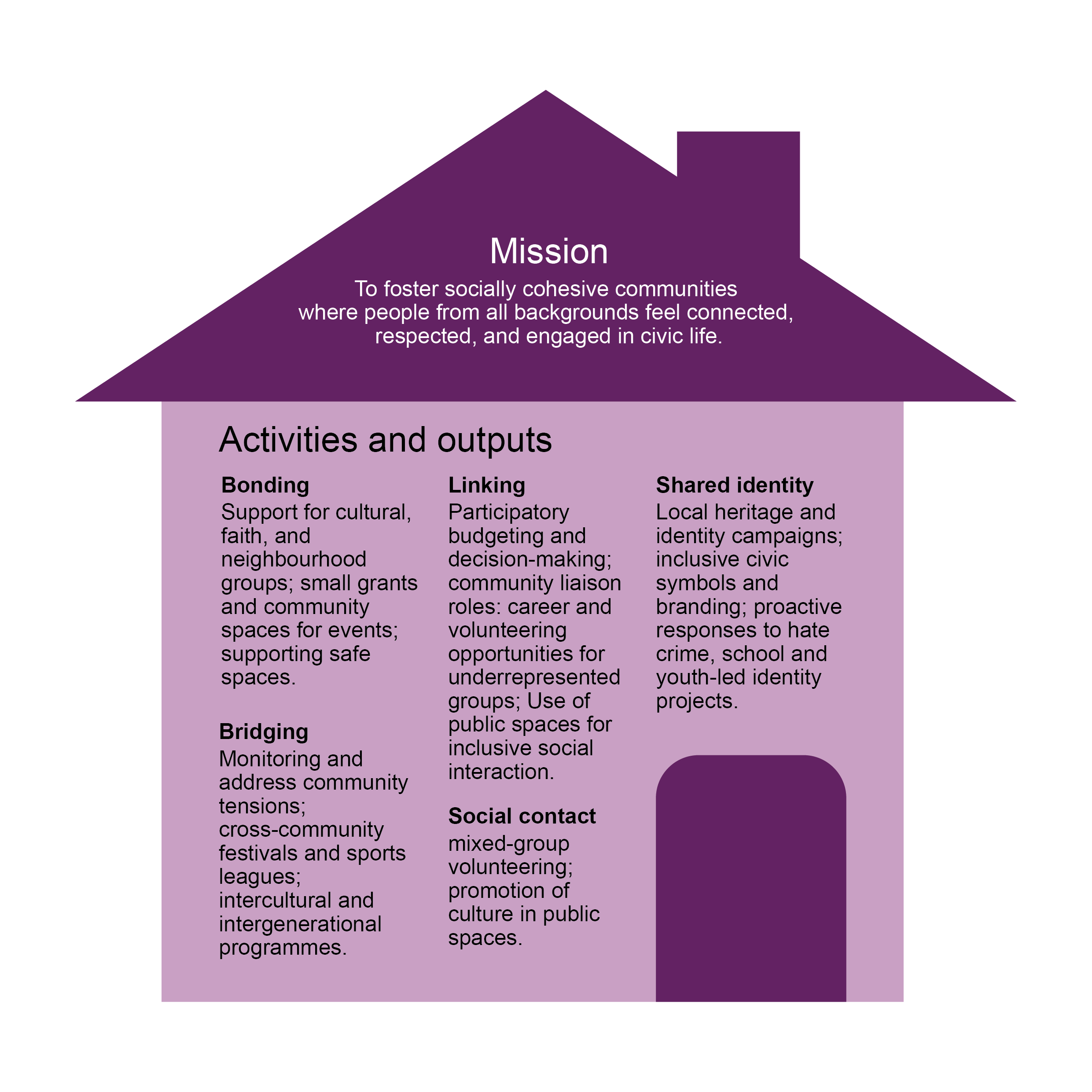
Strengthened Internal Community Ties (Bonding Social Capital)
- Increased trust, safety and solidarity within cultural, faith and neighbourhood groups
- Greater participation in local group activities and mutual support networks
- Enhanced resilience through stronger informal safety nets and shared identity within groups
Enhanced Cross-Community Collaboration (Bridging Social Capital)
- Increased interaction and cooperation between diverse groups
- Reduction in stereotypes and social distance
- Improved partnership responses to community tensions
Improved Civic Access and Influence (Linking Social Capital)
- Greater community influence on local decision-making
- Frontline staff safer and better equipped to hold difficult conversations
- Improved access to public services and institutional support
- Empowerment of underrepresented groups through formal roles and representation
Increased Empathy and Reduced Prejudice (Social Contact Theory)
- More meaningful social contact across difference, leading to reduced prejudice
- Greater empathy and understanding about migration and diversity
- Safer, more respectful public discourse
- Improved cultural competency across local authority teams and communities
Development of Inclusive and Shared Identities (Shared Identity Theory)
- Stronger sense of belonging to a shared civic or local identity
- Weaker exclusive in-group identities and reduced “us vs. them” divides
- Increased pride in heritage and collective narratives
- More robust responses to hate crime and its drivers
Long term impact:
- Resilient and Inclusive Places: Places foster belonging, safety, and opportunity through inclusive public spaces and community-led resilience.
- Trusted and Responsive Local Authorities: Councils are seen as fair and inclusive, with transparent decision-making, strong community relationships and proactive partnership responses.
- Reduced Inequalities in Access and Influence: All communities have equitable access to services and civic platforms, with barriers to participation actively addressed.
- Sustained Civic Participation and Leadership: Diverse residents lead and shape civic life through supported networks, voluntary sector partnerships, and inclusive infrastructure.
- Better Conversations and Social Cohesion Across Places: Public discourse is respectful, informed, and inclusive, promoting empathy and pride in shared local and national identity.
However, mapping progress against these outcomes presents challenges, particularly within local government, where data systems may be fragmented, under-resourced, or not designed to capture cohesion-related indicators.
Connecting existing data sources to specific outcomes is a useful way to avoid cumbersome and unrealistic MEL commitments. As mentioned earlier in this section, local authorities can draw on a mix of quantitative and qualitative datasets and local intelligence to establish baselines and track change. Local authorities who have resident surveys or who conduct baseline polling as part of their community engagement are well positioned to repeat such activates to measure progress on key measures.
Authorities may need to adapt existing tools, for example, adding questions on belonging, trust, or intergroup contact to annual surveys to build the baseline as an output of the strategy.
Key performance indicators (KPIs)
Monitoring should combine quantitative and qualitative methods to capture both measurable change and lived experience.
Suggested KPIs could include:
- the percentage of residents reporting a sense of belonging to their local area
- the percentage of residents participating in cross-community events
- the extent to which community group leadership reflects the demographic characteristics of the local population (for example, gender, ethnicity, age or disability)
- the number of community-led initiatives supported
- the percentage of residents who feel local services treat people fairly.
Qualitative methods (e.g. interviews, focus groups, participatory evaluation) are essential to understand how cohesion is experienced and perceived.
Process evaluation
Process evaluations assess how a programme is delivered, identifying what works, for whom, and under what conditions. Key elements that are examined include:
- adherence to the planned delivery framework
- the quality of community engagement
- the effectiveness of partnerships
- barriers and enablers to implementation.
This helps refine delivery and ensure activities align with the Theory of Change. This is particularly important for longer term strategies and can help ensure the operational elements of delivery are working to meet your end goals.
Impact evaluations
Impact evaluations explore whether and how the programme has contributed to changes in social cohesion, such as:
- increased trust between different groups
- reduced prejudice and social isolation
- greater civic participation and influence
- stronger shared identities.
These evaluations may use longitudinal data, comparative analysis, or contribution analysis to assess change over time. Local authorities may find their local priorities can be measured well through long-term measures and will need to ensure that their theory of change reflects proxy measures that they can see in a shorter time frame to avoid complacency in between measurement points.
Section Three – Partnerships and partner organisations
Partnership working within local authorities, and between local authorities and other public sector organisations, faith and civil society and business is critical to social cohesion. Local authorities cannot expect to foster social cohesion without these vital relationships with organisations. This section describes the value of partnership working, sets out different partner organisations and then looks at different ways to collaborate.
Local authorities will need to take into account some specific partnerships that have direct relevance to social cohesion, including community safety partnerships, strategic migration partnerships and neighbourhood boards that provide the strategic leadership to the Pride in Place programme.
As place-based leads for social cohesion, local authorities may need or wish to commission services from partner organisations. This section also provides guidance on commissioning services and ensuring that partnership projects achieve their intended outcomes.
The value of partnership working
Partnership working strengthens the work of local authorities in developing and delivering work to strengthen community cohesion.
Multi-disciplinary partnerships– for example - civil society organisations, the police, social landlords – have different remits and bring their own specialist skills to address complex social cohesion challenges.
Partnerships can bring together people with a diverse range of skills and perspectives who can generate new ideas.
Partners can often access a range of funding opportunities that may not be available to local authorities alone.
Civil society and faith society organisations can bring local knowledge about specific communities. They can help local authorities reach disadvantaged groups who might not normally engage with or trust local government. These community-based organisations can involve residents in the development and delivery of social cohesion strategies, ensuring their voices are heard in this process.
Partnerships help to build networks between organisations, which strengthens the community’s capacity to respond to crisis situations. Partnership build is often a core component of local resilience forums.
Partnership working helps to embed social cohesion within existing community infrastructure. When local authorities work collaboratively, initiatives are more likely to continue beyond initial funding cycles.
Social cohesion: key partner organisations for local authorities
Local authorities will need to consider which organisations to involve as partners in their social cohesion strategies, and how to involve them. As part of strategy development, local authorities may wish to undertake asset mapping of potential partner organisations.
Partner organisations may include small local charities and anchor organisations which are large, locally rooted institutions that have a long-term presence in an area. Anchor organisations may have a significant local economic and social impact as employers and as community engagement partners. Where they are effective in connecting to and involving people at local level, civil society and faith organisations can significantly ‘extend the reach’ of positive initiatives by the council and its partners, providing a route to engaging those who feel a distance from statutory organisations and the democratic process. They also play a vital role in underpinning social cohesion by strengthening social networks. Anchor organisations include colleges, universities, hospitals and large private sector employers as well as local authorities themselves.
Organisations that are likely to be involved as partners in developing and delivering social cohesion strategies include:
Combined authorities and the Mayor of London
The Government’s devolution agenda grants combined authorities powers over transport, housing and planning, skills and economic development. The powers granted to those authorities depends on the devolution deal that has been signed with the Government, for example Greater Manchester has more powers over employment support and health and social care policy, giving it more scope to act in these areas. Furthermore, not every combined authority is led by an elected mayor. Notwithstanding these local differences, combined authorities are important partners in work to promote social cohesion through:
- Their role to determine the priorities and deliver the Adult Skills Fund which covers vocational education and basic skills (literacy, numeracy, basic digital skills and English for Speakers of other languages (ESOL)) and the skills needed for employment
- The convening power of combined authorities across local authority boundaries
- The leadership and public voice of mayors or leaders, who can promote unity in times of crisis
The elected mayors in Greater Manchester, West Yorkshire and London have police and crime commissioners which cover community safety, hate crime and extremism. Many combined authorities are also supporting the work of faith and civil society organisations that relate to social cohesion.
Some combined authorities have cabinet members for communities, community safety or for equalities who lead the authority’s work on social cohesion. Their work may be supported by officers that have a specific remit for social cohesion.
Parish, community and town councils: These elected bodies sit below unitary or district councils and they are elected. Their remit is of relevance to social cohesion as these councils may oversee community centres, allotments, playing fields, parks and community events. Some town and community councils offer small grants to local charities. Parish, community and town councils have the statutory powers to issue fixed penalty fines for offences such as littering and graffiti which can damage people’s pride in the place they live.
Police: They police play a key role in maintaining community safety and tackling the crimes that can undermine community cohesion such as anti-social behaviour. Neighbourhood policing teams are often involved in tension monitoring. Counter-terrorism police may input into the development of Prevent programmes to reduce divisive hatred and violent extremism.
Police and Crime Commissioners: They set local policing priorities and commission community safety initiatives and victim services. Working with them ensures that social cohesion strategies align with wider efforts to prevent crime, build trust in policing, and support victims.
Schools and nurseries: As set out in Section Four, schools and nurseries are key partner organisations. Here children learn about the shared democratic values that underpin society and learn the life skills they need for the future. When consulting with local residents to develop social cohesion strategies, local authorities can reach parents by involving schools and nurseries.
Colleges and other further education providers: In the academic year ending July 2024, there were 2.7 million further education students in England, of which 1.1 million were adults over the age of 18. Colleges deliver a wide variety of academic, vocational, basic skills and leisure courses to students from a cross section of society. Literacy, numeracy, ESOL, digital inclusion and employability courses underpin social cohesion. They are important places where people meet and mix with each other. Through teaching and student activities colleges model inclusivity and shared values.
Jobcentre Plus: Being in work underpins social cohesion and local jobcentres can be valuable partner organisations in the design and delivery of social cohesion strategies. Jobcentre Plus district and partnership managers may have useful insights about the barriers to employment faced by different communities.
Universities: Universities can strengthen local social cohesion by sharing research and expertise, supporting community initiatives, and encouraging volunteering and civic engagement among students and staff. However, challenges exist in managing housing demand and prices that often exacerbate pressure on local communities.
NHS services: Health providers have strong community networks and work with people facing inequality or social isolation. Many GP practices are involved in social prescribing programmes. Some large hospitals organise integration programmes for staff that they have recruited from overseas.
Social landlords: Some 17 per cent of households in England live in social housing provided by housing associations, councils and arms-length management organisations. Social landlords are important partners in developing and delivering social cohesion strategies. They can be used to reach and engage tenants. Many social landlords own community space that can be used to bring residents together. Social landlords can also empower residents through their involvement in tenants’ associations, community-led initiatives such as community events. Some social landlords are also involved in tension monitoring and initiatives to address anti-social behaviour and hate crime. Although research is still limited, a few social landlords have considered how the design of the built environment can increase social cohesion, building on the expertise of organisations such as Create Streets.
Faith organisations: It is important that faith organisations are involved in the development and delivery of social cohesion strategies. Like civil society organisations, faith groups can help reach and engage residents, including people that can be difficult to reach. They also play a role in addressing socio-economic needs in deprived neighbourhoods by providing essential services like food banks, youth clubs, Warm Welcome Hubs and befriending projects. Many, although not all faith organisations, are involved in inter-faith initiatives which help build bridging social capital and provide spaces for dialogue. However, local authorities will need to be sensitive to differences within faith groups. Within the same broad religious tradition – Christian, Muslim, Jewish, Sikh and Hindu – there are numerous denominations, with different beliefs, practices, or priorities. Partnerships could unintentionally reinforce social divisions if certain groups are overrepresented or other groups feel excluded. It is important that the diversity of opinion within faith groups is reflected in those who are consulted when developing cohesion strategies.
Civil society organisations: These organisations - sometimes termed voluntary and community sector organisations - play an important role in the development and delivery of social cohesion strategies. With over 170,000 registered charities in England and Wales, these organisations are very varied in relation to their size and remit. They include large national or regional civil society organisations with local offices or programmes, large federated organisations such as Citizens’ Advice or Age UK where local branches are legally independent and smaller local organisations. In some sectors – sports and heritage – local civil society organisations are largely run by volunteers.
Like faith organisations civil society organisations can:
- have insights into residents’ needs
- help to reach and involve under-represented groups
- increase bonding and bridging social capital
- increase civic participation through volunteering
- empower local residents to take action.
Some civil society organisations explicitly focus on social cohesion, or related issues such as mediation and conflict resolution. Other civil society organisations work to address factors that influence social cohesion such as poverty and social isolation. Most local sports, arts and heritage projects, as well as gardening and conservation are projects run by civil society organisations and can bring people of different backgrounds together.
Civil society organisations include associational groups that bring people together to pursue common goals or interests. While there are some large associational groups – for example, the Women’s Institute – many associational groups are small and local and may not be registered as charities. Local associational groups include sports clubs, community gardens, book clubs and hobby organisations. Recent research from the funder Power to Change argues that as well as increasing bonding, bridging and linking social capital, associational groups help to strengthen democracy by fostering skills such as cooperation, public speaking and advocacy.
The process of developing a local authority social cohesion policy might include civil society asset mapping. Most areas are covered by local VCS (voluntary and community sector) infrastructure organisations that support and represent civil society organisations. VCS infrastructure organisations are an important group to include in the development and delivery of social cohesion strategies. They can assist a local authority with asset mapping and represent civil society organisations in consultation processes. A few VCS infrastructure organisations have been commissioned by local authorities to deliver programmes of work that boost social cohesion.
For example, East Sussex County Council partnered with local voluntary service infrastructure (such as 3VA, HVA, and RVA) to deliver infrastructure support that boosts resilience within the voluntary sector. This programme provides training, governance advice, and funding guidance to small community groups, enabling them to deliver services that bring people together and strengthen local networks. By supporting these organisations, the initiative helps tackle social isolation and promotes inclusive, connected communities.
For more information see here.
Businesses and employers: Workplaces can have a positive impact on bonding and bridging social links, as they are places where adults are likely to encounter people from different backgrounds. Workplaces have other impacts on social cohesion, driven by a shared identity by working for the same employer, shared goals through working on the same projects, official policies which establish boundaries for behaviour, and relationships independent of work hierarchies through open plan offices and social activities. Some employers also support local charities or encourage staff to volunteer in their community.
While employers may have a limited direct role in developing and delivering social cohesion strategies, they can input into local strategies through their membership bodies such as local Chambers of Commerce. Local authorities can also support the role that employers play by ensuring an environment that is conducive to enterprise.
Funders: Trusts, foundations, local Community Foundations and the National Lottery family of funders are important supporters of social cohesion projects. The National Lottery family includes the National Lottery Community Fund, the National Lottery Heritage Fund, Sport England, Arts Council England Community Fund and Power to Change which received a Lottery endowment. Although trusts and foundations rarely fund local authorities directly, they role in providing financial stability for local civil society organisations can make them important partners. Local authorities are invaluable partners for civil society in their fundraising and grants efforts through the provision of data, needs assessment and broader access to decision making in place. Funders often commission project evaluations and can be an important source of evidence on effective practice – approaches that work in relation to social cohesion and measuring change on the ground.
Further reading
Abrams, D., Davies, B. and Horsham, Z. (2023) Linking Volunteering and Social Cohesion: Causal Evidence in the UK and Beyond. Manchester: Belong
Belong Network (2022) Everybody’s Business: the role that business can play in supporting cohesive communities, Manchester: Belong.
British Academy and Faith and Belief Forum (2022) Cohesive Societies: Faith and Belief
https://www.thebritishacademy.ac.uk/documents/2605/Cohesive-Societies-Faith-Belief.pdf
Create Streets (2022) Restitching our Social Fabric, London: Create Streets.
Davis, S., Roberts, M and Smith F. (2025) Why place matters: neighbourhood effects on crime and anti-social behaviour, London: Crest Advisory.
Northern Ireland Housing Executive (2024) Community engagement and cohesion strategy 2024-2029, Belfast NIHE.
Pennington, M. (2020) The Church and Social Cohesion, London: Theos and the Free Churches Group.
Westerling, J., Hien, L. and Plumb, N. (2025) Closing the Void: Can we reconnect politics with associational life? London: Power to Change.
Different ways to collaborate
Planning and delivering programmes of work on social cohesion may require cross-departmental working within a local authority, as well as partnerships between a local authority and external organisations. These partnerships involve different ways of working.
Strategic partnerships bring together leaders from different organisations to set shared priorities, identify resources, and coordinate long-term plans. Strategic migration partnerships are an example of this type of collaboration.
Delivery partnerships involve organisations working jointly to implement specific programmes or services. Local authorities may lead a delivery partner for a programme or commission a range of external organisations to provide services. The Bradford For Everyone programme is one example of a partnership that played a delivery role. Reporting to the Stronger Communities Partnership of Bradford Council, the Bradford For All programme delivered 80 test and learn projects between 2019 and 2022, as well some larger partnership projects with Bradford College, Jobcentre Plus and civil society organisations such as the Linking Network. Many of the individual projects were evaluated, alongside an overarching evaluation of the Bradford for All programme, which also examined factors that contributed to the success of the programme.
Community partnerships bring local authorities, other local stakeholders and residents together to develop strategies, shape decisions or deliver activities that respond to community needs. They make sure that change happens with communities, not to them. Town Deal Boards or Neighbourhood Boards overseeing the Pride In Place programme are examples of community partnerships.
Co-located partnerships involve staff from multiple organisations sharing the same workspace to deliver different activities for specific groups of people. This arrangement allows for people to access a range of services in one building. This close working relationship allows faster decision-making and more joined-up support for service users. Sharing the same building often leads to wider collaboration between co-located organisations. Local authorities may want to consider whether existing co-located services could be adapted to boost social cohesion.
Children’s Centres and Family Hubs are examples of co-located partnerships where families with children can access a broad and integrated range of parenting services.
In Hartlepool, local authority libraries are co-located with community hubs, which together offer a wider range of services which include social events, employment and skills workshops and health and welfare advice services. These hubs provide access to books, free WIFI and study spaces. Some community hubs have children's play areas or cafes.
Knowledge-sharing partnerships – These focus on exchanging expertise, data, and best practice between organisations. They help partners learn from each other and develop more effective and evidence-based approaches. Belong’s Communities of Practice are examples of knowledge-sharing partnerships.
Advocacy partnerships bring together organisation around a common cause or policy goal. They aim to influence decision-makers, through specific campaigns or by raising awareness. The Together Coalition is an advocacy partnership with a focus on social cohesion.
Case study`: Welcome Hubs
Context
Welcome Hubs are an example of a co-located partnership that provide a range of services to support migrants and refugees. The first of these hubs was developed in Bristol in response to the arrival of people who had moved to the UK through the Government’s Homes for Ukraine scheme. People who came to the UK through the Homes for Ukraine scheme were provided with accommodation by UK sponsors.
Practice approach
Welcome Hubs were piloted in Bristol, where 15 were set up for Ukrainian refugees in partnership with Bristol City Council and the Good Faith Partnership. The hubs were usually located in churches or community centres. They were designed to help Ukrainians settle into their new neighbourhoods by providing a sense of community, food and resettlement support (such as advice and English lessons) during the day and evenings. The Welcome Hubs have hosted a variety of activities, ranging from coffee mornings, community meals, children’s groups and ESOL classes. By partnering with the local authority, Jobcentre Plus and civil society organisations, the Welcome Hubs were able to provide expert resettlement advice under one roof.
The Welcome Hubs aimed to link local civil society groups to each other as well as Bristol City Council, other public organisations and the wider civil society sector. Support was also made available for hosts, helping them prepare for the hosting role in advance and by working collaboratively in supporting their Ukrainian guests.
Impact and learning
The Welcome Hubs were evaluated as part of the pilot process. This highlighted factors that contributed to their success, for example, having a national model of best practice that was flexible enough to be adapted to meet local needs. Volunteer-led initiatives within these hubs not only increased the range of support on offer to refugees but also promoted social integration by increasing contact with people from the local community.
Their success in meeting the needs of Ukrainian refugees, their hosts, increasing volunteering and promoting partnership working has meant that this testing phase has been expanded within Bristol and to a further local authority area. This second pilot will:
- examine how Welcome Hub model adds value to the existing support system for refugees and migrants.
- look at how the Welcome Hub model could work with other cohorts of refugees and migrants.
- share best practice with other local authorities and relevant organisations.
The success of the Bristol Welcome Hub pilot has already led to other local authorities and civil society organisations setting up hubs for refugees and migrants. The refugee organisation Charis in partnership with Somerset Council and Thrive, the local VCS organisation has established six Welcome Hubs across the county. Waltham Forest Council runs a welcome hub from a public library. It hosts a range of services which include information, advice and guidance, English language classes, volunteering opportunities and activities to help the social integration of newcomers in the local authority and access to a full range of library services. Volunteers from the local community help to run this service.
Contacts
David Barclay, Good Faith Partnership
Alex Melbourne
Welcome Hubs Programme Manager, Charis
Partnerships with a remit that includes social cohesion
Several strategic and community partnerships are directly relevant to social cohesion. Some of these partnerships have statutory duties, local authorities will need to consider how they involve these partnerships in the development and delivery of social cohesion strategies.
Community safety partnerships
Community Safety Partnerships (CSPs) are statutory bodies established under the Crime and Disorder Act 1998. They bring together local authorities, police, fire and rescue services, health bodies, probation services, and voluntary sector organisations to develop and implement strategies for preventing and reducing crime, anti-social behaviour, and substance misuse. CSPs play a key role in fostering safe and inclusive communities and responding to civil unrest, which are essential for cohesive communities.
Social cohesion is both a goal and a mechanism for effective community safety. When communities feel connected, trust public institutions, and have strong inter-group relationships, they are more likely to collaborate in crime prevention and respond constructively to incidents. CSPs may wish to consider how social cohesion influences perceptions of safety, willingness to report crime, and participation in community-led safety initiatives.
A real-life example of embedding social cohesion in community safety is the development of youth violence prevention strategies. CSPs might identify that mistrust between young people and police, or between different community groups, is contributing to violence. Addressing these issues requires more than a policing response—it demands building relationships, understanding cultural dynamics, and creating shared spaces for dialogue.
CSPs might manage these risks by:
- Facilitating community dialogues between residents, police, and local leaders to build trust and mutual understanding.
- Supporting youth-led initiatives that promote positive identity, belonging, and peer leadership.
- Mapping tension hotspots and working with local organisations to co-design interventions.
- Ensuring representation from diverse communities in CSP decision-making processes.
- Evaluating safety strategies through a social cohesion lens, identifying unintended consequences and opportunities to strengthen community bonds.
Local Criminal Justice Boards
Local Criminal Justice Boards (LCJBs) are multi-agency partnerships that coordinate the delivery of criminal justice services at the local level. Local Criminal Justice Boards are not statutory bodies, but they operate under national guidance to fulfil statutory collaboration duties set out in the Police Reform and Social Responsibility Act 2011. There are proposals to place them on a statutory footing in future. They typically include representatives from the police, Crown Prosecution Service, courts, probation services, prisons, youth justice, victim support organisations and rehabilitation partners. Many LCJBs have local authority membership but not all. LCJBs aim to improve the efficiency, and effectiveness of the criminal justice system, and their work intersects with social cohesion in several important ways.
Social cohesion contributes to public confidence in the justice system. When communities perceive the system as fair, transparent, and responsive to their needs, they are more likely to engage with it—whether as victims, witnesses, or participants in restorative justice. Conversely, where there is mistrust or perceived bias, social fragmentation can deepen, undermining justice outcomes and community resilience.
Social cohesion can be embedded in criminal justice through community-based restorative justice programmes in areas with high reoffending rates and low trust in formal justice institutions. These programmes rely on strong relationships between communities and justice agencies, and they can help repair harm, reduce reoffending, and rebuild trust.
For example, the Office of the Police and Crime Commissioner for Cleveland used its commissioned service Restorative Cleveland to engage with offenders involved in the summer 2024 violent disorder, running ‘shuttle-mediation’ and facilitating meetings between those in custody and victims including police officers. This helped offenders understand the consequences of their behaviour, rebuild trust by bringing together community and faith groups, and enable victim-centred dialogue. LCJBs might support social cohesion by:
- Promoting restorative justice approaches that involve victims, offenders, and communities in dialogue and resolution.
- Monitoring justice outcomes (e.g., sentencing, victim retention) and taking action to address disparities.
- Engaging community organisations in the design and delivery of justice services, (e.g. domestic abuse victims)
- Improving transparency through public reporting and community forums.
- Embedding social cohesion indicators in performance frameworks to assess how justice services contribute to community wellbeing.
Case Study: Devon and Cornwall LCJB Response to Summer Disorder
Context
In August 2024, Devon and Cornwall experienced significant public disorder, particularly in Plymouth. The violence, racism, and criminal damage that occurred prompted a swift and unified response from the Local Criminal Justice Board (LCJB). Recognising the importance of a coordinated approach, the LCJB convened an extraordinary meeting of strategic leaders across the criminal justice system. This led to the publication of an open letter to the community, condemning the violence and reaffirming support for lawful protest while rejecting criminal behaviour.
The incident highlighted the value of having an established strategic network capable of rapid mobilisation and response. The LCJB’s actions were later recognised as best practice nationally.
Practice Approach
Following the disorder, the LCJB initiated two key actions as part of its 2024–25 priorities:
- Review potential learning opportunities from the dynamic criminal justice partnership response to the large-scale disorder.
- Understand the wider community impact following the disorder.
To support these actions, the Police’s Serious Violence Reduction Officer facilitated a cross-agency learning meeting and presented findings to the LCJB in March 2025. The approach focused on capturing good practice and identifying areas for improvement across agencies.
Good Practice Identified:
- Judicial expectation for next day sentencing with defence cooperation.
- Use of indisputable evidence (CCTV, social media, drone footage).
- Proactive investigation of identifiable suspects.
- Managed arrest planning to avoid overwhelming custody and courts.
Key Learnings:
- Need for improved inter-agency communication.
- Operational-level partnerships are essential alongside strategic and tactical ones.
- Policy inconsistencies, especially in youth justice.
- Absence of clear points of contact in some agencies.
- Better alignment of Local Resilience Forum (LRF) principles at tactical levels.
Recommendations:
- Police contingency planning should include officer assault protocols.
- Mechanisms for sharing court results between police and courts.
- Youth offending policies could be integrated into future disorder planning.
- Use of a video SPOC in large-scale operations should be standard.
- Improved operational liaison between courts and police.
- Recording of judicial sentencing remarks.
- Probation and Youth Justice Services should be informed and consulted during large-scale incidents.
- Review of dynamic road closure processes in Plymouth.
- All agencies to embed LRF principles and develop Tactical Coordination Groups.
Impact and Learning
The LCJB’s response demonstrated the strength of its strategic coordination and the effectiveness of its partnership model. The swift sentencing and visible justice outcomes were seen as a deterrent to further disorder. The learning captured has informed future planning and policy development, particularly around youth justice, operational coordination, and community engagement.
The LCJB’s planning day in September 2024 reaffirmed the importance of this work, embedding it into the board’s priorities for 2024–25. Additionally, Plymouth City Council commissioned a separate piece of work to explore the broader community impact of the disorder.
Contacts
- Julie Dickson – LCJB Business Manager
Office of the Police and Crime Commissioner for Devon, Cornwall and the Isles of Scilly
Email: [email protected]
Local Resilience Forums
Established by the Civil Contingencies Act 2004, Local Resilience Forums are multi-agency partnerships that coordinate emergency planning, preparedness, response, and recovery for major incidents such as large-scale accidents, disasters and public health emergencies. They bring together local authorities, police, fire and rescue services, the NHS, the Environment Agency, and often civil society organisations. Social cohesion creates the foundations for civic resilience, helping communities to adapt and recover after challenges. Local Resilience Forums will need to consider how tensions and local barriers to social cohesion could impact on preparedness, response and recovery to accidents, disasters and public health emergencies.
A real-life example of how social cohesion might be embedded in emergency planning is what needs to take place in flood prone area. Here a Local Resilience Forum’s preparedness would need to consider residents’ online skills, internet connectivity and mobile reception, language barriers, and the extent to which people trust officials. These factors could affect how people receive evacuation warnings, and how they comply with emergency guidance. During the response, tensions between groups—for example, over access to temporary accommodation—could slow relief efforts or lead to conflicts. In recovery, if certain communities feel overlooked or excluded, it could undermine trust in authorities and hinder rebuilding and resilience initiatives, showing that social cohesion is integral to effective emergency management.
The Local Resilience Forum might manage these risks by:
- Engaging local leaders from different communities to ensure all voices are heard in planning and decision-making.
- Mapping community-specific vulnerabilities, needs and points of tension.
- Using tailored alerts and messaging and multiple communication channels, including trusted community figures to relay information, increasing likelihood that residents will act on guidance.
- Ensuring that evacuation routes, shelters, and relief distribution considers equitable access to all groups to reduce friction and perceived unfairness.
- Evaluate emergency responses from the perspective of social cohesion and use the lessons learned to strengthen cohesion.
Currently, the role of local elected representatives is not formally recognised within civil continencies structures. Councillors have vital roles to play in providing civic, community and political leadership throughout the emergency planning cycle. The Resilience Action Plan recognises local authorities’ role in resilience and the Stronger LRF Trailblazers programme seeks to clarify new methods to strengthen accountability to local democratically elected leaders.
Neighbourhood Boards
Pride in Place is the Government flagship programme to build thriving and cohesive communities. Funding in each 244 areas that receive Price in Place support will be overseen by a Neighbourhood Board that will include representatives from a range of grassroots civil society organisations, faith organisations local businesses, the local MP, councillors and local authority staff and representatives from other public sector organisation. Although local authorities are the accountable body in terms of Pride in Place funding, each Neighbourhood Board must have an independent chair. The Ministry of Housing, Communities and Local Government has produced guidance for Neighbourhood Boards to ensure that they act to fulfil the aims of this fund.
Health and Wellbeing Boards
Health and Wellbeing Boards (HWBs) were established under the Health and Social Care Act 2012, which requires local authorities and NHS bodies to collaborate on joint health and wellbeing strategies. They are required to assess local health and care needs, set priorities, and coordinate services to improve population health and wellbeing. Members typically include councillors, local authority directors of public health, representatives from the NHS, local health providers and civil society organisations. The Boards enable a joined-up approach to addressing health factors that undermine social cohesion, for example, economic inactivity due to ill-health. HWBs undertake Joint Strategic Needs Assessments and the wide-ranging social and demographic data that is collected as part of this process is a useful source of evidence for those working to promote social cohesion.
Stronger Communities Boards
Although having no statutory footing, some local authorities have set up stronger communities boards to oversee work on social cohesion and related areas such as community engagement. Some local authorities have set up a specific Hate Crime Board or panels, specifically addressing strategic and operational challenges to preventing and reducing hate crime.
For example, Enfield Council operates a Safer and Stronger Communities Board (acting as its Community Safety Partnership), which includes hate crime within its core priorities. Under this board, Enfield manages a multi-agency Hate Crime Forum and an associated Hate Crime Executive, reviewing cases and coordinating responses.
Strategic Migration Partnerships
The UK Strategic Migration Partnerships (SMPs) provide leadership and coordination on migration in each of the twelve UK regions and nations. Strategic Migration Partnerships encourage collaboration between national government in England, Scotland, Wales and Northern Ireland, local government and other key partner organisations. The SMP role includes strategic leadership, consultation, the coordination and project management of key migration programmes, alongside the sharing of information and practical advice to support local authorities and their partners. Typically, every day the work of SMPs includes training, sharing data and research, and working with local authorities to coordinate the regional delivery of refugee resettlement programmes. Here, local authorities, rather than the Asylum Accommodation and Support Contractors, organise housing and support services. Some SMPs have also become involved in work to address community tensions associated with asylum accommodation and can offer valuable insights to local authorities on managing this issue.
SMPs have representation at the LGA’s Asylum and Resettlement, Council Senior Engagement Group (ARCSEG) meeting, the main forum for engagement at a senior local government and central government officer level, and at the LGA’s Asylum, Refugee and Migration Task Group, the political forum that sits above the ARCSEG. Through these groups SMPs have escalated key issues and challenges and worked with local government attendees to produce resources that support councils to welcome, settle and integrate asylum seekers, Afghans, Ukrainians, Hong Kong British (Overseas) nationals and other resettlement cohorts.
Non-statutory partnerships
In most local authorities there are a range of ad-hoc or non-statutory partnerships with remits that cover specific issues. These include:
- Civil society/VCS led partnerships, often hosted by local VCS (voluntary and community sector) infrastructure organisations which focus on specific issues, for example, homelessness, specific geographic areas or support for refugees. VCS infrastructure organisations are an important group to include in the development and delivery of social cohesion strategies
- Inter-faith partnerships which aim to bring faith groups together. Inter-faith partnerships are primarily a space for dialogue and the organisations and individuals who are involved in inter-faith initiatives will be those who are committed to this process. Local authorities will also need to build relationships with a broad range of individual faith leaders
Principles under-pinning partnership working
Local authorities will need to make sure that partnership working to promote social cohesion is effective, accountable and sustainable. The following principles will help local authorities achieve this aim.
1.Shared vision and values
Partner organisations should agree on common goals, such as fostering trust and belonging across diverse communities.
2.Clear mutual understandings of remits and responsibilities
Each organisation should know the roles and remits of other members of the partnership to avoid duplication or gaps in services.
3. Mutual support
Partner organisations need to be sensitive to each other’s strengths and limitations. For example, a small, civil society organisation may struggle to attend frequent meetings due to other pressures on their work. Sometimes members of partnerships will need support to build their skills and confidence to contribute effectively to decision-making and governance.
4. Effective leadership
Partnerships are often led by a chair supported by boards and officers. Effective leadership of a partnership requires clear vision and direction, ensuring all partners understand shared goals while respecting each organisation’s autonomy. It also involves qualities and skills such as clear communication, flexibility and a commitment to collaboration. Those leading partnerships should model a culture of collaboration to demonstrate to all members that their involvement is valued.
5. Co-production
All partner organisations should be actively involved in designing and delivering strategies and projects, promoting ownership of programme of work and participation.
6. Residents’ involvement
Partnerships need to make sure that local residents have the opportunity to shape their work through consultations and research into the needs and views of community members. There should be a range of opportunities for the public to take part, for example, through short surveys, advisory panels or ‘pop up democracy’ activities such as stalls at events or in shopping centres. It is important to make sure that all voices are heard, with partners often available to reach different groups within the community. Partnerships should also provide clear and accessible public-facing information about their work.
7. Commitment to evidence-based practice, monitoring, evaluation and learning
Programmes delivered through partnerships should be grounded in evidence about what works and regularly monitored to track progress. Both the activities and the functioning of the partnership itself should be evaluated to understand their effectiveness and impact. Partnerships also need to capture and preserve institutional learning, ensuring lessons are shared among partners and applied to improve future practice.
8.Transparency and good communications
Effective partnership working is under-pinned by transparency in relation to the sharing of sharing of information about funding and decision-making. Regular and accessible communication between partnership members ensures transparency and builds trust.
9. Clear accountability mechanisms
Where partnership members are delivering programmes, accountability mechanisms need to be put in place to such as service level agreement, key performance indicators or memoranda of understanding to make sure roles and responsibilities are clearly defined, outcomes are monitored, and all partners are answerable for their commitments.
10.Sustainability
Partnerships should consider the sustainability of work programmes. Wherever possible, partnerships should deliver long-term impact by embedding social cohesion considerations across all member organisations.
Further reading
NHS England and the Department for Health and Social Care (2022) Working in Partnership with People and Communities Statutory Guidance, London: NHS England and DoHSC. https://www.england.nhs.uk/wp-content/uploads/2023/05/B1762-guidance-on-working-in-partnership-with-people-and-communities-2.pdf
Commissioning Services
Commissioning and procurement are more than a technical process; it is a powerful tool for shaping local outcomes and strengthening communities. Traditionally focused on service delivery and cost-efficiency, commissioning is being reimagined as a way to build inclusive economies, local capacity and relationships, and foster long-term social value. Councils can use commissioning not just to meet needs, but to empower communities, reduce inequalities, and promote cohesion through inclusive and participatory approaches.
Definition and value of commissioning
Commissioning is central to councils’ place leadership. It enables alignment of resources with strategic priorities such as community cohesion, inclusive growth, and tackling inequalities.
Effective commissioning involves:
- Understanding local needs through robust data and engagement
- Designing services that reflect community aspirations and diversity
- Selecting delivery models that maximise impact and value
- Monitoring and learning to improve outcomes over time
Procurement processes
Procurement is more than compliance, it presents a strategic opportunity to support local ecosystems, encourage collaboration, and reduce barriers for smaller providers. The LGA’s National Procurement Strategy and Social Value Portal provide guidance on embedding social value and cohesion in procurement.
Procurement is a key stage in the commissioning cycle. Councils could:
- Embed community cohesion outcomes in specifications and contracts
- Use social value criteria to promote economic, social, and environmental wellbeing
- Ensure transparency and fairness in tendering processes
- Engage communities and providers in co-design and market shaping
Legal duties
Councils must comply with legal duties including:
- Public Services (Social Value) Act 2012: requiring councils to consider how procurement can improve social, economic, and environmental wellbeing.
- Procurement Act 2023: elevates this requirement—councils must “have regard to maximising public benefit,” a higher threshold than simply “considering” social value. The Act introduces several expectations on local councils:
- Demonstrate alignment with the new National Procurement Policy Statement (NPPS)
- “Have regard to maximising public benefit”: Councils now have a statutory duty to actively seek broader public benefits—including social, economic, and environmental outcomes—rather than merely considering them.
- Mission-driven, place-based procurement aligned with local priorities and national missions.
- Use of the “Most Advantageous Tender” (MAT) over previous price-focused criteria, allowing procurement decisions to formally weigh social value (e.g. job creation, civil socieiy participation) alongside cost into award decisions.
- New duties to support SMEs and VCSEs, including setting participation targets and reducing barriers through streamlined processes and fair payment practices.
- Embed social value across the entire procurement lifecycle from early planning to contract management and delivery.
- Monitor and report on public benefit delivery
- Equality Act 2010: includes the Public Sector Equality Duty which requires public authorities to “foster good relations” between people who share and do not share a protected characteristic under the Act. This means addressing prejudice and supporting understanding, and in the context of procurements it means avoiding discrimination when making procurement decisions. Many of the other duties set out above, as well as commitments to local procurement, can help local authorities foster good community relations. Best Value Duty 1999: requires councils to secure continuous improvement how their functions are exercised, with regard to economy, efficiency and effectiveness in service delivery.
These obligations support inclusive commissioning and reinforce councils’ role in promoting fairness and cohesion.
Local procurement
Procuring goods and services locally supports the local economy, creates jobs, and strengthens community resilience. Local procurement also fosters stronger relationships between councils and local businesses, encouraging innovation and collaboration to meet community needs more effectively. Whilst the Procurement Act 2023 underlines that councils cannot explicitly favour local suppliers simply because they are local, they can adopt procurement strategies that indirectly support local organisations—through lawful, permitted use of social value and strategic prioritisation under current UK procurement regulations. Councils can achieve this by:
- embedding social value and local economic benefit criteria into procurement policies, breaking larger contracts into smaller lots to make them accessible to local firms,
- using approved supplier frameworks that prioritise local vendors
- ensuring the bidding process not unduly burdensome for small businesses
- engaging proactively with local business networks to raise awareness of upcoming opportunities
Accountability mechanisms
Robust accountability is essential. Councils should consider:
- Setting Key Performance Indicators (KPIs) linked to cohesion and inclusion.
- Use Service Level Agreements (SLAs) and Outcome-Based Contracts to track delivery.
- Require regular reporting from providers on impact and community engagement.
- Involve communities in monitoring and evaluation.
- Apply the MAT framework in evaluations to ensure councils both monitor and report on public benefit delivery (as per the Procurement Act 2023)
The LGA’s LG Inform tool can support data analysis and benchmarking.
Commitment to institutional learning
Commissioning is also a learning process. Councils should ideally:
- Review commissioning outcomes regularly
- Share learning across departments and with partners
- Use feedback to improve future commissioning
- Support staff development through training and peer learning
The LGA’s Commissioning Academy for Elected Members supports councillors in their commissioning role.
Applying inclusive commissioning
Inclusive commissioning ensures that smaller civil society organisations, including grassroots and community-led groups, are not excluded by overly complex or bureaucratic processes. Councils could:
- Simplify application and reporting requirements.
- Offer capacity-building support to smaller providers.
- Use grant funding alongside contracts where appropriate.
- Provide in-kind support such as access to facilities or training.
Councils can also use the General Power of Competence to support innovative public–commons partnerships and co-operative governance models. Inclusive commissioning strengthens local ecosystems, supports innovation, and ensures that services reflect the diversity of communities.
The Cooperative Councils’ Innovation Network (CCIN) is a cross-party network of over 140 councils, opposition groups and organisations, including the London Borough of Hackney. The CCIN highlighted Hackney Council’s work to embed anti-racist principles into its commissioning and decision-making as a leading example of how councils can enhance social value through inclusive and community-led approaches. Hackney’s approach centres on five key principles: building trusted relationships, trusting community groups to identify needs, designing flexible and transparent processes, supporting small organisations with core funding, and using trauma-informed methods. The council is actively identifying where systemic racism appears in the commissioning cycle—such as barriers to funding, exclusion from networks, and risk delegation—and is working to redesign processes to be more inclusive. The team is engaging minority ethnic led organisations to co-develop a new grants programme and is committed to building trust through relationship-focused, rather than process-driven, commissioning. You can read more detail about Hackney’s experience here https://www.councils.coop/resources/toolkits/socialvalue/case-studies/ as part of the CCIN Social Value Toolkit for Councils.
Contact: Joanne Blackwood
Strategic Delivery Manager
Hackney Council
Driving social value
It is widely recognised as best practice for councils to publish a Social Value Statement that sets out how procurement and commissioning will deliver broader benefits for communities—such as job creation, support for local businesses, improved wellbeing, and environmental sustainability. While not a legal requirement, a clear statement helps councils meet their duties under the Procurement Act 2023 and the Social Value Act by aligning procurement with public benefit. It also supports the principles of the Civil Society Covenant, which promotes collaborative working between government and the voluntary sector. A well-crafted statement enhances transparency, accountability, and strategic focus across all contracts and services.
A Social Value Statement provides an opportunity to drive forward the response to social cohesion priorities into a shared framework for staff, suppliers, and partners, aligning procurement with strategic priorities such as fairness, inclusion, sustainability, and community wellbeing. By making these values explicit, councils demonstrate leadership, set expectations for delivery, and embed social value consistently across contracts and services.
This approach helps ensure that commissioning and procurement are not just tools for service delivery, but also for placemaking from supporting local jobs to driving environmental improvements.
Hammersmith and Fulham Council led the way by publishing a comprehensive Social Value Statement and embedding social value in all contracts over £100,000, with a mandatory minimum weighting of 10 per cent. They appointed a Social Value Officer and set up a delivery group to ensure that social value was woven through their Corporate Plan, Industrial Strategy, and Climate Emergency agenda. As a result, procurement activity now contributes to carbon reduction goals, local job creation, business growth, and environmental benefits—demonstrating how councils can use procurement to drive sustained, cross-cutting community gains. You can read more detail about the Hammersmith and Fulham experience on the LGA’s website here.
Supporting civil society
Councils are encouraged to capacity build local VCSE organisations to ensure they can understand and meet their own obligations under social value as they deliver services and respond to grants and tenders. This could include:
- Briefings and workshops to raise awareness of social value and corresponding local priorities
- Distributing social value statements to the VCSE sector
- Sharing case studies of how marking schemes have awarded social value bids
- Sharing case studies of how social value has been implemented – successes and failures
- Promoting tools and approaches that help civil society to measure their own social value (e.g. Belong’s “Power of Events” and ‘Our Social Value’ tool below).
Case Study: ‘Our Social Value’ tool in Hertfordshire – Measuring Social Impact of Community Organisations
Context
Community organisations and charities across the UK play a vital role in addressing social inequalities, yet their impact is often undervalued, especially in areas of high deprivation. Traditional measurement tools fail to account for the varying levels of need across different communities, making it difficult for voluntary, community, faith, and social enterprise (VCFSE) groups to demonstrate the full value of their work. Recognising this gap, the University of Hertfordshire collaborated with stakeholders in Hertfordshire and West Essex to develop a solution that would empower these organisations to better evidence their social impact.
Practice approach
The University launched “Our Social Value”, a free-to-use digital tool that calculates the social value of community services by integrating postcode-level data from the UK’s Index of Multiple Deprivation. This means that activities such as food distribution, mental health support, or skills training are weighted more heavily when delivered in areas of greater need. The tool was co-designed with input from local charities and public sector partners to ensure accessibility and relevance. It allows users to select from a range of service types, input delivery data, and receive a tailored social value report that reflects both the nature of the service and the socio-economic context of the community served.
To date, developing Our Social Value has been funded through the University of Hertfordshire Integrated Care (UHICS) System partnership - a collaboration between Hertfordshire and West Essex Integrated Care System (ICS), the Voluntary, Community, Faith and Social Enterprise (VCFSE) sector, Hertfordshire County Council and the University of Hertfordshire.
Impact and learning
The launch of “Our Social Value” marks a significant advancement in how civil society organisations can quantify and communicate their contributions. By recognising the amplified impact of services in deprived areas, the tool helps organisations strengthen funding bids, advocate for resources, and plan strategically. Early adopters have praised its simplicity and effectiveness, noting that it bridges the gap between grassroots delivery and policy-level recognition. Academics involved in the project, including Professor Eren Demir and researcher James Shepherd, highlight the tool’s potential to shift how social value is understood and rewarded across the UK. The initiative also underscores the importance of co-design and local data in developing meaningful evaluation frameworks.
Contacts
For more information or to access the tool:
- Website: Our Social Value Tool https://www.oursocialvalue.org./
- Lead Academic: Professor Eren Demir – University of Hertfordshire
- Research Contact: James Shepherd – University of Hertfordshire
Further reading
Belong’s Power of Events - free learning resources from Belong’s “Power of Events” initiative, aimed at helping event organisers and civil society groups understand and enhance the social impact of events. It includes an interactive learning platform, a social value estimator, and tools for measuring community engagement and cohesion outcomes.
LGA Commissioning - provides guidance and practical tools from the LGA to help councils improve commissioning as part of wider service transformation.
LGA Social Value Statement - provides the LGA’s Social Value Statement template, a public-facing guide designed to help councils clearly communicate their social value priorities, commitments, successes, and resources to staff, partners, suppliers, and communities.
Socialvaluecommissioning.com is a free website created by Social Value UK and is a free of charge database where you can upload case studies explaining how social value has been increased through successful commissioning.
Social Value Toolkit for Cooperative Councils (2025) - designed to help UK local authorities and their partners embed social value into commissioning, procurement, and service delivery. It includes practical guidance, case studies, and templates to support consistent and impactful social value practices across councils. https://www.councils.coop/project/social-value-toolkit/
UK Social Value Bank—a digital platform by HACT offering wellbeing-based financial proxies and the "Social Value Insight" tool to help organisations (e.g., charities, social housing providers, developers, and public sector groups) measure and report the social and fiscal impact of their services. Available here
Section Four – The role of councillors and different local authority service areas
Cohesion is a strategic and cross-cutting issue that requires input and support from the whole local authority. Councillors set policy and strategy and provide oversight. While social cohesion may be led by one team or policy function within the local authority, all service areas have a role to play in supporting it. Social cohesion considerations need to be embedded across the council as a whole to have impact. This section provides guidance on the role of councillors and different local authority service areas with regard to social cohesion.
The role of councillors
Councillors may not describe their day-to-day work in responding and representing the needs of residents as ‘social cohesion’, but every elected member will be playing an active role in impacting social cohesion within their wards. Every elected member has the opportunity to set the tone for constructive dialogue and positive relationships across communities and their political differences. They are more regularly relied upon to provide visible leadership during periods of tension.
Councillors are elected representatives responsible for setting the strategy and policy direction of the council and ensuring the local authority fulfils its legal duties. Councillors are also place leaders and are there to represent the interests of their constituents. Legislation set out in Section One describes their powers and duties in respect to social cohesion, while the Nolan Principles of Public Life (selflessness, integrity, objectivity, accountability, openness, honesty and leadership) and local codes of conduct should guide councillors’ behaviour. Fulfilling these standards strengthens democracy and therefore helps to build cohesive communities.
In relation to social cohesion, councillors’ roles include:
Policy leadership and strategic oversight
Councillors shape and approve local strategies that foster social cohesion and related areas of work, through over-arching strategies or specific community strategies. Councillors also set budgets and approve programmes of work on social cohesion.
Some plans and strategies relevant to social cohesion are legal requirements, with local authorities obliged to submit them to the Government for approval. The development of these plans and strategies is an opportunity to involve or consult with local residents, giving them a voice in developing policies that impact on them.
Plans and strategies most relevant to social cohesion include:
- The Corporate or Council Plan: The Local Government Act 2000 obliges local authorities to show how they will promote the economic, social and environmental stewardship of their area. Some councils have included commitments on social cohesion in their corporate plans.
- The Local Plan: The Planning and Compulsory Purchase Act 2004 as amended by regulations obliged every local planning authority to produce a Local Plan setting out land use, housing, employment, infrastructure, and environmental policies. The development of Local Plans is an opportunity to consider how local economic development could boost social cohesion and to address issues such as high street decline.
- Joint Health and Wellbeing Strategy: The Health and Social Care Act requires Health and Wellbeing Boards, hosted by local authorities to set out priorities and actions to improve residents’ health and reduce health inequalities. The development of these strategies is an opportunity to consider how to address the social drivers of poor health which include loneliness and social isolation.
- Housing Strategy. The Local Government Act 2003 obliges councils to assess housing need and set out how they will improve housing provision. The development of this strategy is an opportunity to involve local residents in conversations about how to increase housing supply and how the design of new housing can promote social mixing.
- Homelessness Strategy: The Homelessness Act 2002 requires that every housing authority must produce a strategy for preventing and tackling homelessness. The development of this strategy is an opportunity to improve the quality of private rental accommodation and to build more cohesive neighbourhoods.
- Equality, Diversity and Inclusion Strategy: The Equality Act 20210 requires councils to meet the Public Sector Equality Duty (PSED), and such a strategy is one way that local authorities can show they are meeting this obligation. The PSED obliges a public authority to have “due regard to the need to foster good relations between persons who share a relevant protected characteristic and persons who do not share it.” This good relations duty provides an opportunity to address any tensions and divisions within the wider community, while also promoting understanding and constructive dialogue on sensitive issues (for example, immigration and crime) that may affect local residents.
- Crime and Disorder Reduction Strategy and Community Safety Plan: The Crime and Disorder Act 1998 (as amended) obliges local authorities as responsible bodies to produce a three-year Community Safety Strategy, reviewed annually. This is an opportunity to reduce the impacts of crime and anti-social behaviour on social cohesion.
- Prevent Action Plan: The Counter Terrorism and Security Act 2015 and Prevent Duty (2015) obliges councils to have due regard to the need to prevent people from being drawn into terrorism. Typically, a Prevent Action Plan is produced.
- Neighbourhood plans: Areas receiving Pride in Place funding will need to produce a Neighbourhood Plan which is approved by MHCLG. The plan is overseen by the Neighbourhood Board and should involve input from residents and local stakeholders. Developing this plan is an opportunity for consultation with residents to understand their views on social cohesion.
Scrutiny and accountability
Councillors scrutinise local authority decisions to make sure that services and policies fulfil their aims and meet legal duties. Section Two sets out different governance arrangements in relation to social cohesion strategies and programmes of work. Full council meetings, ad-hoc or task and finish committees, or thematic scrutiny committees to scrutinise policies and programmes of work.
In relation to social cohesion, members can specifically scrutinise at various stages of a policy lifecycle, at the initial agenda setting stage, during policy design, implementation, or during evaluation.
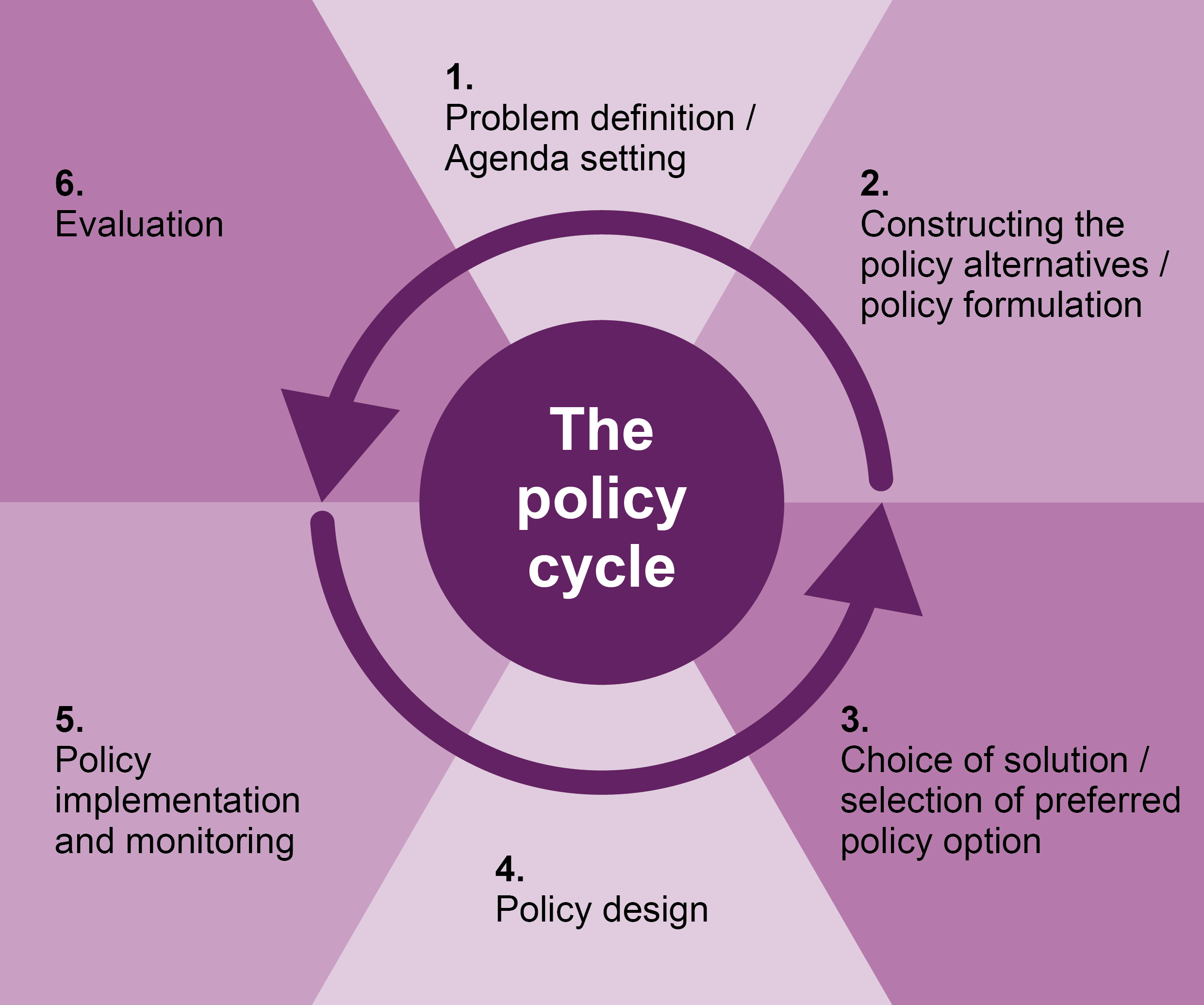
Actions for councillors to consider
Strategy planning:
Are policy goals aligned with social cohesion and democratic values?
What evidence, consultation and coproduction have informed the decision?
Scrutiny Actions:
- request documentation of stakeholder engagement
- examine whether an appropriate range of voices was included in shaping the policy
- assess alignment with strategic equality and inclusion objectives
Implementation:
Are delivery mechanisms fair and inclusive?
Could it exacerbate divisions or marginalise specific communities?
Scrutiny Actions:
- review implementation plans for accessibility and equity
- ask for impact assessments (for example, Equality Impact Assessments e.g. EqIA/ Human Rights Impact Assessment, Community Impact Assessments)
- monitor how frontline services are trained and resourced to deliver inclusively
Monitoring:
Are there indicators tracking cohesion and democratic health?
Do they encourage civic engagement and participation?
Scrutiny actions:
- request regular reporting on key metrics (e.g. trust in institutions, participation rates)
- ensure data is disaggregated by demographics to spot disparities
- evaluate mechanisms for community feedback and responsiveness
Review:
Are there opportunities for residents and local stakeholders to influence future changes?
Scrutiny Actions:
- check for built-in review periods and public consultation opportunities
- advocate for participatory review processes (e.g. citizen panels, deliberative forums)
- ensure lessons learned are documented and inform future policy iterations
Councillors’ role as place leaders
Councillors have a democratic mandate as leaders of place to shape policy in the wards they serve and represent their communities. Effective place leadership means being visible in times of tension or uncertainty, demonstrating that the council values cohesion and speaks with a clear, unifying voice.
Place leadership should be rooted in local understanding — councillors know their communities, the challenges they face, and the opportunities to strengthen cohesion. By acting as advocates and convenors, they can bring residents and partners together around a shared vision, embedding social cohesion at the heart of local decision-making.
Approaches to social cohesion
In order to support their duties and roles, the Chief Executive, Directors and the Monitoring Officer need to make sure that councillors understand their roles and have a broad overview of policies and local context. Officers will need to provide:
- Training and continuous professional development for councillors. Officers may wish to review the training and support that is provided to councillors in respect to social cohesion. This training should ensure councillors are familiar with relevant legislation and policy priorities. Where challenges or tensions arise, councillors’ community leadership role may require developing the skills and confidence to navigate and handle ‘difficult conversations’ and turn them into constructive dialogue using conflict resolution or mediation techniques. This includes the ability to respond effectively to misinformation, disinformation, and conspiracy theories. Training and advice needs to equip councillors to be leaders of place and also respond to tensions and challenging issues.
- Ward-based information and response: Councillors, as community leaders, play a vital role in building cohesive communities at ward level, for example by convening local forums that bring different groups together or ensuring that the views of their constituents are represented in the council’s wider work. To support this leadership role, local authorities should provide them with ward-based information on social cohesion related matters, including tension monitoring intelligence.
Case study: Leicester City Council Ward Budgets
Leicester City Council’s ward grants provide each ward with an annual budget—typically around £18,000—that councillors can allocate to support local projects and address community needs. These grants have been used to tackle issues such as fly-tipping, street cleanliness, and public space improvements. For example, in Spinney Hill ward, funding supported enforcement against illegal waste disposal and removal of abandoned bins, while in Fosse ward, grants were used to enhance parks and lighting. Beyond practical improvements, the grants also fund activities that promote social cohesion, such as cultural events and interfaith gatherings. By enabling residents to engage in shared initiatives and improve their local environment, ward grants help build trust, foster inclusion, and strengthen the social fabric of Leicester’s different communities.
Local government service areas
Social cohesion is relevant to almost all local authority service areas, summarised in Table 4.1 and discussed in more detail below. Local authorities will need to make sure that the leads in each service area have the opportunity to input into social cohesion strategies and also receive training on this issue.
|
Service area |
Relevance to social cohesion |
|
Adult, community education and skills |
These services receive funding to provide ESOL and other basic skills provision. Adult and community education services also provide leisure courses, which can address loneliness and social isolation. |
|
Arts, culture and heritage |
See below. |
|
Community safety |
See below. |
|
Democratic services |
See Section One on duties and Section Five. |
|
Emergency planning and resilience |
See Section Three . |
|
Housing |
See below. |
|
Inclusive growth and regeneration |
See below. |
|
Library and information services |
See below. |
|
Planning duties include creating the Local Plan, processing planning applications |
The design of the built environment can impact on social mixing. There is scope to involve the public in the development of the Local Plan. Areas receiving Pride in Place funds will need to produce a Neighbourhood Plan (see above and below). |
|
Public health |
See below. |
|
Safeguarding |
A cross-cutting area, particularly relevant to Prevent and work with children and vulnerable adults. |
|
Support for civil society and faith organisations |
See Section Three. |
|
Refugee resettlement and care for unaccompanied asylum – seeking children and child victim of modern slavery |
See Section Five. |
|
The Registrar |
The Registrar is responsible for local citizenship ceremonies. They have used this opportunity to get new British citizens to sign the electoral register and provide them with information about volunteering in the local community. A small number of councils have involved local people in the ceremonies, a gesture that communicates a welcome. |
|
Schools and nurseries |
See below. |
|
The Registrar |
The Registrar is responsible for local citizenship ceremonies. They have used this opportunity to get new British citizens to sign the electoral register and provide them with information about volunteering in the local community. A small number of councils have involved local people in the ceremonies, a gesture that communicates a welcome. |
|
Sport, recreation and leisure |
See below. |
|
Youth services |
Where councils still have youth services they can reach most excluded young people. Youth services Have a role in employment support, life skills and citizenship education. |
Links between social cohesion and related service areas
When developing and delivering social cohesion strategies, local authorities should consider how social cohesion aligns with and is supported by related service areas, including those listed below. Further detail on these relationships is set out in Strategic alignment in Section Two [add link].
- Community development
- Community engagement
- Counter-extremism
- Democratic resilience
- Equality, diversity and inclusion
- Migrant integration
- Resilience and civil contingencies
Further reading
- Casey, Dame Louise (2016) The Casey Review: A review into opportunity and integration, London: Department for Communities and Local Government.
- Lloyd, J and Reynolds, E. (2020) Asset-Based Community Development for Local Authorities, London: NESTA.
- Mayor of London (2018) All of Us: the Mayor of London’s Strategy for Social Integration, London: Greater London Authority.
- Oakley, D. (2024) Building resilient communities: The case for social cohesion, London: Protection Approaches.
Service areas: community safety
Community safety is a cornerstone of social cohesion approaches and is increasingly embedded within broader place-based strategies, including housing, public health, and economic development. When residents feel safe in their homes, public spaces, and neighbourhoods, they are more likely to engage with others, participate in civic life, and develop a sense of belonging. Council-led community safety initiatives—ranging from anti-social behaviour (ASB) interventions to hate crime prevention and modern slavery disruption—play a vital role in fostering environments where trust, mutual respect, and shared values can flourish. (For information on Community Safety Partnerships – see Section Three.)
Councils increasingly recognise the intersection between community safety and cohesion. Community safety teams are often the first responders to local tensions, nuisance behaviours, and incidents that threaten cohesion. Their work helps uphold community norms, reduce fear, and build confidence in local institutions.
Crucially, these teams operate at the nexus between council-led priorities and those that fall within the police or wider security agenda. This positioning creates a unique space where councils and policing partners can achieve the greatest impact—making creative, preventative decisions and designing interventions that stop issues from escalating. Because of this, their interaction with wider partners is not simply operational; it is strategic. Effective collaboration ensures that community safety is not perceived solely as a policing function but as an integrated, council-led approach that reflects local priorities and values.
In areas experiencing rapid demographic change, community safety teams also act as mediators and educators, helping new and existing residents understand local expectations and cultural norms. Multi-agency task forces have become essential in tackling complex social issues such as exploitation and extremism, while community-led intelligence and digital tools support early tension monitoring. Trauma-informed approaches are increasingly used to respond to hate crime and extremism, ensuring that interventions are sensitive and effective. Disrupting modern slavery and exploitation further strengthens cohesion by removing harmful practices that undermine dignity, fairness, and trust—allowing communities to thrive in safety and solidarity.
Relevant legislation and policy
Key legislation and policy frameworks underpinning council-led community safety include:
- Crime and Disorder Act 1998 – Requires councils to work in partnership to reduce crime and disorder
- Anti-Social Behaviour, Crime and Policing Act 2014 – Provides councils with powers to tackle anti-social behaviour through tools such as Community Protection Notices and Public Space Protection Orders
- Counter-Terrorism and Security Act 2015 – Places a duty on councils to prevent people from being drawn into terrorism (the Prevent Duty)
- Equality Act 2010 – Includes a public sector duty to foster good relations between different groups.
- Integrated Communities Strategy (2018) – Encourages councils to tackle segregation and promote integration through local leadership and service delivery
- Police, Crime, Sentencing and Courts Act 2022 (the Serious Violence Duty) – A statutory duty on Community Safety Partnerships (CSPs) and other specified authorities to collaborate on preventing and reducing serious violence
- Combating Drugs Partnership Duty – Local authorities must lead Combating Drugs Partnerships (CDPs), multi-agency structures to coordinate efforts to break drug supply chains, improve treatment and recovery, and shift drug demand
Approaches to social cohesion
Councils have developed a range of practical approaches to embed community cohesion within community safety work:
- councils such as Bury and Dudley have developed online tools for reporting community tensions, enabling early identification and response to issues that could escalate (see below)
- multi-agency partnerships are used to share intelligence and jointly coordinate needs assessment
- councils often lead in coordinating short term reactive or more preventative responses to risks navigating resources from across the wider local authority and partners such as policing, housing, fire and rescue, schools and the VCS
- community safety teams work with newcomers to explain local expectations around behaviours such as littering, noise, and public drinking
- education is initially prioritised over enforcement where appropriate, helping to build understanding and reduce conflict
- councils use enforcement and criminal justice powers to address behaviours that undermine cohesion, such as hate crime, fly-tipping, or anti-social behaviour
- councils work with police and community organisations to encourage reporting and support victims
- local authorities have introduced tension monitory processes.
What is tensions monitoring?
Tensions monitoring is underpinned by a number of principles.
- communities and residents are best places to identify community tensions that are arising and highlighting what impact they have on specific community dynamics
- understanding how people are feeling on a regular basis ensures that we can respond to tensions proactively rather than reactively once further harm may be caused
- frontline practitioners from across local authorities, partners and commissioned services provide a key role in identifying and sharing trends in community dynamics.
- With active listening, considerate intervention and proactive dialogue, tensions can be mitigated, and the risk of disorder minimised
- partners in place are responsible for monitoring, sharing and planning together how best to respond
- Tensions monitoring is critical for the management of critical incidents
- an infrastructure is required which would need to include, some, if not all the following approaches:
- a way to collect and triage reported tensions from councils and other statutory partners alongside VSCE sectors
- forecasting and monitoring of local / national / international events and consideration of how they impact locally
- an information sharing agreement and process across partners
- regular joint governance process to assess, review and respond to tensions
- a typology of risk that sets out why, when and how a tension is responded to, noting points for escalation, including to other bodies (e.g. local resilience forums).
- officers engage directly with communities to understand concerns and build trust.
- councils support community forums and local leaders to mediate disputes and promote shared values.
- It is imperative that monitoring processes work ethically and ensure they are cognisant of:
- transparency – purpose of data collection
- privacy and data handling – anonymising sensitive data, safe storage
- informed consent – clear explanations on how data is used
- playback – foster trust in the system but explaining the outcome of the process
- non-discriminatory practices – tensions can impact groups in contradictory ways
- malicious purposes – tensions may be reported for unethical purposes to cause harm to groups or individual(s), screening reports for authenticity is vital.
Approaches to tension monitoring
Community tensions were defined by Ted Cantle as ‘a state of community dynamics which may potentially lead to disorder, threaten peace and stability, or raise the levels of fear and anxiety in the whole, or a part of the local community’. They can arise from a multitude of sources and for a multitude of reasons, including:
- strained relationships between communities or against institutions
- significant local, national or international events (sport, elections, anniversaries, memorials)
- changing policies or legislation
- crime or terrorism
- changing community dynamics (migration)
- illness or public health
- youth behaviour or tensions
- graffiti
- environmental concerns
- community safety concerns
- elections or political canvassing
- terrorism or violent extremism groups or narratives
- international conflicts and their local impact.
Tensions can be short-term in response to real events or misinformation, or they can be long-term and more systemic.
Tensions monitoring data can be provided by different organisations and services, including:
- elected members (resident feedback)
- housing providers, for example, information on neighbour disputes, ASB)
- environmental services (for example, information on graffiti, refuse)
- education, health or social care providers
- community safety and policing (for example, hate crime reporting data)
- social media (attitudes and sentiments in resident groups).
It is important to consider the above to alongside wider quantitative and qualitative data as outlined in Section Two (insert link). Local authorities need to set up processes to collate and analyse data to help triage and prioritise action on the most urgent matters.
Community safety case studies
In June 2024, Hammersmith and Fulham Council became the first London borough to enact a borough-wide Public Spaces Protection Order (PSPO) explicitly targeting street harassment—including catcalling, sexualized comments and gestures, persistent following, non-consensual touch, sexist, homophobic, or transphobic slurs—in public spaces. This follows similar efforts led by Ashfield District Council targeting street harassment, including catcalling and inappropriate behaviour toward women and girls.
Hammersmith and Fulham’s PSPO, supported by 85 per cent of respondents in a borough-wide consultation, empowers authorised council and Metropolitan Police officers to issue Fixed Penalty Notices of £100 (reduced to £60 if paid early), with fines for non-payment rising to £1,000. The introduction was part of the council’s broader Violence Against Women and Girls (VAWG) strategy, supported by specialist training for 72 law enforcement officers and increased patrols in areas of heightened risk. The overarching aim is to make public spaces safer—especially for women and girls—while balancing early-stage education with robust enforcement.
Wokingham Borough Council has embedded hate crime prevention into its local governance through endorsement of the CLASP (Caring, Listening and Supporting Partnership) Hate Crime Charter and structured partnerships with Thames Valley Police. CLASP are a self advocacy charity representing people with learning disabilities in Wokingham. In 2022, over 50 Wokingham Borough councillors signed the pledge—demonstrating the charter’s effectiveness at securing formal and public commitment to ending hate crime locally. The council’s Community Safety Team plays a central role in delivering tailored support to victims, including home security measures, hotspot patrols, and early intervention strategies. Wokingham also leads public education efforts during national awareness weeks, focusing on the links between hate crime and online extremism. Their council-led activity reflects a proactive stance that combines policy, partnership, and public outreach to tackle hate crime at the local level.
Scottish Mediation plays a pivotal role in promoting constructive dialogue and conflict resolution across Scotland, particularly within local government contexts. While the organisation is funded by the Scottish Justice Department and primarily supports small claims disputes, it also contributes to broader community safety and housing-related mediation through a network of local authority services—24 of which currently operate in-house mediation teams.
Despite patchy coverage due to funding constraints, Scottish Mediation offers scalable initiatives such as workshops and seminars that build confidence in non-violent communication, including peer mediation training for schools and capacity-building for teachers. Their outreach extends to third sector organisations, trade unions, landlords (with accreditation pathways), and some employers, mainly through HR-focused interventions. The organisation also collaborates with groups like Nil by Mouth to address sectarianism and supports inclusive engagement strategies that avoid politicisation and encourage participation from individuals with diverse or challenging viewpoints.
Quiet, community-led mediation supported by the Scottish Government is becoming established as an effective approach, including through the programme of marshal training provided by the Centre for Good Relations, enabling parades and campaigning organisations to steward their own events with increasing effectiveness, reducing tensions and reliance on policing.
Further reading
- Cantle, T. (2010) “Community Tension Monitoring Guidance’ in (ed) Cantle, T. Community Cohesion: A New Framework for Race and Diversity, New York: Springer.
- Addressing Community Tensions: Developing Shared Ground
Public Health and Social Cohesion
Public health plays a vital role in fostering social cohesion by addressing the social determinants of health and promoting inclusive, community-centred approaches. Health outcomes are deeply intertwined with social inclusion, economic opportunity, and civic participation—all of which are foundational to cohesive communities.
Public health services contribute to cohesion by:
- strengthening the evidence base by using Joint Strategic Needs Assessments (JSNAs) to identify community priorities and disparities, ensuring that strategies promote inclusion, equity, and shared wellbeing
- embedding social prescribing as a core approach to connect individuals with community resources, fostering relationships and reducing isolation
- reducing health inequalities and marginalisation that can divide communities
- empowering communities through participatory health initiatives
- creating shared spaces and experiences that bring a range of groups together
- supporting mental wellbeing and resilience, which underpin social trust and engagement
A November 2024 LGA report highlights that scaling up early action and support, including social prescribing, physical activity, housing, advocacy, and peer support, yields savings of approximately £3.17 for every £1 invested in adult social care and public health settings. At scale, these preventive interventions could potentially save up to £11.1 billion across councils, the NHS, and voluntary sectors.
Relevant Legislation and Policy
Public health work that supports cohesion is underpinned by several key legislative and policy frameworks including:
- Health and Social Care Act 2012: Places responsibility for public health with local authorities, enabling tailored, place-based approaches
- Equality Act 2010: Requires public bodies to eliminate discrimination and foster good relations between different groups
- Integrated Communities Strategy (2018): Emphasises the role of public health in promoting integration and reducing isolation
- Loneliness Strategy (2018): Recognises loneliness as a public health issue and calls for community-based interventions
- NICE Quality Standard QS148: Provides guidance on community engagement to improve health and wellbeing. These frameworks support councils in designing inclusive health services that reflect and respond to the needs of communities
Approaches to social cohesion
Social Prescribing
Social prescribing is intrinsically tied to social cohesion through connecting individuals to non-clinical services such as community groups, cultural, leisure and physical activity that support wellbeing and social connection. Front-line-officers, typically within health and social care refer an individual to a social prescribing link worker embedded into Primary Care Networks. Some civil society organisations also employ social prescribing staff.
Social prescribing is particularly effective in:
- building social cohesion
- reducing isolation and loneliness
- encouraging civic participation
The success of social prescribing depends heavily on strong civil society infrastructure, and this is where local authorities lead the way. Councils can embed social prescribing into their public health and social cohesion strategies by working with primary care networks, voluntary organisations, and community connectors.
Councils play a vital enabling role in social prescribing, even though delivery is primarily led by the NHS. Their responsibilities span across infrastructure, integration, and leadership to ensure social prescribing is effective and sustainable.
Expand and maintain a diverse referral network
Councils should actively support and promote a wide range of community and commissioned services that link workers can refer into. This includes green spaces (e.g. parks and sport fields), public facilities (e.g. leisure centres, libraries, galleries, and museums), digital and cultural activities accessible online and adult and community education services.
Actions:
- map local assets regularly and ensure they are accessible, inclusive, and promoted to link workers.
- prioritise services that foster social cohesion, such as intergenerational activities, community arts, and shared learning spaces.
Integrate social prescribing into local systems
Councils, as commissioners of place, should embed social prescribing pathways into broader local strategies and services.
Actions:
- align commissioning plans with NHS priorities and ensure social prescribing is reflected in local service design, particularly in adult social care, employment support, and housing.
- embed social cohesion goals into service design by encouraging collaborative, community-based solutions that reduce isolation and build trust among residents.
Build community capacity
Councils should invest in and support Community Infrastructure Organisations and VCSE alliances to help smaller groups become sustainable and “referral ready.”
Actions:
- provide funding, training, and networking opportunities to grassroots organisations so they can meet referral standards and scale their impact.
- support initiatives that promote community bonding, mutual aid, and inclusive participation to strengthen social cohesion at the neighbourhood level.
Lead through public health
Councils should use their public health leadership to embed social prescribing into population health and prevention strategies.
Actions
- train frontline staff across council services to understand the benefits of social prescribing and how to refer individuals to link workers.
- include social prescribing in public health campaigns and local wellbeing initiatives.
- promote activities that enhance social cohesion, such as community volunteering, peer support groups, and culturally inclusive health programme.
Social prescribing can be used to achieve significant social cohesion outcomes. For instance:
|
Social cohesion outcome |
Approach |
Further reading |
|
Bonding social capital – strengthening ties within communities |
Shropshire Libraries, working in partnership with public health, deliver a wide range of social prescribing opportunities across the county. This includes around 150 reading groups held in homes, libraries, and even pubs, alongside personalised induction programmes that help residents engage with cultural and wellbeing activities. These groups foster trust and mutual support within similar demographic or interest-based communities. |
LGA Case Study (2022): Self-help and social prescribing in Shropshire libraries |
|
Bridging social capital – Connecting diverse/different groups |
Creative Minds South and West Yorkshire) is charity hosted by the NHS that develops community partnership programmes linking people from different cultural and socioeconomic backgrounds through arts and creative activities. Participants collaborate on projects like community murals and music workshops, bridging divides and promoting inclusion. |
South-West Yorkshire NHS: https://www.southwestyorkshire.nhs.uk/creative-minds/home/ |
|
Linking social capital – connecting communities to institutions and decision-making structures |
Kent County Council runs the Positive Wellbeing service, where community connectors provide one-to-one support for up to 12 weeks, helping individuals tackle isolation and access local resources. Both approaches demonstrate how libraries and local authorities can use social prescribing to reduce loneliness, improve mental health, and strengthen community connections. |
|
|
Social contact theory – Promoting direct, indirect, and contextual contact to reduce prejudice |
Leicester City Council worked with Active Leicester and local health partners to embed physical activity into social prescribing pathways. The approach included training link workers to confidently refer residents to council-run leisure centres and community sport programmes, targeting inactive groups and those with long-term health conditions. |
Active Leicester: https://www.leicester.gov.uk/media/lbtisgtq/active-leicester-full-strategy-2023-2028.pdf Active Lancashire (2025): A Social Prescribing and Physical Activity Tool funded by Sport England |
|
Shared identity theory – Encouraging inclusive and connecting identities to strengthen shared identities and reduce “us vs. them” divides. |
Chelmsford: Culture and Health Working Group Cultural social prescribing activities (arts, heritage, libraries) co-designed with diverse communities create a shared identity around creativity and wellbeing. Participants report feeling part of a collective “we,” reducing “us vs. them” divides. |
(Source: Chelmsford Cultural Social Prescribing Pilot – see case study below) |
When designing social prescribing schemes with social cohesion as an explicit objective, it may help to intentionally build bridging and linking opportunities, not just rely on bonding. For example, if social prescribing only strengthens bonding (groups of “similar people”), you may unintentionally increase segregation.
Case Study: Cultural Social Prescribing in East of England
Context
The East of England cultural social prescribing pilot aimed to improve health outcomes and social cohesion by connecting individuals to creative and cultural activities. It was delivered across 2024-2025 through a partnership between Chelmsford City Council, Culture Chelmsford, NHS partners, and voluntary sector organisations, forming a Culture and Health Working Group. It is funded through the UK Shared Prosperity Fund via Chelmsford Council and is being independently evaluated by Anglia Ruskin University (publication due early 2026).
Practice approach
Local government played a central role as a place-shaper and convenor, coordinating stakeholders across sectors. Chelmsford Council supported co-design workshops, aligned cultural assets with Integrated Care Systems, and ensured inclusive outreach. It also addressed practical barriers such as transport and accessibility and helped embed cultural offers into formal social prescribing pathways.
Impact and learning
Interim findings whilst the evaluation is completed early 2026 show the initiative fostered meaningful social mixing by engaging diverse communities in shared cultural experiences. Participants reported increased belonging, reduced isolation, and improved wellbeing.
Link workers and GPs noted fewer repeat appointments for non-clinical issues among participants engaged in cultural prescribing.
The council’s leadership in integrating cultural services into health systems demonstrated the value of local government in bridging clinical care with community assets. This cross-sector collaboration illustrates the potential to deliver both community cohesion and improved wellbeing, creating a scalable model for embedding cultural engagement across health systems in other parts of the country.
Contact
For more information, contact: Chelmsford City Council – Culture and Health Working Group www.chelmsford.gov.uk
Further Reading
- BMC Primary Care Study (2025): Cultural Social Prescribing in East England
- LGA Guide (2022): Harnessing Culture and Sport to Deliver Social Prescribing
- Culture Chelmsford: https://www.culturechelmsford.org.uk/news-2/new-research-to-explore-links-between-culture-and-social-prescribing-in-chelmsford
- Chelmsford City Council Health and Wellbeing Plan
Community-Centred Health Approaches
As outlined by PHE, these approaches include:
- asset-based community development: Leveraging local skills, knowledge, and networks
- participatory design and delivery: Involving communities in shaping health services
- reducing barriers to engagement: Providing accessible, culturally sensitive services
- examples include Healthy Living Centres, community health champions, and peer-led wellbeing programmes.
By embedding inclusive, culturally sensitive services, councils reduce barriers to engagement under the Equality Act.
Reaching Communities with Public Health Information
Effective communication is essential for cohesion. Councils should:
- use multi-channel strategies (e.g. social media, community radio, translated materials, public libraries, Family Information Services)
- partner with trusted local organisations to disseminate messages
- tailor messages using values-based communication to resonate with different groups
- combat misinformation through anti-rumour strategies and myth-busting campaigns.
Libraries, schools, and faith centres can serve as hubs for health promotion and engagement.
Tackling Loneliness and Isolation
Loneliness is a significant public health concern and a barrier to cohesion. Councils can:
- include loneliness as a strategic outcome in JSNAs and health and wellbeing strategies
- support initiatives like Pop-Up Pop-Ins, community connectors, and intergenerational activities
- use data to identify at-risk groups and target interventions accordingly.
Workforce Development and Learning
To embed cohesion in public health practice, councils should:
- provide training on cultural competence, community engagement, and inclusive communication
- encourage cross-sector learning between health, housing, education, and community services
- support peer learning through networks like the LGA’s Leadership Essentials programme
Further reading
Housing and homelessness
Housing conditions and the features of the built environment can have a considerable impact on social cohesion.
Access to safe, secure, and good-quality housing is widely recognised as a fundamental condition for health, wellbeing, and social stability. Ensuring that residents have decent homes is therefore not only a matter of fairness but also a practical foundation for thriving, cohesive communities. A recent report to the Independent Commission on Community and Cohesion argued that high levels of homelessness and pressures on the social housing stock can contribute to inter-group tensions. Poorly maintained accommodation, including houses of multiple occupancy (HMOs) can contribute to neighbourhood decline (see Section Five). Some local authorities are addressing this issue through selective landlord licensing.
There is growing body of research that shows how the design of the built environment can impact also on social mixing and people’s attachment to their place of residence. Mixed-tenure housing arranged on traditional streets with active front doors, and accessible shared spaces such as pocket parks, neighbourhood shops and amenities tend to support regular face-to-face encounters between different social groups. In contrast, housing developments more than seven storeys high, or public space that lacks greenery is litter-strewn or feels unsafe less conducive to social mixing. Local authorities can support good design, through their design codes. These form part of their local development plans, ensuring new developments meet high standards of quality and reflect local character. They must consult the community and consider both the existing environment and a future vision, creating codes that can be applied at the authority-wide, area, or plot level to guide building and landscape design.
Approaches to social cohesion
Although housing remains in short supply, local authorities have considerable scope to make sure that housing policies support social cohesion through their roles as landlords, regulators and planning authorities. They can:
- embed social cohesion considerations in the Local Plan, Housing and Homelessness strategies.
- use their powers as planning authorities and landlords, to encourage new build developments and regeneration to design in features that encourage social mixing.
- involve residents and community organisations in the development of the Local Plan and local Design Codes.
- encourage civic participation in tenants and residents’ associations.
- support tenants and residents’ associations to organise community events.
- work in partnership with universities to address pressures on the private rental market and high population churn neighbourhoods.
- consider introducing selective landlord licensing to address neighbourhood decline and anti-social behaviour. Community Safety leads should work with housing regulation staff to achieve this. Local authorities might also consider working with social landlords to address community safety tensions and cohesion issues. This could include setting clearer service level agreements in relation to enforcement.
Case study: Thanet District Council
Many local authorities have used selective licensing schemes to improve housing conditions and reduce tensions linked to overcrowding and rogue landlords. Thanet District Council’s selective licensing scheme is a targeted housing enforcement initiative aimed at improving property conditions and reducing community tensions, particularly in areas like Cliftonville West and Margate Central. The scheme requires landlords to obtain a licence and meet specific standards for property management, safety, and tenant welfare. Through this programme, Thanet has inspected over 1,800 homes, issued around 1,000 breach warnings, and successfully prosecuted rogue landlords, with fines reaching up to £20,000. Environmental health and housing officers work closely with community safety teams to address issues such as overcrowding, poor maintenance, and nuisance behaviours, while also using compulsory purchase powers to convert problematic bedsits into quality family homes. This integrated approach has helped restore trust in local services and contributed to wider efforts to improve cohesion and living standards in the district.
Further reading
- Create Streets (2020) Terraced Friendships, London: Create Streets.
- Local Government Association (2016) Innovation in Council House Building
Inclusive growth, regeneration and community development
Inclusive growth underpins social cohesion. Addressing factors such as poverty and unemployment makes it easier to build cohesive communities. Financial hardship can prevent people from going out and taking part in the activities that bring people of different backgrounds together. Workplaces are also one of the most important places where adults mix and meet with people from different backgrounds to themselves. Poverty and inequality can also increase resentment and grievances and a sense that society is unfair. The Khan review (2024) stated “There is a risk that where our poorest feel left behind, some become increasingly disillusioned with a democratic system which they feel is not supporting them”.
Civic pride and social cohesion are closely linked. Civic pride – people’s positive attachment to, and sense of ownership over their local area - helps to build social cohesion by encouraging shared local identities, mutual respect and collective responsibility.
All recent governments have prioritised inclusive growth and regeneration through a wide range of policies which have included the New Deal for Communities and the Levelling Up programme of work. Currently, the Government’s devolution programme aims to support inclusive growth, with devolution deals giving combined authorities more responsibilities for economic strategy, further education and skills policy. Community ownership has been boosted through the Localism Act 2011, by a ‘Community Right to Buy' policy, the Government’s £150 million Community Ownership Fund and the work of the organisation Power to Change.
The Pride in Place programme aims to revitalise 339 of the most disadvantaged neighbourhoods. Its aims include regeneration and community development, specifically:
- to build stronger communities
- to create thriving places
- to empower people to take back control.
Local authority adult and community education services provide a range of learning opportunities for adults, from basic skills (literacy, numeracy, IT and English for speakers of other languages) to professional and vocational qualifications. Courses are delivered directly by the local council or commissioned and delivered by partner organisations such as further education colleges or civil society organisations. Some local authorities also run employment support programmes, to help residents find work and progress in their careers, working in partnership with Jobcentre Plus and other providers. Council-run employment services often provide additional support for those who face greater barriers to work (this may include 18-25-year-olds, the over 50s, those with caring responsibilities, people with health conditions or disabilities, ethnic minorities, refugees, those with the fewest qualifications or who lack basic skills).
Approaches to social cohesion
To make sure that inclusive growth and regeneration underpin social cohesion policy, local authorities will need to:
- Be informed by evidence on income, skills and qualifications, labour market outcomes, business sustainability investment and barriers to local growth. Local authorities should Identify income and wealth disparities and groups at risk of falling behind. There may be large place-based economic inequalities in some areas.
- Make inclusive growth and regeneration a priority in the council or corporate plan. Local authority priorities should align with those of the combined authority where there is a devolution deal.
- Build partnerships with local businesses and education providers. Such partnerships enable long-term planning for skills development, help identify gaps and shortages, and support strategies that bolster local economic resilience while fostering social cohesion.
- Ensure that there is sufficient childcare for working parents. The Childcare Act 2006 places duties on local authorities to undertake Childcare Sufficiency Assessments to identify gaps in provision, and to work with providers to meet local requirements
- Look at opportunities to give residents a greater stake in their communities, through community development programmes or asset transfer (see case study below).
- Boost basic skills. Low levels of literacy, numeracy, poor English and low IT skills increase the risk of unemployment. People with low basic skills are also more to believe damaging or misinformation and less likely to vote or to volunteer in their communities
- Support volunteering, as this can help people gain some of the skills and experience they need to move into work. Volunteering can also be an opportunity for asylum-seekers to practice their English.
- While decreasing proportions of people are internet non-users, there is a much larger group of people who are limited internet users, for example because they have poor IT skills, limited access to Wi-Fi or have to share devices with other family members. Increasing basic skills can have many positive impacts on social cohesion.
Case study – South Tynedale Railway asset transfer
In 1976 the 13-mile branch-line in South Tynedale closed, but volunteers grouped together in an attempt to purchase and preserve the line, eventually registering the South Tynedale Railway Preservation Society (STRPS) as a company and charity. Over the last 30 years STRPS has taken over the railway, buildings land through a community asset transfer from Eden District Council, Northumberland and Cumbria councils. These transfers enabled the society to restore and operate a heritage railway, create local employment and volunteering opportunities and develop a visitor attraction that supports the local economy. With funding from Power to Change the South Tyndale Railway is now one of the largest single tourist attractions in one of the UK’s most deprived rural areas. STRPS has built strong relationships with local councils and funders.
The work of the STRPS has had many positive impacts on social cohesion. It has created local jobs and boosted the rural economy. It connects isolated communities and busy programme of events has helped to reduce loneliness. With over 60 people involved in the running of the organisation the STRPS provides volunteering opportunities, boosting employability, connection and wellbeing. The railway is a symbol of pride and resilience, serves as a symbol of community resilience, having overcome financial and logistical challenges.
Schools
The work of schools can have a major impact on social cohesion.
- The school curriculum and extracurricular activities provide opportunities for children and young people to learn about shared values and debate topical issues that relate to social cohesion. Citizenship education is mandatory for children at Key Stages 3 and 4. It aims to equip children with a knowledge of democracy and the rights and responsibilities of citizens. These topics can also be explored in other subject areas and through extra-curricular activities such as mock elections or volunteering projects.
- Schools can be places where children form friendships with peers from different backgrounds. These ‘bridging’ social connections help to build inter-group trust and empathy. School events, parent-teacher associations, and extracurricular activities create spaces for parents and carers from different backgrounds to meet.
- Schools often act as hubs for community services, such as adult and community education, which can strengthen social networks.
- As public sector organisations, schools are subject to Equality Act 2010 duties – which includes the duty to foster good relations between people who have protected characteristics and those who do not.
Approaches to social cohesion
Local authorities may wish to consider how they could work in partnership with schools to strengthen social cohesion. Areas to consider include:
Analysis of pupil intake: In some areas, pupil intakes do not reflect the demographic characteristics of the local area. Educational segregation reduces opportunities for bridging social contact between children and parents. Local authorities and may wish to analyse the National Pupil Database to see if children in early years’ settings and schools reflect the background of their catchment areas, taking action to address educational segregation where necessary.
Admissions policies: Local authorities should give consideration to social cohesion when making changes to nursery and school admissions policies, or when putting forward proposals to open new nurseries of schools.
Bridging social contact: Schools can deliver activities to bring children from different backgrounds together, for example, class or school twinning, sharing facilities or teaching or taking part in joint activities
Civic participation: Turnout in local and general elections has been lower among those aged 18-25 than older age cohorts. Local authorities – including councillors – can partner with schools to support citizenship education and civic participation.
Media literacy: Schools may use the citizenship, English or IT curriculum to encourage critical thinking skills and help build children’s resilience to misinformation and disinformation.
Schools as hubs: Opening facilities to the local community means that schools can act as hubs where people from different backgrounds meet each other. Local authority adult and community education services can be delivered in partnership with schools, using their premises to for arts, sports ESOL, IT, basic skills and employability programmes. School-based adult ESOL provision can aid the integration of refugees and migrants. Some schools have developed their work as ‘community hubs’ by working in partnership with a range of organisations to offer educational and social support activities.
SACREs: Religious Education helps children and young people understand and respect different religions, beliefs, and worldviews. At present, GCSE religious education courses require that children study two religious traditions in depth as well as consider religious perspectives on conflict, human rights and justice, However, for children aged between 5 and 14 there is some variation in what they learn as religious education syllabuses are usually set locally by the Standing Advisory Council for Religious Education (SACRE) or by the governing body of the school. A SACRE has a statutory remit to advise the local authority on religious education to be given in accordance with a locally agreed syllabus and to support the effective provision of collective worship. Local SACREs may wish to consider how religious education can promote mutual understanding, respect for diversity, and shared values that strengthen social cohesion, while ensuring that teaching reflects the pluralistic nature of modern society.
Case study – Kirklees Democracy Friendly Schools Programme
Summary
The Kirklees Democracy Friendly Schools Programme is a council-led initiative that helps schools embed democratic values and practices across everyday school life. Children and young people learn about local democracy through hands-on experiences, such as meeting local councillors. Participating schools work towards achieving ‘Democracy Friendly’ status.
Context
The programme grew out of Kirklees Council’s Democracy Commission, which published its final report in 2017. Building on what we’ve learned from the growing a Stronger Youth Council engagement, the Democracy Friendly Schools programme aims to give children and young people a stronger voice in shaping their communities.
Practice approach
The programme is open to all schools in Kirklees. Each school commits to a set of guidelines and principles designed to embed democratic values in everyday school life. They receive support to deliver practical activities that complement the citizenship curriculum. These include a menu of ‘everyday democracy’ activities such as debates, visits, and collaborative projects with councillors or community groups. Schools are encouraged to connect with one another to foster a wider sense of community. Achieving ‘Democracy Friendly’ status provides public recognition of their commitment and progress.
Impacts
The Democracy Friendly Schools Programme has had positive impacts on children, schools and local authorities. Taking part in the programme led to improved understanding of democratic institutions. The programme strengthened pupil voice in schools as well as increasing youth input in local decision-making.
In 2020 the programme was recognised as one of Nesta’s Democracy Pioneers -19 organisations leading innovation in UK democracy.
Learning
Starting in primary schools helps normalise democratic participation. Hands-on practical activities make democracy visible and relevant to children and young people. The ‘Democracy Friendly’ status motivates schools to keep democracy on the agenda.
Further reading
- The Linking Network provides resources on social cohesion in schools and this case study describes its work.
- Commission into Countering Online Conspiracies in Schools (2025) Final Report, London: Pears Foundation, Star and Public First.
- Hewstone, M. (2023) Social Integration in Schools and Colleges, London: DfE
- Manzoni, C. and Rolfe, H. (2019) Promoting ethnic and religious integration in schools: a review of evidence, London: NIESR.
Library and information services
There are around 4,000 public libraries - static and mobile - in the UK, most of which are run directly by local authorities, although some public libraries are run by civil society organisations. The 2023-24 Participation Survey showed 30 per cent of people aged over 16 years used a public library service at least once in the previous 12 months. Younger people and people from ethnic minority backgrounds are most likely to use public libraries.
Books, literacy and reading remain at the heart of the modern library service, which also offers a wide range of essential community support: free computing and internet access, family and early years activities, business advice, arts events, social clubs and sources of information.
Under the Public Libraries and Museums Act 1964, local authorities must provide a ‘comprehensive and efficient’ library service for everyone who lives, works, or studies in their area. The Childcare Act 2006, local authorities must provide information and advice about childcare and early years provision and other support for families through Family Information Services. Some local authorities have incorporated Family Information Services. In Hartlepool, local authority libraries are co-located with community hubs, which together offer a wider range of services.
Public libraries contribute to social cohesion in several ways:
- libraries are shared spaces for the whole community. Activities run in libraries can bring people together, fostering bonding and bridging connections
- libraries can champion basic skills, such as literacy, English language learning for migrants and IT skills. Community based classes are sometimes run in public libraries, which can also provide information and advice about other learning opportunities
- libraries have been involved in campaigns to increase volunteering and voting
- libraries are increasingly becoming involved in campaigns to counter misinformation and disinformation
- libraries Unlimited (the library service in Torbay and Devon recently delivered a series of online and in person sessions on digital media literacy)
- local history collections are often located in public libraries, which can used as a basis for projects to bring people together
- most library services offer welcome events and social activities for migrants and refugees, giving valuable opportunities to meet other people in a friendly and welcoming space. Eight library services now act as UK Visa and Citizenship Application Services (UKVCAS) centres, making what can be a bewildering and intimidating process smoother and more welcoming
Further reading
Libraries Connected evidence to the Independent Commission in Community and Cohesion (2025).
Arts, culture and heritage
Arts, culture and heritage can play a vital role in fostering social cohesion by bringing people together, creating shared experiences, encouraging volunteering, strengthening shared identities and building pride in place.
Taking part in arts activities can increase bonding and bridging social capital.
Heritage comprises both tangible assets—such as historic buildings, landmarks, objects, high streets and landscapes—and intangible heritage, including local traditions, craft skills, stories, and commemorative events like Remembrance. About 40 per cent of registered museums in the UK are owned and operated by local authorities. Many independent museums and heritage sites receive funding and other support from local authorities. These elements reflect a community’s shared history, identity and sense of place. These heritage assets can bring people together – for example, attending an event or taking part in an activity organised in a museum - increasing bonding and bridging social capital. Heritage should be seen as past, present and future, constantly influx reflecting all experiences in place.
Most people identify with and ‘in-group’ (i.e. ‘us) and for some people their in-groups have qualities that are perceived to be positive, at the same time as having negative attitudes to outgroups (‘them’). Sport, culture and heritage can be used to build shared identities – of Britishness, Englishness, or shared regional or local identities.
Arts, culture and heritage can also boost volunteering. One-off volunteering at a cultural event can be a route to more regular volunteering. The arts and heritage sector relies on volunteers, with a 2019 survey by the Heritage Volunteering Group showing 45 per cent of UK heritage organisations depending on volunteers for their operations, although only 60 per cent of those surveyed had a volunteering strategy
Approaches to social cohesion
Local authorities should consider how they can make it easier for local residents to arrange their own cultural events, by taking a supportive approach to those seeking to organise events, maintaining common spaces and supporting initiatives such as Fun Palaces
Civil society organisations and local authorities should consider working together to support campaigns to increase volunteering
Local authorities and arts and cultural organisations should collect data on service users to understand who visits leisure centres or sports facilities and which groups are not reached. By collecting feedback from service users’ local authorities and partner organisations can lean which approaches encourage people to take part in sports and physical activities.
Case study – Remember Together
Context
Remember Together was launched by British Future in collaboration with the Royal British Legion to make the annual tradition of Remembrance more inclusive and relevant in a modern, multi-ethnic Britain. It responds to research showing 78 per cent of white people and 76 per cent of people of ethnic minority background — agree that recognising the Commonwealth contribution in the First and Second World Wars would promote a greater understanding of our shared history.
Approach
The project brings different groups of people together to share stories of service and learn about the contribution of Commonwealth, Polish and Czech service personnel in the world wars. People come together to learn about this contribution and are also take part in hands-on activities, for example, making a wreath or researching local histories. In one year, students at schools in Rochdale and a Muslim-girls school in Waltham Forest appealed to local people to come forward with their family stories of relatives who served in the Second World War. The students then became historians themselves, interviewing the descendants of these veterans and documenting their stories on the school websites.
Another Remember Together events involved people from the Polish and English communities of Boston, Lincolnshire coming together in the historic setting of Boston’s Guildhall, for an event to remember their shared history of service and sacrifice in the Second World War. People at the event, both young and old, created their own giant ‘Remember Together’ message, made from hundreds of individual poppies. Each poppy carried a personal message of remembrance, written by the people of Boston. Pupils at the local Polish Saturday School and St Thomas Primary Academy also wrote messages, some in English and others in Polish, as they learned about Remembrance in class.
These activities are filmed and shared to wider audience on social media. British Future has worked with local authorities, with its Remember Together groups joining the official Remembrance celebrations at the local cenotaph. The Linking Network has also been a partner, producing education materials for schools.
In 2025 and 2026, the project will focus on raising awareness of South Asian service in the two world wars. A statue of Indian Army soldiers is touring the country with linked events in different locations, with an accompanying 'My Family Legacy' campaign calling on British Asian families to share their own family stories of service.
Impact
Evaluations have highlighted the impact of Remember Together on shared identities. One student noted it “makes you feel proud of your culture … that your ancestors helped to make Britain what it is today.” A formal evaluation found that showing video elements of the project to a representative sample produced large shifts in people’s attitudes.
Learning
Local authority remembrance events are an opportunity to replicate Remember Together more widely. Filming the project then sharing it on social media widens the impact of the project, reaching many more people than those who directly took part.
Contact
Steve Ballinger, Director of Communications, British Future.
Case study: The 2022 Festival of Suffolk
The 2022 Festival of Suffolk aimed to use the power of events to bring people together to create lasting legacies in the Platinum Jubilee year and beyond.
The Festival of Suffolk had clear aims. It wanted to capitalise on the 2022 events calendar to strengthen community cohesion, health and wellbeing, create economic opportunities, champion enterprise, improve sustainability and celebrate Suffolk’s rich cultural heritage. It set some ambition goals which included increasing participation in physical activity by 2025 and the recruitment of community champions every neighbourhood to promote volunteering.
The day-to-day work of coordinating the festival was led by a small team of four people. They were supported by a much larger group of partner organisations who included the county and district councils, business groups, cultural organisations, faith and civil society. The Festival of Suffolk mostly used existing events to achieve its aims, although it helped to organise new events in the Jubilee year. The project team and partners used the opportunity of these events to promote the Festival’s aims. For example, Festival organisers worked with the Suffolk Show to make sure that its schools programme had a strong focus on the environment. Community Action Suffolk was represented among the many trade stands at the show and used this opportunity to promote volunteering and recruit community champions.
Further reading
Katwala, S. and Rutter, J. (2019) Crossing Divides: how arts and heritage can bring us together, London: British Future.
Spirit of 2012 (2022) How events can boost volunteering, London: Spirit of 2012.
Sport, recreation and leisure
Sport has the capacity to bring people together, increasing social contact and building a sense of belonging and shared identities.
Taking part in sport or other forms of group-based physical activities such as walking, gardening or environmental conservation can help build bonding and bridging social capital. Most grassroots sports are organised by volunteers and running sports clubs requires that these volunteers interact with councils and funders. As previously noted, research from the funder Power to Change argues that involvement in association groups such as sports clubs can help strengthen democracy by fostering skills such as cooperation, public speaking and advocacy. Yet these benefits are not automatic.
Sport can be used as part of conflict resolution programmes. Popular sports, particularly football, cuts across class, ethnic and political divides. Fans often identify deeply with their local club, creating a common a shared identity that transcends social or demographic differences. Shared support for a team offers one of the few spaces in modern life where people unite emotionally around the same goal.
Yet the positive impacts on social cohesion that sport can bring are not automatic. Intergroup contact is most effective in doing this where it is meaningful, positive and sustained and where the different groups of people have broadly equal status. Research from the Belong Network shows that those who lead sports or recreational clubs need to plan for social cohesion. Organisers need to:
- choose venues and times that are accessible to people and offer low cost or free sessions if possible
- welcome newcomers, mix people up and offer opportunities for socialising after activities.
- collect feedback from participants and know what groups of people attend to understand barriers that might stop people from taking part
Approaches to social cohesion
Local authorities own or manage parks, playing fields, and leisure centres — the shared spaces where people meet. Adult and community education services may also organise sport and physical activities. Sport can be included in a wide range of council-led programmes and priorities, for example reducing loneliness, improving health, or welcoming resettled refugees These assets can help to build community cohesion.
Open spaces need to feel safe and welcoming for everyone. It is important to make sure that women feel safe visiting parks and green spaces. Facilities need to be accessible for disabled people.
Social cohesion considerations can be included in commissioning leisure services, for example, keeping data on users or targets to increase visitors from under-represented groups.
Local authorities and their contractors need to consider what activities are on offer in their parks and leisure centres. Increasing the range of activities on offer can bring new users into these spaces.
Local authorities should consider how they can support community-led sport or other physical activities. They may wish to offer free or low-cost use of premises, or partner with civil society organisations, faith groups or schools to run sports clubs and events to bring people together.
Civil society organisations and local authorities should consider working together to support campaigns to increase volunteering, including volunteering at sporting events or for sports clubs.
Major sporting events, including the 2028 UEFA European Football Championship, should be used as opportunities to strengthen community cohesion. Local councils should work in partnership with community organisations to host public screenings and related events.
Sports and leisure staff and volunteers could be included in local training on social cohesion. Councils can train leisure staff and sports coaches to run activities that promote respect and belonging. They can also bring together schools, clubs, and community organisations to share resources and ideas.
Local authorities and their contractors should collect data on service users to understand who visits leisure centres or sports facilities and which groups are not reached. By collecting feedback from service users’ local authorities and partner organisations can lean which approaches encourage people to take part in sports and physical activities.
Case study: EFL and the British Red Cross Club Connect
Context
Loneliness and social isolation were rising priorities for charities and clubs after the pandemic. The English Football League (EFL), the British Red Cross and community partners recognised that football clubs—because they sit at the heart of many towns—could help bring people together and reduce isolation by creating welcoming matchday and community experiences.
Approach
The British Red Cross became the EFL’s official charity partner and worked with several EFL clubs to run focused activities which included matchday invites and buddying. Here Clubs organised dedicated ‘Club Connect’ days in which people supported by the Red Cross (including older people, refugees and those at risk of loneliness) were invited to attend home matches. Participants were matched with volunteers or regular fans so they had someone to come in with and to meet other supporters. As well as attending a football match, participants were invited to pre-game coffee mornings, informal football kickabouts and were given introductions to club community programmes. The EFL covered travel, tickets and refreshments for many participants.
Impact
Some 25 Club Connect days were run with 21 clubs, enabling roughly 330 Red Cross beneficiaries to attend matches and link into local club programmes. Participants reported making new friends and feeling more connected to their local area. Beyond matchdays, clubs and the Red Cross partnered on related community work, for example, activities to welcome refugees or youth projects.
Learning
- covering tickets, travel and refreshments removed practical barriers to taking part and increased take-up. Pairing beneficiaries with a buddy and running small pre-match social activities (coffee mornings, kickabouts) helped reduce anxiety and create new friendships
- match attendance worked best when it was an entry point to sustained community activities run by a football club or community organisations
- clubs need clear anti-prejudice messaging, accessible facilities and staff training so under-represented fans feel genuinely welcome
- the model is scalable but needs coordination, funding and volunteer capacity to expand without losing quality of welcome
Further reading
The Belong Network (2020) The power of sport: Guidance on strengthening cohesion and integration through sport, Manchester: Belong.
Hewstone, M. (2006) Living Apart or Living Together: The Role of Intergroup Contact in Social Integration, London: British Academy and British Psychological Society.
Puddle, J. (2024) Shared Goals: the power of football clubs to connect diverse communities, London: British Future.
Section Five – Addressing Social Cohesion Challenges
Every neighbourhood is unique and faces a different range of economic and social challenges to cohesion. Inter-group conflict lies at the root of many of the current challenges and barriers to social cohesion and problems such as racism, community tensions and the pernicious influence of religious and political extremism can be worsened by poverty, social isolation or amplified in an increasingly online world. This section sets out these challenges and how local authorities can address them.
While many of these challenges to social cohesion are widespread and not limited to specific locations, some are rooted in local contexts. Across different local authorities, the factors that negatively impact social cohesion may vary in their prevalence, salience and impact. Local authorities, with their detailed understanding of local pressures and neighbourhood dynamics are best placed to identify and respond to these challenges. This section of the guidance outlines social cohesion challenges faced by local authorities across the UK and sets out how current policy can be used to address them. Over the last five years, greater numbers of local authorities have been negatively impacted by challenges such as online misinformation and disinformation. This section examines in detail how challenges can be addressed.
Addressing poverty and inequality
The 2016 Louise Casey Review into opportunity and integration stressed that both poverty and income inequality have far-reaching impacts on social cohesion. Financial hardship can prevent people from going out and taking part in the activities that bring people of different backgrounds together. The State of Us, a report from Belong and British Future to the Independent Commission on Community and Cohesion argues that poverty and inequality can also increase resentment of different social groups who are perceived as receiving preferential access to housing and public services. Income deprivation can also increase people’s views that society is unfair, damaging their trust in democratic institutions. The 2024 Khan Review (2024) stated “There is a risk that where our poorest feel left behind, some become increasingly disillusioned with a democratic system which they feel is not supporting them”.
Workplaces are one of the most important places where adults mix and meet with people from different backgrounds to themselves. Work remains the best route out of poverty and reducing unemployment and economic inactivity are Government priorities. Local authorities have a role in this, through economic policy, their provision of skills-focussed adult and community education and employment support (See Section Four).
Local authorities also have a role to play in alleviating poverty. Here interventions can include:
- The provision of debt, welfare rights or housing advice, including through funding civil society organisations
- supporting programmes that aim to improve residents budgeting and financial capabilities
- programmes to increase energy efficiency and reduce fuel poverty
- administration of the Household Support Fund or discretionary programmes to help vulnerable families meet some of their essential costs
- ensuring parents have access to sufficient affordable childcare. The Childcare Act 2006 obliges local authorities to assess childcare provision to make sure there are enough early years and childcare places for working parents, and parents who are studying or training, to be able to work or train
- commissioning school holiday activities programmes for children, providing free healthy meals and activities outside of term-time
- supporting local foodbanks
Further reading
Casey, Dame Louise (2016) The Casey Review: A review into opportunity and integration, London: Department for Communities and Local Government.
Puddle, J., Rutter, J. and Rolfe, H. (2025) The State of Us.
Case study: Blackpool Council Financial Inclusion Strategy
Context
Blackpool is one of the most deprived local authorities across a range of income, employment, education and health indicators. Work in its hospitality sector is characterised by low pay and job insecurity. Child poverty has been high in recent years, with increased food and fuel costs pushing more families into poverty. These pressures led Blackpool Council to develop a five-year financial inclusion strategy covering the period 2022-2027.
Practice approach
The Financial Inclusion Strategy was developed by the local authority in partnership with the NHS and civil society organisations. Across five-years it aimed to increase residents’ financial resilience and increase economic opportunities. A Cost-of-Living Group was set up involving council departments, NHS and community organisations.
Practical activities including expanding food banks and access to free hot meals. The local authority also promoted financial and digital skills training to build long-term resilience and an employment support programme.
Recognising that poverty can have a long-term impact on children’s development, the local authority worked with partner organisation to provide holiday activities for children who receive free school meals. Its Better Start programme, focusing on the early years, supporting parents to improve their children’s social and educational skills.
Social cohesion in deprived neighbourhoods
Many towns and cities contain pockets of deprived, low trust neighbourhoods which have often seen considerable population decline. The 2023-2024 Community Life Survey, showed that just 20 per cent of people who live in the most deprived neighbourhoods (bottom quintile) feel that many people who live in their neighbourhood can be trusted, compared with 60 per cent of people who live in the 10 per cent least deprived neighbourhoods.
These deprived neighbourhoods often experience high levels of population churn where a large proportion of residents move in and out every year. High mobility neighbourhoods usually have large proportions of private rental accommodation, as well as large student or migrant worker populations. The Annual Population Survey (APS) can be used to estimate population churn or mobility at a local authority level. However, the APS may not always enumerate people who live in communal accommodation such as student halls of residence. The Office for National Statistics has instead used administrative data to estimate population churn, for example, GP Registration data.
Both population churn and deprivation can have negative impacts on civic pride and people’s sense of having a stake in society and belonging. Bonding, bridging and linking social connections tend to be less dense in high churn neighbourhoods.
Approaches to social cohesion in deprived neighbourhoods
Programmes of work to increase social cohesion in deprived neighbourhoods need to address the root causes of deprivation and also take action to manage the social cohesion impacts. The Pride in Place programme is an opportunity to do this for the areas that are receiving this funding.
Place-based neighbourhood management strategies can be used to address challenges. Local authorities might wish to consider:
- employing neighbourhood managers who act as coordinators between the local authority and other organisations and residents. Neighbourhood managers also provide a valuable source of tension monitoring data
- implementing small-scale regeneration project, for example, improvements to green spaces and housing
- action to address crime and anti-social behaviour
- support for existing civil society and faith organisations, which are often led by volunteers
- involving residents in decision-making, through neighbourhood forums or advisory boards
- funding for resident-led community events designed to bring people together, for example, summer barbecues
- welcome events for newcomers that foster relationships with existing residents, for example, coffee mornings
- selective landlord licensing to reduce the numbers of properties that are poorly maintained. This requires landlords in designated areas to fulfil certain conditions, for example, a good standard of repair, to obtain a license to rent properties.
Where there are large numbers of students living in deprived neighbourhoods, local authorities should work with universities to address issues such as population churn and neighbourhood decline. As well as increasing student housing, universities can encourage responsible off-campus living. This might include codes of conduct for students or encouraging them to volunteer in their local communities. Where international students make up a significant proportion of the local population, this work is especially important and might include countering mis and disinformation to support social cohesion.
Further reading
Farrar, E., Mudie, R., Glover, B. and O’Brien, A. (2025) The Anatomy of Mission Critical Neighbourhoods, London: ICON.
Local Trust (2019) Left Behind? Understanding Communities on the Edge, London: Local Trust.
Putnam, R. (2007) ‘E Pluribus Unum: Diversity and Community in the Twenty-first Century’ in Scandinavian Political Studies 30 (2): 137-174.
Social cohesion in rural areas
Some 17 per cent of England's population – 9.7 million people - live in rural areas in 2022, based on ONS population estimates. Rural communities face growing social cohesion challenges driven by demographic change, migration, and limited access to essential services. An ageing population has become a significant issue as younger residents move away for work and education. This leaves older people increasingly isolated, with fewer social networks and declining public transport and health provision. Loneliness and social isolation are therefore key social risks, often compounded by digital exclusion and cuts to local amenities and services such as post offices, pubs, local shops or public transport.
At the same time, inward migration—both from urban areas and overseas—can strain community relations. Newcomers seeking affordable housing or lifestyle change may alter traditional community dynamics, while migrant workers in farming, food processing, and hospitality often experience low pay and social isolation.
Local authorities have legal duties to Gypsy and Traveller populations. The identification of accommodation sites for Gypsy and Traveller communities, and unauthorised encampments, often leads to community tensions. While councils are not legally required to build or manage sites themselves, they must identify and allocate suitable land for Gypsy and Traveller accommodation in their Local Plan. The Housing Act 2004 requires local housing authorities to carry out a Gypsy and Traveller Accommodation Assessment (GTAA). Every local authority must assess the need for sites (both permanent and transit) within their district. This should feed into the Local Plan and inform future site allocations.
Gypsy and Traveller communities often suffer poor educational and health outcomes. Many rural local authorities employ specialist teachers and health workers to improve the educational and health outcomes of Gypsy and Traveller communities.
Approaches to social cohesion
Local authorities play a central role in addressing social cohesion challenges in rural areas, in partnership with and through community engagement and service coordination.
Parish councils, as the lowest local tier of government, are vital in promoting social cohesion. They have intimate knowledge of their communities and can act as link between residents and local authorities. Through small grants and by organising local events, parish councils can foster belonging and encourage civic participation.
Rural populations need to be consulted as part of the development of social cohesion strategies. When developing these strategies, local authorities should consider which groups might be particularly vulnerable to social exclusion or isolation. This should draw on quantitative and qualitative data sources as rural poverty can often be hidden.
Councillors should recognise the value of asset transfer (Link to Asset Transfer example) as a tool to sustain vital rural amenities such as pubs, shops, and community halls. Transferring ownership or management of underused public assets to local community organisations can help preserve essential services, create local employment, and strengthen social cohesion. Local authorities should provide support, advice, and modest seed funding to enable community groups to take on and manage such community assets effectively.
Under the UK’s Localism Act 2011, a wide range of buildings and land can be designated as Assets of Community Value (ACVs) if they further the social wellbeing or social interests of the local community. Councils should ensure proactive monitoring for ACV potential, particularly in rural settings where pubs and shops may be at risk of closure. For example, The Northumberland Arms in Marple was officially designated an Asset of Community Value (ACV) by the Marple Area Committee, which is part of Stockport Metropolitan Borough Council enabling a community right to buy. The Northumberland Arms is now an award- winning community owned pub and a focus for different activities. Local residents are actively involved in running the pub and a weekly ‘chatty cafe, walking and cycling clubs are among the events that are run by the pub community.
Study: Suffolk Rural Coffee Caravan
Context
Rural Suffolk faces widespread issues of social isolation, limited transport, and unequal access to local services. This affects older residents and those without access to cars. Many villages no longer have a pub, post office, or shop — reducing opportunities for casual social contact and community support. Recognising the growing risks of loneliness and isolation, the local authority and civil society organisations sought new ways to connect people and improve wellbeing in villages.
Approach
The Suffolk Rural Coffee Caravan was launched in 2003 by the Suffolk Community Foundation and now operates as an independent charity. The initiative uses mobile coffee caravans that visit small villages and hamlets across Suffolk, bringing free refreshments, information, and conversation directly to residents. The project works closely with parish councils, local authorities, health services, and voluntary groups to identify areas of greatest need.
The caravan provides information leaflets on local services, benefits advice, and signposting to support networks. It also runs community events and campaigns promoting mental health awareness and neighbourliness.
Impact
- The caravan now visits over 60 rural communities, reaching thousands of residents each year.
- It has significantly reduced feelings of isolation and helped residents access health, financial, and wellbeing support.
- The project has strengthened social cohesion, empowering volunteers and parish councils to run their own local initiatives.
- Its flexible, low-cost model has been recognised nationally as an example of best practice in tackling rural loneliness.
Learning
The Coffee Caravan demonstrates that small, mobile, and personal interventions can have major social impact in rural settings. Partnership with parish councils and health services ensures sustainability and trust. Key lessons include the importance of meeting people where they are, investing in relationships rather than infrastructure, and maintaining consistent presence.
Social segregation
Independent reviews of integration and community cohesion - the 2002 Cantle Review and the 2016 Casey Review - have drawn attention to social segregation as a barrier to community cohesion. When different groups of people live, work, study or socialise apart, this reduces opportunities for inter-group or bridging social connections that help to reduce stereotypes and mistrust.
Communities can be divided by faith or ethnicity, but there are also substantial wealth and age divides in society. Schools serving high proportions of children from low-income households often face concentrations of disadvantage. New research from the Sutton Trust using free school meal uptake as a proxy measure of social class showed that the secondary school attainment is lower in areas of high segregation by social class.
The 2019 Integrated Communities Action Plan sets out actions to reduce social segregation, as have a number of local authority community cohesion strategies. Approaches for local authorities to consider include:
Collate evidence: It is important that local authority strategies in this area are informed by data and an understanding of why certain groups cluster together. Social segregation does not apply solely to ethnic or faith groups. There is marked clustering of people by income and wealth in the UK. It is therefore important to consider different forms of social segregation, which may also include clustering by age and income, and of groups as students, refugees and asylum seekers, LGBTQ+. The Index of Dissimilarity is a measure of residential segregation that shows the percentage of a particular group that would need to change location for that group to be evenly distributed across a local authority area. A lower score indicates a more integrated environment, while a score of 1 (100 per cent) signifies full segregation. Local authorities and their partners may wish to analyse the National Pupil Database to see if children in early years’ settings and schools reflect the background of their catchment areas.
Reduce the drivers of residential segregation. Bradford Council, as part of the delivery of its 2018-2013 Stronger Communities Together Strategy commissioned research to understand the drivers of residential segregation in the local authority. The availability of affordable housing impacts on where new migrant have settled. But populations that tend cluster together tend to be those that depend on each other for work or social support Experiences of discrimination and racism can impact on where different groups of people choose to live. Making sure people feel safe and increasing their independence and integration can help to reduce residential segregation.
Consider the impact of nursery and school admission policies. Nurseries, schools and further and higher education are important sites for bridging social contact, between children and their wider families. It is important that new schools, or changes to the admissions policies of existing schools do not undermine social cohesion,
Work with partner organisations to increase the opportunities for social contact between people of different backgrounds. These can be delivered through:
- inter-faith activities such as the Big Iftar or Near Neighbours
- programmes that reach children and young people in education and youthwork settings, for example, school twinning
- social integration programmes targeted at refugees and migrants
- sports, cultural, commemorative or community events, for example, the Big Lunch
- volunteering
School twinning may involve linking classes in schools with where the intake is different – an approach used by the Linking Network (see case study below). Alternatively, twinned schools might share some of their facilities such as playing fields or performing arts spaces, or by sharing teaching. Other options might include bringing pupils from different schools together to take part in a joint project.
Sporting, cultural or community events can also bring people from different backgrounds together. Research and evaluation studies have highlighted the design features of events that are most effective in doing this. The most successful events that bring people together are those that are:
- co-designed with local communities
- held in accessible locations
- affordable
- structured to encourage social interaction, for example, mixing up friendship groups
- include activities that appeal to different tastes
- well-publicised, using messages and media which reach different audiences
- maximise opportunities for volunteering by local/ interested residents
- evaluated from the perspective of how well the event has achieved its aim of bringing people together
Volunteering can bring people of different backgrounds together, particularly if it:
- provides opportunities for genuine collaboration and interaction rather than parallel working
- is flexible and inclusive in terms of time commitment, roles, and accessibility
- recognises and celebrates contributions equally, so all participants feel valued
- builds in social elements—like reflection sessions or shared meals—that encourage relationship-building alongside the volunteering activity
Case study: Buckinghamshire Linking Network
The Linking Network, which builds relationships between schools and help students connect with their peers from different backgrounds in the local area. The Linking Network is currently supporting work in 25 English local authorities, although it is local organisations that run these 25 programmes. The Buckinghamshire Schools Linking Programme is led by Buckinghamshire County Council and began work in 2009.
Its approach focusses on preparing the teachers and the class, before two groups of children come together for activities in neutral space. After the classes meet, teachers receive more support, then the children visit each other’s schools. Evaluations of the programme have shown that this approach encourages active citizenship as well as reducing misperceptions, fear, stereotyping and prejudice of people they see as different to them.
Further reading
Cullinane, C. (2024) Social Selection on the Map: the geography of secondary school admissions, London: Sutton Trust.
Managing immigration issues
Estimations from 2023 suggest that 18 per cent of the population of the UK were born overseas. While many people who were born abroad have become British citizens and lived in the UK for many years, there have been recent increases in immigration into UK, particularly asylum and work migration.
Background
Local authorities need to be aware that people move to the UK for different reasons. They may come to work in the UK, primarily through the Skilled Work Visa or Seasonal Worker Visa Routes. In the 2023/24 academic year, there were over 730,000 overseas students in UK higher education, making up 23 per cent of the total student population. Migrants may enter the UK through Family Visa routes. People may claim asylum after arriving in the UK or through refugee resettlement programme outside the asylum system. Those arriving through refugee resettlement programmes receive an organised integration support programme organised by local authorities, who also provide rental accommodation. Many local authorities have run successful refugee resettlement programmes, even in areas where there are substantial public concerns about the asylum system.
Approximately 18,000 asylum-seeking children and young people arrived in the UK in the year to September 2025Local authorities in England have a statutory duty under the Children Act 1989 to assess and provide accommodation and support to all unaccompanied asylum-seeking children (UASC) who arrive in their area, treating them as ‘children in need.’ Once a UASC is taken into care, the authority assumes corporate parenting responsibilities, ensuring their welfare, education, health, and safeguarding. Unaccompanied asylum-seeking children are especially vulnerable to being exploited and trafficked and local authorities should be aware of pathways to refer to the Independent Child Trafficking Guardian Service. Under the Children (Leaving Care) Act 2000, councils must also provide leaving care support—including a personal adviser, pathway plan, and assistance with accommodation and finances—typically until age 21 (or 25 if the young person remains in education or training).
While many migrants settle, learn English and become part of their local community, immigration, particularly asylum, is a highly salient issue of public concern in many parts of the UK. There was widespread public unrest in 2024 and 2025 including protests outside asylum hotels.. As such, asylum has become a major challenge to social cohesion in the UK.
Approaches to social cohesion
Local authorities may need to consider how to address tensions associated with immigration, as well as supporting the integration of new migrant communities.
Partnership working underpins successful work to support integration. Strategic Migration Partnerships (link back to chapter 3) encourage collaboration between national government, local authorities and other key partner organisations. Their work includes training, sharing data and research, and working with local authorities to coordinate the regional delivery of refugee resettlement programmes. Some Strategic Migration Partnerships have also become involved in work to address community tensions associated with asylum accommodation and can offer valuable insights to local authorities on managing this issue.
Communities should be consulted about asylum accommodation. Evidence shows that creating opportunities for dialogue can dispel tensions. Sunderland Council has trained civic mediators whose role has included addressing tensions associated with immigration. Other councils have supported civil society organisations to hold community conversations on this issue. Local authorities need to respond to community concerns, lawfully expressed about asylum accommodation, while keeping racism out of democratic debate.
While local authorities have limited influence over asylum accommodation providers in relation to dispersed accommodation, from asylum hotels to dispersal accommodation, some local authorities have played a proactive role once a site has been identified. undertaking a community impact assessment and engaging with local stakeholders to respond to community concerns. However, local authorities do not always receive appropriate notice to do such engagement and are also not funded to provide such interventions.
Local authorities should take steps to address mis- dis- and mal-information about refugees and migrants. Effective tackling of mis, dis and mal information requires trust in ‘official’ narratives, which need therefore to be fact-based, transparent and accessible.
It is essential that migration into an area – whether from overseas or elsewhere in the UK - does not place undue pressure on housing and public services. This is challenging given that local authorities cannot control patterns of migration. Local authorities have a legal duty to make sure there are sufficient school and early years places. They should work with partner organisations, universities and employers to address pressures on housing and healthcare.
Local authority social cohesion strategies should encourage the economic and social integration of refugees. Social contact between newcomers and longer settled residents decreases prejudice and helps to developed mutual understanding and shared identities.
Local authorities should work with combined authorities, civil society and faith organisations to make sure that migrants and refugees can access sufficient English language (ESOL) and employment support, mental health and wellbeing activities and support (particularly for new refugees who have gained status)—and other advice and guidance to assist their integration. Welcome Hubs are co-located partnerships, bringing together statutory and civil society and faith organisations to provide a range of integration services for migrants and refugees.
Local authorities have statutory duties to unaccompanied asylum-seeking children. Many young people in this group have experienced interrupted education and face barriers to accessing suitable learning opportunities, particularly if they arrive during examination courses. Local authority Virtual Schools can provide valuable support in helping them re-engage with education and find appropriate placements.
Events such as Refugee Week and citizenship ceremonies can be used to welcome newcomers into the local area. Some local councils have involved local residents in these ceremonies.
Further reading
Strategic Migration Partnerships are an important source of information about immigration and asylum policy, demographic data and practice guidance.
The Local Government Association (LGA) has published information and guidance about asylum and migration and intervenes for local authorities on these issues. Its Asylum and Resettlement Council Senior Engagement Group is the main forum for discussions at a senior officer level between national and local government. The LGA also hosts an Asylum, Refugee and Migration Task Group.
Refugees and asylum seekers | Local Government Association
Case Study: Greater London Authority Asylum Welcome Design Lab
Context
Since 2020, the numbers of asylum seekers living in hotels and community-based dispersal accommodation saw a rapid increase. Some London boroughs struggled to keep up with a fast-changing context, and to proactively plan strategies for improving their responses to new arrivals. The Asylum Welcome Design Lab brought together 11 London local authorities to support them to design programmes of work to improve the reception and integration if newly arrived asylum seekers.
Practice approach
Over six months, the participating councils were guided to design and deliver a pilot initiative in their borough, pioneering a new activity, service or strategy to improve the social integration outcomes of asylum seekers.
Local authorities were invited to send two staff members – one who worked delivering frontline services and one staff member at director or head of service level. The design lab process involved five core in-person workshops, alongside thematic webinars on topics such as mental health and wellbeing and employability. Local authority staff were also supported through one-to-one mentoring calls where they were able to discuss specific challenges or receive advice about their pilot projects.
Participating local authorities planned and delivered a range of different pilots over the six-month period. Two local authorities planned induction pacts for new arrivals. In partnership with local civil society organisations, two further local authorities looked at increasing volunteering opportunities for asylum seekers to help them develop skills and transferable qualifications.
The sessions and mentoring were delivered by British Future and REAP with input from refugee speakers, other experts and Greater London Authority staff.
Impacts
The Asylum Welcome Design Lab and the individual pilots were internally evaluated to distil learning. The Design Lab enabled participants to share learning and resources between local authorities. Participants also had a stronger understanding of the barriers to social integration faced by newly arrived asylum seekers. Taking part in the Asylum Welcome Design Lab also improved communication and collaboration within many local authorities. There were other impacts specific to pilot projects, for example, improved relationships with civil society organisations or better relations with contingency hotel managers.
Learning
Participants found the one-to-one support valuable and complemented the inputs from the core and thematic workshops. Sending staff with both frontline and director-level experience to the Design Lab meant that different perspectives were brought to the workshops. Pairing
Further resources
Contact
Mark Winterburn, Principal Policy Officer
Case Study: Swift Project, North Yorkshire
Context
While people born overseas make less than 7 per cent of the population of North Yorkshire, they are a diverse group of people. Their numbers include armed forces personnel and veterans and their families, EU citizens, others who have moved to the area to work and asylum-seekers and refugees. Asylum-seekers are currently being housed in hotels in the local authority. In the past, some migrants and refugees have struggled to access services, particularly in rural areas.
Approach
The Swift project aims to improve access to information, advice and guidance for migrants and refugees. It is a three-year programme delivered by Up for Yorkshire in collaboration with North Yorkshire Council, Citizens Advice and Law Centre, and two other LIOs; funding is provided by the National Lottery Communities Fund and North Yorkshire Council. It supports newly-arrived asylum-seekers and migrants across North Yorkshire and the surrounding areas to access advice and support and focusses on
four key areas:
- professional advice and casework for migrants, delivered in partnership with Selby Citizens Advice and Law Centre
- community development, including a weekly Conversational Cafe
- information and awareness campaigns, and
- capacity-building for other civil society and faith organisations
North Yorkshire Council has created a steering committee to guide and monitor the success of the project, and this committee is comprised of council officers, the Swift project manager from Up for Yorkshire, and key community partners. The council has also funded the employment of a dedicated Swift project worker and a researcher. Up for Yorkshire also runs a community fridge, and this has been pivotal to the success of the project, as it enables the organisation to meet migrants and refugees and connect them to the project. This has led to the creation of a Lived Experience Project Steering Group ensuring the Selby offer meets the needs of local recipients.
Learning
The Swift project works closely with North Yorkshire Council and is integral to their work with migrant communities. Collaboration, positivity, and partnership is central to the success of the project, drawing in a wide range of staff skills and experience. Having a civil society organisation as the lead for information, advice and guidance ensured access to National Lottery funding for this work.
Contact
Chris Hailey-Norris, Chief Executive, Up for Yorkshire – [email protected]
Modern slavery and exploitation
Disrupting modern slavery and exploitation is deeply connected to strengthening social cohesion. These forms of abuse erode trust in institutions, deepen social inequalities, and isolate vulnerable groups—often migrants, low-income workers, or those with insecure housing. Councils like Cornwall have used regulatory inspections and multi-agency operations to identify and disrupt modern slavery, often linked to poor housing and employment practices.
Cornwall Council’s approach to disrupting modern slavery is rooted in multi-agency collaboration and regulatory enforcement. The council works closely with police, housing officers, trading standards, and environmental health teams to identify exploitation—particularly where poor housing and illegal employment practices intersect. They conduct joint inspections of properties suspected of housing victims, often targeting sectors like agriculture, hospitality, and car washes.
Cornwall also uses licensing enforcement to disrupt exploitative businesses and has developed training for frontline staff to spot signs of trafficking and forced labour. Their Safer Cornwall Partnership coordinates intelligence sharing and victim support, ensuring that safeguarding and criminal justice responses are aligned. This proactive, place-based model enables early intervention and disruption of exploitation networks.
Addressing misinformation, disinformation and malinformation
False or malicious claims—whether online or offline—can fuel hostility, deepen divisions, and damage confidence in public services. Whether they seek to inflame tensions around international conflicts or misrepresent council operations, misleading statements demand proactive strategies to protect communities and maintain trust. Every local authority faces these risks—having a clear plan is essential.
Definitions
- Misinformation: False or misleading information shared without intent to harm.
- Disinformation: Deliberately false information intended to deceive or cause harm.
- Malinformation: information that is technically true but shared with the intention to cause harm to a person, organisation, or country.
Even without harmful intent, misinformation can cause serious consequences, such as reducing vaccine uptake. Stakeholders also note that terms like “mis/dis/malinformation” may alienate audiences by implying gullibility. Alternatives such as “harmful content” or “digital hate” can shift the focus to impact rather than user behaviour.
Impacts on social cohesion
The Khan Review (2024), the BBC Director-Generals speech (2025) and research by Kings College London collectively demonstrate that disinformation is not only degrading public trust in institutions but also fuelling polarisation, weakening civic bonds, and posing a sustained threat to the stability of democratic society.
False and harmful narratives undermine trust in public institutions, fuel polarisation, and can escalate tensions. They often target marginalised groups, amplifying hate and discrimination both on-and-off-line. Consequences include reduced confidence in democratic processes, increased hostility toward specific communities, and fragmentation of local networks and partnerships. Research from King’s College London shows vulnerability is linked to low digital literacy, social isolation, and distrust in institutions. Older adults digitally excluded individuals, and those in economically deprived areas are disproportionately at risk—especially during crises when information voids occur.
Legislation and policy
The Online Safety Act (2023) places duties on platforms to reduce harmful content and empowers Ofcom as regulator. Ofcom oversees compliance, transparency reporting, and enforcement. While councils are not directly regulated, they are expected to:
- collaborate with Ofcom and policing partners
- report harmful content
- support resilience-building initiatives.
Approaches for local authorities
The primary objective in countering mis/dis/malinformation is to give the public confidence in information so they are equipped to make their own decisions. Public authorities act as trusted leaders during crises. Silence creates space for harmful narratives. Clear, timely, and empathetic communication can mitigate harm and promote social cohesion.
However, low confidence, skills, and awareness often hinder councils’ ability to respond effectively. Structural challenges—such as slow decision-making and complex communications processes—can leave information voids that allow harmful narratives to spread both online and offline. Local authorities should look beyond these barriers to develop proportionate, realistic approaches. Councils have long managed rumours through community engagement and reassurance campaigns.
While social media accelerates the spread of misinformation, councils can mitigate harm through a combination of reactive and proactive measures:
Reactive measures: Rapid myth-busting and counter-narratives using clear, authoritative messaging aligned to target audiences and amplified by credible messengers.
Councils should identify and engage trusted voices early—this includes voluntary, community, and faith sector partners, as well as local influencers such as Facebook group administrators or community connectors. These community voices often hold the greatest trust but may lack capacity; councils should consider providing funding, training, and communications support. However, support should not be rushed or offered without a clear understanding of these actors’ values, reach, and reliability. Building sustainable community engagement requires investing time in relationship-building and due diligence to ensure partnerships are effective and resilient.
Proactive measures: Digital and media literacy campaigns, influencer engagement, and resilience-building with community partners.
Councils should establish early-warning systems using social listening tools and community intelligence networks to detect emerging rumours. Regular factual updates—not one-off rebuttals—are essential to position councils as reliable sources of truth. Messaging should be truthful, grounded in civic pride and empathy, and delivered through engaging formats such as short videos and infographics on platforms where misinformation thrives (TikTok, Instagram, WhatsApp).
People sometimes share inaccurate information for many different reasons, including social influences and misunderstandings. Addressing this effectively means focusing on open, respectful conversations that help rebuild trust and support shared understanding. When dealing with complex or sensitive issues, councils and partner organisations can benefit from specialist advice to make sure their responses are well-informed and balanced.
Understanding the role of the council
Mis/dis/malinformation will affect almost every household, information source and institution. Councils should recognise that harmful narratives exist on a spectrum—what one authority tolerates may differ from another. It is essential to set clear thresholds for intervention based on local values, resources, and socio-political context. Doing nothing is not always an option: unchecked rumours can cause real-world harm - but councils should be aware of the potential Streisand effect—where efforts to counter false information inadvertently amplify it—underscoring the need for proportionate and strategic responses. While some misinformation falls outside a council’s remit (e.g., celebrity gossip), others directly impact local governance and community safety. Councils should facilitate internal discussions to define when and how to act, ensuring responses are proportionate and realistic.
Case studies
Gateshead: Rumours claimed streetlights contained 5G technology causing health risks. The council issued clear statements via major media, reassured residents using public health evidence, and took legal action against harassment. Rapid engagement reduced panic and restored confidence.
North Lincolnshire, North-East Lincolnshire and Hull: A false alert of civil unrest led businesses to close, causing economic disruption. Councils amplified police messaging and worked with national partners to prevent escalation, highlighting the need for early-warning systems and strong partnerships.
Doncaster: Online speculation suggested the mayoral election was cancelled. The council clarified through official channels, partnered with electoral services and influencers, and monitored social media for repeat rumours. This maintained voter confidence and demonstrated the importance of trusted messengers.
Lessons learned from case studies
Councils with frontline experience tackling mis/dis/malinformation have identified key principles and practical lessons worth applying:
- speed and timeliness: Rapid, visible response prevents misinformation from gaining momentum and curbs its spread.
- clarity and simplicity: Formats like “Claim vs Fact” cut through noise and make truth accessible.
- values and unity: Grounding messages in civic pride and shared values resonates deeply with communities.
- leadership presence: Direct communication and on-site visibility from trusted figures reinforce credibility and confidence.
- transparency and naming: Clearly identifying facts and naming the true source (e.g., the actual group involved) demystifies rumours and dispels fear.
- proactive rhythm: Regular factual updates position councils as reliable sources of truth.
- preparedness: Establishing rapid-response protocols ensures institutions are ready for mis/dis/malinformation incidents.
Skills, roles and ways of working
While Communications teams are the de-facto department to lead the response, other departments and stakeholders play important roles. Be aware that some groups may bring their own priorities and biases to the table.
- Elected members: to provide political leadership and reassurance.
- Strategic directors: to lead governance, approve escalation protocols and allocate resources.
- Senior managers: to coordinate agile responses.
- Communications teams: to monitor and fact-check, and to craft creative messaging strategies tailored to different audiences and on different platforms.
- Community safety teams: to detect early tensions and escalate.
- Partner agencies: to share intelligence, coordinate joint statements and responses, and maintain public confidence.
- Civil society and faith groups: to act as trusted messengers and identify emerging rumours; with capacity support, they can also lead counter-narrative work.
Consideration needs to be given to the appropriate governance and decision-making mechanisms that can coordinate the above activity both preventatively and reactively in times of crisis or operational sensitivity.
A response framework
The Government’s Communications Service RESIST toolkit is useful inspiration for councils providing a structured, step-by-step approach to tackling mis/dis/malinformation effectively and proportionately. Each stage addresses a critical part of the response process.
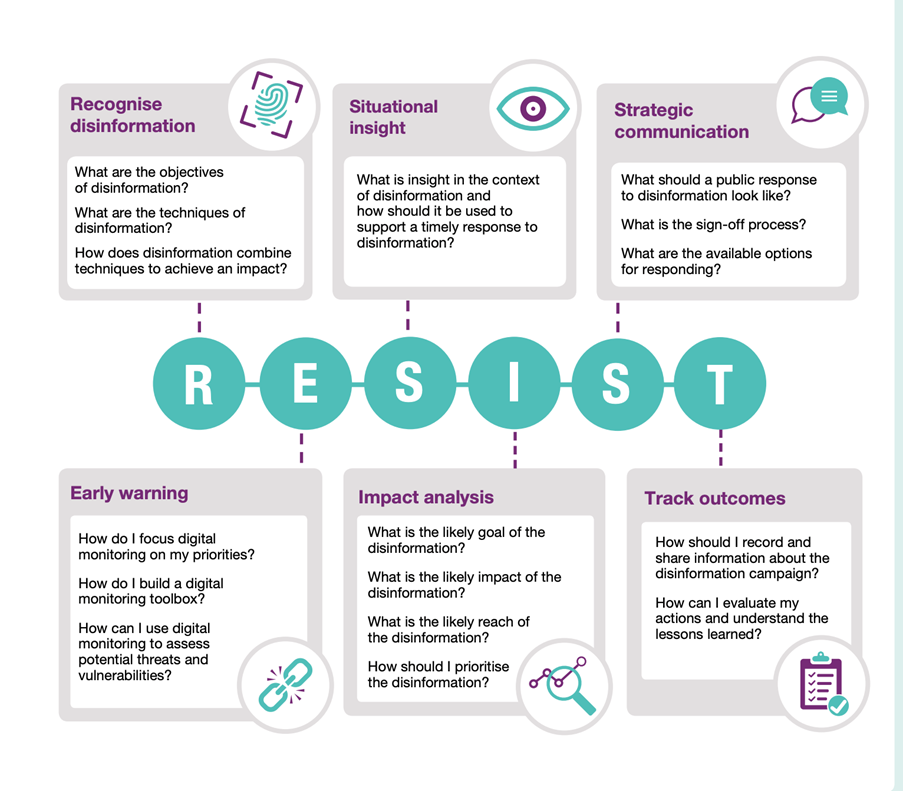
Figure 5: RESIST model: a quick guide
Learning and development
Building the capacity, capability and confidence to respond to mis/dis/malinformation is a critical challenge to councils. Survey data from the LGA Heads of Communications (2025) shows tackling mis/disinformation is a top concern (50 per cent), alongside capacity to deliver (56 per cent). Training needs include AI (69 per cent) and evaluation skills (58 per cent), with strong demand for online workshops and bespoke support.
Internal council skills
Communications teams and key personnel need to enable:
- social media monitoring and analysis to detect emerging rumours
- crisis communication for rapid, clear and empathetic messaging
- community engagement to build trust and amplify accurate information
- legal and reputational risk awareness to ensure compliance and proportionate action
- influencer engagement and counter-disinformation techniques for proactive outreach
Skills for the VCS sector
Trusted messengers—faith leaders, community connectors, and local influencers—require:
- basic digital literacy and social media skills to share accurate updates confidently
- training in myth-busting and counter-narrative approaches tailored to local contexts
- access to verified information and ready-to-use resources from councils
- support for resilience-building and community dialogue to address misinformation constructively
Investing in these skills ensures councils and partners can respond swiftly, proportionately, and collaboratively to protect social cohesion.
Balancing freedom of speech with responsibility
Councils should uphold free expression while protecting communities from harm. This means recognising that free speech does not extend to harmful misinformation, that platforms have a responsibility to curb dangerous rumours, and that councils and businesses should fact-check and share accurate information. Communities should also be encouraged to rely on verified sources.
To achieve this balance, councils need clear, structured guidelines for consistent decision-making in challenging situations. Knowing when public discourse becomes harmful and how best to respond swiftly and proportionately is key to protecting social cohesion while safeguarding democratic values.
Support available
Escalation
Councils should have defined routes for escalation when harmful narratives pose risks to public safety, cohesion, or democratic processes. Illegal content or threats should always be reported to the police immediately. For other concerns, consider the following options:
- report harmful content directly to social media platforms (Facebook, TikTok, X, Instagram) using their escalation channels
- Full Fact: Offer independent verification - they prioritise claims that have the most potential to cause harm to people’s lives
- escalate through Local Resilience Forum structures for multi-agency coordination, especially where misinformation intersects with emergency planning or civil unrest.
LGA Disinformation Training Workshops (2025)
The Local Government Association (LGA) held a series of Disinformation Training Workshops for council officers, aimed at Prevent teams, safeguarding leads, communities and community safety teams, housing support officers, which any council officers were able to attend.
Sessions featured expert presentations on understanding disinformation and information threats, and the tools to use to respond proactively and reactively, to build individual and organisational resilience.
Belong Mis/Dis/Malinformation Capacity Building
Belong provides a capacity-building framework to help councils navigate the complex landscape of harmful information. The service supports the creation of a Target Operating Model (TOM) for strategic response, blending awareness training with facilitated design sessions. It explores operational pathways and policy positioning that enable councils to move from reactive to resilient—while keeping coproduction at the heart of the approach.
Further reading
- Colley, T., Granelli, F., & Althuis, J. (2020) Disinformation’s Societal Impact: Britain, Covid, And Beyond . Defence Strategic Communications, (8), 89-140.
- Government Communication Service RESIST Counter-Disinformation Toolkit
- LGA guide to disinformation affecting local authorities and their communities
Case Study: Liverpool City Council
Context
In August 2025, misinformation began circulating across Liverpool regarding asylum accommodation.
Key false claims included:
- the former care home on Aysgarth Avenue was being converted into housing for asylum seekers
- Serco, the Home Office’s housing provider, was allegedly evicting residents to make way for asylum accommodation
- asylum seekers were receiving “luxury” housing and special privileges.
These rumours were entirely unfounded, yet they spread rapidly via social media and community discussions, fuelling division and fear. The situation escalated to planned protests at hotels and the former care home site.
Practice approach
Rapid Response
- Liverpool City Council (LCC) launched a coordinated communication campaign between 20–25 August, publishing 25 posts across platforms to counter misinformation with factual, values-led messaging.
Myth-Busting strategy
- Published a myth-busting blog using a ‘claim vs fact’ format to directly address circulating rumours.
- Deployed organic and paid social media posts, tailored to local audiences, to correct misinformation and reinforce inclusive city values.
- Paid advertisements achieved a click-through rate (CTR) of 1.82 per cent and a cost per click (CPC) of £0.08, exceeding awareness benchmarks.
- For social media awareness campaigns in the UK, common benchmarks are:The CTR (0.9–1.2 per cent) and CPC (£0.20–£0.30) ‘awareness benchmarks’ are based on industry/agency benchmark data and internal estimates by Superads; Smart Insights; Sprout Social. They reflect typical performance ranges for awareness-focused social campaigns and should be used as comparative guides rather than published UK public-sector standards.
Leadership Visibility
- Open letter from Council Leader Cllr Liam Robinson emphasised dignity, respect, and rejection of hate, reinforcing accountability and transparency. Amplified through Mersey Views newsletter and local influencers to broaden reach
Tone and consistency
- Messaging was short, factual, empathetic, and consistent across all platforms
- Campaign achieved:
- 1.3M social media impressions
- 86,000+ engagements
- 8,500+ clicks to myth-busting blog
Impact and Learning
|
Outcome |
Description |
|
Rumours Neutralised |
Clear, rapid myth-busting prevented escalation. |
|
Community Reassurance |
Leadership visibility boosted trust and reduced protest turnout. |
|
High Engagement |
Metrics showed strong audience interaction and sharing of factual updates. |
.
Contact
Solace Okeyi, Communications Officer
Email: [email protected]
Further reading
Open letter from Cllr Liam Robinson
Case Study: Nuneaton and Bedworth Borough Council
Context
In early September 2025, a coach carrying an American football team arrived at the Holiday Inn Express on St David’s Way, Nuneaton. Shortly afterward, false rumours circulated on social media claiming the coach was transporting asylum seekers.
This misinformation triggered fear among locals, resulting in staff harassment and the hotel adding security measures.
Practice approach
Detection and monitoring
- social media monitoring identified the false claims early.
- reports flagged alarming content suggesting a deliberate “immigrant lie” was gaining traction.
Response coordination
- Nuneaton and Bedworth Borough Council, represented by Leader Chris Watkins and Councillor Brady Hughes, personally visited the hotel to show support and counter the rumours.
- hotel management publicly refuted the claims, clarifying it was a football team on a sports trip.
Communication strategy
- official statements from both the Council and hotel management were issued, explicitly naming the visitors’ true identity and urging reliance on verified sources.
- emphasised swift disclosure to neutralise inaccuracies before escalation.
Impact and learning
|
Outcome |
Description |
|
Rumours Busted |
Prompt official clarification stopped further spread. |
|
Staff Reassurance |
Council presence reassured hotel staff and public. |
|
Operational Continuity |
The hotel remained functional with added security, avoiding disruption. |
Contact
For further information or insights into the council’s approach:
Brady Hughes, Nuneaton and Bedworth Borough Councillor
Challenges to democratic resilience
Voter turnout is an indicator of civic engagement and trust in the democratic system. General election turnout peaked at 83.9 per cent in 1950 but has declined since 1997. In the 2024 general election where overall turnout stood at 59.7 per cent of the eligible electorate, turnout fell below 50 per cent in 55 parliamentary constituencies. Turnout is lowest among 18–25-year-olds, those from lower socio-economic groups, non-graduates and some ethnic minorities.
The British Social Attitudes Survey (2024) showed 45 per cent of respondents saying that they “almost never” trust governments to act for national interest—up 22 percentage points since 2020. In the same survey 58 per cent of adults believed politicians ‘almost never’ tell the truth in tough situations—up 19 percentage points since 2020.
Falling democratic participation and declining trust can erode the legitimacy of institutions, weaken perception of shared values, and increase the appeal of extremist or non-democratic alternatives. The trends described above led the Government to commission Dame Sara Khan to include democratic resilience as an explicit theme in her 2024 review of social cohesion. The review indicated further issues of concern, which included:
- the intimidation of those standing for public office of voters. The LGA reported that in 2025 some seven out of ten councillors reported abuse or intimidation in the last year
- the actions of hostile state actors in influencing the elections, including through mis-, dis- and mal-information
- the future risks of AI on the integrity of elections
Approaches to social cohesion
Section One sets the legal duties of local authorities to register voters, maintain the electoral register, elections, and ensure lawful, fair, and accessible democratic processes. The Electoral Commission publishes guidance for local authorities on these duties.
The Local Government Association supports the Debate not Hate campaign which aims to raise public awareness of the role of councillors in their communities, encourage healthy debate and improve the responses and support for local politicians facing abuse and intimidation.
Some local authorities have also undertaken work to increase civil participation in elections and in policymaking. These initiatives have included:
- Encouraging voter registration: Targeting groups less likely to vote. This may involve advertising campaigns, outreach to schools and colleges, or working with partner organisations to increase registration and turnout.
- Citizenship education: Part of the national curriculum at key stages three and four. Local authority officers and councillors can work in partnership with citizenship teachers to strengthen young people’s understanding of democracy and increase future voter turnout. Councils can provide practical learning experiences, such as visits from local councillors to discuss decision-making and representation.
- Young mayor schemes: Programmes in which young people vote for a young mayor who represents youth voices and participates in decision-making at a local level. For example, Lewisham Council’s Young Mayor scheme (running since 2004) allows a young person aged 11 to 17 to serve a one-year term, advise the mayor, and oversee a youth-allocated budget.
- Participatory budgeting: A process where residents decide how to spend part of a public budget. This involves proposing projects, deliberating on options and voting on how to allocate funds. In Scotland, the Government supports participatory budgeting as a way to build inclusive, empowered and resilient communities, in line with the Community Empowerment (Scotland) Act 2015. It can increase civic participation and reduce tensions between groups, often promoting equality of opportunity and good relations.
- Deliberative democracy: Defined as "two-way communication that involves weighing and reflecting on preferences, values and interests regarding matters of common concern" (The Oxford Handbook of Deliberative Democracy). In the UK, local authorities have led deliberative democracy through pop-up initiatives in public places, crowdsourcing ideas, and citizens' assemblies and juries. These processes aim to enhance the legitimacy of decision-making and strengthen civic capacity through in-depth engagement.
Deliberative democracy has the potential to:
- change public attitudes, social norms and behaviours
- reduce polarisation by exposing people to different perspectives and building consensus
- provide policymakers with the knowledge to make better decisions
- show whether or not there is a public mandate for change during major transitions, for example to net zero
- show that different perspectives have been considered in policy change
- provide greater political legitimacy for new policy.
Initiatives such as citizens assembles involve people directly – by taking part in deliberation, including the activities that accompany citizens assemblies and juries. The also reach people indirectly and contextually –through hearing about deliberative activities, through the media or conversations with peers. To have a positive impact, deliberative democracy needs to reach large numbers of people than those who directly take part, through associated activities and the media.
Further resources
The organisations Involve and Demos have expertise and resources in participatory policymaking and deliberative democracy and both work with local authorities.
- www.involve.org.uk
- www.demos.co.uk
- Bächtiger, A., Dryzek, J. Mansbridge, J and Warren, M. (2018) ‘Introduction’ in The Oxford Handbook of Deliberative Democracy, Oxford: Oxford University Press.
- Khan, Dame Sarah (2024) The Khan Review: Threats to Social Cohesion and Democratic Resilience, London: Department for Levelling Up, Housing and Communities.
- Local Government Association (2023) Debate not hate: ending abuse in public life for councillors, London: LGA.
Polarisation
Society has always been made up of people who have different sets of values and beliefs. However, there is some evidence of growing affective and issue-based polarisation in the UK. Affective polarisation is when individuals begin to see themselves as members of a value-based in-group and begin to dislike and distrust the ‘opposite side’ irrespective of their views on matters of policy. Issues-based polarisation is where such a divide is formed around a particular policy issue, for example, asylum policy or gender recognition policy.
Polarisation presents challenges to social cohesion; It can lead to values-based segregation, particularly in employment, as people choose to work and spend time with their political ‘tribe’. Polarisation can reduce the space for constructive dialogue. In more extreme circumstances, affective polarisation can lead to inter-group conflict.
The echo chamber effect on social media can reinforce polarisation. Algorithmic personalisation prioritises the content that people see. Alternative views are filtered out and people tend to follow accounts that hold similar views. Debates about immigration, race and gender identity have been particularly divisive on social media. Local authorities should consider working with partner organisations to provide spaces for dialogue.
Gender identity
In some local authorities debates about gender identity have led to conflict. The 2024 Supreme Court ruling clarified that terms “woman” and “sex” in the Equality Act 2010 mean biological sex. Services, facilities or organisations that provide single-sex spaces, for example, women’s changing rooms, women-only refuges, or single-sex sport teams must restrict access on the basis of biological sex. This does not prevent these organisations from also offering non-sex specific services. Furthermore, the ruling does not remove protections for transgender people under the Equality Act 2010 for the protected characteristic of gender reassignment —but those protections do not override the requirement to respect biological-sex distinctions when operating single-sex spaces.
Local authorities can address this kind of issue-based polarisation by providing spaces for people’s voices to be heard, and by making it clear that the rights of biological women and of transgender people to protection from discrimination remain intact, as well as by providing training for staff on sensitive, balanced approaches to gender identity and rights.
Further reading
Duffy, B., Hewlett, K., McCrae, J., and Hall, J. (2019) Divided Britain: polarisation and fragmentation trends in the UK, London: Policy Institute, King’s College London.
Case study: Near Neighbours, Luton
Context
Near Neighbours is a programme run by the Church Urban Fund of the Church of England in partnership with local organisations. It aims to strengthen ‘bridging’ relationships between people of different faiths and ethnicities in diverse neighbourhoods. In Luton, the project is operated by Grassroots Luton, which since 2011 has managed the delivery of small grants and worked to strengthen inter-faith relationships through community action projects.
Approaches
In Luton, Near Neighbours has used a range of activities to bring people together. The programme has supported around 287 local projects, community gardening, arts and sports activities, inter-faith women’s groups, to activities that bring people from different backgrounds together for dialogue and action. Dialogue-based projects have included the ‘Real People, Honest Talk’ initiative and ‘Catalyst’ – a youth leadership project that brought together young Christians, Jews and Muslims people from many diverse religious backgrounds in Luton for structured dialogue around issues—including how overseas conflicts resonate locally.
Impact
Near Neighbours’ work has been evaluated for its impact. Participants report increased trust and new friendships across faith and ethnic boundaries. Its Real People, Honest Talk project reported 99 per cent of respondents agreed they had open and honest conversations and 91 per cent said they had met someone of a different faith whom they didn’t already know. In Luton, the programme has also helped the local authority and other partners better engage with diverse communities.
Learning
- small-scale grassroots funding: This can seed innovative community action and bring people together across lines of difference.
- action-oriented, dialogue-based approaches: These work well when they create safe spaces for conversation that bring in people who would not usually meet and when difficult issues, including those with an international dimension, are openly addressed.
- a focus on sustainability: Embedding dialogue into everyday community life (for example, in schools, at cultural events or through faith forums) helps the impact last beyond one-off projects.
Contact
Sarah Wallace – Near Neighbours
Impact of international events on communities in the UK
Conflicts and high-profile events outside the UK can impact on social cohesion in local communities. The Israel-Hamas conflict has triggered an increase in antisemitic and anti-Muslim hate crime. This conflict has been exploited by extremists and the counter-terrorism police have warned it risks radicalising individuals in the UK. The Israel-Hamas conflict has also strained interfaith relations and raised important questions about online mis/dis/malinformation, free speech and the policing of protests.
Other international conflicts can impact on communities in the UK, particularly where diaspora communities of from opposing sides of the conflict live in proximity to each other. In some parts of the UK, people of Pakistani and Indian heritage live close to each other, and tensions have increased after the recent conflict in Kashmir, often stoked online. Other examples are tensions between people of Turkish and Kurdish heritage, or between Eritrean and Ethiopian communities. These tensions can manifest themselves in schools, and student accommodation, for example, between Hong Kong Chinese students and those supportive of the Chinese government. It is important that local authorities are aware of potential sources of tension, particularly in relation to smaller diaspora communities. More positively, there are many cross-community peace-making initiatives in the UK, initiated by faith and civil society organisations, and informal ‘bridgers’.
Protecting of buildings
During times of tension, places of worship have been targets for hate crime or intimidation. The Government provides funding for security scheme, for example, the Jewish Community Protective Security Grant, the Protective Security for Mosques Scheme and the Places of Worship Protective Security Scheme. These enable eligible faith institutions to apply for measures such as CCTV, alarms, secure doors and fencing in response to heightened risk. However, other buildings may be at risk, for example, the offices of members of parliament. Community Safety Partnerships need to be aware of these locations and work with the police and organisations affected to put in place protective measures.
Policing protests
Protests relating to international conflicts raise issues for the police and local authority community safety teams.
Local authorities may require permits for protests, or the use of amplified sound equipment at such events. Such requirements vary between different areas. Legislation also requires that organisers of marches notify the police in writing at least six days before the event. The police have the powers to limit or change the route of a march or set other conditions such as restrictions on its timing.
The College of Policing’s Authorised Professional Practice on Public Order and Public Safety was updated in 2023 to provide a consistent standard for policing events, protests and public-order situations. This states that policing must balance the right to peaceful protest with the rights of others in relation to public safety and preventing disorder. The College of Policing and National Police Chiefs’ Council has also published more detailed operational advice. The Home Office has recently announced that it will afford the police more powers to consider the cumulative impacts of repeated protests when imposing conditions. These changes will be implemented through amendments to the Public Order Act 1986. Further operational guidance will be incorporated when the Home Office publishes full legislative detail.
Amid heightened local tensions, the police have faced accusations of differential treatment, particularly in policing protests.
Approaches to social cohesion
Local authorities should consider mapping migrant and ethnic minorities in their area and consider where there may be tensions that relate to conflicts and events overseas. This information should be included in tension monitoring processes. It is important to monitor social media for content that may inflame tensions, although external expertise may be needed in relation to coverage of overseas conflicts.
Where marches or protests risk tensions or disorder, open, transparent communications with organisers is an important consideration to maintain. It is important that both the police and local authorities make sure that policing is seen as fair to all communities. There may be a need for wider and more proactive engagement between the police, local authority and leaders from affected communities. Schools, colleges and youth leaders may also be useful intermediaries to involve.
Traditionally, local inter-faith networks have been valuable spaces for inter-faith and inter-ethnic dialogue The Israel-Hamas and the Kashmir conflicts have weakened inter-faith relations in many parts of the UK. Local authorities may need to invest more time in supporting inter-faith networks through mentoring or offering support in kind. Local authorities will also need to secure relationships with separate faith communities.
Local authorities should also consider other spaces for dialogue where tensions have arisen between communities. These might include school or youth-based projects.
Further reading
College of Policing and National Police Chiefs’ Council (2023) National Protest Operation Advice
Case study: Social Cohesion in the London Borough of Barnet
Context
The London Borough of Barnet is a largely prosperous residential area where data shows that there is a strong sense of community. It is home to the UK’s largest Jewish community, with 14.5% of residents identifying as Jewish in the 2021 Census. Some 12.2% of Barnet’s residents identify as Muslim. However, there have been increased tensions between these two communities since 2023 and a reported increase in faith-based hate crime. Yet, strong and evolving relationships between the local police, civil society and faith organisation and the local authority have played an important role in maintaining community relations.
Approach to social cohesion
The Police and Barnet Council have worked closely with residents and community organisations to address hate crime, as part of the Safer Communities Partnership Board objectives. Support for victims of hate crime is available through the local authority Victim’s Hub and Restorative Justice services.
In summer 2024, information was received indicating a potential threat to a solicitor’s office that handles asylum and immigration cases. The local response showed strength and resilience and that week there was a solidarity visit to Friday prayers by the Barnet Multi-Faith Forum at North Finchley Mosque. A large congregation was joined by a diverse array of prominent faith and community leaders and local authority representatives.
The local authority has continued to prioritise projects that strengthen community cohesion across the borough. A key initiative is its Community Listening programme - a series of roundtable discussions with members of minority groups, Cabinet members and senior council officers. The Council won the Mayor of London Cultural Impact Award in 2024, enabling the co-creation of a cultural programme that celebrates Barnet’s diverse communities and heritage. Building on this, Barnet’s 2025 Connecting Communities campaign aimed to forge closer links with communities, strengthen community resilience and promote diversity in a positive light.
Case Study: The Optimistic Alliance of Muslims and Jews
Context
Conflict in the Middle East has had major impacts on social cohesion in many parts of the UK. Inter-faith relations have been put under strain and the work local inter-faith forums have sometimes been weakened. The police also report an increase in anti-Muslim and anti-Jewish hate crime. A new group – the Optimistic Alliance of Muslims and Jews – was formed to address these issues.
Approach
The work of the Optimistic Alliance was launched at an event in 2024, which brought leaders from Muslim and Jewish communities together. Here there were wide ranging discussions about how to tackle hatred and challenge extremism. Those involved also highlighted the need to defend shared religious freedoms and support mainstream, positive voices from both communities. Subsequently, the Optimistic Alliance has nominated four Jewish and four Muslim co-chairs, representing the breadth of Jewish and Muslim communities. The specific aims of the Optimistic Alliance are:
- tackling hatred: working together to eliminate anti-Jewish and anti-Muslim hatred and challenge extremism
- defending freedoms: collaborating to defend shared religious freedoms and practices, for example timely burial
- promoting social cohesion: supporting mainstream voices to build a cohesive society and preventing overseas conflicts from dividing communities
- addressing societal issues: finding common ground on broader challenges like poverty and climate change.
After the October 2025 attacks at Heaton Park Synagogue in Manchester, the Optimistic Alliance put out a statement signed by its co-chairs. This reaffirmed the group’s desire to resist division and remain hopeful.
Impact and learning
The work of the Optimistic Alliance of Muslims and Jews highlights the power of shared, positive narratives rather than focusing on difference, division or conflict. Its approach shows that amplifying mainstream, moderate voices help to counteract extremism and polarisation, giving visibility to the many who seek cooperation and coexistence. As an informal network, the Optimistic Alliance shows the importance of personal relationships and spaces for dialogue in addressing faith-based conflict.
Hate crime and its impact on social cohesion
Home Office data for the year ending March 2025 recorded 115,000 hate crimes, with sharp increases in race and religion-based offences, particularly antisemitic and anti-Muslim incidents. Despite this rise, underreporting persists. According to the latest Crime Survey for England and Wales (CSEW) which is considered the best measure of prevalence because it captures both reported and unreported crimes. It estimates around 176,000 hate crime incidents annually, while police recorded only about 116,000 cases in the same period. This gap suggests that at least one-third of hate crimes go unreported, confirming persistent underreporting despite improved recording practices.
Impact on social cohesion
Hate crime not only harms individuals but fractures trust between communities, fuelling fear and creating conditions for segregation and isolation. British Future’s report Calling Out Hatred and Prejudice highlights that unchecked hate undermines democratic norms and civic participation, eroding the social fabric.
Home Office data for the year ending March 2025 recorded sharp increases in race and religion-based offences, particularly antisemitic and anti-Muslim incidents. Despite this rise, organisations representing victims suggest that underreporting persists. Many victims lack confidence in reporting mechanisms or fear reprisals.
This type of crime destabilises local networks, intensifies mistrust, and can escalate into wider disorder. Victims often experience long-term psychological harm, while bystanders and wider society absorb narratives that normalise prejudice. These dynamics weaken bridging social connections and amplify polarisation, particularly during flashpoints linked to international conflicts or domestic political tensions.
Public policy
National strategies emphasise prevention and victim support, but provision remains uneven and local capacity can be fragile. Funding for synagogue and mosque security—administered via the Home Office’s Protective Security Grant—and third-party reporting organisations are vital resources – however, reliance on short-term grants creates vulnerabilities. Councils often lack sustainable resources for proactive prevention or restorative interventions.
The police hold primary responsibility for enforcement and recording hate incidents that cross the criminal threshold – they also record and investigate non-crime hate incidents (NCHIs, which can provide data to local authorities and community safety partnerships). The National Police Chiefs Council have recommended that all forces in England and Wales cease recording NCHIs in their current format; the Metropolitan Police Service has already stopped the practice. A review is underway, with findings expected in December 2025. .
Local authority approaches
1. Victim support and reporting
- clarify and promote signposting routes to national and local services in an easy read format for residents emphasising what each service can provide and what protected characteristic they support (e.g., Victim Support, True Vision, British Muslim Trust, Community Security Trust, Stop Hate UK, Galop, Islamophobia Response Unit (IRU)). For a good summary see GOV.UK Religious and racially-motivated hate crime and where to report and Kingston Council’s example.
- set expectations on how local authority staff will respond to cohesion-relevant incidents and provide trauma-informed training to support staff to respond.
- improve signposting and confidence-building campaigns to address underreporting – including through National Hate Crime Awareness week.
2. Prevention and security
- quality assure and help coordinate physical security measures for faith institutions, supported by CST and mosque security funds.
- establish early-warning systems for tension monitoring to detect emerging risks and trends to coordinate multi-agency responses. Consider dedicated ways to learn from relevant incidents, for having a dedicated LCJB review on victims of hate crimes or Hate Incident Panel (HIP) – see examples below
- lead community dialogue initiatives to challenge prejudice and build resilience, drawing on British Future’s recommendations for inclusive civic spaces.
3. Perpetrator interventions
- quality assure existing offers together with policing colleagues. The Victims Code of Practice (2020) mandates the right to receive information about restorative justice when reporting a crime. Restorative justice programmes, such as Hartlepool’s model — which focuses on accountability and rehabilitation rather than punitive measures alone — are available for authorities to consider. All service providers have to consider whether the victim of a crime would benefit from restorative justice.
4. Bystanders and wider society
- promote public awareness campaigns to empower bystanders to report and intervene safely.
- commission and lead schools-based programmes and civic education to counter prejudice and promote empathy.
- coordinate place-based / organisational pledges to align public sector, voluntary, community and business sectors to adopt. Tower hamlets introduced a ‘No Place for Hate’ pledge in
Case Studies
The Tower Hamlets Hate Incident Panel (HIP) is a multi-agency mechanism designed to manage complex or high-risk hate crime and hate incident cases in the borough. HIP reviews and coordinates service provisions for hate incidents/crime. HIP facilitates, monitors and evaluates effective information sharing to enable appropriate actions to be taken to support and protect victims, take action against identified perpetrators and prevent further harm. The panel is chaired by the Council in partnership with the Police and meets once every month via MS Teams. Any agency representing a visitor, worker or resident in Tower Hamlets can refer cases to the panel. Anyone over 16 can be referred to the panel.
Devon and Cornwall LCJB Victim Scrutiny: Victims Code of Practice Scrutiny Panels bring together the criminal justice system actors together to review random sample of anonymised cases according to a crime type (e.g. Hate Crime, Serious Violence). Panels assess if all the 12 rights of the Victims Code of Practice (2021) have been complied with, exploring good practice and learning experiences, recognising areas that could be improved.
Hammersmith and Fulham Hate Crime Strategy 2024-2028: The strategy was co-produced with residents, and local stakeholders which included civil society and faith organisations, football clubs, the British Transport Police and a social landlord. Residents were also consulted through a survey. The strategy took a whole-system approach combining prevention, victim support, and community engagement. It also outlined a delivery plan and annual updates.
Case Study: Oldham Council – monitoring and responding to community tensions
Context
Oldham Council has emerged as a leading example of how local authorities can proactively manage community tensions in an era marked by misinformation, political scrutiny, and social division. In 2024, Oldham faced a volatile mix of challenges: the national grooming gangs inquiry, rising online abuse targeting council leaders, and heightened community anxiety. These tensions were further exacerbated by international conflicts such as the Israel-Hamas situation, which had local reverberations.
Despite limited resources and a fragile infrastructure for misinformation management, Oldham successfully prevented potential unrest through a coordinated, intelligence-led approach. This case illustrates the critical role of community safety functions in upholding cohesion and public trust during periods of heightened tension.
Practice approach
Oldham’s community safety response is rooted in a multi-agency, place-based model that integrates:
- Tension Monitoring: A robust system combining police data, social media analysis, community intelligence, and frontline reporting. This aligns with national guidance on early intervention and ethical data handling.
- Escalation and Governance: A local command structure involving the Director of Communities, Deputy CEO, CEO, and Chief Inspector ensures rapid decision-making and visible leadership.
- Community Engagement: Trusted relationships with local leaders, mosque councils, youth workers, and VCSE partners enable swift, culturally sensitive responses. The Council uses WhatsApp groups, Facebook pages like “I Love Oldham,” and Bee in the Loop to track and counter misinformation.
- Legal and Ethical Frameworks: All monitoring and interventions are conducted within the bounds of the Regulation of Investigatory Powers Act 2000 and the Equality Act 2010, ensuring transparency and proportionality.
- Partnership Coordination: Daily collaboration with Greater Manchester’s Gold and Silver Command (including Police, Fire, GMCA, and Counter Terrorism) ensures alignment across agencies.
Impact and learning
Oldham’s experience demonstrates that:
- Early engagement prevents escalation: Proactive outreach and trusted messengers were instrumental in averting riots during the summer of 2024.
- Digital literacy and misinformation resilience are critical: The rapid spread of false narratives exposed the need for better tools, training, and national-local coordination.
- Relationships are infrastructure: Long-term investment in community development and local leadership enabled a rapid, trusted response when tensions rose.
National support is essential: Cuts to preventative services have left local systems vulnerable. Oldham’s case underscores the need for sustained funding, consistent national guidance, and improvements.
Case study – Waltham Forest Council
Context
Waltham Forest is an ethnically diverse outer London local authority. There are many active civil society and faith organisations and a strong sense of community. The local authority prides itself on the welcome it affords to refugees. However, the borough has seen among the fastest growth in house prices and rents of any authority in the country over the last decade, which has served to exacerbate existing inequalities in a borough in which 39% of children live in poverty.
Practice approaches
As one of the Government’s five Integration Action Areas, Waltham Forest received funding to support innovative work on cohesion and integration between 2019 and 2022. It’s Connecting Communities programme, which put into practice this work, involved some innovative initiatives and provided valuable foundations for future work on community cohesion. One initiative was the Citizens’ Assembly on Hate Crime, which brought together 45 residents to co-create community-led solutions. Participants were selected to represent the different views and background of people who live in the area. Recommendations from the citizens assembly included the rollout of bystander training and a local authority-wide hate crime reporting mechanism, supported by a youth-focused media campaign.
Connecting Communities also established a single point of contact approach to ESOL provision, thorough which individuals could be referred through to ESOL provision which would best suit them, including informal leaning and community provision.
This more personalised and relational approach, involving close working relationships with community groups, proved a valuable precursor to the later establishment of a dedicated Welcome Hub in Lea Bridge Library with wraparound support services to meet the evolving needs of new arrivals. The Welcome Hub model, initially created as support to asylum seekers in hotels, has since been developed in a more universal offer available to all residents and rolled out across most libraries in the borough.
Programmes of work undertaken during this period have strengthened relationships between the local authority and faith and civil society groups. This proved valuable during the COVID-19 pandemic.
Waltham Forest Council has adopted a proactive, place-based approach to fostering cohesion. Unique in their borough-wide campaigns, such as Together We Are Waltham Forest, the council reinforce a borough-wide message of unity and collective resilience.
The Council has also demonstrated responsiveness to national and international events. Following the Manchester synagogue attack, it reached out to all local synagogues and Jewish organisations to offer reassurance. During the Israel-Hamas conflict, maintained ongoing dialogue with faith and community partners and issued statements reaffirming a shared commitment to cohesion and protecting local communities.
The local authority actively monitors social media to stay ahead of emerging narratives.
Cultural initiatives continue to play a vital role in fostering pride and connection. As the Mayor’s first Borough of Culture in 2019, Waltham Forest has seen the opening of a new theatre, the Soho Theatre Walthamstow. The award-winning William Morris Gallery has put on important exhibitions including on the influence of Islamic art on the work of William Morris, which play a valuable role in helping to build strong but inclusive sense of place and heritage. The Legends of the Forest volunteering scheme further encourages civic participation and strengthens community ties.
Waltham Forest’s experience highlights the importance of leadership and responsiveness.
Key Learning
Waltham Forest’s experience highlights the importance of trust, responsiveness, and cultural sensitivity in cohesion work. Economic divides and inequalities have been exacerbated by rising housing costs and remain a real challenge, with 39% of children living in poverty.
The Council places an emphasis on placemaking across the borough, and recognisises the need to build connections between those who have recently moved into the borough and longer-standing residents, as well as, improving relationships with underrepresented groups with a view to enabling access to key services like health and education.
Cultural initiatives such as the Borough of Culture programme in 2019 which launched the Soho Theatre and the Legends of the Forest volunteering scheme play a vital role in building pride and civic participation.
Managing Community Tensions in Westmorland and Furness
Context
Westmorland and Furness Council, formed after recent local government reorganisation, is facing significant community cohesion challenges in its towns and rural hinterland – particularly in Barrow-in-Furness and Dalton-in-Furness. Although Barrow’s traditional industries have seen a recent boost, the area can feel distant from large cities, with some residents feeling their voices are not heard, leaving them feeling marginalised or resentful. Residents living in rural areas often lack support networks.
Furthermore, Westmoreland and Furness Council have had to respond to some specific incidents threatening social cohesion. These have included a false accusation of assault by Muslim men, the convictions of three men for child sexual exploitation, tensions around asylum hotels and opposition to the building of a mosque in Dalton-in-Furness which has been exploited by extremists.
Practice approach
Westmorland and Furness Council responded to escalating tensions by building robust monitoring systems, fostering proactive dialogue, and aligning cohesion with major strategic investments. These actions included:
- A council statement reiterating legal and moral support for religious freedom, emphasising no place for racism or misinformation in the context of opposition to the mosque.
- A strategic “Together we are Powered by Communities” plan to enhance grassroots resilience and connections.
- The allocation of core council funding for a dedicated cohesion officer.
- Adopted the tension monitoring system that existed prior to local government reorganisation and strengthening with a weekly review with police.
- Improved monitoring networks across the local authority, including Prevent / counter-terrorism monitoring networks spanning the area.
- Established a Cohesion Community Network of 56 local stakeholders and residents.
- Set up a Westmoreland and Furness Cohesion Group under the Community Safety Partnership with a dedicated action plan.
Targeted interventions included countering misinformation around the proposed mosque by co-producing factual leaflets with mosque leadership and councillors. This was shared widely with residents. The local authority partnering with Flowhesion, to support emerging community leaders. In one area where concerns about crime were high, the policy, fire service and local authority made door-to-door visits to talk to residents.
Impact and learning
- timely, fact-based intervention is key: Proactive info campaigns (like mosque factsheets) deflate misinformation.
- structured pro-active intervention is better than reactive responses firefighting: Built-in weekly cadence ensures the council stays ahead of tension spikes.
- economic investment complements cohesion: A dedicated member of staff to coordinate a response is a necessary investment. Economic growth frameworks can support social unity.
- multi-agency engagement builds trust – through Visible joint visits reassure communities and promote integrated local problem-solving.
Contact
Westmorland and Furness Council – Communities Team
Email: [email protected]
Further reading
- Council Statement on Community Cohesion Issues: Overview of live intergroup challenges
- BBC feature: “South Lakes Islamic Centre: For and against…”: Local views on mosque tensions
- IQNA: “Barrow Mosque Project Faces Misinformation Campaign”: Council’s response to disinformation
Annex A: Special Thanks
Belong and the Local Government Association extend sincere thanks to all organisations, practitioners and partners who contributed to the development of this guidance. Their insight, experience and leadership have shaped the recommendations and strengthened the relevance of the final publication.
Expert Reference Group
We offer particular thanks to the members of the Expert Reference Group, whose expertise and critical reflections significantly shaped the content, scope and quality of this guidance:
- Blackburn with Darwen Council
- Birmingham City Council
- Calderdale Council
- Hartlepool Council
- Manchester City Council
- Torbay Council
- Walsall Council
Stakeholder Consultation Acknowledgements
The following organisations and networks were consulted between May and October 2025.
- Board of Deputies of British Jews
- Bolton Council
- Cheshire East Council
- City of Sanctuary
- Convention of Scottish Local Authorities (COSLA)
- Greater Manchester Combined Authority
- Knowsley Council
- LGA Special Interest Group for Countering Emerging Threats
- Luton Dialogue Project
- Mayor’s Office for Policing and Crime (MOPAC)
- Members of Belong’s Executive & Strategic Leader Community of Practice
- Members of Belong’s Local Government Community of Practice
- Members of Belong’s People and Places Community of Practice
- The Jo Cox Foundation
- The Office of the Cheshire Police and Crime Commissioner (OPCC)
- Up for Yorkshire
- Voluntary and Community Sector Emergency Partnership (VCSEP)
- West Midlands Recovery Forum (WMRF)
Lastly, we offer our particular thanks to all organisations and practitioners who contributed case studies, and who generously shared their insights, time and learning with us.
Acknowledgements
This guidance has been written by Rebecca Inskip, Director of Programme (Local Government), and Jill Rutter, Policy and Research Lead at the Belong Network, with support from Project Coordinators Eve Henley and Josh Williams.
We would also like to thank the wider Belong Network team and associates for their editorial input and advice, as well as colleagues from the Local Government Association and the Ministry for Housing, Communities and Local Government for their advice, partnership and guidance throughout the development of this publication.