The ‘OK to Ask?’ campaign, delivered for Surrey Police and the Office of the Police and Crime Commissioner, tackled youth-produced sexual imagery (YPSI) among 13–17-year-olds.
Campaign background
Using Social Norms Theory, insight-led research and co-creation with young people, the campaign reframed not asking for or sending sexual images as an aspirational, positive choice and promoted respectful peer behaviour. Delivered via TikTok, Snapchat, Meta and YouTube with supportive resources for parents, teachers and professionals, it reached over 300,000 accounts and generated more than six million impressions. Evaluation found strong message recall and shifts in perceptions about norms, helping young people feel empowered to say “no”.
Executive summary
The ‘OK to Ask?’ campaign was delivered by Hitch Marketing working with Surrey Police and the Office of the Police and Crime Commissioner with Home Office funding. It aimed to prevent the creation and sharing of youth-produced sexual imagery (YPSI) among 13–17-year-olds - one of the most widespread issues affecting young people. The campaign sought to shift harmful social norms, reduce pressure to request or share images, and promote respect and positive peer behaviour. It used insight-led research, co-creation with young people, and targeted digital and resource-based activity to challenge the normalisation of YPSI.
The challenge
A third of indecent images of children online are created by young people themselves, commonly under peer or partner pressure. This behaviour can reduce confidence, affect friendships and relationships, and lead to difficulties at school or at home. Young people often perceive asking for or sending sexual images as typical, making the behaviour difficult to challenge. The campaign was commissioned to shift these perceptions and promote healthier, respectful approaches among adolescents.
Objectives
- Challenge norms and expectations that facilitate YPSI.
- Present not asking or sending images as aspirational, positive choices.
- Reduce pressure to request or share sexual imagery.
- Promote respectful peer behaviour and empower young people to say “no”.
- Educate parents and professionals on supporting young people facing pressure.
Approach and methods
The campaign was grounded in Social Norms Theory, focusing on subjective norms - what young people believe others expect or do. It aimed to empower teens by showing how they could control decisions about asking for or sending YPSI and support peers who choose not to engage in these behaviours. Research included in-person and online focus groups, surveys, and a ‘writers’ room’ with young people to ensure strength-based, age-appropriate messaging that resonated and reflected lived experience.
Execution
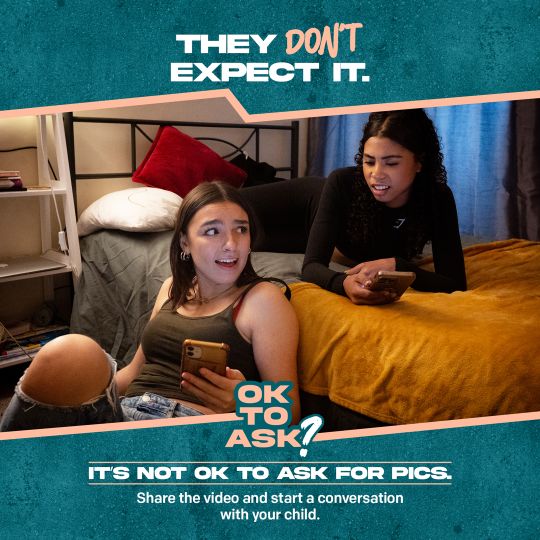
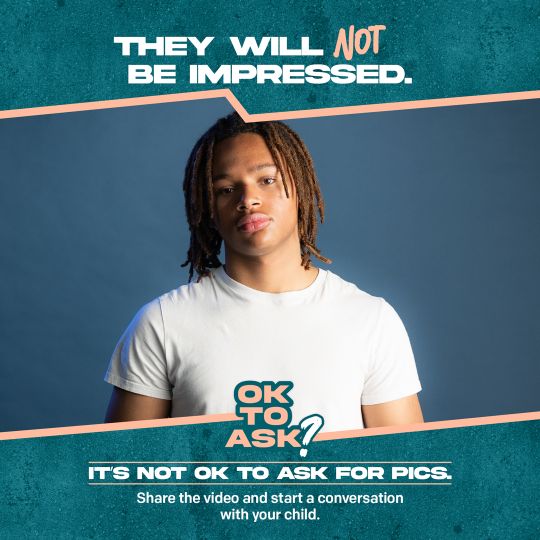
Co-created with young people to ensure authenticity and relevance, the campaign used unbranded relatable content portraying real scenarios (via actors retelling lived experience). It was delivered on TikTok, Snapchat, Meta and YouTube, targeting 13–17-year-olds, with additional parent-focused Meta activity and amplification through Surrey Healthy Schools. A dedicated website provided resources for parents, teachers and professionals, with signposting to support services.
Results
- Reached 300,000+ accounts.
- Generated 6,000,000+ impressions.
- Achieved 300,000+ video views with 75 per cent completion rates.
Mid-point evaluation showed YPSI was often normalised and trivialised, highlighting the need to challenge perceptions that it’s widespread. Survey and workshop data indicated the campaign successfully shifted beliefs, with high proportions of young people reporting that it helped them see asking for nudes as undesirable and feel empowered to support friends who say “no”.
Evaluation
Evaluation combined digital analytics, surveys and workshops. Findings demonstrated strong recall and resonance, with high agreement that the campaign clarified its messages and empowered young people not to send imagery. TikTok and Snapchat performed best for awareness and engagement among primary audiences. A bespoke workshop was developed into a tool for use in schools to explore social norms and peer influence further.
Lessons learned
- Challenging harmful norms requires relatable, age-appropriate messaging rooted in audience insight.
- Co-creation with young people enhances authenticity and engagement.
- Combining targeted digital activity with supportive resources improves reach and practicality for parents, teachers and professionals alike.
Additional information
Contact
Nick Godbehere, Managing Director at Hitch Marketing Limited, [email protected]