Maidstone Borough Council (MBC), partnered with Wickes Maidstone, launched a targeted rainwater harvesting initiative, procuring 555 free 210‑litre water butts for eligible residents to support households most vulnerable to climate impacts and surface water flooding.
Background
Using MBC’s Geographic Information System (GIS), officers overlaid indices of multiple deprivation with surface water flood risk mapping to identify priority neighbourhoods. With one in five Maidstone properties at risk of flooding, the Council partnered with Wickes Maidstone to procure 555 free 210‑litre water butts for eligible residents. Each selected household received a personalised letter with a unique single‑use collection code for in‑store redemption. This project reduces runoff, supports water conservation, and provides tangible adaptation support to residents least able to act independently. In total, the scheme delivers potential water savings of more than 115,000 litres per season while contributing to biodiversity and drought resilience.
The challenge
Maidstone faces increasing surface water flood risk as heavier rainfall events become more common. One in five properties in the borough is at risk of flooding. Many high‑risk neighbourhoods also experience socioeconomic deprivation, limiting residents’ ability to invest in mitigation measures. A commitment in MBC’s Biodiversity and Climate Change action plans is to carry out targeted interventions with vulnerable groups to improve uptake of climate mitigation measures. The council therefore sought a practical intervention that would reduce pressure on drainage systems, support water conservation, and offer tangible adaptation support to households least able to take action independently.
The solution
The project aimed to reduce surface water runoff, improve household climate resilience, support biodiversity during drought, strengthen community trust, and build capacity for targeted adaptation planning.
Using GIS, officers combined indices of multiple deprivation with surface water flood risk overlays to identify neighbourhoods where vulnerability and disadvantage intersect. MBC partnered with Wickes Maidstone to procure 555 water butts, with the retailer holding stock in‑store to avoid council storage and transport costs. A voucher‑based system enabled controlled distribution and reduced logistics overheads.
Selected households received personalised letters containing unique single‑use alphanumeric codes and instructions for in‑store collection, installation, benefits, and maintenance. Codes were securely tracked and deactivated upon redemption. This ensured efficient, secure, and anonymous reporting.
The impact
Environmentally, the project reduces peak‑flow pressure on drainage systems, lowers the risk of surface water damage, supports water conservation during summer, reduces demand on mains supply, and improves garden resilience during hosepipe bans. The scheme delivers potential water savings of more than 115,000 litres per season.
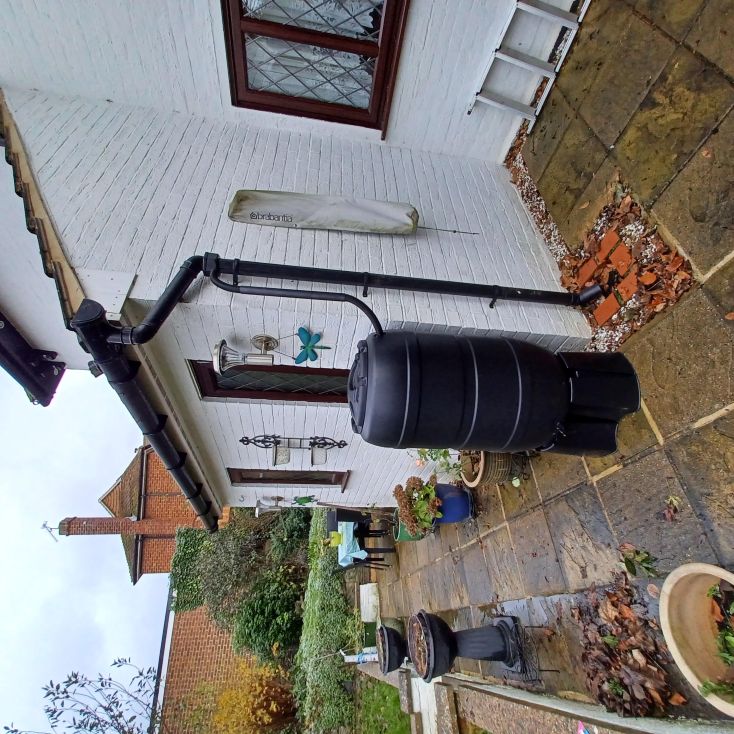
Socially, it provides direct support to low‑income households, increases awareness of climate adaptation behaviours, and strengthens community trust.
Financially, it represents a high‑value, low‑cost intervention with avoided logistics expenses, reduced flood‑related damage costs, and potential long‑term insurance and recovery savings.
How is the approach being sustained?
The model is sustained through integration into wider climate resilience planning and ongoing monitoring of uptake using MBC’s GIS. The targeted approach will be replicated in future adaptation programmes. MBC intends to expand distribution, extend partnerships across the borough, and incorporate rainwater‑butt uptake into resilience indicators. The council will continue refining the operational model, including potential installation workshops, clearer communications, and expanded accessibility features for future phases.
Lessons learned
he project showed that GIS targeting significantly improves fairness, ensuring that support reaches households most in need. Partnerships with local retailers reduce costs and simplify distribution. Providing a tangible adaptation measure increased resident engagement and satisfaction. Clear communication, including detailed instructions and eligibility criteria, reduced follow‑up enquiries.
For other councils, a data‑driven approach, retailer partnerships, clear installation guidance, and piloting within smaller catchments before scaling are recommended. Future improvements could include installation workshops, QR‑linked instructional videos, colour printing to enhance legitimacy, and clearer emphasis on in‑store collection requirements.