1. Introduction
Local government reorganisation (LGR) must focus on people as much as process if it is to deliver change and successfully create robust new councils with a healthy culture. It is essentially a large-scale change management programme and it is important to understand and acknowledge that people react to change in different ways.
By focusing equally on the information and engagement needs of staff, as well as the corporate programme itself, internal communications can help set the tone for the new councils by building trust and providing clarity around change.
People want to understand three things: what is happening, what it means for them, and what is expected of them right now. Internal communications needs to answer those questions and establish the best ways to share the answers.
This resource is designed to help councils going through LGR with their approach to internal communications (which includes communications with councillors) as a strategic discipline alongside the extensive delivery programme.
It sets out how to provide clarity amid uncertainty, balance honesty about what is unknown with reassurance about what can be clarified, and how to equip leaders, managers, councillors and officers to communicate with confidence.
Milestone moments and core content
Much external activity will focus on the key milestones and decisions relating to the creation of your new programme - and it’s important that staff are aware of these. It helps to show progress and maintain momentum at a strategic level.
For these milestone moments, tailor messaging around these big set piece announcements to your internal audiences; try to avoid simply reissuing to your staff media releases or videos intended for an external audience.
However, while these are important and significant internally, it is unlikely the main concern of your colleagues is “phase three is getting underway” or “the structural change order has been laid before Parliament”. These are so far removed from their day-to-day work, it's essential to strike a balance between strategic messaging and content that addresses the questions about real impact on staff and services. Part of this is the importance of insight to understand what staff want to know, and maintaining a two-way flow of information and dialogue throughout the process, not just when a milestone moment is reached.
To align messaging to key stages of the programme and still keep it relevant, ask the same key questions at each stage.
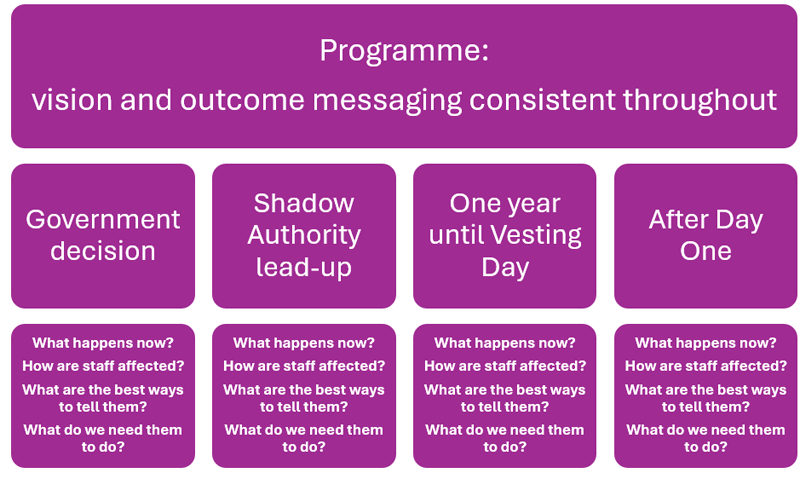
This toolkit is designed to help you think and consider how you answer these questions, who to involve and how to cascade and receive information.
2. Strategic internal communications
Aims and objectives
The aim of your internal communications work should be defined: it is likely to be “to support the successful creation of the new council/s”, or something similar.
We see internal communications as being about retaining good staff so we can run and maintain good services.”
- A head of communications from a county council currently going through LGR
You will also need to establish your specific internal communications objectives, which could include:
- maintaining staff trust during a period of prolonged uncertainty. Trust is the building block of successful change. In this toolkit, you’ll find ideas and suggestions that help you build trust in a number of ways.
- building internal momentum for change
- encouraging two-way engagement
- enabling senior officers to lead visibly and consistently
- creating understanding of LGR, the process, the timeline and what it means for staff
- strengthening connections with HR and workforce transition teams to ensure joint working and shared value
- translating high-level changes into relevant and relatable messages and content.
Principles of internal communications
As with aims and objectives, you should consider the principles governing your work, as these will set the approach that you will take throughout. These might include:
- empathetic: we know change invokes emotion, and that everyone responds differently. We acknowledge uncertainty, anxiety, or excitement, and provide information that helps people manage the transition.
- tailored and targeted: messages focus on how change impacts different audiences, and are shared in ways, and by those, that work for recipients. That includes language and format, and can help ensure messages are relevant and relatable, and therefore more likely to land.
- open and often: proactive communications, even when you do not have all the answers, helps create trusted information sources and minimise rumours. Being explicit about uncertainty by communicating about what you don’t know, why you don’t know and giving employees a date to expect information will always be more effective in building trust than only focusing on the ‘known knowns’ since only answering those often leaves people frustrated and feeling that those leading the change don’t understand their needs or worries.
- responsive to feedback: listening needs to be a key part of internal communications supporting LGR. Build the means for colleagues to feed back, escalate and share. What do people need? What are they worried about? Where are your information gaps? Ask and your staff will tell you.
Aligning your internal communications
We should have put more time and resource to specifically focus on developing internal communications. And a specific strategy rather than including it within the wider communications strategy. We would have achieved greater buy-in and endorsement.”
– a director of communications from a council which has undergone LGR
Your internal communications will need to align with the programme (including corporate workstreams such as HR, workforce, procurement and IT) and service workstreams, supporting and receiving input from each of them in turn. This way, you’ll be able to ensure the right support for both, meaning colleagues are getting answers to their own practical concerns and as well as the important programme messages.
Alignment across communications plans can look like this:
Internal communications intention
Overall LGR programme:
- Why are we doing this?
- What are we becoming?
- What does success look like?
Specific service:
- Relevance, reduced anxiety, service continuity, safe and legal requirements, momentum
Core emphasis
Overall LGR programme:
- Why are we doing this?
- What are we becoming?
- What does success look like?
Specific service:
- What does this mean for my service, my team, my role, and my workload
- What should I do right now?
How?
Overall LGR programme:
- Strategic narrative
- Senior officer leadership (visible, empathetic, and consistent)
- Transparency around decisions and process
Specific service:
- Practical implications of change – the ‘so what?’
- Empowering managers
- Acknowledge pressures and provide emotional support through change.
Key message focus
Overall LGR programme:
- Strategic vision
- The 4 Ps
- Milestone moments and decisions
- HR, IT, governance
- Transition not transformation
Specific service:
- Local relevance - what it means for us
- FAQs including TUPE, working practices incl. IT systems and base location, Ts&Cs
- Job security and ‘day one’
- How to influence service design Importance of service continuity.
Delivery emphasis
Overall LGR programme:
- Core messages and central content ownership
- Corporate channels
- Leadership briefing notes for consistent lines
- CEX webinars, Town Halls and briefings providing access, listening and visibility.
Specific service:
- Toolkits and accessible content for managers – tailored via comms links with services
- Comms cascade
- Feed up concerns and issues
Face to face/online briefings, change champions network, inboxes which allowed staff to raise issues anonymously so their questions fed visibly into wider FAQs were the things that worked best for us”
- A director of communications in a council which has undergone LGR
3. Communications in a change environment
Not everyone internally will welcome LGR. Change inevitably brings uncertainty, and for many people this can be more challenging than the change itself. Throughout LGR, colleagues may understandably worry about what the transition means for their roles, including the possibility of job losses as new councils work to reduce duplication and deliver savings. Others may be concerned about how their expertise will be valued, the impact on familiar teams and relationships, or a shift in how they work day to day. These reactions – from anxiety and frustration to a sense of loss – are natural during a transition of this scale. Effective internal communications should acknowledge these concerns openly and provide clarity and reassurance wherever possible.Working with colleagues in HR and OD
Communications teams will need to work closely with colleagues in HR throughout the process – much of their work will form the content for your internal communications updates, alongside the wider programme. See these Ten essential workforce considerations for local government reorganisation (LGR) that set out advice we’ve given as part of our guidance on workforce issues for LGR.
There are some specific approaches, over and above good internal communications practice, that can be considered when working on a major change programme, and can help to reduce some of the factors that cause anxiety and resistance.
The 4 Ps of change communications (William Bridges, Making Sense of Life’s Changes – 2019.)
The role of the internal communicator is to help move people from the end of one reality towards the successful ‘new beginning’ of another. To do this, you can structure your strategic messaging around the ‘4 Ps’. These are:
Purpose
The theory: Why we are doing what we are doing, the reasoning behind it that makes it a necessity.
LGR perspective: This can range from citing government direction to more positive messaging around the objectives and benefits identified in the approved proposal and those cited by ministers in correspondence announcing the decision.
Picture
The theory: Tell people what the change will look and feel like when we reach our goal.
The LGR perspective: Your vision of the future once the new council exist, from the perspective of staff and organisational culture including what it will be like to work here.
Plan
The theory: Tell people how we will get from the current state of two-tier structures to a single unitary council.
LGR perspective: A visual timeline is essential, setting out not just the milestone moments, but what happens in between – at a programme and a staffing and service level.
Part
The theory: Explain what people need to do to help make the change a reality and a success.
LGR perspective: A potentially golden space where a culture that is inclusive and values innovation can start to be shaped. Set out examples of colleagues across several preceding councils shaping Day 1 service planning together.
Three stages of transition
Stage 1: Endings
Aim: help people let go of ‘the old’
Internal communications approach: acknowledge loss and provide clarity
- respect feelings of loss, grief and mourning
- clarify what will change and what will stay the same
- help people to ‘let go’ of the old ways and see the things they’ll be pleased to let go of
- identify losses to mark what they feel sad about losing
- show how the best values and practices of their existing council can be preserved and amplified in the new organisation
- explain why change is necessary (the “Purpose”) and how things will be (the “Picture”).
- celebrate past success and mark legacy.
Stage 2: The Neutral Zone
Aim: Help people make ‘the journey’
Internal communications approach: communicate to manage confusion and encourage engagement
- seek, encourage and respond to feedback
- promote and showcase ways for people to contribute ideas
- create opportunities for people to experiment and try new ways of working
- acknowledge ongoing confusion and anxiety.
- focus on how change is happening and scope for staff involvement (“Plan” and “Part”) to give employees direction.
Stage 3: New beginnings
Aim: encourage commitment to a new future
Internal communications approach: Solidify the change
- demonstrate early successes
- celebrate key milestones in the change journey – e.g. shadow elections, vesting day
- emphasise the “Part” people played
- remind people of the “Picture” they’re now part of.
Understanding how people react to change
Change can be unsettling and exciting at the same time. Many people experience different emotions when faced with change, with the most common responses to transition at any given pointset out here (WalkMeBlog, The John Fisher Changer Curve: A Complete Guide – 2024)
- Anxiety – can I cope?
- Happiness – at last something is going to change!
- Fear – what impact will the change have on me?
- Threat – the problem is bigger than I thought.
- Guilt – are the past failings down to me?
- Disillusionment – this is not for me so I’m leaving.
- Acceptance – maybe things won’t be so bad.
- Excitement – I’m looking forward to the challenge.
Not everyone feels the same about LGR, and we certainly don’t feel the same things at the same time. When senior officers and programme leads are at the ‘feeling positive, excited and keen’ stage, there may be a significant grouping in the workforce who are a long way behind.
When you’re planning your internal communications and messaging, remember that everyone experiences change differently – people can go back as well as forward. Try and understand any parts of the organisation that seem particularly resistant to change, connect with people where they are – acknowledging emotions and feelings.
4. The importance of leadership
Your organisation’s leaders must be seen to be owning and enabling the successful creation of the new council/s.
Town Halls and briefings have been the best way we’ve found to reduce noise and rumour because people see leaders, hear the same messages, and can ask questions directly.”
– a head of communications in a borough council currently going through LGR
You'll need to help your leaders:
- Be consistent: With a strong narrative, purpose, and set of Q&As, that reinforces priorities and is clear about decisions – and is communicated with the right tone to inspire confidence and trust.
- Be vulnerable: Say what they know and what they don’t know. Share their own worries and concerns (within reason). It will build their individual credibility and that of the programme. Be their ears to help them understand what people are actually worried about.
- Be accessible: Create platforms for two-way engagement and listening loops that surface recurring these to the leadership team so leaders hear from staff all across your organisation
- Be visible: This is particularly important during difficult decisions and announcements. Leaders must own those and be seen to do so throughout.
- Be purposeful: Help them anchor everything in the intended outcome, to celebrate (others) early wins and evidence momentum. Eyes, always, on the prize.
- Be confident: Middle managers are leaders of their teams and services. Provide them with the information and assets they need to give clarity, deal with team-level questions and manage trickier discussions.
Some line managers aren’t confident in sharing the info because it’s complex. I would like to have done more work to help line managers cascade info in a more consistent way.”
– a unitary council communications lead who has been through LGR
5. Structuring and resourcing internal comms for LGR
Your programme structure will determine how you organise your communications. It is likely and desirable that there is a programme communications lead who sits by right on the Programme Board and attends any joint preceding council Chief Executives’ meetings as a strategic advisor. Internal communications insight and strategy are key elements of this role.
The main principle for internal communications is that it has to be integrated with external for everything.”
- A county council going through LGR
The staffing resources needed to deliver effective internal communications cannot be underestimated. As well as your programme lead, it is likely your council will need a dedicated specialist for internal communications delivery.
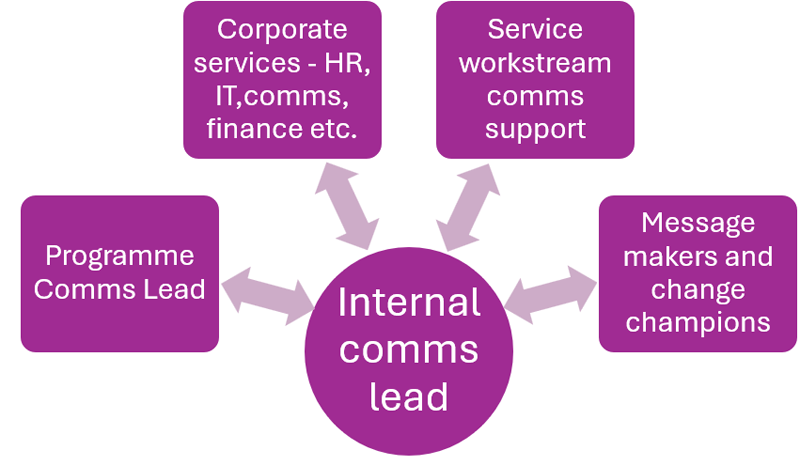
That internal communications lead will need to maintain their own two-way flow of dialogue with:
- Programme Communications Lead: for strategic messages and key decisions and milestones; and to escalate and feed up insight and sentiment from across preceding councils
- Corporate services leads: to translate key developments around HR, IT, comms, finance, procurement and governance into practical and relevant messaging
- Service workstream communications leads: to ensure effective tailoring of internal messages to frontline and delivery staff, and to escalate key internal communications needs and themes to Programme Board
- Message makers and change champions (if established): to liaise in terms of roles set out above.
Our communications lead at leadership team is championing the role of internal communications as part of change and the creation of the new councils.”
- a county council going through LGR.
Our communications lead at leadership team is championing the role of internal communications as part of change and the creation of the new councils.” - a county council going through LGR.
Create a central communications co-ordination team with representation from all councils embedded within all programme workstreams to maintain narrative consistency, coordinate timing and cascades, and surface frontline intelligence”
- A county council going through LGR
6. Audience analysis
People respond to change very differently depending on their level of influence, confidence, perceived risk and trust in leadership. The standard INFLUENCE / INTEREST matrix is not sufficient for a change programme as significant as LGR.
This simple template may be a more helpful tool for assessing audiences. It will need to be regularly reviewed and ideally completed with colleagues within services and audience groups to ensure it’s not a top down exercise.
| Audience | What they care about | Preferred communication methods | Internal communications support needs | Curren channel gaps |
|---|---|---|---|---|
| Councillors | ||||
| Service Directors / Heads of Service | ||||
| Service managers / Team managers – desk based | ||||
| Service managers / Team managers – not desk based | ||||
| Staff – desk based | ||||
| Staff – not desk based |
Personas to consider
Below are four personas created for this toolkit, that may help you shape messaging, engagement and leadership support.
The change agent
Summary: Sets the vision and makes change happen, mobilises others, delivers tangible results
Who they are: Senior leaders, programme leads, transformation managers, or and service managers who see change as necessary and an opportunity. They are actively driving various elements of the reorganisation. Though with less reach, non-leaders and non-managers can also be change agents.
Typical mindset: “We’re accountable for this change. We need to move well and stay focused.”
Behavioural characteristics:
- proactive and solution-focused
- comfortable with ambiguity
- confident communicators
- high tolerance for risk
- can become impatient with resistance
- may unintentionally assume others have the same information they do.
Internal communications strategy: Align, amplify and provide constructive challenge
Risks if support /information needs not met:
- pushing for an unrealistic pace
- communicating in strategic language that feels abstract to frontline teams
- underestimating emotional impact on others / that others are not in the same place.
Internal communication needs:
- strategic advice and expert delivery
- insight from within the organisation – what is landing, what feels opaque or inauthentic, what is causing resistance
- consistent lines to take and effective delivery methods
- involvement in steering key messages.
Internal communications tactics and delivery:
- visible and consistent delivery voices demonstrating leadership and vision
- detailed briefings
- early sight of messaging for refinement
- forums to sense-check tone and approach first hand
- data and feedback.
The change advocate
Summary: Champions change, persuades others, builds support.
Who they are: Influential managers and respected team members who broadly support the change but are not formally leading it. They are critical in shaping local sentiment.
Typical mindset: “I can see why this is happening. I just need to understand how to explain it properly.”
Behavioural characteristics:
- pragmatic and constructive
- trusted by peers
- willing to explain and translate change
- motivated by service improvement
- can lose confidence if messaging feels inconsistent.
Internal communications strategy: Your amplifiers - invest in them deliberately with resources and support.
Risks if support /information needs not met:
- time to support when busy with ‘the day job’
- withdrawing support if they feel exposed or unsupported
- spreading mixed messages unintentionally.
Internal communication needs:
- clear rationale in plain language
- impact on services and teams
- FAQs they can use in conversations
- space to ask difficult questions privately
- regular updates, even if the update is “no change”.
Internal communications tactics and delivery:
- manager toolkits
- town Halls
- issues and queries escalation routes
- short, consistent briefings
- access to senior leaders
- acknowledgment of their role.
The change ambivalent
Summary: Unsure about change, passive, waits and sees.
Who they are: The largest group. Competent staff who are focused on day-to-day delivery and may be unsure how reorganisation will affect them. Not resistant, but cautious.
Typical mindset: “I’ll get on with my job. Just tell me what this means for me.”
Behavioural characteristics:
- keen to know “how does this really affect me?”
- concerned about job security or workload
- low engagement with strategy they can’t relate to
- seeks reassurance from managers and peers
- can drift into anxiety if there are communications gaps.
Internal communications strategy: Avoid transformation theory. Provide clarity and relevance.
Risks if support /information needs not met:
- disengagement
- accept rumours
- productivity dips
- loss of trust if surprises emerge.
Internal communication needs:
- what is changing and what is not
- timescales that affect their role
- clarity on job security and consultation processes
- practical implications for workload
- honest acknowledgement of uncertainty
- regular updates, even if the update is “no change”.
Internal communications tactics and delivery:
- simple, direct updates
- visible leadership presence
- consistent messaging cadence
- Q&A channels
- clear summaries and signposting.
The change antagonist
Summary: Resists change, challenges motives, undermines progress.
Who they are: Staff who actively oppose the reorganisation. This may include experienced employees who feel loyalty to the existing structure, those who feel threatened, or individuals who distrust leadership.
Do not ignore!
Typical mindset: “This is unnecessary and poorly thought through.”
Behavioural characteristics:
- vocal scepticism
- challenge messaging publicly, leak briefings
- highlight risks and worst-case scenarios
- strong emotional attachment to current identity
- can influence others significantly.
Internal communications strategy: Listen constructively. Avoid the temptation to ignore them.
Risks if support /information needs not met:
- undermining morale
- fueling informal resistance
- escalating minor issues
- creating an “us vs them” mindset and narrative.
Internal communication needs:
- transparent rationale
- evidence for change
- clear explanation of decision-making
- honest discussion of trade-offs
- direct access to senior leaders for challenge
- regular updates, even if the update is “no change”.
Internal communications tactics and delivery:
- face-to-face forums
- space for challenge
- data and case studies
- calm, non-defensive responses
- consistent follow-through on commitments.
People are not fixed in one category. Someone may start ambivalent and become an advocate. An advocate can become antagonistic if trust erodes. Your role as internal communicators is to provide clarity, reduce unnecessary anxiety and create enough shared understanding that the organisation can function effectively through transition while creating the new councils and ensuring day one needs are met.
These personas assist managerial and political leadership by informing messaging and internal engagement, to handle the human dynamics of change not just the structural ones.
It is also important to consider how specific workforce groups may experience and therefore interpret change differently. A tailored approach can help especially as councils have such diverse workforces spanning different sorts of roles, services and contracts. A few groups to consider having an especially targeted and adapted language approach towards could be:
- frontline operational staff
- non-desk-based employees
- remote workers
- senior leaders
- specialist professionals
- staff in shared services
- those with unique contractual circumstances
- councillors.
Consider EDI and inclusive communications as part of their internal communications planning for LGR. It is recommended to keep the following in mind when doing so:
- accessibility of communications for different groups (desk-based, non-desk based, disabled employees)
- potential disproportionate impact of organisational change on particular groups
- engagement with staff networks and representative groups throughout the transition
- alignment of communications with equality impact assessment processes.
This is why ensuring your internal comms is well-connected across service workstreams and staff network groups, as well as the overall programme and corporate workstreams, is particularly important.
Communicating with councillors
Councillors are a key audience for internal communications: in the LGR context there are some particular considerations.
There are two key periods for your communication with elected members:
Now until Shadow Elections:
- All councillors of preceding councils have the opportunity to influence the creation of the new authority
Shadow Authority until Vesting Day:
- Shadow council members are making decisions about the new authority
- Preceding council members focus on decisions regarding their existing, current council.
Shadow Authority members may be completely new councillors or members from your existing council. It is essential to make sure that all members, from now until vesting day, have early access to clear, factual information about the change that is underway.
Members need this as they have three important roles to fulfil:
- communicating and answering questions about LGR from residents, service users and community groups in their wards
- decision-makers for the new council, place leadership and culture (until May 2027)
- members of both audit and scrutiny committees looking at preparations for LGR.
As well as this, members will want to consider their own positions ahead of the Shadow Council elections, and determine what role, if any, they want to have, and so whether they will stand in those elections or not.
As a minimum, it is recommended to:
- ensure members are briefed early and consistently at key milestone moments throughout the process
- provide members with easy-to-user briefing materials, such as up to date Q&As and slide decks
- establish a regular elected members newsletter: you’ll need to review this once the Shadow Authority is in place, as content, frequency and audience needs may be split according to preceding or shadow authority membership.
Potential newsletter content:
Key decisions and milestones:
- decisions taken since the last update
- upcoming decisions (and where they’ll be made—Cabinet, committee, full council) with links to papers and agendas
- call to action: read papers and attend democratic meetings.
Member questions:
- top questions raised by councillors recently
- clear, consistent answers.
Engagement activity:
- what engagement has taken place (residents, stakeholders, staff)
- what’s coming up
- call to action: How councillors can get involved or direct residents.
Forward look:
- progress against the overall LGR timeline
- what’s coming up in the next four to eight weeks.
7. Delivery, channels and FAQs
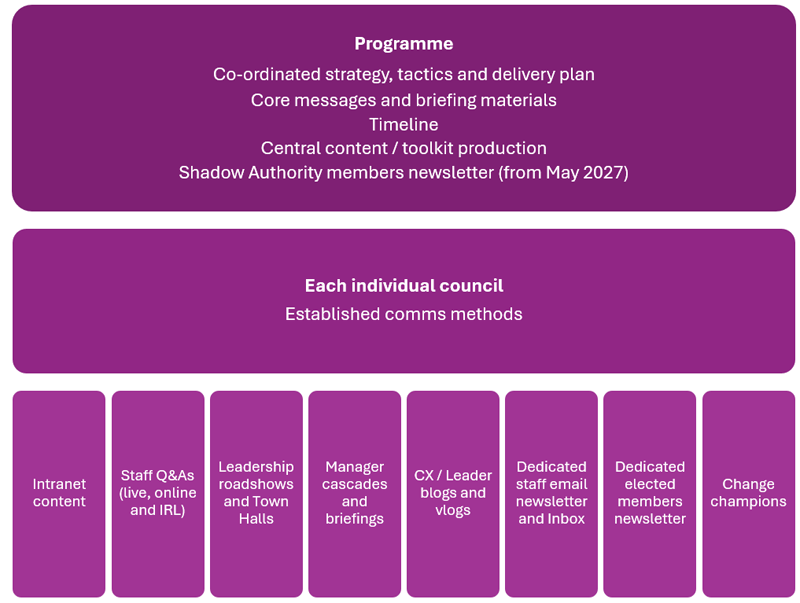
Practically, using established internal communications channels is likely to be the best place to start. You’ll almost certainly need to supplement this with ‘LGR specials’ such as Chief Executive roadshows, Town Halls and focused emails.
All comms colleagues across all councils recognise the need for programme specific internal communications, such as a dedicated newsletter and intranet. But we bolster that with channels and tailored messages within each organisation as some information is different for county staff to districts (e.g. TUPE); and we must be sensitive to that.”
– a county council going through LGR
Start by mapping all available channels across all preceding councils so you understand frequency ownership and effectiveness – the audience analysis template above can help with this. You will need to redo this if your programme realigns to new council footprints once the government has made its decision.
Your delivery structure will probably look something like this:
The biggest “real world” success factor for us hasn’t been more channels or more content, it’s been consistency - regular all-staff briefings with a familiar structure, repeated clarity on what’s changed vs what hasn’t, clear statements of what we know and what we don’t (and when we’ll know), and FAQs that visibly keep pace with questions and updates.”
- a head of communications from a borough council going through LGR
It is also important to get into a good rhythm of comms activity – so that colleagues know when to expect updates and briefings. Because staff are in different preceding councils, you’re advised to look for and plug delivery gaps.
One such topic that internal comms should be consistently covering is the shadow authority. Internal comms should be striving to explain how the new shadow authority will function, so that colleagues throughout the organisation know what to expect and feel a sense of transparency throughout the process. These communications should start well before the shadow authority is established, right up until the new authority is up and running.
Message makers and change champions
Consider establishing both message makers and change champions within all preceding councils. What’s the difference?
Message maker
Who they are: A representative cross-section of trusted staff who sense-check, stress-test and refine messaging before it goes live.
Their role:
- ensure the message lands in reality — not just at Programme Board or via Leadership team briefing slide
- protect leaders from accidental tone-deafness and help avoid the “this was done to us” reaction.
How they do it:
- challenge clarity (“I don’t understand this bit.”)
- identify language that feels corporate, vague or defensive
- flag emotional reactions or likely resistance
- surface unintended implications for frontline teams
- push for relevance and relatability
- suggest plain-language alternatives
- test whether the “why” feels honest and credible.
Change champions
Who they are: Operational leaders or respected influencers embedded within services who actively support and model the change.
Their role: Change champions improve adoption and translate strategy into day-to-day reality.
How they do it:
- act as visible advocates within their service area
- explain “what this means for us” in practical terms
- surface risks, resistance and unintended consequences early
- provide upward feedback to the change team
- model new behaviours and ways of working.
Understand that the line manager cascade is not always effective and is not consistent. The bigger directorates are more hit and miss – layer stuff on top, make sure the corporate comms is there to offer info and choice about info consumption.” - a county council going through LGR
Role of managers
Line managers play a crucial role in the change process. For the majority of staff, they are often seen as the most trusted source of information at work. This can sometimes put managers in a situation where they are expected to have difficult conversations with their team/s which they are not equipped to have. Having a good internal communications strategy in relation to managers and their role in reorganisation is therefore critical. Here are a few ways that internal communications can provide support to managers on leading and communicating change effectively:
- cascade protocols and briefing packs clearly setting out managers’ responsibilities in disseminating messaging and key information relevant to their team/s
- clear escalation routes so that managers know who to ask if they cannot answer a question posed by a member of their team
- team discussion templates to encourage transparent and open discussions within teams so that they feel involved in the process from as early as possible and see their line manager as a direct link to the process.
The importance of an up to date set of FAQs
This cannot be underestimated. Along with your ‘Four Ps’ core content, this will be your live, most critical content piece – the single source of truth. It will form the basis of your leadership briefings, your cascade briefs and your intranet content.
Treat it as a live and constantly evolving resource. Create a process for managing and publishing these that is visible, accessible and timely. Be transparent about when questions are updated and how current answers are. Create opportunities for staff to add questions. Say if you don’t know the answer to a question – staff will appreciate this more than a complete vacuum - and ideally state when you expect to be able to provide information.
What we’ve found builds confidence is treating our FAQs like a ‘living’ response – so regular updates, a way to capture ‘rumours’/questions through a single point (inbox), and especially how to get FAQs out and questions in, from non-desk-based teams.”
- A head of communications from a district council going through LGR
Depending on frequency, build in time for ‘special’ updates around key milestones. Structure your questions into logical content groupings.
8. Legacy and celebration
As organisations prepare for a new council and new ways of working, it is important to recognise both the opportunities ahead and the pride many colleagues feel in their current council’s history, achievements and identity. Staff often have a strong sense of belonging to their council’s culture, its ways of working and the relationships built over many years. Understandably, elements of this will change.
Marking what has been achieved is not about dwelling on what is being lost, but about celebrating the contribution staff have made and creating a positive bridge into the future. Taking time to reflect on collective achievements can help people feel more grounded and ready to embrace the next chapter.
Ways to do this could include:
- a celebratory event such as staff awards or a civic ceremony
- a legacy project such as a commemorative book, short film or curated archive
- a space (physical or digital) where staff can share reflections as part of honouring the organisation’s story.
9. Measuring impact
It is likely you are already measuring metrics such as open rates, click throughs, and event attendance. These basics are good internal communications practice but there will need to be more work undertaken to measure the levels of staff have clarity, support for change and knowledge of how it impacts them.
It is a good idea to establish baselines now if you haven’t already. If you have a rhythm of staff surveys you may want to build these measures into that, supplemented by pulse surveys at regular points and in particular around milestone moments. You may want to structure these around your key internal communications aims.
Therefore, measures could include:
Clarity and understanding:
- “I understand why this change is happening.”
- “I understand what will happen in the next xx months.”
- “I know what we are aiming for”.
Trust and leadership:
- “I trust leaders to be honest about this change.”
- “Difficult issues are not avoided.”
- “I feel able to ask leaders challenging questions”
- “Senior leaders acknowledge the challenges as well as the benefits.”
- “Leaders are visible and accessible during this change.”
Relevance and relatability:
- “I know how this change will impact my job”
- “I know how this change will impact my service”.
Information provision:
- “I know where to access the information I need”
- “ Information about the change is clear and easy to understand.”
- “Communication about the change addresses the issues that matter to me.”
- “Information is shared in a timely way.”
- “Information feels like it’s written for me”.
Seek advice from your research leads on the best methods / platform.
There is a really strong FAQ system; there is an inbox, questions are put on the intranet; but people mostly want to get info from their line managers.”
– a county council going through LGR
The above focuses on measuring the impact of communications on staff sentiment. It is also important to consider key indicators of LGR’s impact on the organisation more strategically, and in which internal comms for change will play a part. Therefore, the council can also use the following as ways of measuring the impact of LGR on the organisation:
- staff retention during the transition
- levels of staff engagement through staff networks or survey responses
- staff absence levels
- employee confidence in the organisation and its leadership
- ability to recruit new staff and attract talent.
10. Checklist
You can use this checklist as a quick way to confirm that the key elements of your internal communications approach for LGR are in place. It draws together the core themes from this toolkit and can help you sense‑check plans, prepare for milestone moments and identify any gaps as the programme moves forward.
- Strategic narrative covers purpose, picture, plan and part
- Specific internal comms plans for each milestone moment
- Four key questions answered at each stage (What happens now? How are staff affected? What are the best ways to tell them? What do we need them to do?)
- Internal comms clear line of sight to programme board
- Audiences and channels mapped and gaps filled
- Measures and baselines established for internal comms success
- Pulse survey methodology agreed
- Messages tailored to ensure relevance to services and frontline staff
- FAQs prepared with agreed frequency for updating
- Toolkits for team discussions
- Two-way channels and escalation route established
- Leadership briefings prepared
- Face to face /engagement opportunities created
- Message makers in place
- Change campions in place
- Legacy and celebration space created.
11. Further support
The LGA offers a wide range of support to councils, which includes communications and HR/workforce support.
For the LGA’s full communications support offer please visit our Comms Hub or contact us at [email protected]. Three of our resources relevant to this toolkit are the: Local Government Reorganisation engagement toolkit, the Council and place narratives resource and the Internal communications guide. There is also a self-assessment Change Management and Transformation Maturity Index.
For Workforce and HR support including but not limited to:
- organisational design processes
- support for TUPE and formal consultation
- assimilation and job matching
- consultation with trade unions and ER support
- advice on pensions, redundancy and redeployment processes
- creating new terms and conditions.
Please email [email protected]