Welna Bowden, Workforce Adviser, LGA
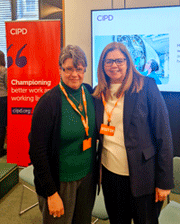
I was thrilled to be invited to attend a parliamentary reception at the House of Commons for International Women’s Day in March.
I had never been to an event at the Houses of Parliament so that was exciting, but I was also pleased to be taking part in discussions about how we can support women’s reproductive health and their wellbeing at work.
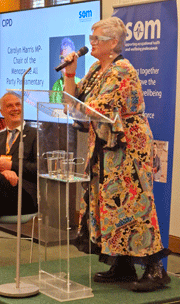
The event, on Tuesday 18 March, was hosted by the Chartered Institute of Personnel and Development (CIPD) and the Society of Occupational Medicine (SOM) and sponsored by Carolyn Harris MP, with engaging speakers including Sarah Owen MP, Mims Davies MP, and Rick Lee OBE from Willmott Dixon. The discussions were lively, and the imposing committee room buzzed with energy and passionate debate about the urgent changes needed in our workplaces to help women to thrive at work.
Why women's health matters
In 2025, workplace equality and inclusivity are essential goals. It's not just about getting more women into work; it's about ensuring they can truly thrive while they are there.
Women face unique health challenges such as endometriosis, severe menstrual pain, and menopause, which can significantly impact their careers. Addressing these issues is crucial for creating a supportive and productive work environment and reducing women’s sickness absence: inadequate support for women’s health costs the UK economy nearly £11 billion annually due to absenteeism and reduced productivity. And crucially, supporting women’s attendance at work can reduce the gender pay gap and open up more career opportunities at work.
Breaking down barriers
The event titled 'Helping Women Thrive at Work: Making Women's and Reproductive Health a Key Priority' opened honest conversations around traditionally taboo topics. Discussions tackled issues like menstrual health, miscarriage, and menopause, emphasising the need to bring these subjects into the mainstream, both at home and in the workplace.
Lessons from workplace leaders
During the event, we heard from employers who are implementing innovative policies. For example, Willmott Dixon told us about support they offer for bereavement leave for pregnancy loss and subsidised health screenings for menopause care. These measures are not only compassionate but also economically savvy, ensuring businesses retain their talented women employees.
Education and awareness
Education emerged as a key theme. Incorporating reproductive health into school curricula and medical training can help break cycles of misunderstanding and mismanagement. By educating young people and professionals, we pave the way for informed, empathetic workplaces.
A call to action
Despite progress, there's more to be done.
The event brought home to me that to create different, better experiences for women we must:
- promote workplace policies that support health challenges, such as paid leave for miscarriage and flexible working options.
- raise awareness by normalising conversations around women's health and tackling ignorance head-on.
- drive systemic change by pushing for faster diagnosis timelines for conditions like endometriosis and making gynaecological training mandatory for healthcare professionals.
The bigger picture
Prioritising women's health in our local government workplaces isn't just the right thing to do—it's a smart economic move. Thriving employees are productive employees. By addressing women's health, we invest in stronger, more equitable workplaces. The services that local government provides have a disproportionate impact on the lives of the women who live in our communities in their multiple roles and so it’s really important that we have workplaces where women are represented at all levels of our workplaces and involved in crucial decisions about those services.
Local government is a strong supporter of women’s participation in the workplace so I know that we can commit to doing more to build workspaces where women can succeed not despite their health but because they are supported.
The time for change isn't tomorrow—it's today. Let’s make it happen.
We have resources on our website to help local government employers to encourage and enable greater levels of gender diversity and inclusion at work.