Summary
Background
Between October and December 2024, the Local Government Association (LGA), conducted an online survey of all councils and combined authorities in England, asking them share views on their organisation’s use of data, including strategy, management, governance and skills development.
This exercise will inform the support offered through LGA’s better use of data programme, which offers a range of free-to-access support to help local authorities recognise the full value of data and make good use of it for decision-making.
The survey was sent to heads of data or equivalent positions, and a total of 96 organisations (30 per cent) responded.
Key findings
- On a scale of data maturity ranging from ‘level 1: the organisation has poor and inconsistent practices around data’ through to ‘level 5: the organisation innovates in terms of data related techniques and approaches and is considered a leader amongst peers for its approach to data’, the most common level selected by respondents was ‘level 3: the organisation is making good progress in developing its capacity and capabilities in terms of data’ (49 per cent).
- The second most common answer was level 2, with just over a third (34 per cent) of respondents selecting ‘level 2: the organisation is beginning its journey in terms of working with data’.
- The majority of responding councils (53 per cent) said they did not have a data strategy currently in place. However, this included 28 per cent who said that they were in the process of developing a data strategy. A further 44 per cent of respondents said that they had either a standalone data strategy, a data and digital strategy or another type of data strategy.
- The top three barriers that respondents faced when it came to developing data capacity and capability were lack of financial resources (73 per cent), impact of legacy systems (71 per cent) and lack of staff capacity (ie not enough data professionals) (67 per cent).
Introduction
From October to December 2024, the LGA conducted an online survey of district councils, unitary councils, metropolitan districts, London boroughs, county councils and combined authorities regarding the use of data in their authority. The survey was carried out to understand the use of data in a wide sense, including strategy, management, governance, and skills development.
The results are being used to inform the support offered through the LGA’s better use of data programme, which offers a range of free-to-access support to help local authorities recognise the full value of data and make good use of it for decision-making. The findings are also key in informing the LGA’s work advocating for the importance of properly investing in data capacity and capability in local authorities, to enable more efficient ways of working and better outcomes for service users.
Methodology
The survey was conducted by the LGA’s Research and Information Team using an online questionnaire. An email containing a unique link was sent to all heads of data (or equivalent position) in all councils and combined authorities in England (329 in total). A few councils submitted one joint response on behalf of themselves and another authority, as data teams are shared across the councils. Adjusting for this, the number of organisations who could have participated was 325. The survey was available to complete between October and December 2024. The final overall response rate was 30 per cent (96 councils).
This level of response means that these responses should not necessarily be taken to be widely representative of the views of all local authorities in England. Rather, they are a snapshot of the views of this particular group of respondents.
Response rate
As Table 1 shows, the local authority type with the highest level of engagement was metropolitan districts, at 39 per cent, or 14 councils. The lowest level of response was from counties (at 29 per cent, or six councils) and districts (at 24 per cent, or 39 councils).
Regionally, as shown in Table 2, the highest level of engagement was from councils in the South West with a response rate of 41, or 11 councils, this was followed by the North West with a response rate of 37 per cent, or 14 councils. The lowest level of response was from councils in the North East, at 21 per cent or three councils and the East Midlands, with a response rate of 20 per cent (eight councils).
| Type of council |
Number of questionnaires |
Number of responses |
Response rate |
|---|---|---|---|
| District |
160 |
39 |
24% |
| County |
21 |
6 |
29% |
| London borough |
33 |
11 |
33% |
| Metropolitan district |
36 |
14 |
39% |
| Unitary |
63 |
22 |
35% |
| Combined authorities |
12 |
4 |
33% |
| Region |
Number of questionnaires |
Number of responses |
Response rate |
|---|---|---|---|
| Eastern |
50 |
14 |
28% |
| East Midlands |
41 |
8 |
20% |
| London |
34 |
11 |
32% |
| North East |
14 |
3 |
21% |
| North West |
38 |
14 |
37% |
| South East |
70 |
18 |
26% |
| South West |
27 |
11 |
41% |
| West Midlands |
33 |
12 |
36% |
| Yorkshire and Humber |
18 |
5 |
28% |
To make the results of this survey more representative of all local authorities in England overall, responses have been weighted.
In addition, the following should be considered when interpreting the findings of this survey:
- Where tables and figures report the base, the description refers to the group of people who were asked the question. The number provided refers to the unweighted number of respondents who answered each question. Please note that bases can vary throughout the survey.
- Numbers and percentages are provided for any questions where the base was less than 50. To calculate the number of respondents who provided a certain response for other questions, simply multiply the percentage provided by the base.
- Throughout the report, percentages may not appear to add up to exactly 100 per cent due to rounding.
- Significance testing has been conducted at the 95% confidence level between single-tier and county authorities compared to district authorities. Any significant difference in the results will be reported in the main analysis.
- For some questions extra guidance was provided to help respondents answer the questions. The complete set of survey questions with notes can be seen in Annex A.
Heads of data survey
This section contains analysis of the full results from the survey.
It is worth noting that that there is frequently variation between service areas when it comes to data use within local authorities, with more data rich or heavily monitored services often being more mature. This survey aimed to get a sense of the corporate/strategic position of local authorities, therefore respondents were asked to take an overarching view.
Structure
Team structures
Respondents were asked about the structure for data-related roles (such as analysts, data scientists or officers using data for performance management) within their organisation. As Table 3 shows, 40 per cent of all respondents selected the answer ‘there is a small, centralised team of data specialists, with data specialists also located within specific service areas’.
The second most common response was, ‘there is one or more centralised team(s) that contain most of the data specialists’ (30 per cent). Ten ‘other’ responses were given, including:
- Working on creating a centralised team
- Only one dedicated post in centralised team.
|
Per cent |
|
|---|---|
| There is a small, centralised team of data specialists, with data specialists also located within specific service areas |
40% |
| There is one or more centralised team(s) that contain most of the data specialists |
30% |
| The organisation currently doesn’t have any data specialists |
10% |
| Data specialists sit primarily within individual service areas |
9% |
| Other |
11% |
| Don’t know |
0% |
Unweighted base: all respondents (96)
Data-related roles
Respondents were asked which specific data related roles are employed in their organisation. The roles are listed in Table 4 below; respondents were asked to answer ‘yes’ for each role if their organisation employs one or more officers who fulfils the role, even if that is not reflected in their job title.
As Table 4 shows, the top four roles employed in councils and combined authorities were information governance officer (87 per cent), performance management officer (85 per cent), data analyst (73 per cent) and database administrator (60 per cent). After this, there was a notable decrease, with the next most common role being data engineer, at just 31 per cent.
The three roles that respondents most commonly said their organisation did not employ were data ethicist (87 per cent), chief data officer (79 per cent) and data scientist (72 per cent).
Respondents from single tier and counties were significantly more likely to have data roles in their organisation compared to districts authorities.
Seven ‘other’ responses were given, including:
- Analytics engineer
- Data support officer
- Data platform engineer
- GIS engineer.
|
Yes |
No |
Don’t know |
|
|---|---|---|---|
| Information governance officer |
87% |
13% |
0% |
| Performance management officer |
85% |
14% |
1% |
| Data analyst |
73% |
22% |
4% |
| Database administrator |
60% |
36% |
4% |
| Data engineer |
31% |
58% |
11% |
| Data quality officer |
24% |
70% |
6% |
| Data scientist |
21% |
72% |
7% |
| Data architect |
20% |
71% |
9% |
| Chief data officer |
14% |
79% |
7% |
| Data ethicist |
5% |
87% |
8% |
Unweighted base: all respondents (96)
Respondents were then asked to estimate how many posts (full time equivalent – FTE) currently existed for these roles within their organisations.
As Table 5 shows, there was a wide variation in the number of data specialists, both between different types of local authority and within local authorities of the same type. The smallest number of FTEs reported in districts was 0.5; this is compared to a minimum of two FTEs in single tier and county councils and in combined authorities. The largest reported FTE in districts was 10 and was 100 in single tier and counties and in combined authorities. The median average number of FTEs in districts was three, compared to 24 in single tier and counties and 54 in combined authorities.
|
District councils |
Single tier and county councils |
Combined authorities |
|
|---|---|---|---|
| Smallest number of FTEs |
0.5 |
2 |
2 |
| Largest number of FTEs |
10 |
100 |
100 |
| Average (mean) |
3.2 |
33.2 |
52.4 |
| Median |
3 |
24 |
54 |
Base: all respondents (71 – single-tier and county (35), districts (32) and combined authorities (4))
Leadership and strategy
Overall data maturity
Respondents were shown a list of descriptions of data maturity, ranging from ‘level 1: the organisation has poor and inconsistent practices around data’ through to ‘level 5: the organisation innovates in terms of data related techniques and approaches and is considered a leader amongst peers for its approach to data’, and to select which one best matched their organisation currently.
Table 6 shows just under half (49 per cent) of respondents selected ‘level 3: the organisation is making good progress in developing its capacity and capabilities in terms of data’.
The second most common answer was level 2, with just over a third (34 per cent) of respondents selecting ‘level 2: the organisation is beginning its journey in terms of working with data’. Only a minority of respondents (14 per cent) selected one of the more advanced levels of maturity, with 12 per cent selecting level 4 and 2 per cent selecting level 5.
|
Per cent |
|
|---|---|
| Level 1: the organisation has poor and inconsistent practices around data. |
3% |
| Level 2: the organisation is beginning its journey in terms of working with data. |
34% |
| Level 3: the organisation is making good progress in developing its capacity and capabilities in terms of data. |
49% |
| Level 4: the organisation exhibits good practice around the use of data and uses widely agreed standard approaches to data use and management. |
12% |
| Level 5: the organisation innovates in terms of data related techniques and approaches and is considered a leader amongst peers for its approach to data. |
2% |
| Don’t know |
1% |
Unweighted base: all respondents (96)
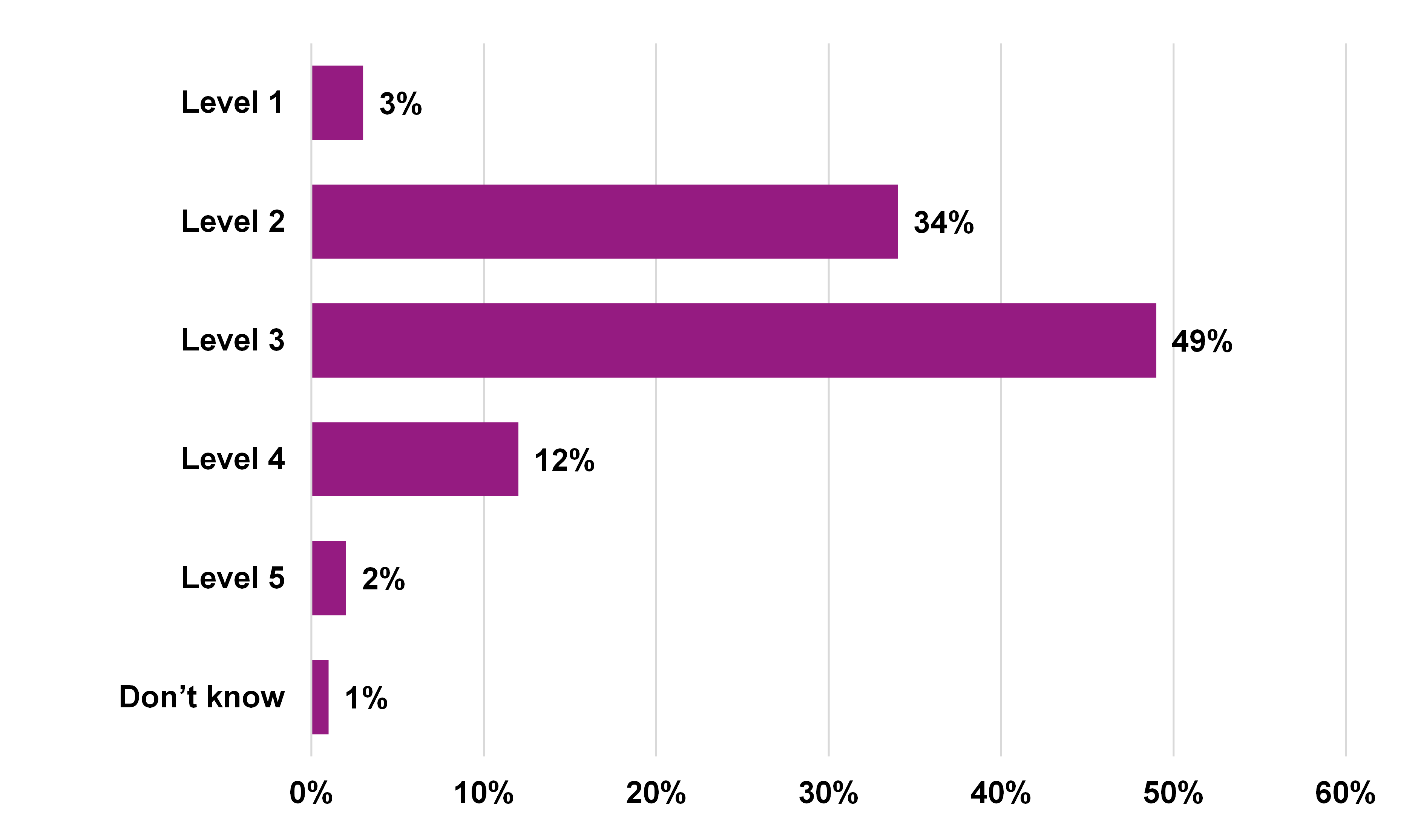
Figure 1: Overall, which of the following descriptions do you think best matches your organisation’s current level of data maturity?
Data strategy
Respondents were asked if their organisation had a current data strategy. As Table 7 shows, 44 per cent of respondents answered ‘yes’, they did have a data strategy. This comprised 16 per cent who said they had a standalone data strategy, 14 per cent who had a data and digital strategy and 14 per cent who said that they had another type of data strategy, some of these are included below:
- Information and Insight Strategy
- Data Quality Strategy
- Digital and Data Strategy
- Digital, Data and Technology strategy.
Twenty-eight per cent of respondents answered that they were in the process of developing a data strategy, whilst a quarter (25 per cent) answered that they had no data strategy.
|
Per cent |
|
|---|---|
| Yes |
44% |
| Yes – a standalone data strategy |
16% |
| Yes – a data and digital strategy |
14% |
| Yes – other |
14% |
| Currently in development |
28% |
| No data strategy currently |
25% |
| Don’t know |
3% |
Unweighted base: all respondents (96)
Those respondents who had answered they had a standalone data strategy, a data and digital strategy or another type of data strategy were asked the extent to which they would say that the data strategy had been effective in improving the organisation’s use of data.
As Table 8 shows, 52 per cent of respondents answered the data strategy had been effective in improving the organisation’s use of data to a great or moderate extent. Twenty-nine per cent answered that it had been effective to a small extent and 17 per cent answered that it was too soon to say.
|
Number |
Per cent |
|
|---|---|---|
| To a great or moderate extent |
22 |
52% |
| To a great extent |
7 |
16% |
| To a moderate extent |
15 |
36% |
| To a small extent |
12 |
29% |
| Not at all |
0 |
0% |
| Too soon to say |
7 |
17% |
| Don’t know |
1 |
3% |
Unweighted base: all respondents who answered ‘Yes – a standalone data strategy’, ‘Yes – a data and digital strategy’ or ‘Yes – other’: (42)
Those respondents who said that the data strategy had only been effective in improving the organisation’s use of data to a small extent to date were asked what, if any, had been the main barriers that had hindered the ability of the data strategy to improve the organisation's use of data.
Twelve respondents answered this question, with answers covering the following themes:
- Resource constraints – both human and financial – was the most frequently mentioned issue, with nine responses. For example, a small number mentioned a lack of staff to meet workload demands while other respondents mentioned that those with the necessary skills often do not have enough time.
- Data quality received two mentions, with one respondent highlighting a ‘lack of value placed on good quality data, and a lack of understanding that this is what is needed to ensure evidence-based decisions and effective performance monitoring’.
- Data sharing/protection and data skills each received two mentions. On the former, respondents mentioned a cultural reluctance to share data. The two respondents who mentioned skills commented on a lack of data skills within the organisation, and a failure to invest in skills internally.
Business cases for investing in data
All respondents were asked if any part of their organisation had produced a business case for investing in data in the previous five years or so. This could have been a case to invest in data capacity or capability in the organisation generally, or for a specific initiative. It could also have been as part of a wider service redesign business case that contained data elements.
Table 9, shows that 61 per cent answered ‘yes’, whilst 26 per cent said that they hadn’t. Thirteen per cent answered that they didn’t know.
Respondents from single tier and county authorities were significantly more likely to say they had produced a business case for investigating in data in the last five years or so compared to respondents from district authorities.
|
Per cent |
|
|---|---|
| Yes |
61% |
| No |
26% |
| Don’t know |
13% |
Unweighted base: all respondents (96)
Those respondents who said that their organisation had produced a data-related business case in the previous five years were asked, if they had one that had been unsuccessful, to briefly outline what they thought the main reasons for this had been. Twenty respondents answered this question, with answers covering the following themes:
- Over half of respondents mentioned financial constraints or lack of resources. Respondents commented on the lack of available budget in general, with some mentioning that financial pressures mean it is hard to make the case for innovation, when set against a struggle to meet statutory needs.
- Leadership and culture was the second most mentioned reason, with five respondents highlighting a lack of senior buy in and direction around data. Linked to this, some respondents mentioned low levels of understanding of the benefits of investing in data.
Evaluation
Respondents were asked if their organisation had undertaken an evaluation of any data projects or initiatives in the last five years or so. As Table 10 shows, 44 per cent said that their organisation had undertaken an evaluation, 36 per cent said they hadn’t, and 20 per cent answered that they didn’t know.
|
Per cent |
|
|---|---|
| Yes |
44% |
| No |
36% |
| Don’t know |
20% |
Unweighted base: all respondents (96)
Data lifecycle
Data storage and access
Respondents were asked whether in general, across the organisation, teams could easily get access to their data from the systems of third-party suppliers, in the format they needed it in. As Table 11 shows, just over half (51 per cent) of respondents said they could get the data they need very or fairly often. However, 42 per cent answered that they could only occasionally get access to their data in the format they needed it in.
|
Per cent |
|
|---|---|
| Very or fairly often |
51% |
| Very often |
7% |
| Fairly often |
44% |
| Occasionally |
42% |
| Never |
1% |
| Don’t know |
6% |
Unweighted base: all respondents (96)
Respondents were asked about the extent to which their organisation has effective systems in place to ensure data users within the organisation have a good awareness of where data is stored and can be accessed.
Just over half (51 per cent) of respondents said this was the case to either a great or moderate extent, as shown in Table 12. However, 43 per cent of respondents said this was only the case to a small extent.
|
Per cent |
|
|---|---|
| To a great or moderate extent |
51% |
| To a great extent |
7% |
| To a moderate extent |
44% |
| To a small extent |
43% |
| Not at all |
4% |
| Don’t know |
2% |
Unweighted base: all respondents (96)
Respondents who had answered that there were effective systems in place to either a great or moderate extent were asked to select, from a list, the systems that were in place. Respondents could select multiple answers as needed.
As Table 13 shows, respondents most commonly said that they had work to reduce duplication of data sets (60 per cent), data platforms (46 per cent), and service specific catalogues (39 per cent) in place.
Ten ‘other’ responses were given, which included performance and risk management systems and information governance records.
|
Number |
Per cent |
|
|---|---|---|
| Work to reduce duplication of data sets |
29 |
60% |
| Data platform |
22 |
46% |
| Service specific catalogues |
19 |
39% |
| Central data catalogue |
8 |
17% |
| Other |
10 |
20% |
| Don’t know |
7 |
14% |
Unweighted base: respondents whose organisations have effective systems in place to ensure data users within the organisation have a good awareness of where data is stored and can be accessed, to either a great or moderate extent (49)
Data infrastructure
All respondents were asked if they were using a data warehouse, data lake and/or data mesh. Table 14 shows, respondents most commonly said that their organisation had a data warehouse, with a quarter (25 per cent) saying that this was fairly or very well established and 19 per cent saying that they were using this was in the early or mid-stages of implementation.
Thirty per cent of respondents said that their organisation had a data lake, with 8 per cent saying this was fairly or very well established and 22 per cent saying that this was still in the early or mid-stages of implementation. Only 6 per cent of organisations answered that they were using a data mesh.
Just over a quarter of respondents said that their organisation didn’t have a data warehouse, lake or mesh in place. Eight of these respondents detailed other systems that were in place, including a small number who said that there were data warehouses within disparate systems but not at a corporate level, and a couple who mentioned the use of Power BI to draw together data sources.
Respondents from single tier and county authorities were significantly more likely to say they had a data warehouse and a data lake compared to respondents from district authorities
|
Yes |
Yes - fairly/ very well established |
Yes - early/mid stages of implementation |
No |
Don't know |
|
|---|---|---|---|---|---|
| Data warehouse |
44% |
25% |
19% |
45% |
11% |
| Data lake |
30% |
8% |
22% |
58% |
12% |
| Data mesh |
6% |
0% |
6% |
70% |
25% |
Unweighted base: all respondents (96)
Data quality
Respondents were asked to what extent they would say poor data quality is a challenge in their organisation. Table 15 shows that three-quarters (75 per cent) of respondents said poor data quality is a challenge, to either a great or moderate extent. Just 24 per cent answered to a small extent, with no respondents answering ‘not at all’.
Respondents from single tier and county authorities were significantly more likely to say that poor data quality was a challenge in their organisation to a great or moderate extent compared to respondents from district authorities.
|
Per cent |
|
|---|---|
| To a great or moderate extent |
75% |
| To a great extent |
30% |
| To a moderate extent |
45% |
| To a small extent |
24% |
| Not at all |
0% |
| Don’t know |
1% |
Unweighted base: all respondents (96)
Respondents who said that poor data quality was a challenge in their organisation to either a moderate or great extent, were asked what they thought the main challenges were in relation to data quality.
Seventy-one respondents provided an answer to this. They flagged a range of data quality issues including inconsistent standards, outdated records, data duplication, and the need for and impact of manual workarounds. Poor data capture at source and inconsistent use of Unique Property Reference Numbers (UPRNs) were also flagged.
The reasons given for these data quality issues generally covered the following areas:
- Systems and tools: Many respondents reported that fragmented and legacy systems made it difficult to maintain data consistency. Some said that systems were not fit for purpose, while others highlighted a lack of interoperability. Respondents reported that front-line staff faced challenges due to limitations in data entry tools, leading to inconsistent and incomplete data.
- Leadership and culture: A lack of leadership buy-in and a low prioritisation of data quality were common themes. Several respondents noted that data had not been valued as a strategic asset, with operational demands often taking precedence over quality improvement initiatives. A lack of accountability and ownership of data quality issues within services was also reported.
- Lack of process: The absence of standardised workflows and unclear responsibilities were flagged as major barriers to improving data quality. Respondents mentioned the inconsistent application of best practices across teams, making it difficult to maintain data accuracy. A lack of structured data stewarding had also been a key issue.
- Skills and training: Many responses pointed to a lack of expertise and insufficient training budgets. A general lack of data literacy across different levels of the organisation had made it difficult to identify and resolve data quality issues effectively. Some respondents also mentioned the absence of structured workforce development.
- Funding and resources: Limited capacity to audit, cleanse, and improve data was a common theme. Some respondents highlighted the need for investment in dedicated data teams, tools, and automated processes to reduce manual interventions.
- Lack of policy: Several respondents had highlighted the need for clearer data governance policies and standards to ensure consistency. The absence of overarching policies had led to fragmented data management practices across services.
- Governance: While fewer responses mentioned governance directly, those that did emphasised the need for clearer accountability structures.
Respondents were then asked if the organisation had taken any actions to improve data quality in recent years, that had proven effective. Sixty-eight respondents provided an answer to this, with answers generally covering the following areas:
- Data governance and strategy: Some respondents mentioned they implemented formal data strategies and governance frameworks, including the establishment of data governance boards and corporate data standards to drive consistency. Data maturity assessments were conducted to identify gaps and inform targeted improvements.
- Technology and tools: Almost half of respondents said that they had invested in solutions such as data warehouses, Power BI dashboards, and master data management systems to improve accessibility and accuracy, reducing reliance on Excel spreadsheets and manual processes. Some organisations also explored solutions such as data lakes and enhanced data matching capabilities.
- Data management and quality assurance: Respondents mentioned that regular data cleansing routines, golden records, and data quality audits were introduced to maintain accuracy, alongside standardised data entry processes. One respondent mentioned that automated feedback loops helped improve data input at the source, reducing long-term errors.
- Workforce and skills development: Some respondents said that their organisation had recruited data specialists and data quality officers, supported by training programs to enhance staff awareness of data governance. Others mentioned that the introduction of data steward roles within services helped embed data quality responsibility at a local level.
- Cross-system integration and data linkage: A number of respondents mentioned that efforts to link disparate datasets and develop master datasets had improved data consistency. One respondent said that their organisation had mapped all data ownership and systems to enable targeted training, whilst another said that they had improved data quality by integrating the Local Land and Property Gazetteer (LLPG) into their data platform and systems.
- Service-specific improvements: Some respondents shared experiences in social care, children’s services, and SEND. Examples included extensive data cleansing and dashboard implementations for better performance tracking.
Data access
All respondents were asked how often their organisation could access the data that it needs from other public sector partners such as central government and neighbouring councils. As Table 16 shows, respondents most commonly answered that they could only access this data occasionally (50 per cent). The next most common answer was fairly often at 42 per cent.
|
Per cent |
|
|---|---|
| Very or fairly often |
45% |
| Very often |
3% |
| Fairly often |
42% |
| Occasionally |
50% |
| Never |
1% |
| Occasionally or never |
51% |
| Don’t know |
4% |
Unweighted base: all respondents (96)
All respondents were asked if they or their partner organisations have taken any steps to overcome common barriers to data sharing. Forty-two respondents provided an answer to this, with answers generally covering the following areas:
- Data sharing agreements and protocols were commonly mentioned, by just under half of those who answered this question. A small number of respondents mentioned doing this at a regional level, or due to a particular initiative. Other tools mentioned included Information Sharing Protocols with key partners, having non-disclosure agreements in place to support the sharing of sensitive/confidential data, and the use of pro-formas and Memorandums of Understanding.
- Several respondents also highlighted the importance of partnership working and collaboration, with examples mentioned including working groups, peer group meetings, and ensuring good lines of communication.
- Some technical solutions were also mentioned, including data feeds, use of Power BI, use of shared online workspaces, and a shared intelligence platform which works on aggregated data, reducing barriers to data sharing.
- Respondents gave some examples of pockets of effective data sharing, arising from specific programmes or initiatives, such as Supporting Families.
- A small number of respondents mentioned that they had developed clearer guidance and/or training to support the workforce to be more confident in sharing data.
A small number of councils also took the opportunity to mention the barriers they face when attempting to share data. Barriers mentioned included risk aversion within organisations and from partners, unaligned priorities and governance between organisations, poor data infrastructure, differences in practice and the way data is captured and held, and a lack of resource and expertise to do the work needed
Systems and tools
Procurement
Authorities were asked how often, if at all, data needs are considered, and data professionals within the organisation involved, at the point when new systems are procured. As Table 17 shows, 43 per cent of respondents answered always, very or fairly often. However, a further 43 per cent answered occasionally, with one-tenth (10 per cent) answering that this never happens.
|
Per cent |
|
|---|---|
| Always, very or fairly often |
43% |
| Always or very often |
15% |
| Fairly often |
28% |
| Occasionally |
43% |
| Never |
10% |
| Don’t know |
4% |
Unweighted base: all respondents (96)
Access to tools
Respondents were asked if the data professionals in their organisation generally have access to the tools they need, such as Power BI, Python, R or other data science or visualisation tools. As Table 18 shows, more than half (53 per cent) of respondents answered that data professionals had access to all or most tools that they needed – 14 per cent said ‘all tools’ and 38 per cent answered ‘most tools’. Forty-two per cent of respondents answered that data professionals had access to some tools, while seven per cent answered ‘no’.
|
Per cent |
|
|---|---|
| Yes, all or most tools |
53% |
| Yes, all tools |
14% |
| Most tools |
38% |
| Some tools |
42% |
| No |
7% |
| Don’t know |
0% |
Unweighted base: all respondents (96)
Respondents who said that data professionals did not have access to all the tools they needed were asked to select from a list what the reasons for this were. Table 19 shows the top reason was difficulty obtaining budget for licences (61 per cent), and this was followed by IT concerns about security of certain tools (41 per cent). Forty per cent selected ‘challenges in ‘making the case’ for why the tool is needed’ and 39 per cent cited a lack of knowledge of which tools are available.
Twenty-seven ‘other’ responses were given, which have been put into the themes below:
- Lack of knowledge from management about tools
- Inconsistent policies and practices around requesting new tools
- The council doesn’t want too many tools
- Staff are too busy to attend training to use new tools
- IT team capacity.
|
Per cent |
|
|---|---|
| Difficulty obtaining budget for licences |
61% |
| IT concerns about security of certain tools |
41% |
| Challenges in ‘making the case’ for why the tool is needed |
40% |
| A lack of knowledge of which tools are available |
39% |
| Other |
31% |
| Don’t know |
3% |
Unweighted base: all respondents who said that data professionals in their organisation do not have access to all the tools that they need (82)
Those respondents who said that data professionals in their organisation generally have access to the tools that they need were asked whether they had any advice for local authorities where data professionals do not have this.
Seventeen respondents answered this question. The full set of responses can be found in Annex B. Responses were varied, but commonly mentioned:
- The need to take a strategic approach, such as developing a business case that demonstrates a strong rationale for access to a particular tool and highlights clear benefits, demonstrating return on investment and having the necessary policies in place.
- The importance of developing good lines of communication and positive working relationships between IT and data teams, and spending time developing professional trust.
- The need for senior support, both to ensure a coherent approach across the organisation, and to encourage all parties to work towards a positive solution.
A small number of respondents suggested practical or technical solutions such as experimental sandbox environments where tools can be safely used, the use of virtual machines and allowing access for trusted members of staff and having rules of engagement.
Respondents were then asked what the main data tools they used in their organisation, or would use if they had access to them. Table 20 shows that all respondents said that their organisation was currently using Excel and 84 per cent were using Power BI. The other tools were less commonly used, with the next most popular being Python, at 36 per cent.
A further 21 per cent said they would use Python if it were available, followed by 19 per cent who would use Tableau and 17 per cent who said SPSS.
Respondents from single tier and county authorities were significantly more likely than those from district authorities to use the main data tools, excluding Excel which was used by all responding authorities.
Respondents were also asked to add any other tools that they use which were not listed in the survey, including any tools used for simple analysis through to data visualisation and on to more advanced data science tools, for example for machine learning. Thirty-six respondents listed other tools they were using, some of these were:
- Alteryx
- Arc GIS
- Azure
- CoPilot applications
- Esri suite
- Fabric
- Power apps
- Qlik
- SQL
|
Currently used |
Would use if available |
Don’t know/don’t want to use |
|
|---|---|---|---|
| Excel |
100% |
0% |
0% |
| Power BI |
84% |
12% |
4% |
| Python |
36% |
21% |
43% |
| R |
25% |
15% |
60% |
| SPSS |
20% |
17% |
64% |
| Tableau |
13% |
19% |
69% |
Unweighted base: all respondents (96)
Artificial Intelligence
Respondents were asked to select from a list, the statement which best described their organisation’s current use of Artificial Intelligence (AI) capabilities. AI is defined as computer systems that can perform tasks that normally require human intelligence. Examples include generative AI systems that create text or images, and predictive AI systems that try and predict an outcome.
The statements ranged from ‘level 1: The organisation is not currently using or exploring AI capabilities’, through to ‘level 5: The organisation is innovative in its use of AI and is considered a leader among its peers’. As Table 21 shows, the majority of respondents – 70 per cent – selected level 2: ‘the organisation is at the beginning of its journey in terms of working with AI’.
|
Per cent |
|
|---|---|
| Level 1: The organisation is not currently using or exploring AI capabilities |
9% |
| Level 2: The organisation is at the beginning of its journey in terms of working with AI |
70% |
| Level 3: The organisation is developing its capacity and capabilities around AI |
11% |
| Level 4: The organisation is making some use of AI, exhibiting good practice and incorporating guidance from expert organisations |
8% |
| Level 5: The organisation is innovative in its use of AI and is considered a leader among its peers |
2% |
| Don’t know |
1% |
Unweighted base: all respondents (96)
Data skills
Organisational data literacy
Respondents were asked the extent to which they would say that staff across their organisation had the level of data literacy they needed to be able to do their jobs effectively – including the ability to use insights to support decision making where relevant. This question related to all staff in the organisation, rather than just data professionals.
Table 22 shows that 62 per cent of respondents answered to a small extent or not at all, with the majority of those (58 per cent) saying to a small extent. This is compared to 36 per cent answering to a great or moderate extent.
|
Per cent |
|
|---|---|
| To a great or moderate extent |
36% |
| To a great extent |
4% |
| To a moderate extent |
32% |
| To a small extent |
58% |
| Not at all |
4% |
| To a small extent or not at all |
62% |
| Don’t know |
2% |
Unweighted base: all respondents (96)
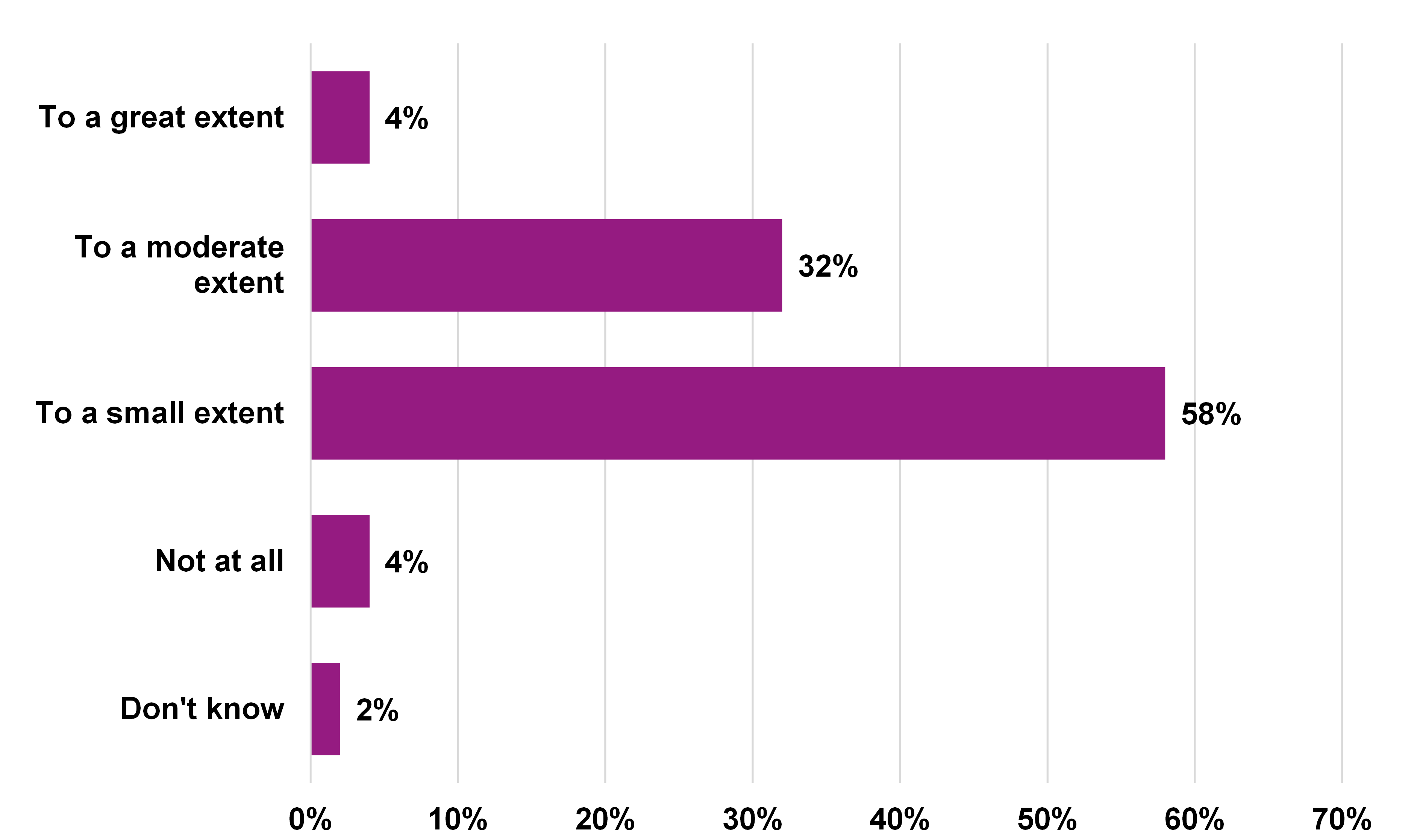
Figure 2: To what extent, if at all, would you say that staff across the organisation have the level of data literacy they need to be able to do their jobs effectively – including the ability to use insights to support decision making where relevant?
Specialist data skills
Respondents were asked to what extent there was an organisational understanding that specialist data skills and resources are needed within the organisation. Table 23 shows that just over two-thirds (68 per cent) of respondents said there was an understanding to a great or moderate extent – 19 per cent said to a great extent and 49 per cent said to a moderate extent. Twenty-seven per cent of respondents answered ‘to a small extent’.
|
Per cent |
|
|---|---|
| To a great or moderate extent |
68% |
| To a great extent |
19% |
| To a moderate extent |
49% |
| To a small extent |
27% |
| Not at all |
5% |
| Don’t know |
1% |
Unweighted base: all respondents (96)
Respondents were asked about the extent to which their organisation knows what in-house data specialist roles it needs, and the extent of any current skills gaps. As Table 24 shows, nearly half (48 per cent) of respondents said their organisation has a great or moderate understanding of this. A very similar proportion (50 per cent) responded that their organisation only knew this to a small extent or not at all – with the majority of these answering ‘to a small extent’.
|
Per cent |
|
|---|---|
| To a great or moderate extent |
48% |
| To a great extent |
13% |
| To a moderate extent |
35% |
| To a small extent |
42% |
| Not at all |
8% |
| To a small extent or not at all |
50% |
| Don’t know |
2% |
Unweighted base: all respondents (96)
Recruitment and retention
Respondents were asked if their organisation faced any problems recruiting and/or retaining officers with specialist data skills.
As Table 25 shows, around half (53 per cent) of respondents said ‘yes’, comprising 32 per cent who said they had problems both recruiting and retaining officers with specialist data skills, 17 per cent who had problems recruiting and four per cent who had problems with retention. Fifteen per cent said they had no problems, whilst 32 per cent answered that they didn’t know.
|
Per cent |
|
|---|---|
| Yes |
53% |
| Yes – problems recruiting |
17% |
| Yes – problems retaining |
4% |
| Yes – problems recruiting and retaining |
32% |
| No |
15% |
| Don’t know |
32% |
Unweighted base: all respondents (96)
Those respondents whose organisation’s faced problems recruiting and/or retaining officers with specialist data skills were asked to describe the main reasons for this, which can be seen below:
- Salary and budget issues: Over half of those who answered this question mentioned they struggled to offer competitive salaries, with pay scales often lower than the private sector and even other public sector bodies. Budget constraints limited the ability to attract and retain skilled staff, particularly for specialist roles such as data architects, engineers, and scientists. A couple of respondents highlighted that local government pay and grading structures do not sufficiently recognise specialist data skills.
- Competition with private sector: Almost half of the respondents mentioned that the private sector offers significantly higher salaries, better career development, and greater flexibility, making it difficult for local authorities to compete. Some mentioned investing in training their data staff, only to lose them to private firms offering better financial incentives.
- Career development and progression: Some respondents mentioned progression pathways for technical staff were often unclear or limited, as career advancement typically required moving into management roles rather than technical leadership. A lack of internal development opportunities led to retention issues, with staff leaving for organisations that better recognised and supported their specialist skills. A couple of respondents mentioned that staff were often expected to cover multiple roles, which deterred skilled specialists.
- Workplace culture and motivation: Some respondents mentioned that data professionals felt demotivated when their work did not translate into action due to organisational immaturity in data use or resistance from decision-makers. Additionally, security restrictions limited access to necessary tools, and recruitment processes failed to identify the right candidates.
- Skill gaps: Some respondents mentioned a lack of people in the job market with appropriate data skills. A couple said that they had focused on upskilling internal staff, but there were reported incidents of them later leaving for better-paid roles elsewhere.
All respondents were then asked whether their organisation has taken any action to address problems in recruiting or retaining officers with specialist data skills, that had proved effective. Thirty-two respondents provided examples, with common themes including:
- Development and training initiatives, with several respondents saying they have had success through investing in skills development and training, including in-house programmes. Rather than focusing purely on data skills, some respondents talked about professional development and ‘investing in the individual’; giving opportunities to develop, learn and work across different areas to build expertise. The use of apprenticeships was also commonly mentioned.
- Linked to this, a small number mentioned that they had had success with developing a ‘pipeline of talent’, recruiting into junior roles and then supporting staff to build their expertise, service and system knowledge to become data professionals. One respondent mentioned the use of student internships to help with this.
- Some respondents said that they have found that focusing on workplace benefits and flexible working has helped with recruitment and retention. Respondents mentioned hybrid working, agile working and promoting work life balance, as well as ensuring good people management to ensure data specialists feel valued and supported.
- Improving job profiles, pay and ensuring a career path were highlighted by some respondents. For example, one respondent said they have ‘implemented a career grade for analysts associated with a tailored skills framework, [this] has significantly increased applications and successful recruitment’.
- Finally, a few respondents mentioned different approaches that they had taken to recruitment, including proactive outreach on LinkedIn, investing in recruitment literature, and undertaking specific recruitment campaigns.
Training
All respondents were asked about the extent to which analytical and data staff had access to sufficient training to keep up to date with evolving tools and techniques.
As Table 26 shows, over half (57 per cent) of respondents answered that analytical and data staff had access to sufficient training, to either a great or moderate extent. However, 38 per cent said this was the case only to a small extent, whilst two per cent said not at all.
|
Per cent |
|
|---|---|
| To a great or moderate extent |
57% |
| To a great extent |
15% |
| To a moderate extent |
42% |
| To a small extent |
38% |
| Not at all |
2% |
| Don’t know |
3% |
Unweighted base: all respondents (96)
Networks and communities of practice
Respondents were asked whether data professionals in the organisation were involved in any data related networks or communities of practice.
Forty-three respondents said that they had networks within their own organisations, for example:
- Analyst and business intelligence networks.
- Communities of practice or similar around specific issues such as Power BI, coding and GIS.
- Groups to promote learning and knowledge sharing, including show and tells.
Fifty-one respondents said that they were involved with local or regional networks, including:
- Various local and regional analyst and performance management networks.
- Service specific networks, for example public health and children’s services.
- London Office of Technology and Innovation (LOTI).
- Information governance and data protection networks.
Forty-three respondents said that they were involved with nationalnetworks, including:
- LGA networks including the Advanced and Predictive Analytics Network (APAN), knowledge hub groups, performance management groups and the LGA AI network.
- ONS Local and ONS data science community.
- Service specific groups, such as NPIMG (national performance and information management group) and DfE networks.
Sharing notable practice
The LGA offers a range of free-to-access support to help local authorities recognise the full value of data and make good use of it for decision-making. To inform this, respondents were asked to briefly describe any notable data-related projects or particularly effective action that their organisation has taken to improve data capability, that they would be willing to share with colleagues.
Around a third of respondents provided examples, and the LGA will follow these up to produce case studies, webinars and masterclasses. The examples given were wide ranging but included work in the following areas:
- Improving data architecture and systems, including the creation of user-friendly dashboards and automation of data processes as well as the adoption of data platforms.
- Data strategy and governance, including undertaking data maturity assessments as well as establishing robust data governance foundations.
- Data science and AI projects such as natural language processing and predictive analytics.
A variety of further examples covered topics such as data sharing, data matching, data skills development and steps to improve data quality.
Barriers
Respondents were asked to select from a list, which (if any) issues were acting as barriers to their organisation developing its data capacity and capability.
As Table 27 shows, the top five barriers local authorities faced were: lack of financial resources (73 per cent), impact of legacy systems (71 per cent), lack of staff capacity (ie not enough data professionals) (67 per cent), difficulty evidencing the impact or potential impact of investing in data (44 per cent), and insufficient knowledge of good practice (40 per cent).
At the other end of the scale, lack of political leadership buy in (18 per cent) and inability to retain people with the right skills (18 per cent) were seen as not so much of a barrier.
Fifteen ‘other’ responses were given, which included a history of a lack of investment in data, lack of centralised ownership for data issues and data literacy varying across the organisation.
|
Per cent |
|
|---|---|
| Lack of financial resources |
73% |
| Impact of legacy systems |
71% |
| Lack of staff capacity (ie not enough data professionals) |
67% |
| Difficulty evidencing the impact or potential impact of investing in data |
44% |
| Insufficient knowledge of good practice |
40% |
| Current data staff do not have the required level of data skills |
35% |
| Challenging working relationships between different departments |
31% |
| Poor digital infrastructure |
29% |
| Risk-averse approach to innovative data work |
29% |
| Inability to recruit people with the right skills |
28% |
| Lack of senior officer leadership buy in |
28% |
| Inability to retain people with the right skills |
18% |
| Lack of political leadership buy in |
18% |
| Other |
14% |
| None of the above |
0% |
Unweighted base: all respondents (96)
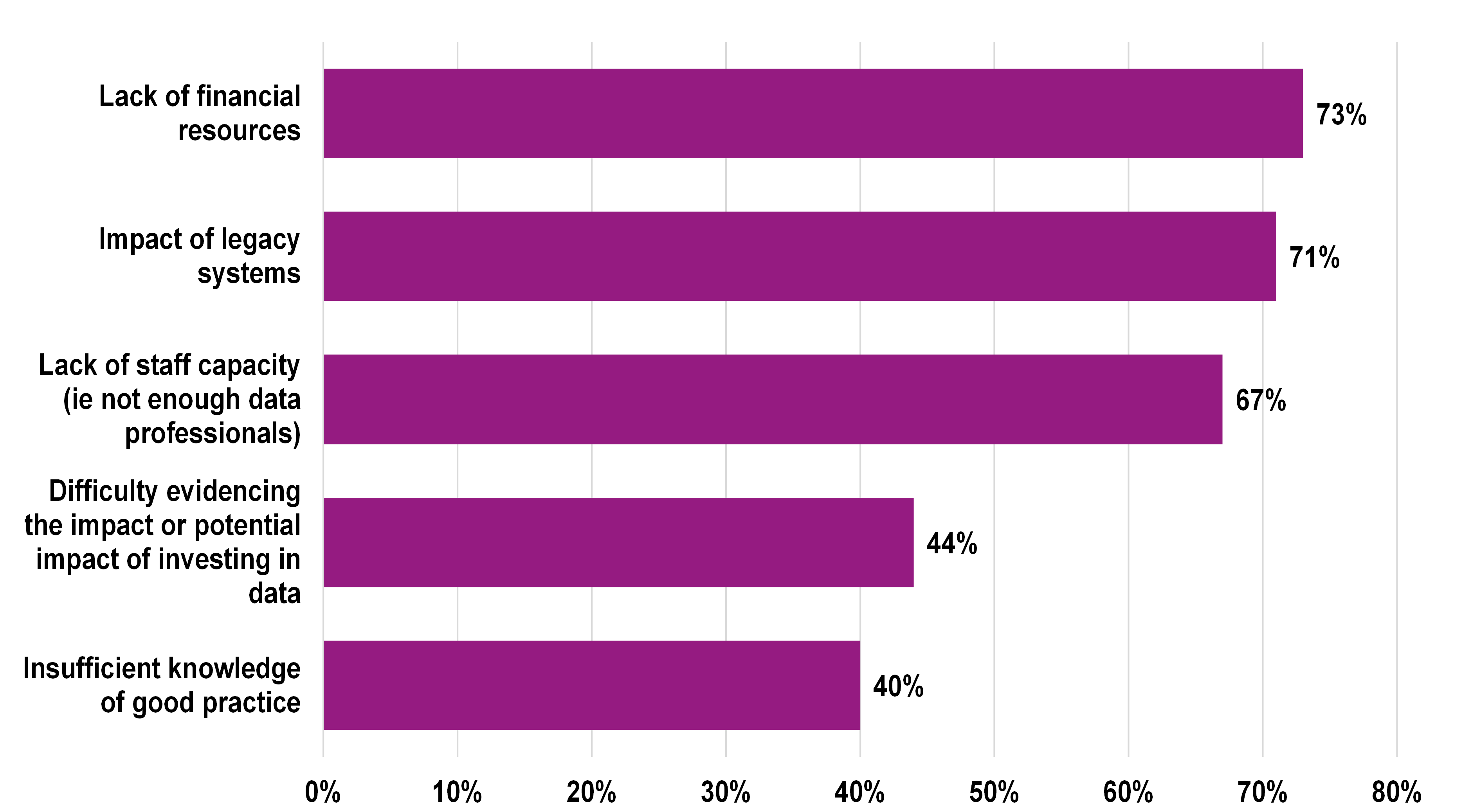
Figure 3: In your view, which (if any) of the list below are currently acting as barriers to your organisation developing its data capacity and capability?
LGA Support
Access to data
The LGA and other partners are working to help local authorities gain access to more and better data. To inform this activity, all respondents were asked to specify what, if any, data their organisation does not have access to but, if it did, it would lead to better service delivery.
Thirty-five respondents answered this question, with answers covering the following themes:
- Health data was the most mentioned, with a range of specific examples given including primary care, A&E, mental health, and dentistry.
- DWP data and police data were also commonly mentioned by those who answered. One respondent noted that better DWP data “would enable us to understand families/residents’ financial difficulties and provide more support/intervention before escalation to the point of crisis.”
- A small number of respondents also mentioned the challenges they face when looking to access data from another council in the same area (county to district and vice versa).
- Other types of data, each mentioned by two or three respondents included:
- timely benchmarking data
- current datasets to be available at a more granular or different geography
- unit cost and value for money data
- fire service data
- Valuation Office Agency data
- Land Registry data.
LG Inform
Respondents were asked whether they found the LGA’s LG Inform data service useful. As Table 28 shows, the majority (82 per cent) of respondents found it very or fairly useful – with 36 per cent saying it was very useful and 46 per cent saying fairly useful.
|
Per cent |
|
|---|---|
| Very or fairly useful |
82% |
| Very useful |
36% |
| Fairly useful |
46% |
| Not very useful |
5% |
| Not at all useful |
1% |
| Don’t know |
7% |
| Not heard of it |
5% |
Unweighted base: all respondents (96)
Further support
Respondents were asked to describe any further support from the LGA that might be useful in helping them to improve the use of data in their organisation.
Six respondents provided an answer to this, with answers generally focusing on the sharing of good practice; respondents mentioned that the findings from the survey would be useful, to see what other authorities are doing that’s working. Case studies were also highlighted as being useful.
Annex A: Questionnaire
Introductory text
We are aware that there can be variation between service areas when it comes to data use within a local authority, with more data rich or heavily monitored services such as adult social care or housing often being more mature.
In this survey, we are trying to get a sense of the corporate/strategic position of the organisation, so there may be questions where you need to take an overarching view - we recognise that this may disguise some service level differences.
Structure
1. Which of the following most closely describes the structure of data-related roles within your organisation?
By data specialists we mean roles such as analysts, data scientists or officers using data for performance management.
- There is one or more centralised team(s) that contain most of the data specialists
- There is a small, centralised team of data specialists, with data specialists also located within specific service areas
- Data specialists sit primarily within individual service areas
- The organisation currently doesn’t have any data specialists
- Other (please specify)
- Don’t know
2. Does your organisation currently employ any officers in each of the following roles (or equivalent)?
Please tick ‘yes’ if your organisation employs one or more officers who fulfils the role, even if that is not reflected in their job title. Please also tick ‘yes’ if your organisation is currently recruiting for this role.
Row options
- Chief data officer
- Performance management officer
- Data analyst
- Data scientist
- Data engineer
- Data architect
- Data ethicist
- Database administrator
- Information governance officer
- Data quality officer
- Other data specialist role (please specify)
Column options
- Yes
- No
- Don’t know
3. Thinking of the roles listed above, please estimate how many posts (full time equivalent) there currently are for these roles, in total.
Please include any posts that you are currently recruiting for. Please enter ‘0’ if there are no posts and leave blank if you don’t know.
Leadership and strategy
4. Overall, which of the following descriptions do you think best matches your organisation’s current level of data maturity?
Please select the option that most closely matches the current position.
We are aware that there can be variation in maturity between service areas. We are trying to get a sense of the corporate/strategic position of the organisation, so for this question please take an overarching ‘on balance’ view.
- Level 1: the organisation has poor and inconsistent practices around data.
- Level 2: the organisation is beginning its journey in terms of working with data.
- Level 3: the organisation is making good progress in developing its capacity and capabilities in terms of data.
- Level 4: the organisation exhibits good practice around the use of data and uses widely agreed standard approaches to data use and management.
- Level 5: the organisation innovates in terms of data related techniques and approaches and is considered a leader amongst peers for its approach to data.
- Don’t know
5. Does your organisation have a current data strategy?
- Yes – a standalone data strategy
- Yes – a data and digital strategy
- Yes – other (please specify)
- Currently in development
- No data strategy currently
- Don’t know
To those who answered ‘Yes – a standalone data strategy’, ‘Yes – a data and digital strategy’ or ‘Yes – other (please specify)’:
6. To what extent would you say that the data strategy has, to date, been effective in improving the organisation’s use of data?
- To a great extent
- To a moderate extent
- To a small extent
- Not at all
- Too soon to say
- Don’t know
To those who answered ‘To a small extent’ or ‘Not at all’:
7. What would you say have been the main barriers that have hindered the ability of the data strategy to improve the organisation’s use of data?
To all:
8. Has any part of your organisation produced a business case for investing in data in the last five years or so?
This could have been a case to invest in data capacity or capability in the organisation generally, or for a specific initiative. It could also have been as part of a wider service redesign business case that contained data elements.
- Yes
- No
- Don’t know
To those who answered ‘Yes:
9. If you have had data-related business cases that have been unsuccessful, please briefly outline what you think the main reasons for this have been.
To all:
10. Has your organisation undertaken an evaluation of any data projects or initiatives in the last five years or so?
- Yes
- No
- Don’t know
Data lifecycle
11. In general, across the organisation, can teams easily get access to their data from the systems of third-party suppliers, in the format that they need it in?
- Very often
- Fairly often
- Occasionally
- Never
- Don’t know
12. To what extent, if at all, are there effective systems in place to ensure data users within the organisation have a good awareness of where data is stored and can be accessed?
- To a great extent
- To a moderate extent
- To a small extent
- Not at all
- Don’t know
To those who answered ‘To a great extent’ or ‘To a moderate extent’:
13. Please indicate what systems are in place, using the list below:
Please tick all that apply [randomise answer options]
- Data platform
- Central data catalogue
- Service specific catalogues
- Work to reduce duplication of data sets
- Other (please specify)
- Don’t know
To all:
14. Which, if any, of the following is your organisation using:
Row options
- Data warehouse
- Data lake
- Data mesh
- Other (please specify)
Column options
- Yes – and this is fairly/very well established
- Yes – in the early/mid stages of implementation
- No
- Don’t know.
15. If your organisation is using anything other than what is above, please use the space below.
16. In general, to what extent would you say that poor data quality is a challenge in the organisation?
- To a great extent
- To a moderate extent
- To a small extent
- Not at all
- Don’t know
To those who answered ‘To a great extent’ or ‘To a moderate extent:
17. What would you say are the main challenges relating to data quality?
To all:
18. Has the organisation taken any actions to improve data quality in recent years that have proven effective? If so, please briefly describe below.
19. How often, if at all, can the organisation access the data that it needs from other public sector partners such as central government, neighbouring councils and so on?
- Very often
- Fairly often
- Occasionally
- Never
- Don’t know
20. If you or partner organisations have taken any steps to overcome common barriers to data sharing, please briefly describe this below.
Systems and tools
21. How often, if at all, are data needs considered, and data professionals within the organisation involved, at the point when new systems are procured?
- Consider for example whether procurements specify data standards and the ability for data professionals to easily access data.
- Always or very often
- Fairly often
- Occasionally
- Never
- Don’t know
22. Do data professionals in the organisation generally have access to the tools that they need (for example Power BI, Python, R or other data science or visualisation tools)?
- Yes, all tools
- Most tools
- Some tools
- No
- Don’t know
To those who answered “Most tools”, “Some tools” or “No”:
23.What are the reasons why data professionals in the organisation do not have access to all the tools that they need?
Please tick all that apply [randomise answer list]
- IT concerns about security of certain tools
- Difficulty obtaining budget for licences
- Challenges in ‘making the case’ for why the tool is needed
- A lack of knowledge of which tools are available
- Other (please specify)
- Don’t know
To those answered “Yes, all tools” or “Most tools":
24. Do you have any advice for local authorities where data professionals do not have access to all the tools that they need? For example, about how they could overcome common barriers such as helping IT understand how open-source software can be used safely? If so, please briefly outline this below.
To all:
25. What are the main data tools you currently use in your organisation, or would use if you had access?
Please provide an answer for each row, plus add extra tools not listed. This covers any tools used for simple analysis through to data visualisation and on to more advanced data science tools, for example for machine learning.
Row options:
- Python
- R
- Excel
- Power BI
- SPSS
- Tableau
- Other (please specify)
- Other (please specify)
- Other (please specify)
- Other (please specify)
Column options
- Currently used
- Would use if available
- Don’t know
26. Which of the following statements best describes your organisation’s current use of Artificial Intelligence (AI) capabilities?
By AI, we mean computer systems that can perform tasks that normally require human intelligence. Examples include generative AI systems that create text or images, and predictive AI systems that try and predict an outcome.
- Level 1: The organisation is not currently using or exploring AI capabilities
- Level 2: The organisation is at the beginning of its journey in terms of working with AI
- Level 3: The organisation is developing its capacity and capabilities around AI
- Level 4: The organisation is making some use of AI, exhibiting good practice and incorporating guidance from expert organisations
- Level 5: The organisation is innovative in its use of AI and is considered a leader among its peers
- Don’t know
Data skills
27. To what extent, if at all, would you say that staff across the organisation have the level of data literacy they need to be able to do their jobs effectively – including the ability to use insights to support decision making where relevant?
This question relates to all staff in the organisation, rather than just data professionals.
- To a great extent
- To a moderate extent
- To a small extent
- Not at all
- Don’t know
28. To what extent, if at all, is there an organisational understanding that specialist data skills and resources are needed within the organisation?
- To a great extent
- To a moderate extent
- To a small extent
- Not at all
- Don’t know
29. To what extent, if at all, does the organisation know what in-house data specialist roles it needs (for example data analysts, data architects), and the extent of any current skills gaps?
- To a great extent
- To a moderate extent
- To a small extent
- Not at all
- Don’t know
30. Does the organisation face any problems recruiting and/or retaining officers with specialist data skills?
- Yes – problems recruiting
- Yes – problems retaining
- Yes – problems recruiting and retaining
- No
- Don’t know
To those who answered “Yes – problems recruiting”, “Yes – problems retaining” or “Yes – problems recruiting and retaining”:
31. Please use the space below to describe the main reasons you face recruitment and/or retention problems relating to officers with specialist data skills. Please also highlight here if there are any particular skills gaps that are challenging to fill.
To all:
32. Has your organisation taken any action to address problems in recruiting or retaining officers with specialist data skills that has proved effective? If so, please briefly describe this below.
33. To what extent, if at all, do analytical and data staff have access to sufficient training to keep up to date with evolving tools and techniques?
- To a great extent
- To a moderate extent
- To a small extent
- Not at all
- Don’t know
34. Are data professionals in the organisation involved in any data related networks or communities of practice? If so, please list them in the relevant sections below:
Row options
- Within the organisation
- Local/regional
- National
- Other
35. Local authorities are very keen to hear from peers who are doing good work with data. Are you working on any notable data-related projects, or has your organisation taken any particularly effective action to improve data capability, that you would be willing to share with colleagues?
If so, please share a brief description below and we may follow up with you.
Barriers
36. In your view, which (if any) of the list below are currently acting as barriers to your organisation developing its data capacity and capability?
Please tick all that apply [randomise answer options]
- Insufficient knowledge of good practice
- Poor digital infrastructure
- Impact of legacy systems
- Lack of financial resources
- Lack of staff capacity (ie not enough data professionals)
- Current data staff do not have the required level of data skills
- Inability to recruit people with the right skills
- Inability to retain people with the right skills
- Lack of senior officer leadership buy in
- Lack of political leadership buy in
- Risk-averse approach to innovative data work
- Difficulty evidencing the impact or potential impact of investing in data
- Challenging working relationships between different departments
- Other (please specify)
- None of the above
LGA Support
38. The LGA and other partners are working to help local authorities gain access to more and better data. Please let us know what, if any, data you do not have access to but, if you did, it would lead to better service delivery?
38. How useful or not do you find the LG Inform data service, which provides data about the authority and allows benchmarking as part of the LGA’s sector support offer?
- Very useful
- Fairly useful
- Not very useful
- Not at all useful
- Don’t know
- Not heard of it
39. Please use the box below to describe any support from the LGA that might be useful in helping improve the use of data in your organisation.
40. If you have any final comments on the use of data in your organisation or in local government more generally, please use the space below.
Annex B: Advice on accessing data tools
| Plan employee skills development and technology adoption in tandem. |
| Demonstrate ROI [return on investment]. Exploit senior leadership pain point/challenge with tool enabled solution. |
| The key for our organisation is training data stewards at service level to use tools for performance and sharing information. |
| Having a line of communication between IT Services and Data Teams. |
| Establish good working relationships and solid skills. IT are happy to set up virtual machines, and the more competence demonstrated the more they are willing to provide additional access to other things. |
| We need to introduce greater clarity about which tools are available and which roles should have access via emerging Digital and Data Strategy and associated governance. Additionally, focus on the recruitment of data-led roles to build capacity/capability. |
| Procure at regional levels, use enterprise agreements. |
| We are developing relevant policies to protect the organisation and overcome any IT concerns. |
| The conversation needs to be at a senior level in the organisation, so IT are encouraged to find a solution rather than present challenges. It's also about allowing access to trusted members of staff and having rules of engagement. It's no longer just IT staff who need to code so setting up a working group to establish the right ground rules is also important. Working in the cloud also helps but not all councils are there yet. Installing software on laptops is always going to be more support-heavy which isn't ideal but not impossible. There are a number of different ways of providing access to these tools using Cloud services: - Data Science virtual machines templated by Microsoft - Azure data platform access to Jupyter notebooks - Python within Microsoft desktop software which can now be enabled (for specific, trusted users rather than everyone). |
| Make [the] case for selected professionals to access, rather than wider staff audiences. Work on building professional trust between data and IT teams. Research experimental sandbox environments where tools can be safely used. |
| Work with the IT&D team to explore options that meet data teams requirement but also take into account the risk to the organisation or residents. Don't got to IT with a solution, go with the problem you are trying to resolve. |
| Ensuring that discussions for access to relevant tools are had at the highest level in the organisation so they are available on a corporate level, this ensures that proper benefits can be discussed and a single approach to managing and visualising data can be had. |
| Having data roles close to our more traditional IT roles in a department that brings together Digital, Data and Technology. |
| The business case for investment is made through demonstrating value through smaller use-cases, tools such as PowerBI/Fabric have clear investment value once a certain number of users are reached. But also needs to be recognised that analytical outputs are often of an intangible value, so engaged executive sponsors who see this value are vital. |
| Move data away from IT. It's a separate skill e.g. riding a motorbike is different to driving a car. Data analysts/scientists ideally need a detailed understanding of the business so that the value of their analysis can be enhanced by a greater understanding of the business they are supporting. |
| Ensure that the strategic rationale for data, intelligence and business improvement are made early. |
| Business case approach to the benefits data automation can make, particularly in services with flux in demand that are high risk like children's - we built a BI solution that refreshes automatically every night that enables performance information from the front door through to care leavers to enable all managers to see and manage issues. |