This case study forms part of the resource The High Impact Change Model (HICM) for Optimal Handed Care (OHC) which provides a practical framework to embed OHC in different care settings across the health and care systems. It aims to ensure that every person receives safe, proportionate, and independence-focused care and support, while reducing workforce strain and maximising system efficiency.
The challenge
To review all double up packages of care in commissioned domiciliary care services. Project aim was to generate workforce capacity within domiciliary care service.
Plan / implementation
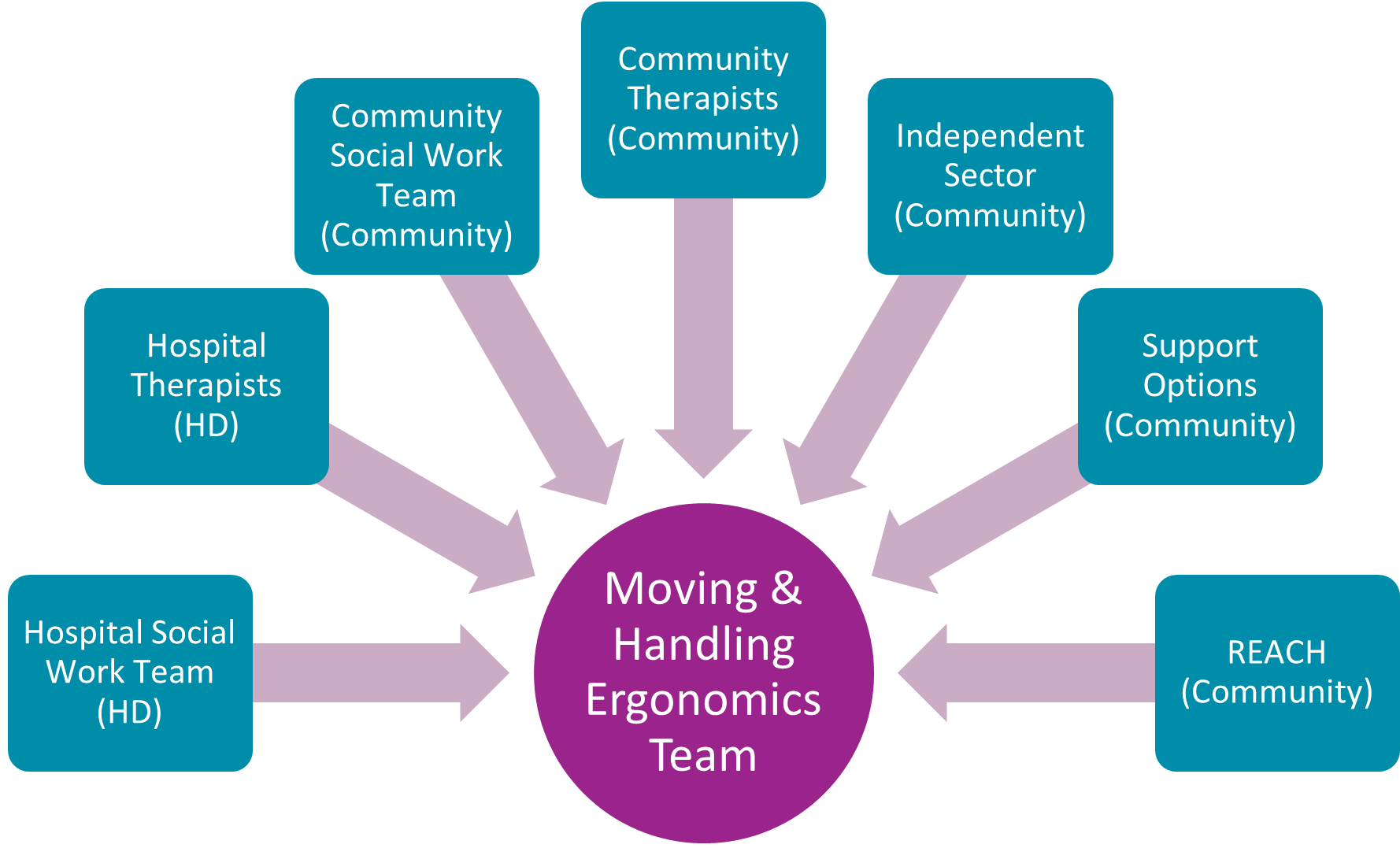
To address these issues, Kirklees Council established the Moving & Handling Ergonomics Team, a dedicated specialist function within Adult Social Care. The team’s remit was to provide comprehensive assessments, training, and advisory support to commissioned domiciliary care providers, with a focus on optimising care delivery through evidence-based ergonomic and single-handed care practices.
The project commenced in July 2017, with full-year data collection running from January to December annually thereafter. All multiple-hander care packages, whether originating from hospitals or community referrals, were directed to the team for review. Each case was systematically assessed to identify whether the existing double-up care could safely and effectively be reduced to a single-carer model through the use of appropriate equipment, training, and environmental adaptation.
Referrals were received from multiple sources, including care providers, hospital discharge teams, and community services. The process was underpinned by strong governance, cross-professional collaboration, and rigorous data tracking, ensuring that outcomes were transparent and measurable.
Moving and handling ergonomics team
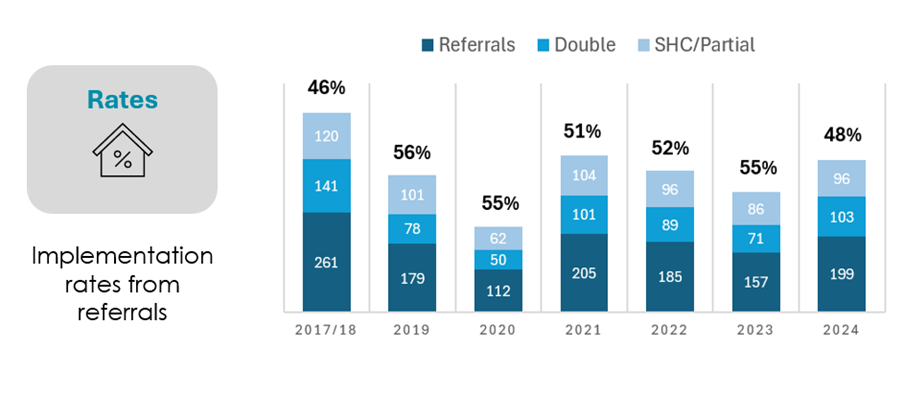
Implementation rates from referrals
Hurdles
The initial stages of the project revealed predictable challenges: some care providers were hesitant to adopt new manual handling practices due to safety concerns, perceived workload implications, or lack of confidence in equipment use. Furthermore, the volume of historic double-up cases required significant assessment capacity and prioritisation.
Cultural change within the sector was also necessary. The long-standing assumption that “two carers equals safer care” had to be challenged and replaced with a model based on professional risk assessment, training, and the appropriate use of technology and equipment.
How these were overcome
These challenges were addressed through persistent engagement, evidence-based training, and collaborative working. The Moving & Handling Ergonomics Team delivered tailored support to care providers, demonstrating the safety, practicality, and efficiency of single-handed care where appropriate. Regular data review meetings ensured the team remained outcome-focused and responsive.
A structured referral and triage process ensured that all double-handed cases were reviewed consistently. The introduction of specialist ergonomics expertise enabled complex risk assessments and provided confidence for both practitioners and providers.
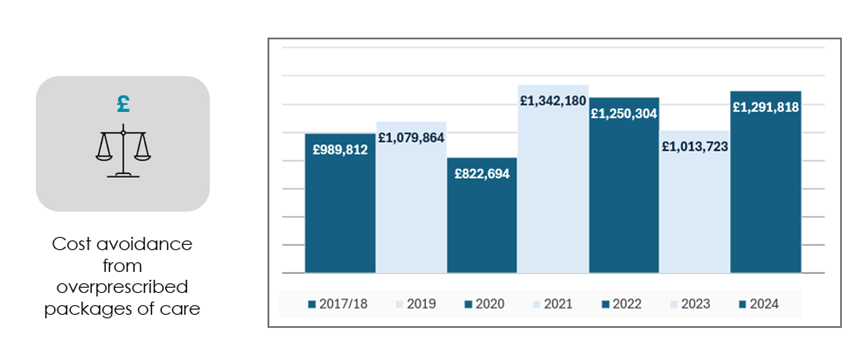
Through this systematic approach, Kirklees achieved a sustained increase in implementation rates and measurable workforce and financial gains year-on-year between 2017 and 2024.
What resource was required
The programme utilised a core specialist team funded within the adult social care budget. Resources included:
- specialist moving and handling practitioners and ergonomists
- access to manual handling and equipment training facilities
- administrative support for data capture and analysis
- engagement from domiciliary care providers and commissioning teams.
This modest investment was offset many times over by the financial and workforce benefits realised through cost avoidance and reclaimed care hours.
Outcome
Over a seven-year period, the moving and handling Ergonomics Team has demonstrated consistent and significant impact across the Kirklees Adult Social Care system.
The data shows:
- referral volume and implementation; hundreds of referrals were received annually, with high implementation rates from assessment to change — evidencing strong provider engagement and practical outcomes.
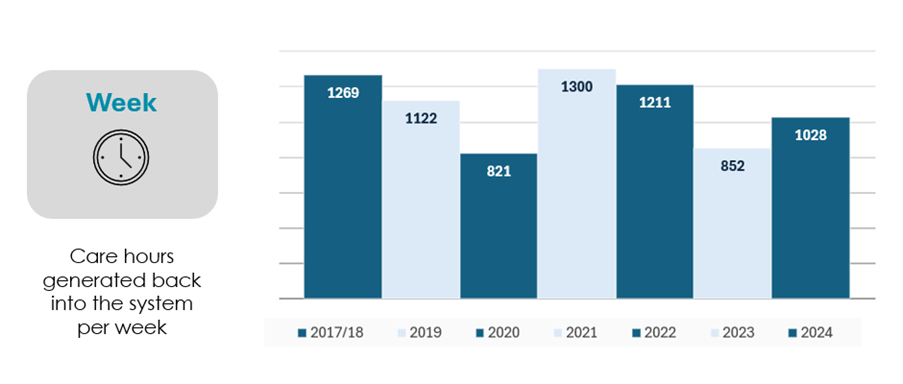
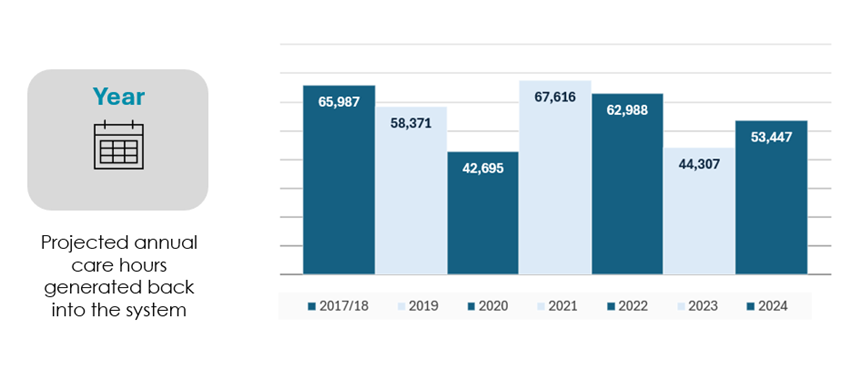
- workforce capacity generated; reviews of double-handed packages generated substantial workforce capacity.
Care hours generated back into the system per week
Projected annual care hours generated back into the system
Cost avoidance from overprescribed packages of care
Contact
Sarah Thornton
Email: [email protected]