Partners in Care and Health (PCH) asked the Social Care and Health Collaborative to help to develop a tool for councils to help people who work in adult social care to focus on strengths-based approaches. This resource sets out the High Impact Change Model to support strengths-based approaches.

This model has been developed using feedback from a national survey, and a series of co-production working groups. Strengths-based approaches, grounded in lived experience, inclusion, and empowerment, transform the way people experience adult social care. Using “I,” “we,” and “together” statements, this document centres the individual while guiding professionals and systems to respond collaboratively and respectfully. Embedding equality, diversity and inclusion throughout ensures that every person is seen, valued, and supported as a unique individual.
I have personally lived experience of severe and enduring mental health challenges and physical health disabilities. Strengths-based assessments and approaches have helped me to live a good life. They see me for the unique individual I am, not just a label or a diagnosis. I know that when people are seen and supported in this way, they can shape their own lives, make choices that matter to them, and build the support systems they need. Although my experiences have not always been consistent, I strongly believe that strengths-based approaches will lead to better care and support for many more people. They help systems respond to real needs, recognise each person as unique, and empower individuals to create meaningful change with the right support." Isaac Samuels OBE
1.1. What is a strengths-based approach?
A strengths-based approach means really getting to know and understanding a person’s life and experiences and working with them to build on what they already do and have. This includes thinking about:
- The things that make people who they are – for example having a sense of humour, being patient or having confidence (their capabilities).
- What they like to (and can) do for themselves– with or without support (their abilities).
- How they have coped before when things have been difficult and how this could help them with their current situation (their resilience).
- Who they know that might be able to offer support - for example, their network of friends, family, and other people they know, such as people in their community (their assets).
Taking a strengths-based approach means that you focus on options and solutions, rather than just problems . When this is done well it leads to better support that helps people be more independent and live the life that they want to. Using a relational approach with people also supports a strengths-based approach.
1.2. What is a High Impact Change Model?
A High Impact Change Model is a practical guide that highlights the few changes that will make the biggest difference. It helps councils and adult social care teams focus on what really works to improve services and deliver better outcomes for people.
This model is designed to identify a small number of key actions that make the biggest difference. This sector-led approach often includes examples of good practice from councils and other organisations, so these can be shared and learned from. High Impact Change Models have already been used successfully to support hospital discharge and stop people needing to go into hospital (admission avoidance) as well as supporting approaches to working with people who may have dementia. Equally, this model may well be of use to other services such as drug and alcohol services or housing teams.
1.3. Developing the High Impact Change Model
The work to develop this High Impact Change Model has included:
- An online survey, distributed through Partners in Care and Health networks and shared on Linkedin.
- A working group made up of people from across adult social care including people with lived experience.
In addition, the model includes some good examples from other research and published evidence in adult social care that help us to know that these are the good changes to make.
2. What do we want to achieve?
- It is important to make sure that the focus on strengths-based approaches is about people and not just about systems. This means:
- Focusing on what has meaning and purpose in people's lives. Using “I,” “we” and “together” statements.
- Going back to basics – having the right conversations at the right time and then revisiting these.
- Strengthening capability and understanding across the board – that is, for people who draw on care and support and for anyone that supports them.
- Making sure that the needs of family, friends and unpaid carers are considered.
- Modelling strengths-based behaviour.
It’s not that we don’t have strengths — it’s that no one explains what they mean by it, or how it helps."
- Survey respondent person with lived experience
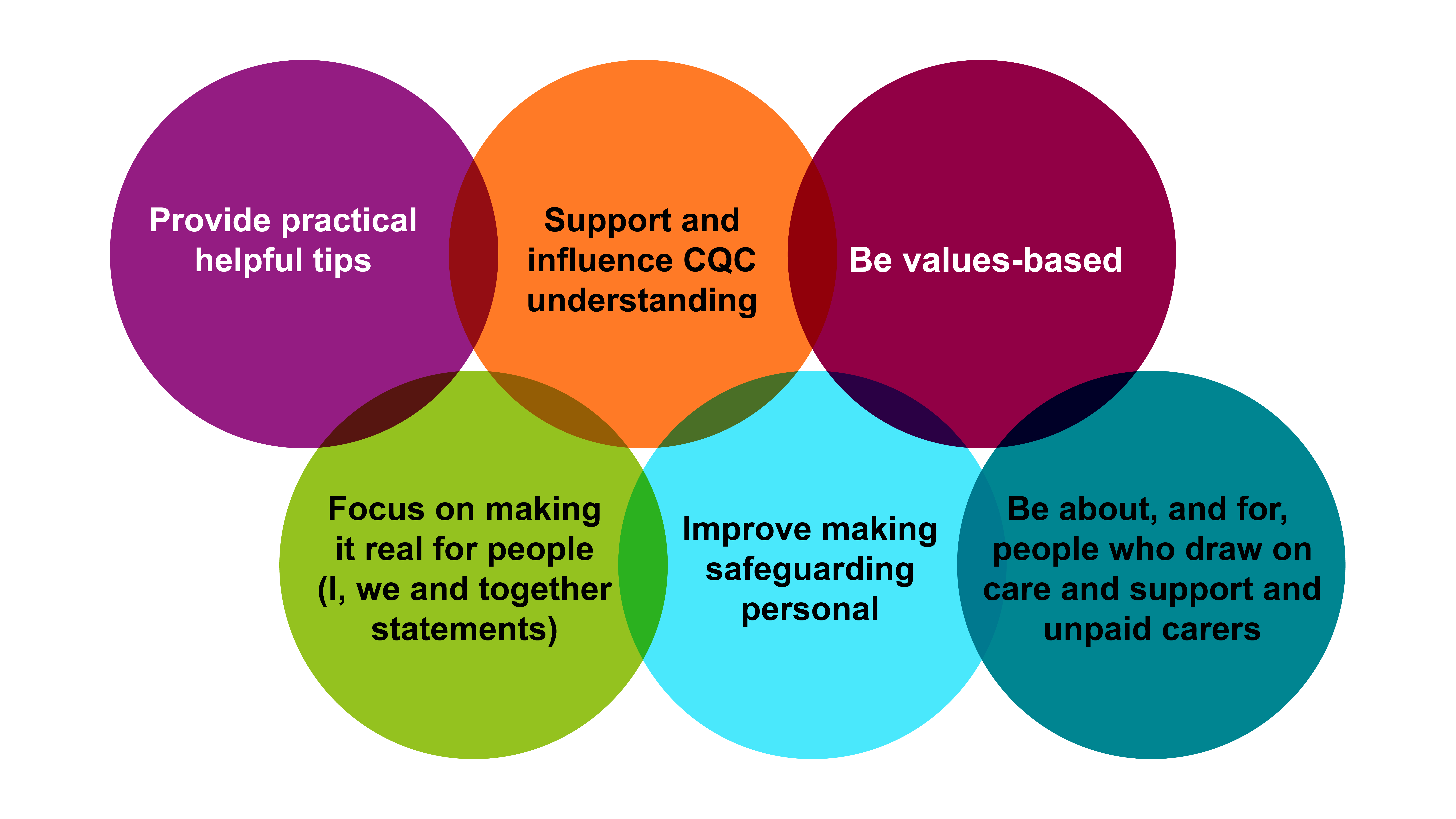
The diagram below sets out what the high impact change model should achieve.