Aftercare services are supported to work in an integrated way.

Objective
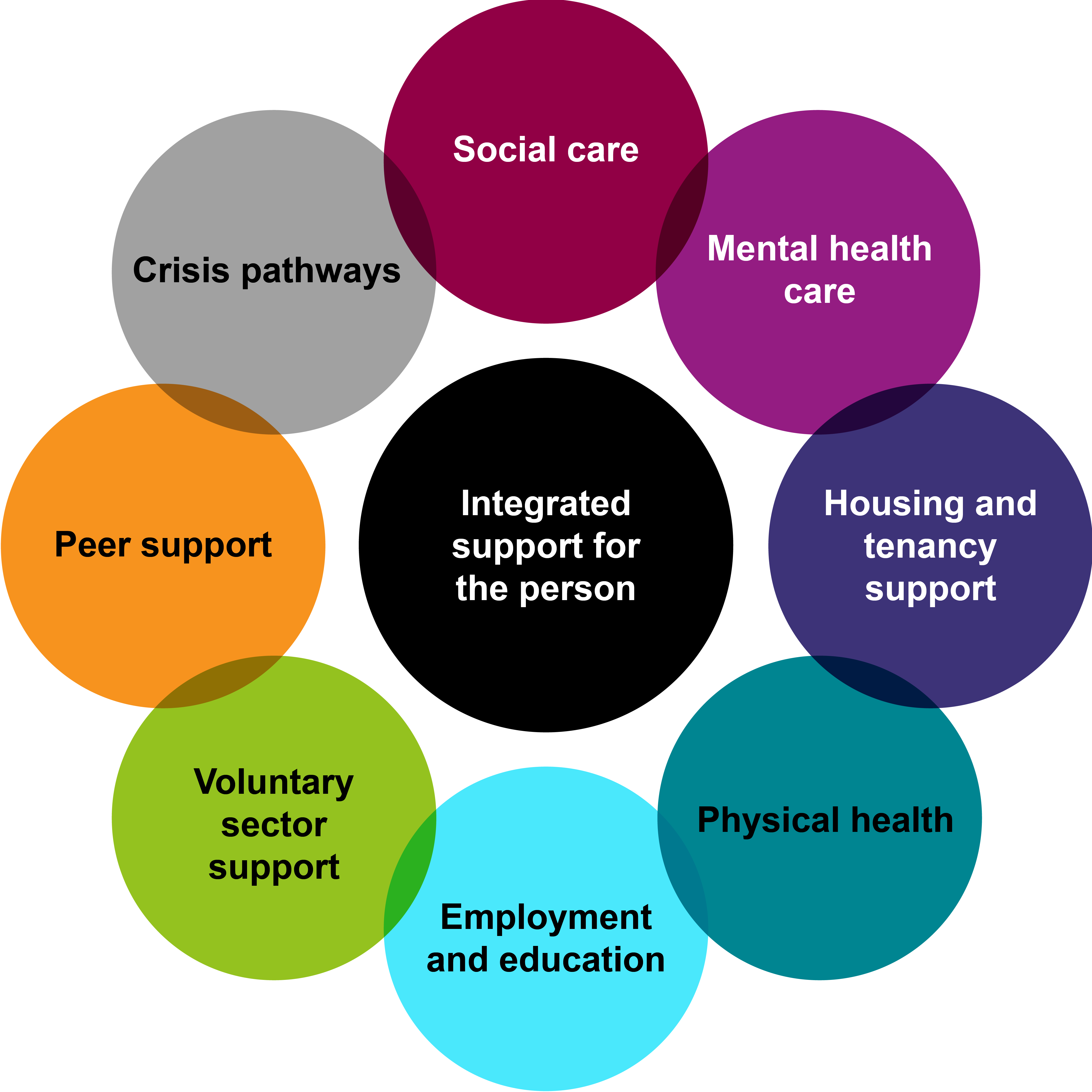
To promote the alignment of mental health, physical health, social care, housing, employment, financial and benefits support, and community support to address the full range of a person’s recovery needs.
Why is this important?
A person’s recovery and wellbeing following detention under the Mental Health Act is influenced by a wide range of factors, including their social, economic and environmental circumstances, as well as needs arising from their mental disorder. As a result, people with Section 117 entitlement often have needs that cannot be met by a single service.
What does good look like?
- Collaborative working: There is a culture of collaborative working between all partners involved in the delivery of aftercare. This includes regular communication, joint training, and a shared commitment to achieving the best possible outcomes for people.
- Seamless pathways: There are clear and seamless pathways between different services to ensure people can access the support they need without unnecessary delays or bureaucracy. This includes pathways between statutory services, as well as with the voluntary and community and private sector, supported by effective information sharing.
- Focus on social determinants: The service model recognises and addresses the social determinants of mental health, such as poverty, poor housing, inequalities, unemployment and digital exclusion. There is effective working with other local partners, such as housing associations, employment support services and digital inclusion initiatives, to provide a more comprehensive package of support.
Practical considerations;
Map local resources: Is there a shared understanding of all the available resources in the local area, including statutory services, non-statutory and private provision, voluntary and community sector organisations, peer support groups, and online or digital provision? This should include, where relevant, established local information sources and directories (for example, Local Offers for children and young people), to support comprehensive awareness of available support.
Decisions must not be constrained solely by local service availability.
Integrated care (all age):
Are there agreed ways of working between services across the system — including commissioning functions, statutory services and non-statutory, voluntary and private provision — that enable people with Section 117 entitlement to experience joined-up, coordinated support? This should include:
- clear arrangements for joint working between Local Authorities and the NHS/ICB, including agreed commissioning routes to non-statutory and private provision where required to meet aftercare needs
- effective coordination across children’s, adults’ and transitions services, including through Preparing for Adulthood (PfA) pathways where relevant
- mechanisms to ensure all-age awareness and consistent application of Section 117 duties, including access to advice and support for teams with less frequent experience of Section 117
- good practice arrangements where adult services with established Section 117 expertise support or advise children’s services and transition teams to ensure continuity and lawful application of aftercare duties.
Promote multi-agency working: Is multi-agency working promoted through the establishment of multi-disciplinary teams, joint training initiatives, co-location of staff where appropriate, and the development of place-based or neighbourhood models of integrated working that bring together health, social care and community services?
Commission for collaboration: Are commissioning arrangements designed to incentivise and reward integrated and collaborative working? This could include the use of pooled budgets, lead provider models, and outcomes-based contracts. Commissioning arrangements should also support personalised approaches to care, including enabling access to Personal Health Budgets for people eligible for Section 117 aftercare, in line with statutory guidance.