Section 117 planning is inclusive and responsive

Objective
Section 117 aftercare plans are inclusive and reduce health inequalities for people who have been detained under the MHA.
Why is this important?
People from diverse backgrounds can face additional barriers to accessing and engaging with mental health services. It is essential that services are designed and delivered in a way that is inclusive and that actively seeks to reduce disparities in access, experience, and outcomes.
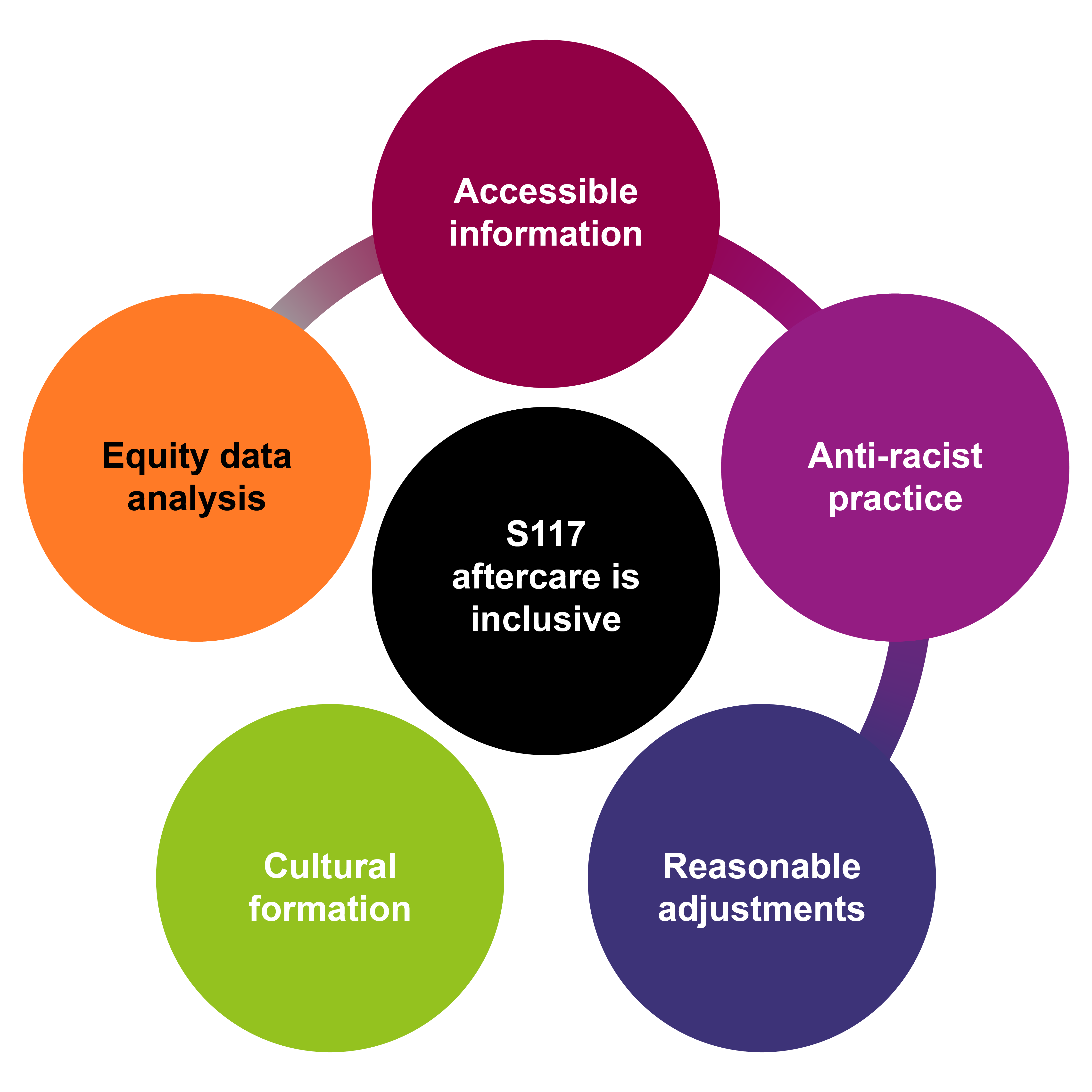
What does good look like?
- Cultural competence: There should be a shared understanding of the cultural, social and structural factors that can influence a person’s mental health, their engagement with services, and their pathway into detention and Section 117 aftercare. This includes awareness of different cultural beliefs about mental health, the impact of racism and other forms of discrimination, and consideration of whether protected characteristics (such as race, ethnicity, age and disability) or other factors (including neurodiversity) may have contributed to the person’s admission or presentation.
Aftercare planning should actively consider whether communication differences, sensory needs, cultural misunderstanding or unmet adjustments may have influenced behaviour or risk, and how these factors can be made explicit, mitigated and addressed to support recovery, reduce the risk of readmission, and promote equitable outcomes.
- Aftercare planning should actively consider whether communication differences, sensory needs, cultural misunderstanding or unmet adjustments may have influenced behaviour or risk, and how these factors can be made explicit, mitigated and addressed to support recovery, reduce the risk of readmission, and promote equitable outcomes.
- Accessible information: Information about Section 117 aftercare is available in a range of formats and languages to ensure that it is accessible. This includes the use of interpreters and translators where necessary.
- Responsive services: Services are responsive to the specific needs of different communities and work with community leaders and organisations to develop culturally appropriate services.
- Challenging stigma and discrimination: Stigma and discrimination should be actively challenged to promote and enable a culture of inclusivity, dignity and respect. This includes addressing stigma and discrimination that may arise across all organisations and services involved in Section 117 aftercare, whether at an individual, organisational or systemic level, including differential treatment or access to support based on diagnosis or perceived mental health need.
Practical considerations
- Equality Impact Assessments: Are equality impact assessments being undertaken on all Section 117 policies and procedures to ensure that they do not disadvantage any particular group?
- Data collection and monitoring: Is there data collected and monitored on the ethnicity, age, gender, and other protected characteristics of people receiving Section 117 aftercare to help to identify any inequalities in access, experience, and outcomes?
- Community engagement: How are those responsible for Section 117 aftercare planning actively engaging with diverse communities, including people of different ages and needs, to understand their experiences and to co-produce culturally appropriate and accessible services? This should include, but not be limited to, older adults, working-age adults, children and young people, and people with specific or complex needs.
- Workforce diversity: Does the mental health workforce reflect the diversity of the local population to support culturally competent care, and does it have the skills and competencies required to meet the needs of different population groups, including for example older adults, children and young people, people with learning disabilities, and those with complex or forensic needs?